
 February 9, 1979 marked 40 years since Paramount pictures released the cult-classic film The Warriors , based off of the fictional novel by author Sol Yurick (1925-2013). I have personally watched the film dozens of times and remember the first time I saw it many years ago. As a New York City native, I admittedly have a slight bias towards seeing my hometown on the silver screen. The film garners a mix of reactions from critical praise to harsh criticism. However, I am often surprised to learn that there are many viewers who are unaware that the film was adapted from a book that tells a much different and more violent story. I had known that the film was taken from Yurick’s book but had never read it until now. I was curious to see how the film and book lined up side by side. And having finished the book, I can understand why some authors do not always have a positive view of the films that are adapted from their books. This is the real version of the story of the Warriors and may prove to be quite surprising to fans of the film.
I believe it is necessary to clear one’s mind before reading the book to avoid making the mistake of expecting the story to read with the film’s plot in mind. And while the major events in the book were carried over to the film, the overall narrative differs from what we see on screen. The most surprising is that the Warriors gang does not exist in the book by name of nor do any of the characters from the film. They are however, composites from those that are the focus of the story within. Further, the gang members are part of the Coney Island Dominators and far more ruthless than their screen counterparts. I think by now, you have probably guessed that this book is not for children. In fact, even some adults may find the descriptions of violence and sex to be quite shocking. But Yurick, who had worked with the New York City Department of Welfare, wanted to show just how raw the street gangs were. As I read through the book, I thought to myself that Paramount Pictures had no choice but to present a far tamer version of the story with more diversity among the characters. Had it not, the film probably would not have been granted approval by the Motion Picture Association of America. Walter Hill has disclosed previously that he wanted the gang to composed of Black and Puerto Rican youths but was overruled by Paramount executives leery of the fallout and possible accusations of racial bias. We also cannot ignore the financial aspect as well and having a white lead in 1979 was a more effective sales strategy as unsettling as it may sound. Readers may be surprised to hear what Yurick has to say about the ethnic variations found in the film in contrast with the characters he created for the book.
There are parts of the story that filmmakers left out or altered significantly which readers may find both interesting and surprising. The day on which the conclave takes place in the book could have been added to the film but is really a minor issue. I do think it may have given the film a more authentic feel but the movie has stood the test of time and as someone who has never worked in the movie business, my opinion is not likely to impress those that do. The back story of Hinton, whose film composite is certainly Swan, is a very interesting story in itself. And while we do not learn his entire family background, we learn enough to see the dysfunction to be found in his home and undoubtedly in those who are part of the Family as they see each other. Perhaps the most surprising character difference is that of Mercy, played by Deborah Van Valkenburgh in the film. I will not say much about her counterpart in the book except to say she is unlike anything you could have imagined and you may need to steel yourself during that part of the story. Yurick taps into some of the darkest parts of human nature and what transpires is not for the faint at heart.
Inevitably, the debate will arise of over which version is better. I do not think there is a clear answer. I believe that although the film is drastically different from the book, it is a good movie and suitable for mature audiences. The book in contrast, is far grittier and shows the savagery with which man still lives with to this day. Each has its place and it is up to readers and viewers to decide which one they prefer. Personally, I have taken each for they are and both will remain a part of my literature and film collections. However, one bonus to be found in the book is Yurick’s discussion of how he came to write the Warriors and its adaptation for the silver screen by Paramount Pictures. It is a good explanation of how literary works undergo significant changes in pre-production before filming commences. For Yurick, the book’s reception and relevance in pop-culture is not something he foresaw when writing it. But regardless of his intention, it did result in a well-loved film by millions of fans. The cast of the film all did an amazing job and no one will forget Joel Weiss improvising with the classic line “Warriors, come out and playyyyyy “. Forty years later, the movie still captivates audiences and will remain a large part of pop-culture. If you are curious about the book that inspired the film and the written account of the gang that had to make it back to Coney Island, this is a must read.
The Warriors is not the best of my books. It was out of print and more or less unknown to the lovers of the movie. Yet, without the book, there would be no film. I find that amusing. – Sol Yurick
ASIN : B006NZBGRC
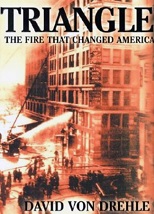 During my first semester at the John Jay College of Criminal Justice many years ago, I attended a class in the field of fire science as part of my graduate degree track. In the class, we, were required to study one of the deadliest fires in New York City history: the Triangle Shirtwaist Factory fire on March 25, 1911. Our professor warned us that the story was deeply disturbing and that the detailed descriptions of the victims would be beyond grisly. However, he also explained that as part of the basis for a career in fire protection, we needed to understand the life safety code and the stories of how and why fire protection has continued to advance. Today, nearly twenty-three years later, I still recall the fire and its impact on workplace safety. But I decided to read this book by David Von Drehle to revisit the fire and perhaps learn something I did not know previously. And what I found within its pages, is a story much longer story than the one I had learned of over two decades ago. And similar to when I first read about the fire in college, I also felt chills go down my spine this time around.
 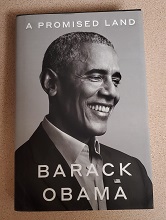 I believe that we can all agree that 2020 was a year unlike any other in modern history. The coronavirus, officially known as Covid-19, brought the world to a grinding halt and disrupted our lives in ways we could have never imagined. Here in the United States, we saw the pandemic take hold, social unrest erupt and the election of Joe Biden, Jr., as the next President of the United States of America. His swearing in on January 20, will mark the final stage in the transition between administrations. For some, it signals the return of politics largely void of the more extreme rhetoric that has gripped the country in recent years. Former President Barack Obama, will undoubtedly be called on for support and advice. I have often thought back to the Obama administration and the decisions that were made on a range of issues. But in particular, I have become even more interested in what life is really like as the Commander-In-Chief. This book, by the 44th President of the United States is exactly what I had been looking for. Not only does it provide an insider’s view into life within the White House, it is also a sobering account of life as a politician. There are highs and lows with a lot in between.
  FREETHINKING BIBLIOPHILE
You must be logged in to post a comment.