
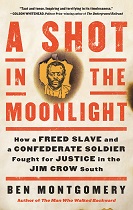
 I am consistently amazed at the number of post-Civil War stories I have yet to learn. This book caught my attention, admittedly from the title alone, and it turned out to be an interesting account of an event that could have been lost to history. On the night of January 27, 1897, a mob of men appeared at the home of George Dinning (1857-1930), a former slave in Kentucky, and demanded that he vacate the home and leave the state. Dinning refused and as the two sides stated their positions, a shot was fired from outside the house. While in retreat and fearing for the lives of his wife and children, Dinning returned fire and mortally wounded Jodie Conn (1864-1897). Dinning turned himself in the next day and was later formally charged and charged with a crime. But prison was not the biggest threat. In fact, the local sheriff feared mob retribution at the hands of local whites and makes a quick decision that spares Dinning’s life. And this was the first step on a journey that not only shocked the State of Kentucky but one that changed the American legal system.
Today, the concept of due process is strong, and we have the right to a jury of our peers. But in 1897, for Black Americans, the average jury worked very differently. And if you were a black person accused of murdering a white person, death was almost guaranteed. But for George Dinning, that was not the case. A trial was held, and the author provides selected transcripts of the questioning to show how stories can be influenced and mis-represented. At the end of the proceedings, Dinning is convicted but the Governor of Kentucky, William O’Connell “Bill” Bradley (1847-1914), takes matters into his own hands and sends shockwaves throughout Kentucky. And incredibly, Dinning’s saga is far from over.
Dinning eventually returns to Simpson County, Kentucky a free man. But his story catches the attention of reporters, politicians, and lawyers. This is where Bennett H. Young (1843-1919) enters the picture. As someone who works in the legal field today, this part of the book was highly relatable. However, I struggled with the fact that Young was a former Confederate soldier who strongly supported and Confederacy and its president Jefferson Davis (1808-1889), but he also believed in the advancement of Black Americans in the wake of the war. It is a contradiction that remains prevalent as the story moves forward to its conclusion. Young consistently takes bold actions to help blacks that are a permanent part of his complicated legacy. Putting that aside, he does an incredible job of representing Dinning, who is awarded damages in a civil suit against several of the men who surrounded his house on that cold January night in 1897. The judge’s award sends shockwaves across America, changing the concept of legal rights for individuals. For other blacks, Dinning’s victory provided the courage needed to make their own claims for damages against those who had wronged them. But though George Dinning had won in court, he was far from trouble free.
Following the successful lawsuit, Young eyed the remaining members of the mob and mounts further legal challenges. But before they play out, we reach the book’s darkest moment in which Dinning comes close to losing his life. This part of the story is disheartening yet Dinning again proves that he refused to be intimated or broken. He eventually leaves Kentucky and makes a new home in Indiana where he spent his remaining days. In 2019, Montgomery interviewed Anthony Denning, George’s great-grandson who carries the family named though the spelling is changed slightly. It is likely that Dinning himself made the change after leaving Kentucky. Regardless, the family lineage is intact to this day and George Dinning’s story lives on ninety-seven years after his death. This story has many components but the most important is that it is American history.
“A Winchester rifle should have a place of honor in every black home, and it should be used for that protection which te law refuses to give.” —Ida B. Wells (1862-1931)
ASIN: B0881Y6TGZ
 FREETHINKING BIBLIOPHILE