
 Discussions of American history during the 1800s may cause one to wonder how the country survived intact. The Civil War, conflicts with Native Americans, and two presidential assassinations highlighted the violent century in which America changed significantly. As the 1900s approached, America was ready for new challenges but in 1914, the world was plunged into war after the assassination of Archduke Franz Ferdinand (1863-1914). As America watched the growing conflict, tensions increased on its southwest border as Mexico found itself in the midst of revolution and armed resistance from rebels such as Doroteo Arango who is famously known as Francisco “Pancho” Villa (1878-1923). This is the story of his role in Mexico’s revolution and its resistance to American foreign policy.
I knew Villa’s name as he has become a pop culture reference in the years following his death. But I did not know his story, and how he became a mythical figure. This book by Jeff Guinn clears up some of the confusion about Villa’s actual role in the revolution and America’s attempt to capture him. The author provides a good primer on Mexican history and United States expansion, in particular the 1847 when the Southwest as we know it began to come into focus. We are also provided with a recap summarizing the impact of former President Benito Juárez (1806-1872). South of the border showed that Mexico had its own political tensions which rose to surface in the last days of President Porfirio Diaz’s (1830-1915) regime. Guinn takes us back in time as the power vacuum begins, and soon enough, Mexico finds itself at a crossroads. What ensues is an intriguing account of unusual coalitions, double cross, political fame, and murder.
Readers should be aware that the multiple men serve as president of Mexico in the book. In fact, at one point, the names change quite rapidly. But this is not the author taking creative freedoms. Mexico was unstable and the thirst for power consumed easily. And it is in the middle of the ongoing political upheaval that we are introduced to Villa, the obscure rebel who had no desire to become president, but still found a place in history. The majority of the conflicts take place in Mexico but on March 9, 1916, Villa staged a raid on Columbus, New Mexico which caught the attention of President Woodrow Wilson (1856-1924), who put his faith in the legendary General John J. “Black Jack” Pershing (1860-1948) to stop Mexican aggression and capture the elusive Villa. And what follows is a cat and mouse game that becomes surreal as Villa seems to escape each time, and even survives an assassination attempt which remained a carefully guarded secret. And while this saga plays out, Mexico continues its cycle of political dysfunction.
Pershing was determined to find Villa; however World War I loomed in the distance and upon America’s entry, the famed general was called into service yet again, leaving Villa free to his own devices. And surprisingly, Mexico had its supporters, including Germany which had its own agenda as the war raged. Villa continues his rebel activities but eventually reaches the end of his usefulness. In 1920, President Venustiano Carranza (1859-1920) was assassinated and succeeded by Adolfo de la Huerta (1881-1955) who negotiated a “early retirement” for Villa which was accepted. Sadly, the revolutionary only had a few more years to live himself and we learn of his fate, and the last days of other figures who could not escape the violence of Mexico. From start to finish the author maintains the right pace of the narrative and the account is a roller coast ride through Mexican history. What we learn is disheartening but also a reminder of the importance of a functioning democracy. Pancho Villa is long gone but he lives on as the iconic bandit who sought to liberate his country. The reality is far more complicated, less climactic, and darker in some areas. And whether Villa was a saint, or a sinner is up to you to decide. But we have here is a solid discussion of his exploits and role in the Mexican Revolution.
ASIN : B08LDV3VXG
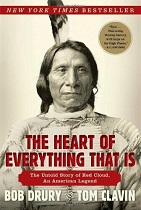 In the 1800s, the United States was a rapidly growing nation that had evolved from thirteen British colonies to a country seeking to expand across North America. The ideology of “manifest destiny” propelled the drive west into the unchartered and unknown. White settlers who dared to venture past America’s borders faced severe dangers with no guarantee of military aid. But all knew that the gravest dangers outside of the United States were the Native American tribes who called the continent home. As explorers and American military personnel moved further west, the native tribes reaffirmed their commitment to preserving their way of life. Washington’s plan for establishing more territory set the two opposing cultures on a collision course that spread violence, mistrust, and cast a dark cloud over American history that exist to this day. The names of
  FREETHINKING BIBLIOPHILE
You must be logged in to post a comment.