
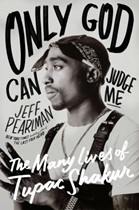
September 13, 2026, will mark thirty years since the death of the actor and rapper Tupac Amaru Shakur (b. Lesane Parish Crooks) (1971-1996). The trial of alleged conspirator Duane Keith “Keefe D” Davis is scheduled for August 2026, and if convicted, Davis faces life in prison. Whether Davis is convicted remains to be seen, but the events on the night of September 7, 1996, at the MGM Hotel and Casino in Las Vegas, remain permanently etched in history. Following a scuffle involving Southside Crip Orlando “Baby Lane” Anderson (1974-1998), Shakur and Death Row Records CEO Marion “Suge” Knight were ambushed by gunfire as their vehicle remained stopped at a traffic light on the Las Vegas strip. I can vividly recall when the news broke of the shooting and the sense of dread felt among fans of the star. And when Hot 97 radio host Angie Martinez announced his death, the dark cloud hovering over the rap music industry seemed to get even darker. Shakur’s short life came to a violent end at the age of twenty-five, yet years later there is much about his life that is misunderstood. I recently reviewed ‘Tupac Shakur: The Authorized Biography‘ by Staci Robinson, which is a thorough account of his life and the trials and tribulations his family endured intensified by the struggles of his mother Afeni Shakur (1947-2016). I strongly recommend that book if you also decide to read Pearlman’s biography. When I saw Pearlman’s book, I decided to see how it holds up to Robinson’s work and what he had to say about Shakur’s life.
The biographies are similar in some respects, but Pearlman takes a slightly different approach at the beginning by revisiting the story behind Shakur’s hit song ‘Brenda’s Got a Baby‘. It is fascinating and provides more context behind Shakur’s decision to write the song after learning about the story while reading the newspaper. Following that trip down memory lane, we dive into the story of Tupac Shakur and his unorthodox life. Pearlman discusses Afeni’s role in the Black Panther Party and trial in New York State Court in which she won an acquittal. Both authors rightly point out that while incarcerate, Afeni becomes pregnant with her first child. And here is where the books diverge. Robinson provides more backstory on Tupac’s biological father Billy Garland while Pearlman mentions him on occasion throughout the book. However, Pearlman focuses slightly more on Carol Jean Crooks (1946-2022), Afeni’s cell mate while incarcerated and Tupac’s godmother. Despite the smaller differences, both books are spot on in the way they present the subject matter. And that is the case for most of the book, but Pearlman dives a little deeper into various aspects of Tupac’s life.
Tupac’s early years are well-documented, and the family’s nomadic lifestyle highlights the ongoing struggles he would have throughout his life, both internally and externally. But what is seen in both books is the lack of a father in the home, something that Shakur said himself was a major reason his life became so complicated. And just when it seems as if the family might find stable footing, they are required to move again. However, the moment when Tupac learns he is being sent to California and forced to leave the Baltimore School of Performing Arts is heartbreaking and I have always wondered what his life would have been like had he remained on the East Coast in better surroundings. The importance the school had during his early teenage years should not be overlooked. It was a transformational period in his life, and the place where he met life-long friends Jada Pinkett Smith and John Cole.
When we think of California, we picture beautiful weather and nice beaches but in Marin City, it was a hard knock life for a kid fresh from Baltimore, Maryland. Despite the dire living conditions and Afeni’s spiraling drug use, the West Coast is where Tupac eventually gets his break in the music industry. The story is interesting and shows how chance encounters can change our lives for good. I also appreciated Pearlman paying homage to the late Shock G (b. Gregory Jacobs) (1963-2021), the leader of Digital Underground and the reason we had the rap star 2Pac. And once Tupac gets his break in the industry, the story moves faster as fame, infamy and tragedy occur. The main components are all there including Interscope Records, his 1994 court case, introduction to Death Row Records, a marriage, and the fateful trip to Las Vegas. Readers familiar with the events will know the main aspect of each, but the author does provide background information of which I was not aware. And while there is no smoking gun regarding his murder, the premise matches what prosecutors will rely on as they attempt to put Keefe D behind bars for good. As I read, I could feel the climactic ending coming and felt chills as Vegas approached. However, Pearlman does a thorough job of showing the multiple sides of Shakur and how these complexities came together for form a young man who was both driven and conflicted. And the eerie premonition of death found in Robinson’s book is also found here. As a result, there is a sense of urgency around everything Shakur does.
I have seen criticism of the book in videos online and some allegations are slightly off based. Pearlman does not slander Shakur, nor does he present a picture of an artist who is without faults. What I found was a biography which shows the many sides of him from an author who both admired the late rapper and recognized his flaws. Shakur himself was always aware of his unhealthy habits and admitted his mistakes. And if you revisit the interview he sat for with Ed Gordon of Black Entertainment Television (“BET”), you can hear him explain how the presence of a father would have changed his life. I often think of Tupac and find it incredible that decades after his death, people still talk about him. But I also find myself angry at the decisions and statements he made which came back to haunt him and cost him his life. I wish he had never traveled to Las Vegas or joined Death Row Records, but the past is done. The films and music he left behind remain symbols of his short but extraordinary life. He was talented, flawed, emotional, rough, impulsive, and intellectual -a mixed bag that touched lives. Behind the facade of a gangster rapper, was a young man carrying heavy burdens from a childhood cursed by struggle and trauma. But his life is also a story of the American way, a system in which you can find fame through arduous work and the right connections. Shakur will also be controversial and his last moments in Las Vegas will remain the subject of conspiracy theories even if Davis is convicted. Regardless of what happens, the fact remains that a young man lost his life in a senseless tragedy and his murder remained unsolved for too many years. That may soon change. This is yet another fascinating look at the life of the late Tupac Amaru Shakur.
ASIN : B0DTKH4BWL
Publisher : Mariner Books, October 21, 2025
 FREETHINKING BIBLIOPHILE