
 On September 6, 1901, President William McKinley (1843-1901) arrived in Buffalo, New York for a Pan-American Exposition. As he made his way through the crowd, a young man stepped forward with a revolver hidden from sight. Once in front of the commander-in-chief, the assailant Leon F. Czolgosz (1873-1901) raised the firearm and squeezed the trigger, mortally wounding McKinley who died on September 14, 1901. The assassin was apprehended by the authorities and became the number one public enemy. But to everyone’s surprise, he was forthright in his reasons for the shooting and showed no signs of psychosis or evidence of being part of any conspiracy to murder the president. The investigation should have been an open and shut case, but it was not. In fact, the murder of William McKinley set off a series of events that changed the United States. Author Eric Rauchway examines the assassination and the fallout which ensued in its wake.
Following Czolgosz’s arrest and confession to intentionally murdering McKinley, he does receive legal counsel. However, while the criminal justice system turned its wheels, America soon realized that it had a new president by the name of Theodore Roosevelt (1858-1919), who would transform America in ways that can still be felt today. The shooting is one part of the narrative with the author also focusing on Roosevelt’s administration and the changes in America. Interestingly, efforts to link the murderer to a foreign conspiracy of anarchists determined to destroy America come up short but highlight the fact that immigration has always been a hotbed issue in the United States. But I did take note of a statement by the assassin regarding his view of Republicans which sent chills down my spine because today, more than one hundred twenty-three years later, similar sentiments about the Republican party persist. And there is the issue of race which centers around the heroic actions of James B. “Jim” Parker (1857-1907), an African American migrant from the South who had fled Jim Crow to live in the North.
The Czolgosz family story is reviewed as well, with statements included from family members who provide background information on their infamous sibling. As I read, I could not find any evidence that the killer had any type of psychological impairment. His defense team was not easily convinced he was sane, and their position opens the discussion about the insanity defense and when it should apply. Until the very end, Czolgosz never changes his story as the trail of the assassin is followed and examined. In Washington, D.C., Roosevelt is busy remaking America into his vision for the future.
Students of American history will appreciate the discussion regarding Roosevelt’s rise and departure from office. His presidency is fascinating but not without its controversies. However, his policies remain examples of “progressive” politics. And this earned him supporters as well as enemies, and one of them attempted to execute a repeat of McKinley’s murder with Roosevelt, the intended victim. The surreal story is contained within, and Roosevelt’s actions following the attempted murder left me speechless. Theodore’s star continued to rise, but his decline was also lurking in the distance. And the succession of the presidency by William H. Taft (1857-1930) eventually guaranteed that Roosevelt would never again claim the fame he once had as president. But “Teddy” was far from done and launched the Progressive Party to gallantly return to Washington. In hindsight we know that things did not turn out as he had hoped but he had already cemented his legacy in American history.
Leon Czolgosz was eventually convicted and sentenced to death, but events post-mortem left me shocked. The disdain for the assassin is understandable, but the animus towards his remains is disturbing. Czolgosz never wavered from his statements as to why he shot McKinley. Whether he was mentally impaired remains to be proven but I do think we will ever see anything to the contrary. He was remorseless and prepared to accept his fate but, in the end, shooting the president did not accomplish any goals he had intended to complete. It did however, pave the way for one of the America’s most memorable presidents. This book is well-researched and well- written, and the author balances the narrative to provide a thorough discussion of the crime, the assassin’s story, Roosvelt’s ascent, and the aftermath as America went through growing pains. If you are interested in the assassination of William McKinley and a transformative period in American history, Rauchway’s book is a good place to start.
ASIN : B000RQ4FTE
Publisher : Hill and Wang; First edition (April 15, 2007)
 On November 25, 1963, my mother prepared to celebrate her birthday, but everyone knew there would be little joy that day. While my mother prepared herself for that day, officials in Washington were making the final adjustments to the funeral of President John F. Kennedy (1917-1963). In Texas, the family of Lee Harvey Oswald (1939-1963) also made their adjustments to his funeral after he was shot and killed while in Dallas Police custody by nightclub owner Jack Rubenstein (1911-1967), known more commonly as Jack Ruby. Over the years, my mother has spoken about that day and has always said that it was the saddest birthday she can recall. The sorrow and tear-streaked faces of those around him are images that have been permanently embedded into my father’s memories that are still intact six decades later. Kennedy’s murder will continue to serve as a topic of debate but what is rarely discussed are his reasons for visiting Dallas and the warnings, he received not to travel to a city known for right-wing activity. Author William Manchester (1922-2004) was asked to author a book covering the Dallas trip from start to finish by former first lady Jacqueline (“Jackie”) Kennedy Onassis (1929-1994). And this account is a thorough explanation the five days in which America experienced the death of a president.
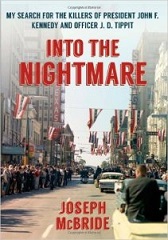 Anyone that was born at least nine years before 1963 can remember with precision where they were the day that John F. Kennedy died. My father remembers it as if it were yesterday and in full detail. And I sense that although he tells me what he does remember, there are so many more things about that day that he is unable to express with words. The violent removal of the president and the change of government that ensued left its mark as one of the darkest days in American history. The ghost of John Kennedy continues to haunt us every November when we remember those tragic days in Dallas. In October, 2017, the government is expected to release a significant number of classified documents relating to the assassination, in particular documents related to the Central Intelligence Agency. The news has given researchers hope that one day we may know the full truth about Kennedy’s murder.
 FREETHINKING BIBLIOPHILE
You must be logged in to post a comment.