

On December 6, 1865, Congress ratified the Thirteenth Amendment to the United States Constitution, which marked the end to slavery and indentured servitude in the United States. President Abraham Lincoln (1809-1865) had approved the version presented before in January of that year but did not live to see it ratified, having been assassinated at Ford’s Theater on April 14, 1865. The ratification of the amendment was a bittersweet vindication of Lincoln and a former slave who became one of America’s strongest voices for abolition. Frederick Douglass (1818-1895) outlived Lincoln by thirty years but remained committed to the goal of equality and an America representative of all its inhabitants. This book is the story of their lives, friendship and the issue of slavery, over which America pulled itself apart.
This book is a not a standard biography of either Lincoln or Douglass, but author Brian Kilmeade does provide enough background information to give readers a solid understanding of their beginnings which stand in stark contrast. Lincoln, who was born free as a White American, was the extreme opposite of Douglass who was born enslaved in Maryland. But as they both matured, America began to go through a metamorphosis and each man would find his calling in pushing the nation forward. However, to appreciate the crossing of their paths in life, Kilmeade moves back and forth between he key events which shaped their views of America and their purposes in life.
Although the book is not a standard biography of either figure, I did find a wealth of information in the book. And for readers who are well read on both, Kilmeade’s narrative can still be of value. While reading the book I could see the importance in the contrast between Douglass and Lincoln setting the stage for future events. And this is a strong aspect of the book. Each man came to detest slavery but through extremely different paths. Lincoln would use the courts and politics, but Douglass’s journey was far more difficult and dangerous and would take him through abolitionist circles which results in the appearance of notable historical figures in the story which heightens the suspense.
Any story regarding Federick Douglass is incomplete without mention of William Lloyd Garrison (1805-1879), a staunch abolitionist and strong influence in Douglass’s life, and the abolitionist John Brown (1800-1859). Each man plays a significant role in the book, and Brown’s story is fascinating on its own. He remains both famous and infamous depending on who you ask. However, we cannot deny the impact of his raid on the Harper’s Ferry federal arsenal in 1859. That event sent shockwaves across the United States and might have been far more deadly if other noted abolitionists had stood behind Brown’s actions. The relationship between Brown and Douglass is a moving part of the story and highlights the difference between conviction and recklessness.
While the abolitionists are fighting the battle against slavery in public, Lincoln comes into his own as a politician with a bright future. His rise to fame in what became the Republican Party is part of the story as well, and what we witness is an odyssey taking place as Lincoln’s views on slavery are challenged and changed. And part of that progression was his relationship with Douglass, which is the crux of the book. As a history lover, I thoroughly enjoyed this part of the story. Of course, we cannot ignore the “elephant in the room” which is the looming American Civil War. The buildup is part of the account, particularly the growing resentment in South Carolina when it becomes clear that Lincoln is the favorite to win the 1860 presidential election. His victory that November was seen as proof by the newly formed Confederate States of America in January 1861 that secession was the only option. And on April 21, 1861, the first shots of the war were fired, sending America into darkness for the next four years. For Douglass and Lincoln, the conflict brought them closer together and saw the end of their friendship.
As the war heats up, both men are watching with uneasiness as Confederate forces prove to be tougher than expected. The Union needed an advantage and here is another crucial part of the story when the subject of black fighting units takes center stage. Ironically, the idea of colored troops caused division as deeply as the war itself. In hindsight we know that the Union eventually formed units of black soldiers who performed equally as courageous as white troops. The saga of the Union’s colored soldiers is captured with grace and respect by the author who has given us a valuable book regarding a dark time in American history. In April 1865, the war comes to a bloody end, but Douglass’s story is not yet finished. And the South was determined to rise again.
Following the war, the story continues with Douglass’s life and the changes he endured as America was altered for better and worse. Reconstruction, Jim Crow, and southern resentment would affect the lives of Black Americans for decades to come. Douglass remained steadfast in the movement for civil rights, but he could not escape father time and makes his departure from the story in 1895. Both men were gone but their legacies were cemented in history. And through books like this we can step back in time to revisit an era when America was at a crossroads with morality, technology, and the very constitution our nation is founded on. There are tragic moments in the book, but it is a story which provides enlightenment, humility and an appreciation for the things we take for granted. Highly recommended.
ASIN : B08Z7RC9N6
Publisher : Sentinel (November 2, 2021)
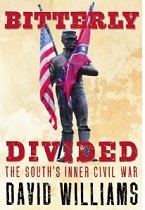 I am consistently amazed at the amount of history related to the American Civil War. The conflict which bitterly divided America, was a moment in which the United States had to reconcile with its dark past and an uncertain future. As a Northerner, the image I had of the Confederacy was generated from films and television. However, the reality of the South was a society divided and plagued with inner turmoil and dysfunction. Author David Williams explores this little-known history of the Confederacy, and the resistance from within to keep the Union together and dismantle the slave-holding elite class in the South.
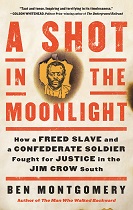 I am consistently amazed at the number of post-Civil War stories I have yet to learn. This book caught my attention, admittedly from the title alone, and it turned out to be an interesting account of an event that could have been lost to history. On the night of January 27, 1897, a mob of men appeared at the home of
  On May 10, 1865, Confederate States of America President
  The more I learn about history, the more I realize how much of it is not taught in schools. I recall learning about the Civil War but in limited discussions. And I fondly remember the 1989 film
 The death of George Floyd (1973-2020) initiated a chain of events that have resulted in a criminal trial and more discussions about race in America. It is a subject that will never go away and many still struggle to confront it with the honesty that is sometimes necessary. I have noticed that when it comes to race in America and the nation’s history, it is almost impossible to grasp the entire picture without factoring in the effect of the American Civil War (1861-1865). The conflict tore the nation apart over several issues, the most important of which was the topic of slavery. Many states in the North had already abolished slavery, but in the South, it remained a way of life. And because it was so critical to the South’s existence, the states that formed the Confederacy were willing to fight to the death to preserve what they felt was their right. Today we know with the benefit of hindsight that it was a lost cause from the start but the battle that ensued was a long and bloody conflict that left thousands dead and others critically wounded. Veterans who survived the conflict were forced to live with horrible memories of war that remained with them until their final days. Among the war’s combatants was the Eighteenth President of the United States and former General
 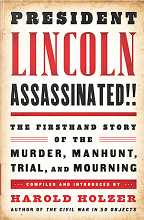 The assassination of President Abraham Lincoln (1809-1865), remains a pivotal moment in American history when the nation was truly at a crossroads. A brutal civil war had just ended and millions of former slaves found themselves unsure of their future post-bondage. The former Confederacy was left in shambles and the Radical Republicans were intent on reconstructing the south in the model of the Union as a whole. Lincoln, was either loved or hated depending on who you asked. In the Confederacy, there was no love lost when he was murdered and as Jefferson Davis (1809-1889) bluntly stated: “Well, General, I don’t know; if it were to be done at all, it were better that it were well done; and if the same had been done to Andy Johnson, the beast, and to Secretary Stanton, the job would then be complete.” Investigators had tried to link Davis to the assassination but the former Confederate leader was never tried or convicted for Lincoln’s murder. The crime cast a dark cloud over the nation and millions of American went into mourning at the loss of the fallen leader. Author Harold Holzer takes us back in time as we re-live the murder and events that followed as they happened in 1865.
 FREETHINKING BIBLIOPHILE
You must be logged in to post a comment.