
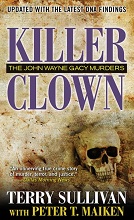
 On December 11, 1978, Robert Jerome Piest (1963-1978) was finishing up his shift at Nisson Pharmacy when an older man approached him with the offer of a job in his contracting company. Piest told his mother Elizabeth that he would only be a few minutes. That was last time anyone saw Robert Piest alive. Police would soon learn that the older gentlemen observed conversing with Piest was a local named John Wayne Gacy (1942-1994), a well-respected but peculiar figure who owned a company named PDM Contractors. Gacy initially denied any knowledge of Piest or his whereabouts that night but detectives felt that he was certainly hiding something. Although he was only a person of interest at that time, none of the detectives could have known then that in only two years, the worst serial killer in American history would be convicted of multiple counts of murder. Terry Sullivan was Supervisor of the Cook County State’s Attorney’s Third District office and here he teamed up with Peter Maiken (1934-2006) to bring us the inside story of the effort to bring John Wayne Gacy to justice.
I believe that it goes without saying but I will say here that readers should use discretion when deciding whether to read this book. The subject is sensitive and anyone who knows even slightest bit of information regarding John Wayne Gacy, knows that the story does not have a happy ending. In fact, it is dark, disturbing and one of the most extreme true crime stories that you will ever read. But that is also what makes it so appealing. However, if you are not able to read descriptions of violent acts that result in death and post-mortem examinations, then you may want to give this book a pass. But if you prefer true crime and have questions about Gacy’s story, then you have essentially hit pay dirt. The book is a good as it gets and from start to finish, and is a roller coaster ride that will leave readers speechless.
Similar to most serial killers, Gacy was described as successful, charming and sociable. His charm is on full display as he engages with a cat and mouse game with the police officers assigned to tail him as a person of interest. Undoubtedly, much of what she says and does if overly flattering but the seductiveness of his charm when turned on is apparent and gives the book an even darker chill as the descriptions of his crimes come to light. In an almost Dr. Jekyll and Mr. Hyde routine, John would be friendly, overly helpful and a town role model but the darker John, cruised the streets at night, turning his city into his hunting grounds in which young men were fair game. And between 1972 and 1978, he engaged in a reign of terror that took the lives of at thirty young men.
The book certainly reads like a true crime story and Sullivan moves us along in chronological order. But it is interesting to see how the officers on the case and the district attorney’s office worked together to develop their file on Gacy, whom they all suspected of being in involved with the disappearance of Robert Piest. However, as we see in the book, authorities had no idea at that time, that Gacy was hiding far darker deeds. As their file grew, detectives began to learn more about Gacy and his criminal past which included a sodomy conviction and prison time at Anamosa State Penitentiary. Detectives began to take note of odd things at Gacy’s house, most importantly personal items that did not belong to him and a rancid odor emanating from the kitchen and bathroom area. After obtaining a second search warrant to search Gacy’s house, detectives and forensic personnel made a grisly discovery that changed American history. Coincidentally, Gacy had paid a visit to his attorneys’ office and what he would tell them left both men shaking. The walls were closing in on Gacy and after he was in custody, the true nature of the horror detectives had uncovered became strikingly real.
It was clear to all involved that Gacy had in fact murdered a staggering amount of people, but detectives were also faced with the task of identifying the remains found and finally solving disappearances that had authorities baffled. And although the crimes are horrific, what is really spine chilling is the casual manner in which Gacy discusses his actions. He recalls each crime as if it was part of his regular routine and no big deal. This alone should remove all doubt as to just how cold and calculating Gacy truly was. At some parts of the book, I found myself staring in disbelief at what I was reading. While I knew of Gacy’s actions, there is a wealth of information that might be new information for some readers. The story is simply mind-blowing and far better than any documentary I have seen.
After Gacy was firmly in custody, prosecutors then had to come up with a strategy to secure a conviction in a court of law. Their case was built around Robert Piest but Gacy faced multiple charges of homicide. And while no one doubted that he had killed, including his own lawyers, the defense’s case rested upon the insanity defense. This is the crux of the legal action and Sullivan shows the opposing points of view between the prosecution’s experts and the defense’s experts. As someone who works in the legal field, I am keenly aware of the important of expert witness testimony and how it can make or break a case. And reading their testimony here, sometimes made the hair on my neck stand up not because of any graphic descriptions but because their words would decide whether Gacy would go to a mental hospital and possibly be released or whether he would meet his maker on death row. Today we have the hindsight of 20/20 vision and know Gacy’s fate. But at that time, there was a good possibility that an insanity defense just might work and Sullivan expresses his concern as he discusses the expert testimony. It is a good analysis of trial procedure in what was unquestionably a high profile case.
Sullivan and his squad of prosecutors eventually prevailed and the final moments in their crusade for justice are captured in the book and show just how much effort went into preparing the case against Gacy. And for prosecutors, securing a sentence of death was the “icing on the cake”. On May 10, 1994, John Gacy was executed at the Stateville Correctional Center, near Joliet, Illinois. But surprisingly, the story was not yet over. In fact, Sullivan provides a discussion on DNA evidence examined in 2011 that brought even more closure to the families of Gacy’s victims. Perhaps we may never know the full number of victims and their locations. Gacy took many secrets with him to the grave but he was wrong about one thing, clowns do not always get away with murder.
ASIN: B00BPVV2T6
 On January 24, 1989, the executioner on Florida State Prison’s stepped forward to exercise his duty in carrying out orders of the state. But this was no ordinary execution. In fact, it was one that no one would ever forget. At 7:16 a.m., Dr. Frank Kilgo declared the prisoner deceased and his announcement provided the conclusion to the final chapter in the life of American serial killer Theodore Robert “Ted” Bundy (1946-1989). During his incarceration, Stephen G. Michaud and Hugh Aynesworth conducted a series of interviews with Bundy in an attempt to understand thoughts and motives, and to clear up mysteries surrounding his crimes. The result is this intimate look at Bundy through the eyes of the authors who came face to face with a killer who is firmly entrenched in the annals of American criminal history.
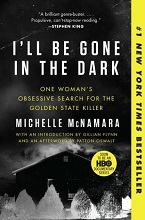 When I started reading this book, I was not sure if I should continue as I felt that the subject matter was darker than even I am used to. But something inside of me said to keep going and listen to what the author is saying. Less than ten minutes into the book, I realized that I would not be putting it down anytime soon. In fact, the book pulled me in so much that I finished it one day. I simply could not get enough of the story. Initially, the book came as a recommendation on Amazon. Like many others, I was aware of other killers in Californian history. The Zodiac? Check. Richard Ramirez? Check. Golden State Killer? I had no clue about this menace who terrorized southern California in the late 1970s and early 1980s. But as I read through the beginning of the book, I soon realized that author Michelle McNamara (1970-2016) was about to take me deep inside the story of the “Original Night Stalker”.
 Compton, California has earned a reputation over the last fifty years as a place where people are tough, life is dangerous and unless you are from there, you stay away. Gangs such as the Bloods and the Crips have proliferated across the city in the wake of the Civil Rights Movement and the dawn of the crack cocaine epidemic in the United States. In what could rightly be described as a civil war, thousands of black men, women and children have died on the streets of Comptom and in Los Angeles county as gang wars escalated. In 1888, the City of Comptom had formed its own police department to patrol city limits and at the time of the deadly gang wars erupted, it was pushed to its limit. Some officers would leave the department for much quieter neighborhoods with lower crime rates. Others would stay until it was disbanded in 2000. Among the two most well-known as respected officers were Tim Brennan and Robert Ladd. The duo have been interviewed numerous times in recent years, expressing their thoughts on Compton, the murder of Tupac Shakur (1971-1996) and his alleged killer Orlando Anderson (1974-1998). However, there is far more to their story than what we have come to learn on screen and here the two join with Lolita Files, whom some may recognize from the A & E multi-part series
  On March 13, 2018, Dr. William Hunter came home to find his eleven-year old son Tom and housekeeper Shirlee Sherman lying in pools of blood after having been brutally murdered by an unknown assailant. Police soon arrived on the scene and detectives began their investigation into two homicides that unnerved the quiet suburban enclave. Five years later on May 14, 2013, doctors Roger and Mary Brumback were shot and killed in their West Omaha home. The brutality of the murders shocked even the most seasoned investigators and left many wondering what how one person could commit such a grisly crime. Detectives Derek Mois and Scott Warner became the lead investigators and continued to examine the two murders, looking for any clues that would lead them to a suspect. A crucial link was soon discovered between the two victims and led investigators to take a closer look at the Department of Pathology at Creighton University.
 In 1974, the feelings of innocence and safety that were pillars of Icelandic society, eroded when two men disappeared and were later presumed dead. The crimes brought home the reality to thousands of Icelanders that even their nation could experience what was believed to only happen in other places such as America. On January 27, 1974, Gudmundur Einarsson disappeared after leaving a nightclub in the area known as Hafnarfjordur. Ten months later, Geirfinnur Einarsson disappeared after receiving a phone call from an unknown caller. He left home in a hurry and his car was later found abandoned by authorities. The bodies of both men have never been found. The cases would have remained cold if not for the arrest of a young couple for embezzlement. Erla Bolladottir and Saevar Ciesielski’s apprehension by police eventually set into motion a chain of events that resulted in the convictions and imprisonment of six people whose names continue to carry the stigma of Iceland’s worst killers. Kristjan Vidar Vidarsson, Tryggvi Runar Leifsson, Albert Klahn Skaftason and Gudjon Skarphedinsson joined Erla and Saevar as defendants in the cases that polarized an entire nation. At first glance, the story seems simple, two kids were caught committing a crime and then confessed to other crimes wherein they implicated previously unknown co-conspirators. But upon closer inspection, many problems arise with the official story and to this day, there are many unanswered questions. Anthony Adeane traveled to and from Iceland for several years conducting research for this book and what is contained in its pages has caused me to take an even deeper look at a case that had already caught my attention.
 In spite of their infamous reputations, there is something about serial killers that compels society to revisit their crimes and re-live what could best be described as nightmares by the families of victims, survivors of the crimes and law enforcement who worked countless hours in their attempts to bring the killers to justice. Netflix recently premiered
  On July 21, 1979, the bodies of fourteen year-old Edward Smith and thirteen year-old Alfred Evans were found in Southwest Atlanta. Both had been murdered and authorities struggled to find a motive for the senseless killings. Over the course of the next two years, more than twenty children, adolescents and adults were found murdered in Atlanta. The homicides were dubbed by the media as the Atlanta Child Murders. Today, the crimes are a distant memory for many Americans but Atlantans will vividly recall the time period in which the primarily African-American areas of the city lived in fear as a killer was on the loose, preying upon young children, teens and adults. Less than forty years ago, a homicidal maniac terrorized the famed Southern Georgia city that served as the home of the 1996 Olympic Games.
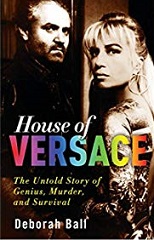 There are some who say that the City of Miami was never he same after Giovanni Maria “Gianni” Versace (1946-1997) was shot and killed on July 15, 1997 by Andrew Cunanan (1969-1997). The world-famous fashion designer had given the city new life with his bold designs, outlandish parties and mansion called the Casa Casuarina. At the time of his death, the Versace name was a juggernaut in the fashion world, dominating news headlines and magazine covers. Tragically, in less than ten seconds, Cunanan changed all of that in ways that no one could have imagined. After Versace’s death, trials and tribulations nearly brought the company to the brink of extinction but today it is still going strong. And its creator is regarded as one fashion’s greatest minds. The story of his death is well-known having been relived through the FX award-winning series
 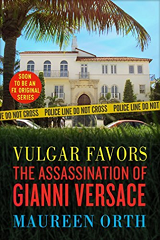 I remember with vivid clarity the day that Giovanni Maria “Gianni” Versace (1946-1997) was shot and killed in front of his home in Miami, Florida. My friends and I were in shock and in the wake of the shooting, we kept hearing the name Andrew Cunanan (1969-1997). None of it made sense but from the news we did learn, Cunanan was a one man crime spree and through fate, he crossed paths with the world-famous fashion designer. Twenty-one years have passed since Versace’s death but the fashion line that bears his name continues to remain strong. Several days after Versace was shot and killed, Cunanan took his own life aboard a houseboat that was eventually seized by the City of Miami. In the days after his death, more information about his erratic and deadly lifestyle came to light and also revealed how law enforcement missed vital clues contributing to what Maureen Orth calls the largest failed manhunt in U.S. history. By all accounts, Cunanan should have been caught long before he walked up to Versace on July 15, 1997. However, miscommunication and in some cases prejudice against homosexuals, resulted in investigations crippled from neglect, allowing Cunanan to remain at large before committing his final murderous act. The world now new the name Andrew Cunanan and it would never be forgotten. But just who was Andrew Cunanan and how did he make the FBI’s Most Wanted List? The list is reserved for the most dangerous of criminals and typically a suspect such as Cunanan would not normally be found on the list. His use of extremedly deadly force rightfully earned him a place among the most deadly killers on the run in America at the time. Maureen Orth, a journalist for Vanity Fair, covered Versace’s murder and was familiar with Cunanan before the final events in Miami. In this chilling account of Cunanan’s path of rage, she recounts his life helping us understand how and why he descended into madness.
 FREETHINKING BIBLIOPHILE
You must be logged in to post a comment.