
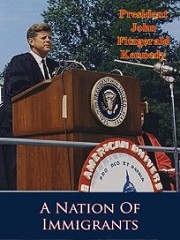
 America is often referred to as the land of opportunity for anyone wishing to start a new life far away from home. Since the days of Amerigo Vespucci, the territory we now call the United States has been a primary destination for world travelers. In recent years, legislation regarding immigration has been an important topic which provokes fierce debate. Every country has its issues with immigration and none has a perfect regarding the same. However America has been the place where millions of immigrants have made a new home. The late John F. Kennedy, formerly the Thirty-Fifth President of the United States, left us with many writings, interviews and speeches before his untimely death in Dallas, Texas. His sharp wit, uncanny foresight and fierce independence catapulted him to the top of the list of Americans whose names live on forever. As the descendants of Irish settlers from Ireland escaping the potato famine, his family came to America in search of a new life. Their journey was long and their assimilation into a new society rough, with prejudice and xenophobia forming substantial obstacles to peace and happiness. Their plight was never forgotten and is told again in this short but engaging book that clarifies his position that America truly is a nation of immigrants.
Today it is hard for many of us to comprehend that the America as we know it is less than three hundred years old. In fact, my hometown of New York City did not come into existence until 1898. The stories of Ellis Island are legend in American history with tales of immigrants from places such as Ireland, Italy, Germany at The Netherlands. But as Kennedy beautifully explains, America owes its diversity to immigrants from all over. He starts off by giving a brief history of the creation of America before going into the influx of newcomers and their cultures and traditions that they introduced to the American experience. As I read the book, I thought to myself that although it was written in 1958 and published posthumously in 1964 after his death, his words are still relevant today. Currently, America finds itself in the midst of a bitter political climate. Immigration remains a hotly contested topic with the lives of millions of people living in the United States at stake. But as we move forward and consider how to approach immigration, it is wise for us to reminder JFK’s words that immigrants are responsible for the building of our country.
One of the tragedies of America’s development, pointed out by Kennedy in the book, is the backlash and discrimination faced by newly arrived immigrants. Every group of people has had to face discrimination fueled by bigotry and xenophobia. Regrettably, those who engage in such acts easily forget that all of our ancestors come from foreign land. Furthermore, the disenfranchisement of the Native Americans, Aborigines and struggle of the African and Hispanic-American and dark periods and a stain on the American conscience. The more I read his words and listen to his speeches, the more I am concerned that they are more important today. And his death on November 22, 1963, is still one of America’s darkest moments. My father who will turn sixty-five this year, still recalls with vivid detail, the day that Kennedy died. And as I listen to him talk, I can feel and see the sense of loss that engulfs him.
St. Augustine remarked that “the world is a book, those who do not travel read only a page”. Truer words have rarely been spoken. For some of us, it is not merely travel, but a completely new change in life requiring moving from the place known as home to a new land thousands of miles away. Those of us who have always lived in once place may find it difficult to appreciate the struggle many face as they try to make a new life in the United States. But as we go about our daily routines and encounter those who are different, it is imperative that we remember this deeply moving compendium and its words by the late John Fitzgerald Kennedy.
ISBN-10: 0061447544
ISBN-13: 978-0061447549
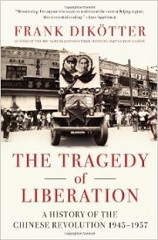 Today, the People’s Republic of China continues to feel the effects of the policies of it most popular leader, the late Mao Zedong (1893-1976). Known as Chairman Mao, his successful campaign against the Nationalist led by Chiang Kai-Shek (1887-1975) set the stage for the founding of the People’s Republic of China on October 1, 1949. Mao ruled the nation until his death on September 9, 1976 at the age of eighty-two. During his tenure he came a controversial figure and is credited with causing millions of deaths through the failed policies of collectivization and the infamous “Great Leap Forward.” The aura of promise and hope that surrounded the commencement of his administration subsided as millions of Chinese endured long periods of poverty and famine while Mao enjoyed unlimited perks through his role as Chairman. Propaganda is a power tool used by the darkest of dictators to enforce their will on the masses of people they wish to control. An official story of triumph supported by an unwavering commitment to the revolution by ordinary men and women, helped cast an illusion of a progressive new China, modeled on its Soviet counterpart. In reality, the story is far different and in some cases, horrific as can been seen in this study of the early years of the Chinese Revolution by Dutch historian Frank Dikötter. (1961-)
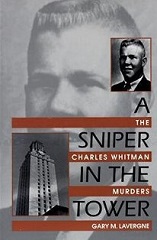 On August 1, 1966, the citizens of Austin, Texas woke up to yet another brutally hot summer day. The heat was typical for the summer season but that day would be remembered for more than just the temperature. At 11:35 a.m., Charles Whitman (1941-1966), a former United States Marine and student at the University of Texas, ascended to the observation deck of the UT Tower and unleashed a deadly shooting assault on suspecting civilians below. In ninety-six minutes, Whitman murdered fourteen people and wounded at least thirty-one before he was shot and killed by responding law enforcement officers Houston McCloy and Ramiro Martinez who were joined by civilian Allen Crum. The shooting left the city shocked and ushered in a new concept in American history; the mass shooting spree.
 More than twenty years have passed since the deaths of rap stars Tupac Shakur and The Notorious B.I.G. (Christopher Wallace). The two rappers were both under thirty years of age and left behind grieving friends and family members who struggled to come to terms with such a sudden and tragic loss. Officially, both murders are still open investigations. Fans of the fallen artists have expressed shock that the murders have remained unsolved for so many years. Theories have been presented surrounding their deaths but no final conclusion had been reached. Following Shakur’s death, his mother Afeni successfully sued Death Row records for control of her son’s master recordings, unpaid earnings and royalties. The parties reached a
 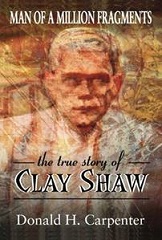 In December, 1991, Warner Brothers pictures released Oliver Stone’s JFK, the film adaptation of the investigation by New Orleans District Attorney Jim Garrison (1921-1922) into the death of President John F. Kennedy. The film is filled with an all-star cast and remains one of Stone’s greatest accomplishments. Reviews of the movie are generally favorable but there are many critics who have voiced their dissatisfaction with the film believing that Stone omitted crucial information and glorified Garrison on screen. The famed director did an incredible job of bringing the past of life and his effort paid off immensely as more records related to President Kennedy’s assassination were released to the public. The actors that took part in the landmark film all did an incredible job in making the story one that will continue to spark curiosity. From history, we know that Lee Harvey Oswald (1939-1963) was the alleged assassin but was murdered himself before he could stand trial. Several years later, Garrison began his own investigation, focusing on what he believed to be a plot in his own City of New Orleans to murder Kennedy. His investigation resulted in the arrest and prosecution of local businessman Clay L. Shaw (1913-1973). The trial became infamous for its absurdity and Shaw was exonerated in March, 1969. Garrison later tried Shaw on the charge of perjury and Shaw subsequently filed a civil suit against Garrison and others for the violations of his civil rights. These matters and others were unresolved at the time of Shaw’s death from lung cancer on August 15, 1974.
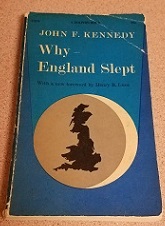 On September 1, 1939, Adolf Hitler’s Third Reich invaded Poland and started the Second World War. In violation of the terms of the Treaty of Versailles, Germany had rearmed itself and under the determination of Hitler, set its eyes upon conquering all of Europe. The looming threat of German domination had been lingering for quite some time before the outbreak of the war. But sadly, many of the nations that would later be opposed to Germany did not think that Hitler would be brazen enough or have the resources to initiate a world conflict. In hindsight, we know that way of thinking was short-sighted and later highly regrettable. The actions of the British government in response to Hitler’s annexation of Czechoslovakia, resulted in the condemnation of Prime Minister Neville Chamberlain and established Germany as a legitimate threat to world peace. The episode has been recalled in history books and documentaries and continues to provoke discussion about how Hitler could have been stopped before his army invaded neighboring Poland.
 FREETHINKING BIBLIOPHILE
You must be logged in to post a comment.