
 The United States and Iran share a long and storied past, defined in moments that changed world history. The removal of Mohammad Mossadegh in 1953, followed by the reinstatement of the Shah and the Iran Hostage Crisis in 1979, set the stage for decades of tension between the two nations. And incredibly, it was under this tension that the administration of U.S. President Barack H. Obama engaged in talks that resulted in the The Joint Comprehensive Plan of Action, simply known as the Iran Nuclear Deal. The deal was both heralded as a landmark achievement and a kowtow of the worst kind. But what many Americans did not know, was that there was far more taking place behind the scenes, including the release of U.S. prisoners held in Iranian jails. Among those prisoners, was American born journalist Jason Rezaian, of The Washington Post. You may remember him from his appearance on Anthony Bourdain’s (1956-2018) hit show No Reservations. The episode was beautifully done and Rezaian and his wife Yeganeh, appear as voices of insight into Iranian culture. At the conclusion of the episode, there is a message on the screen that they both had been taken by Iranian intelligence. The episode is my second favorite, the first is Vietnam in which President Obama makes a surprise appearance and enjoys a meal with Bourdain in Ho Chih Minh City. On January 16, 2016, Rezaian was released was repatriated to the United States. Joining him were his Iranian born wife and his mother who never stopped fighting for her son’s release.
The book came to me as a recommendation from Amazon and I have to say, it was right on the money with this one. I easily recognized Rezaian and was curious to know exactly what did take place during his incarceration. The goods are all here and at times, I had to shake my head at the words and actions of his captors. The Twilight Zone atmosphere, as Rezaian once describes it, is periodically broken by his recollections of his early life and his family’s history. He explains his reasons for leaving America in his early thirties and moving to Iran, the place of his late father’s birth. At first, the book reads like a typical story of a young man who found a home away from home. He meets the love of his life, Yeganeh and the two begin to build their life together as a married couple. But on July 22, 2014, that all changed when they were arrested, blindfolded and transported to the Evin Prison in Tehran.
Authorities are convinced Rezaian is conduction “spionage”, as they call it and have labeled him a master spy who has come to spread revolution in Iran, through the import of “avocados”. At first I could not believe my eyes but the insanity only increases. Interrogators employ endless mind tricks in order to get Rezaian to “cooperate” and “admit” his wrongdoings, even without being able to say for certain what they were. They assure him that they are there to “help”. Rezaian’s sharp wit, adds a level of comedy to the story that lightens the mood and keeps the reader glued to the book, anticipating the next page. But the reality is that the charges were serious, in fact, deadly serious. More than once he is threatened with execution. The jury is still out whether the Iranians ever intended to actually commit such an act or if it was strictly a scare tactic that they knew would have backfired publicly and politically. Their attempts to interrogate him and their obsession with American films and politics, has the effect of turning the affair into a three-ring circus in which Rezaian is the only one with a sane mind. How he kept his sanity, sense or humor and composure, many of us will never truly know. Perhaps it is the human will to survive which at times can be stronger than most would expect. Rezaian admits that he nearly gave in on more than one occasion but the world was rooting for him and the support of his family, in particular his brother, help provide the inspiration he needed to remain stoic and defiant, until he once again walked the streets as a free man.
As to be expected, the Iran Nuclear Deal is a significant back story to the book and integral to his eventual release. As a prison inside Iran, Rezaian was given an insider’s view into Iranian society and the mood in Tehran as its leaders and Washington hammered out an agreement that had been reached with the hope that the two nations could begin open dialogue which could eventually end in peace that has eluded both for nearly forty years. Rezaian discusses the process and the difficulties of reaching an agreement which also included himself and other prisoners. But even he admits that at the time, he had no idea of how many people were at work, doing everything in their power to secure his release and several others. The ending of the book plays out as if Hollywood sent its best writers but this is not fiction. It was a show of diplomatic power at its finest and a story in which the good guy does win.
Sadly, hopes of peace between Iran and America faded with the announcement of President Donald J. Trump that the United States would withdraw from the Iran Nuclear Deal. On May 8, 2018, the withdrawal went into effect and only time will tell what will happen but I sincerely hope that peace does prevail. For Jason Rezaian, peace came in a different form and his freedom from the Evin Prison, has given him an even deeper perspective of where Iran continues to go wrong. He also explains the many areas in which non-Iranians fail in understanding how and why its society operates in the manner that it does. But make no mistake, this is his story and how he survived incarceration in the Islamic Republic of Iran.
ISBN-10: 0062691570
ISBN-13: 978-0062691576
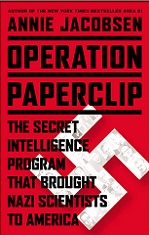 On April 30, 1945, Adolf Hitler fatally shot his wife Eva Braun and then turned the gun on himself as it became evidently clear that allied forces were closing on the führerbunker. The fear of falling into Russian hands and a subsequent trial for war crimes proved to be too much for the top echelon of the Third Reich that remained in Berlin. Many top-ranking officials had previously fled and others had left Germany after realizing that all hope for a victory in the war had been lost. As allied forces move in and occupied the country, the true horrors of the Nazi reign became clear and soldiers were faced with the grim discoveries of concentration camps, emaciated and dead prisoners. The Final Solution had been revealed for the entire world to see. In the aftermath of the war, several hundred Nazi party members were executed by allied forces. Others were acquitted or had their death sentences commuted to long-term imprisonment. Another group consisting of scientists and doctors, found their way to America with the help of the United States Government in what became known as Operation Paperclip. Their story is the focus of this incredible book by author Annie Jacobsen.
 Those of us who have visited the Museum of Modern Art in New York City, can testify to its seduction of visitors with a passion for treasured art. The second floor is home to Campbell’s Soup Cans and Other Works, 1953–1967, a collection of thirty-two pieces by the late Andy Warhol (1928-1987). February 22 will mark thirty-two years since his untimely death at the age of fifty-eight. Art students and museum aficionados have long studied his work as the shining example of the Pop Art movement that swept across the United Kingdom and United States during the 1950s. Warhol undoubtedly became the poster child for the movement with his sleek frame, white wig, large frame glasses and black sweater. His personal life, carefully hidden from the public, became a mystery to those seeking to know just who is and who was the real Andy Warhol? Bob Colacello worked for Warhol on their publication Interview, for twelve years and in this intriguing account of their time together, he reveals the Andy Warhol he knew with all his quirks, ingenuity and fears in life.
 I decided to take a break from the reviews and address a question that I am often asked. “Why do you love to read?”, is the question I am presented with by people who are aware of my passion for books. I could offer a cliché answer but the truth is more intricate than that. I firmly believe that each bookworm, as we are often referred to, has their own personal reasons for reading and the category of material that he/she prefers. Regardless of the reason, their love of books is something that unites us.
 On July 21, 1979, the bodies of fourteen year-old Edward Smith and thirteen year-old Alfred Evans were found in Southwest Atlanta. Both had been murdered and authorities struggled to find a motive for the senseless killings. Over the course of the next two years, more than twenty children, adolescents and adults were found murdered in Atlanta. The homicides were dubbed by the media as the Atlanta Child Murders. Today, the crimes are a distant memory for many Americans but Atlantans will vividly recall the time period in which the primarily African-American areas of the city lived in fear as a killer was on the loose, preying upon young children, teens and adults. Less than forty years ago, a homicidal maniac terrorized the famed Southern Georgia city that served as the home of the 1996 Olympic Games.
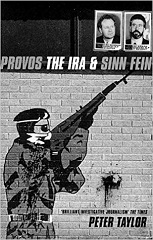 Britain is steadily moving towards the anticipated and dreaded exit from the European Union on March 29, 2019. For Ireland, the move comes with a mix of emotions, including fears of the re-ignition of a conflict that resulted in several thousands deaths over the span of several decades. The IRA has long been recognized as the extreme group responsible for dozens of bombs and acts of terrorism across Norther Ireland and London. But the reality is that many groups were involved in one of the world’s deadliest conflicts. I have been following Brexit since the referendum was held on June 23, 2016. The vote to leave the European Union sent shock waves throughout the world and left many wondering what would happen to both England and Ireland in its wake? I wanted to know more about the conflict in Northern Ireland and decided on this book by author Peter Taylor. And what I found inside its pages, has opened my eyes to a feud that would have dire consequences should it commence again.
 On September 1, 1939, the Second World War began as the German army invaded Poland as part of Adolf Hitler’s quest for world domination. Britain had warned Germany that any military action against Poland would result in England coming to the aid of its ally. Interestingly, Adolf Hitler (1889-1945) did not want to go to war with England, preferring to accomplish the annexation of Poland through diplomatic methods after having successfully partitioned Czechoslovakia in what is infamously referred to as the “appeasement at Munich”. But if Hitler did not want to wage war against Britain, knowing their intention to save Poland, then why did he give approval to the invasion that plunged the world into a major conflict? The answer to that question lies in the story of his Foreign Minister and Nuremberg defendant, Ulrich Friedrich Wilhelm Joachim von Ribbentrop (1893-1946).
 FREETHINKING BIBLIOPHILE
You must be logged in to post a comment.