
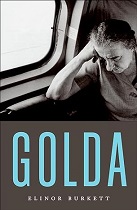
On May 14, 1948, David Ben-Gurion (1886-1973) beamed triumphantly as the State of Israel was formally created. The nation’s first prime minister delivered the declaration of independence in Tel Aviv as the world watched. The establishment of a Jewish nation in the wake of World War II became a pivotal moment in world history. One of the signatories to the declaration was Golda Meir (1898-1978), who later became the first female prime minister of the country. The occasion was monumental but the alarm bells soon started to ring as tensions with the Arab world intensified. In public, Meir presented a stern face and immovable character as she championed Israel’s future. But in private, her life was vastly different and rife with personal struggle. It is a stunning contradiction of the woman who carried the torch as she led Israel. This is her story as told by author Elinor Burkett.
I recognize that due to current events, matters regarding Israel, the Palestinian people and the Gaza Strip are disheartening and controversial. If you are a staunch supporter of the Palestinian people, this book may not be for you. However, I can say after finishing the book that Meir was not oblivious to the plight of Palestinians and had foresight that could have prevented future bloodshed. But hindsight is always perfect vision and there is more to her story than the events on the world stage. Her story begins in Ukraine as the Meyerson family is forced to leave due to persecution of Jews. They emigrate to American settling down in in Milwaukee and soon learn the ways of the Midwest. But Golda is not one to stay put and in her late teens, leaves for Denver, Colorado to live with her sister Sheyna (1889-1972). And it is apparent early in the book that she is unlike any of her peers or her family members. Golda’s stubborn independence would carry her throughout her life as she rose through the ranks in the Israeli government. But first shefound a significant other.
In 1917, Golda married her husband Morris (1893-1951), who agreed to relocate to Palestine in order to have her hand in marriage. However, that did not help their relationship, and this is one of the saddest aspects of her story. It also made me question her extreme commitment to Israel’s cause. Surely, the creation of the Jewish state was important but was it worth the personal sacrifices she made? Morris comes and goes in the story, constantly trying to reconnect with his wife. His efforts are futile but after his death, Golda never remarried nor did she ever forget him. The couple bring two children into world, Menahem (1924-2014) and Sarah (1926-2010). And like their father, they too would not have the relationship they desired with their mother who was always away working for the Israeli cause. Golda was not ignorant of the fact that her children felt neglected and on occasion in the story, she tries to mend fences. There is no doubt she cared for them, but the lack of quality time and guidance is vividly apparent. She even seeks affection outside the home, and those relationships proved to be just as problematic.
While away from home, Golda is hard at work as we see in the book and seems to never run out of steam as she campaigns for the cause. However, she was suffering in private, and health issues arise. They are compounded by a poor diet and a steady stream of cigarettes. But Golda never slows downs, even in the face of sexism which became an issue as she became the favorite for the prime minister role. And in 1956, anyone who doubted her was forever silenced when she became the first female prime minister. Her work was far from done, and this is where the story changes gears as the threats from Arab nations increase. War eventually breaks out placing Israel in a fight for its existence. Domestically, the issues of territory and displacement of Palestinians also arise and Golda’s views on both are likely to surprise some readers. She was keenly aware of what was happening to the Middle East but hardliners within her own government proved to be quite a challenge. But those domestic issues were forced to take a backseat when the Yom Kippur War ignited in 1973. The author provides a good recap of actions behind the scenes highlighting what was at stake. Further, Israel’s relationship with the United States factors into play as Golda does her best to influence America’s president Richard M. Nixon (1913-1994).
Israel survived the war, but Golda’s career did not fare as well. We follow her in private as she contemplates her decisions, the broken relationships in her life and mortality. The “Iron Lady” had proven to be a capable leader but the role took a heavy toll on her life. And it is this side of the story which is the most heartbreaking as her physical decline becomes apparent. Yet she never asks for pity and keeps going when possible. She accomplished what was thought to be unthinkable for a woman but that came with a steep price. Her passion, drive and willingness to make tough decisions are all on display. Quotes by Golda herself provide further insight to her character and her personal issues which she was unable to conquer.
On December 8, 1978, Golda lost a twelve-year battle with lymphoma and was laid to rest in Mount Herzel, leaving behind a complicated yet history changing legacy that is relevant to this day. If you are looking for a biography of Golda Meir that shows both sides of the public figure, this is a good place to start.
No matter how anyone else, now or then, measured her life, Golda had an unwavering standard for herself: “I can honestly say that I was never affected by the question of the success of an undertaking. If I felt it was the right thing to do, I was for it regardless of the possible outcome.”
ASIN : B0017ZMZ0U
 FREETHINKING BIBLIOPHILE