The Andy Warhol Diaries – Andy Warhol and Pat Hackett

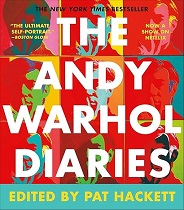
This statement may be bold, but there will never be another Andrew Warhola (1928-1987), known to the world as Andy Warhol. The undisputed king of pop art remains an iconic figure, vividly remembered for his bright colored wigs, thin frame, and soft-spoken nature. He seemed to be everywhere and knew everyone and was firmly entrenched in popular social circles. But behind the fame, there was a different Andy, misunderstood and overlooked. Several years before his death, Warhol asked his close friend Pat Hackett to help in transcribing his personal diaries. The pages totaled over twenty thousand but were condensed by Hackett into a final product suitable for publishing. This Kindle version is condensed slightly further but it is still an impressive eight-hundred forty-two pages which cover the years 1976 to 1987. Warhol died on February 22, 1987, following surgery to have his gallbladder removed, which explains the abrupt ending of the diaries. However, there is more than enough material in the book to satisfy Warhol fans.

The book is not a biography at all. Warhol does mention family members but only regarding the day’s diary entry. This is a collection of daily observations about work, friends, the New York City nightlife, and his inner struggles. If you watched the Netflix series ‘The Andy Warhol Diaries’, then this book will feel like closure. I watched the docuseries and thought it was one of the best Netflix has released. Of course, the producers could have added more material because Andy’s life was a non-stop show which reached a heartbreaking conclusion. But surprisingly, in the diaries, Andy himself is not the over-the-top eccentric character you might expect. In fact, those around him steal the show and what Andy recorded is nothing short of wild. His diaries also confirm that the lifestyles of the rich and famous are sometimes out of control.

As the diaries progress, we become familiar with Andy’s social circle which consist of fashion designer Halston (1932-1990) and boyfriend Victor Hugo (1948-1994), author Truman Capote (1924-1984), rockstar Mick and wife Bianca Jagger, fashion columnist Diane Vreeland (1903-1989), Interview editor Bob Colacello, and fashion designer Diane von Furstenberg. I did notice that Jed Johnson (1948-1996) is rarely mentioned. Johnson’s role as an employee at Warhol’s Union Square office and love interest following the 1968 shooting of Andy by Valerie Solanis (1936-1988) that nearly killed him, naturally gave me the expectation to read more about his life with Warhol. However, that is not the case here. Jed is mentioned but in passing, and the most significant entry is when he moves out of their place in December 1980. Understandably, the end of their relationship was difficult for Warhol and whether he omitted Johnson intentionally or whether Hackett left those pages out at his request I do not know. Jed is discussed extensively in the Netflix docuseries.

Readers will notice that early in the day, the diary entries are mundane but as night falls, and New York City comes to life, the entries heat up as the gang meets up for nights of mayhem with the famed Studio 54 being their home base. The entries are unreal, and yes, there are copious amounts of drugs, alcohol, and debauchery. Frankly, if you know anything about Warhol and his crew, then the diaries are everything you expect. Some are more extreme than others, but each has his or her own set of problems making the narrative more intriguing. Andy’s observations are revealing and humorous. They were stars but as we see, their personal lives were all over the place. Andy’s diaries reveal the human side of people known to the public through a carefully crafted image. The veil is lifted here to reveal their fears, anger, concerns, and moments of reflection. But of all the people he discussed, Victor Hugo stands out as the most outrageous rascal of the bunch. He was an exciting, daring, obscene yet tragic figure whose own story is a discussion for another time.

After Jed moves out, Andy finds himself in a sunken place, but he finds a new crush in Paramount movie executive Jon Gould (1953-1986). There is not much of a story here except for random entries by Andy discussing their phone calls, infrequent times together and where their relationship was going. However, Andy does say that Gould had asked him to be kept out of the diaries, and that may be the explanation for the lack of material. But this results in more confusion about the nature of their relationship which seems to have been asexual. And when Gould becomes the latest victim to a deadly new virus spreading among gay men, the wedge between them began to grow.

As Andy details his daily routine, travels abroad and escapades at night, we also see that he fears the virus originally termed the “gay cancer”. Warhol did not contract the virus himself due to his lack of sexual activity. In fact, in one diary entry, he flatly states that he “does not do anything”. He was idle but the virus was all around him and after Gould’s admission to New York Hospital in 1984 for pneumonia, Andy gave instructions to his housekeeper which are explained in the diary, which highlights his fear of the mysterious virus. While I read of the demise of close friends and famous stars who had contracted HIV, I found myself transported back in time to re-live the shock I had when the news broke of those stories. It was a dark time, and no one who lived through the 1980s will ever forget the shock of HIV and AIDS. Andy was spared HIV, but he had his own health battles which rise to the surface in the book. His notorious gallbladder, which resulted in that fateful surgery in February 1987, was not a sudden illness. There are multiple diary entries in which he discusses the problem and his diet, which was not very friendly towards it. And his alcohol consumption only added fuel to the fire. Warhol was aware of this and pokes fun at himself and acknowledges when he is falling short of where he should be. And despite his fame, endless list of friends and acquaintances, intimacy was missing. Had he lived, would Andy have found true love? We will never know.

These diaries are a roller coaster ride and a trip down memory lane. The book is full of guest appearances and steps back in time to the 1980s art scene where young ambitious creators such as Keith Haring (1958-1990) and Jean-Michel Basquiat (1960-1988) were making their names known. Andy talks about both, with strong focus on his relationship with Jean-Michel whose drug use was an issue for many years prior to his sudden death. I did notice the affinity Warhol had for Basquiat’s mother and her island cuisine. Readers interested in the lives of both will enjoy Brad Gooch’s ‘Radiant: The Life and Line of Keith Haring‘ and Phoebe Hoban’s ‘Basquiat: A Quick Killing in Art‘. Here they each play a part in Andy’s life, along with the others who compose the cast of characters entrenched in the world of Andy Warhol. Colacello also wrote about his time with Andy in ‘Holy Terror: Andy Warhol Up Close. Andy’s notes and comments force us to confront the realities of fame, tragedy, race, creativity, and mortality. Warhol was brilliant at watching and creating, and social media would have been heaven on earth for him. For us older readers, these diaries are the old school version of today’s platforms known as Facebook, Instagram, and Twitter. Andy Warhol was one of a kind. This book is far from short, but if you want to know more about Andy Warhol and the people in his world, this is highly recommended.

ASIN ‏ : ‎ B002WAUVQ4
Publisher ‏ : ‎ Grand Central Publishing (November 11, 2009)

Perón – Joseph A. Page

peronAn old friend once said to me that in Argentina “it is rare for a non-Peronist president to finish a full term”. The remarked surprised me at first but then I thought of the late Juan Domingo Perón (1895-1974) who served as Argentina’s president three times. His final term was short-lived due to his death on July 1, 1974, in Buenos Aires. Today the country is under the leadership of Javier Milei who famously raised a chainsaw on the campaign trail as he promised to slash government spending. Time will tell if Milei’s approach is the right course, but no leader can move Argentina forward without acknowledging the influence of Perón. This biography was on the list of recommendations I regularly receive and immediately caught my attention. And what I found is a well-researched, well-written and engaging account of Perón’s life and the turbulent political history of Argentina. 
During one of my visits to Argentina, I had the opportunity to witness a discussion regarding Perón’s legacy. The participants were people I met through a mutual friend and had come over for dinner. The conversation quickly grew tense with both sides digging into their respective positions. As the only American in the group, I realized that it was imperative for me to listen and refrain from speaking. I was in their country and needed to hear their history as they knew it. And I saw firsthand how Perón had shaped the lives and minds of Argentines decades after his passing. Of course, the discussion was far from the final analysis on the legacy of Juan Perón. But it did provide me with crucial insight, and I relied on those memories as I began to read this definitive biography. 

Although I strongly recommend some research into Perón’s presidency beforehand, it is not required to enjoy this book. The author provides a discussion of Argentine history which readers will find fascinating. Included in the discussion is the election of Hipólito Yrigoyen (1852-1933), who famously became known as “the father of the poor” and the first democratically elected president. As the story moves forward, we are introduced to the Perón family and patriarch Mario Tomás Perón. The story is typical of South America at that time but when Juan decides on a military career over medicine or law, his life and that of Argentines was destined for change. There is nothing about military career which stands out in the book, but he did find time for love and walks down the aisle with Aurelia Tizón (1908-1938) in 1929. Their union is happy but short-lived, and her death serves as an eerie premonition for what would later come in 1952. 

Perón moves through the ranks steadily but before he reaches the pinnacle, the world is forced to confront the growing Nazi threat from the Third Reich in Berlin. The outbreak of World War II set the world ablaze, but it also placed Argentina in a difficult position. The information contained here is crucial for it explains the long and difficult path Argentina and America have traveled together. Neutrality, escaping Nazi leaders and the looming Cold War stirred tensions between the two nations. Page provides a wealth of information to provide the reader with a thorough picture of what happened and why. Further, the impact of former U.S. Ambassador to Argentina Spruille Braden (1894-1978) cannot be overlooked. His battles with Perón are a significant aspect of the relationship between Washington, D.C. and Buenos Aires. 

In 1945, both Germany and Japan surrendered ending World War II. On the domestic front, Perón’s had ascended to the leadership position of the nation and his changes once again when Maria Eva Duarte de Perón (1919-1952) enters the story and becomes the most popular First Lady in Argentina’s history. On her own, Eva Perón is a fascinating figure, and there are books, a play, and a movie about her life. However, the focus here is on Juan and his rise to power. We do learn about their private life, and the dedication Eva had for him. Although it is not clear when she developed the condition that claimed her life, there are clues in the story. But what is definite is that both Juan and Eva both knew that something was terribly wrong with her health. The author explains the developing tragedy with the right amount of tact, making sure to keep Juan as the focus of the book but giving enough attention to Eva’s struggles with her own mortality. Readers who want to know more about her life will find ‘Evita: The Real Life of Eva Perón ‘ by Nicholas Fraser and Marysa Navarro to be a fair starting point. We can see that the end is coming and the final scene in her life plays out as one would expect, devastating Juan and the nation. But there is more to her death and the movement of her casket post-mortem between multiple countries is a surreal and nightmarish story on its own as readers will learn. 

Though in mourning, Juan’s problems were only beginning, and domestic tensions continue to brew. The buildup of the opposition forces to Perón’s reign is captivating, and the stage is soon set for his exile which lasted an overwhelming seventeen years. His defiance and exodus play out like a major motion picture with suspense, tragedy and emotions running rampant. But what Argentines could not have known was that Perón would come back and take control of the country. His time in exile is equally fascinating, and we follow him through South America, the Caribbean, and Spain where he established long-term residency. In each country, Perón is a guest but also witness to history as coups and political violent take place time after time necessitating a quick exit by the former Argentine president. Students of Latin American history will find this section of the book to be intriguing and Venezuela stands out due to current day events. 

Perón’s time in Spain is uneventful, however he soon finds third wife Isabel Martínez de Perón, who is still alive today. Their marriage provided Juan with a boost in image which had been severely damaged through the scandal involving teenager Nelly Rivas (1939-2012). Perón denied any improper behavior regarding their relationship but as shown in the book, there was more to the story. You can be the judge. Isabel’s entry in the picture sealed any hope of Rivas finding her way to Juan and the “Conductor” as Perón was informally known, set his sights on his native land and the throne he once claimed. And thus, the stage is soon set for his triumphant return to Argentina. But before I go further, it is necessary to mention a figure in the story whose name is still obscure. When I read of José López Rega (1916-1989) I could not recall any information I had previously come across to explain his role. However, Page solves that issue and Rega’s involvement in the life of Juan and Isabel is both mystifying and absurd. He was a character out of central casting, but his influence could not be denied. His rise and fall are covered here and provide an interesting and unbelievable sub-story to the main narrative. 

The return of Perón to Argentina plays out as readers will expect, with flair and drama. But what is more important are the incidents which took place preceding his return and allowed for his next presidency. Anyone who knows Argentine politics will understand the short-lived tenures of numerous presidents and military rule to stabilize the country. Page does not go into the “disappeared” which is a dark and unsettling time in Argentina’s history. But as someone who has visited the country, those who were taken in the 1970s never to be seen again have not been forgotten, and the era continues to haunt the nation. The downfall of presidents, military actions and vitriol used by political candidates provides a roller coaster ride that the author takes us through. The story is surreal at times but also a reminder of the fragility of democracy. Argentines who lived through these times have stories they can tell you, and the emotion with which they speak will say more than their words. 

After making his return to Argentina and the presidency, Perón’s life moves toward its conclusion as his health issues become more frequent and serious in nature. Curiously, the Central Intelligence Agency had been keeping reports on the matter and their findings are included in the story. It will be clear to readers that the end is coming and that Perón is slipping away. And on July 1, 1974, the finale plays out bringing the conductor’s life to an end. However, stepping in to fill the void is wife Isabel who becomes the next president. Her time in office is short-lived and a coup forces her into exile as well marking the end of the Perón presidency. And like a house of cards, those close to him fall out of favor and make their exit from the stage. Perón was gone but Argentina was nowhere close to a strong democracy and would go through political and social unrest more than once which threatened to turn the country on its head. Today Argentina is once again at a crossroads but hopefully this is the right turn to move forward and put the errors of the past to rest. If you want to know about Juan Perón, the charismatic yet unorthodox former leader of Argentina, this is must-read. 

ASIN ‏ : ‎ B0BWRJ1Z69
Publisher ‏ : ‎ Open Road Media (April 4, 2023)

John Quincy Adams – Harlow Giles Unger

quincy

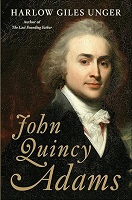
Every time I visit New England, I am amazed at the amount of history one can discover. My trips to Vermont, New Hampshire, Rhode Island, Maine, and Massachusetts have all left a mark as I learned more about the country in which I was born. However, there is still American history I have to learn, and when I saw this biography of former President John Quincy Adams (1767-1848), my curiosity piqued and I knew I had to read it. And what I found is a story every American should know, and we have author Harlow Giles Unger to thank for this remarkable biography of a president who is underrated.

Before starting the book, I was aware of Quincy’s time in office but my knowledge of his personal life and contributions to America’s development was in insufficient. I felt as if I was reading about him for the first time, which deepened my interest and enhanced my shock as I learned of his incredible life. The story begins in Braintree, Massachusetts in July 1767, when Quincy as he is known, is born to John Adams (1735-1826) and wife Abigail (1744-1818). His father served as the nation’s second president and was instrumental in his son’s personal life and political career. I noticed early in the story that Quincy had a strong bond with his parents which proved to be the foundation he needed throughout his journey. But the family was fiercely committed to education and self-improvement, themes which remained with Quincy for life.

Unger’s writing style kept me glued to the pages from beginning to end, and the narrative has an exceptionally smooth flow which maintains a steady pace as Quincy’s life moves forward. Within the first ten years of life, resistance against Britain intensified and culminated with the American Revolution for independence. The conflict, discussed in the book and witnessed by Quincy, had a profound impact on him. Although he was too young to fight the British, he witnessed the importance of independence and sacrifices by patriots resisting British rule. As he ages, the story shifts gears when he attempts to gain admission to Harvard. The saga surrounding his admission is interesting and resembles modern-day anxiety and struggles by students seeking entry into ivy-league institutions. In hindsight, we know he eventually did gain admission, and went on to complete law school. However, the legal field was not all it was thought to be but everything in the book changes when he is selected for government service by President George Washington (1732-1799).

Washington’s offer to Quincy to become America’s Minister to Holland, comes as a surprise but with the urging of his father, he accepts and embarks on a European journey that changes his life permanently. And while America had gained its independence, Europe was still embroiled in revolution and chaos. The unrest across the continent takes center stage, in particular France during the reign of King Louis XVI (1754-1793), who was overthrown and beheaded in 1793. Several years later, another ruler ascends to the throne and forces the world to recognize the name of Napoleon Bonaparte (1769-1821). He also appears later in the story as the United States expands to the south and west across North America. But there is another component to France’s story in the form of its raging war against England. I could not stop reading as the crisis plays out and challenges America’s foreign policy. What transpires is an eerie premonition of future events in which France requested United States involvement. There is also the issue of the British who have not forgotten the loss if England’s thirteen colonies. Their acts of aggression and the American response show how close we came to war with Britain for a second time.

During the period of 1974 to 1817, Adams traveled around Europe through government positions, and the details of each are too extensive to discuss here. The details are in the book and the stories are fascinating. He developed a lifetime of experience at a very young age but also found time for love which resulted in his marriage to Louisa Catherine Johnson (1775-1852) on July 26, 1797.  Their story is wholesome but the personal tragedies within the Adams family are heartbreaking. It seems for every success there was an equal tragedy which Quincy and Louisa are forced to confront. There are also issues within her family as well, emanating from her father Joshua who causes grief and chaos through his own financial failures. But destiny was waiting for Quincy and his return home in 1817 proved to be the change he needed.

In 1817, President James Monroe (1758-1831) chose Quincy to be his Secretary of State. This decision had monumental ramifications for Adams personally and the political landscape of America. His effectiveness  did not go unnoticed, and history buffs will instantly think of the Monroe Doctrine, which is discussed by the author. Quincy’s star continues to rise and rumors about a presidential campaign soon begin. Curiously, Louisa is not at all thrilled by Washington, and the description of the city by Unger leaves much to be desired. The physical state of Washington seems unthinkable today, but in the 1800s, it was the reality. In 1825, fate intervened, placing Adams in the White House for a single term. And instantly, opponents and opportunists move behind the scenes to secure their own political ambitions. It becomes clear that politics was never for the faint of the heart. The actions of Henry Clay (1777-1852) and John C. Calhoun (1782-1850) are questionable to say the least.

dams’ tenure in the White House is uneventful but opposing forces soon begin to form, throwing their weight behind Andrew Jackson (1767-1845). And it is here that we see the groundwork for the two political parties which dominate American politics today. Jackson is a controversial figure, and Adams was no fan. In fact, his comments about Jackson are similar to others who could not envision the “rascal” or “illiterate” in the White House. But that is exactly what happened. Quincy took his loss in stride but was far from finished with politics. And as a member of the House of Representatives he made his voice loud and clear as he argued for causes which lacked popular support.  I found this part of his story incredibly interesting and as it continues, Adams becomes more outspoken about his convictions which provoke censorship. His anti-slavery stance drew the wrath of pro-slavery congressmen and highlights the hotly contested matter of human bondage.

The outspoken congressman was forcing America to examine its moral fabric, and this won him more support than opposition. And as a gift from above, he finds himself involved in a legal case involving the Portuguese vessel Amistad, manned by slave hunters who had kidnapped Africans from Sierra Leone for transport to Cuba. Mutiny occurred and when it was over, the captain and crew lay dead. The slaves were arrested and sent ashore to the United States where they were tried in court. Adams takes up their defense and his legal training kicks into a high gear as he puts on a master class in what is known as oral argument in the legal field. Today it may absurd that a legal argument over kidnapped human beings was needed, but in 1839, slavery was both legal and encourage in parts of the world. The case and its conclusion cemented his legacy as a champion of human rights.

Behind the scenes, Quincy and Louisa go through their trials and tribulations with brief periods of distance. But she knew she could not keep him down. By January 1848, his health had significantly declined, but staying home was not an option. On February 23, he made his way to the Capitol as usual, but this day would not end like the others. In fact, what happened during the afternoon session left me speechless. But after reading the book, I could not see Adams departing any other way. He lived and died for the success and progression of the United States of America. Today he would be called “liberal” and “progressive” but in his time he was an advocate for the things we still debate today.  The amount of research required for this book could only have been staggering. The author’s beautifully compiled narrative is seductive from start to finish, and at no point in the book did I lose interest. I could not put it down and found myself eager to read more regardless of the time or location. If you are in search of a delightful book about an outstanding leader in America’s past, this is strongly recommended.

“It is of no use to discover our own faults and infirmities unless the discovery prompts up to amendment.”-  John Quincy Adams

ASIN ‏ : ‎ B008EMEH5A
Publisher ‏ : ‎ Da Capo Press (September 4, 2012)

The Assassination of Maurice Bishop – Godfrey P. Smith

Maurice

The 1980s was a decade unlike any other, both positive and negative. Hollywood had reached its pinnacle with movies that became eternal classics, the Soviet Union began its decline, NASA experienced a tragedy that haunts us today, and change was rapidly occurring around the world. The Caribbean island of Grenada had a population of less than 100,000 people in the month of October 1983. It is seen as a small island. But on October 19, 1983, that island made news around the world when the leader of the ruling New Jewel Movement (“NJM”), Maurice Rupert Bishop (1944-1984) was assassinated along with several others in a violent coup which plunged the country in chaos and resulted in the deployment of United States Marines by United States President Ronald Reagan (1911-2004). The involvement of American troops has overshadowed the events leading up to the events on October 19. But in order to understand Bishop’s downfall and its aftermath, a discussion regarding the events leading up to the tragedy is necessary. Godfrey Smith, a Belizean journalist, revisits the death of Bishop and the political climate in Grenada, in this book which is both informative and chilling.

Godfrey’s book is less than two hundred pages, but its contents tell a story that gave me a new perspective on the events in Grenada during that time. From the beginning, there is a dark omen over the story due to a meeting of the Central Committee which would have extensive ramifications. However, the subject of the meeting does not appear at first to be something that should have resulted in the death of Bishop and others. But a sad reality is that power is seductive and it corrupts. In the meeting of the Central Committee it is suggested that Bishop shares the duties of leader with Bernard Coard, second in command. The meeting expands into criticism of Bishop’s ruling style, but the matter is put on hold as Bishop wants to think about the party’s future and obtain Coard’s input. Coard was not present, and the talking is done by others. But this meeting would set into motion a chain of events that brought Grenada to the brink of anarchy.

Before we reach the fallout in October 1983, Godfrey provides a short biography of Bishop’s life and his rise in politics. It is a fascinating story, and easy to see why Bishop became the people’s favorite. However, he had his demons like other leaders. We learn of Bishop’s nonchalant manner in handling party issues, and his philandering which became an issue as his personal life became more complicated. His weaknesses provided the pretext needed for subordinates to usurp his authority. But they were not serious enough for death. The question that arises in what happened that caused the Central Committee to remove Bishop by force? The answer partly lies in a trip abroad that should have been routine.

The NJM had established itself as a left-wing government. Further, it had formed closed relations with Caribbean neighbor Cuba through its President Fidel Castro (1926-2016). This should come as no surprise because the NJM was based on Marxist-Leninist ideals and naturally aligned itself with nations founded on similar principles. But Washington was watching closely, and Bishop’s growing ties to Castro did not go unnoticed at home. In fact, as we see in the story, it backfired with deadly consequences. It also raised the issue of how much influence Cuba should have in Grenada’s affairs. Internally, Bishop’s avoidance of the bi-lateral power sharing agreement, planted the seeds of doubt in the minds of people who believed he needed to be removed. The fear of a tyrant was fresh in their minds due to the removal of a former president whose name is rarely mentioned in world history.

As a backstory to the fallout between Bishop and party leaders, we learn of the toppling of Prime Minister Eric Gairy (1922-1997) who was viewed as a dictator. For readers unaware of Gairy’s reign, this is a good primer. Of course, the full story is far more detailed, but for the purposes of this book, the amount of information is sufficient to set the stage for Bishop’s future battle within his own party. His trip abroad which included a visit to Cuba, set the stage for the conspirators to enact their plan. And when the party does meet with Bishop who is reluctant to change the power structure, we see the writing on the wall. A secret meeting without his knowledge proves to be a warning that something was not right. The moment we are waiting for eventually comes when Bishop and others are detained. But the conspirators did not anticipate that the people of Grenada loved Bishop and would not tolerate his incarceration on trumped up charges.

When the people learn that Bishop has been arrested, all hell breaks loose in Grenada. He is eventually freed and retreats to Fort Rupert along with the other officials unjustly detained. At first it seems as if Bishop will prevail, but this location would prove to be a scene of horrific events that are haunting. I must warn readers that the decision to seize the fort and capture its occupants is graphic. Frankly, it was nothing short of murder. As I read, I felt a sense of loss at Bishop’s death and how callous his executioners were in ending the lives of Grenadian officials. It is by far, the darkest moment in the book and I can only imagine the grief felt by Grenadians on that day. In Cuba, Castro was following the events, and his prophetic warning about U.S. involvement was about to come true.

The deployment of U.S. Marines has been labeled an “invasion”. It is true that battles did occur between the U.S. military and Grenadian army, but order was restored, and the October 17 group consisting of those who led the coup against Bishop received their comeuppance for what happened. The author explains the result of the arrival of U.S. troops and trials of conspirators. Today, those who survived their prison sentences are still alive, but they carry with them the memories of October 19, and the insanity which occurred. Bishop’s demise was tragic, and its impact was significant. It is further complicated by the controversy surrounding his grave which has no marker. Readers who find this book enjoyable, should take a look at a Washington Post podcast called ‘The Empty Grave of Comrade Bishop‘ by host Martine Powers. It is a fascination series of episodes which take a deep dive into the life of Maurich Bishop and the island of Grenada.

ASIN ‏ : ‎ B08JF29K7G
Publisher ‏ : ‎ Ian Randle Publishers (September 16, 2020)

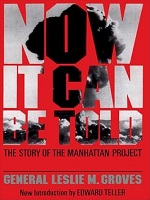
Now It Can Be Told: The Story of the Manhattan Project – General Leslie R. Groves

grovesOn May 8, 1945, Allied forces celebrated Victory in Europe Day (V-E Day) marking the surrender of the German armed forces in World War II. In the Pacific, the war against Japan continued to rage forcing Allied commanders to face the grim reality of a ground invasion which became the basis of the proposed Operation Downfall. The invasion would have resulted in a large number of casualties on both sides but ending the war was priority number one. Unbeknownst to troops in the field, Washington had been working diligently on a new weapon that had the potential to end the war. On August 9, 1945, the United States Air Force executed a mission which dropped the atomic bomb named “Little Boy” on Hiroshima, Japan. Three days later on August 9, “Fat Man” was dropped on Nagasaki. The impact was devastating and on August 15, 1945, Japan surrendered, bringing World War II to an end. For those who worked on the Manhattan Project, the success of the bombs was both a blessing and a curse. But no one could deny the hard work and dedication which turned the project from a vision into a reality. And here to explain how it came into existence and succeeded is Gen. Leslie R. Groves (1896-1970), the man in charge.

If you have seen the film ‘Oppenheimer‘ starring Cillian Murphy as the famed scientist, you will recall Groves who is played by Matt Damon. The film was a hit and the type of production we have to expect from director/filmmaker Christopher Nolan and brilliantly captured the suspense and uncertainty surrounding the creation and testing of the bomb. And although the film does not portray the events which conclude World War II, it brought the past to life as the American military and scientists found themselves in a race against time. Groves wrote this book in 1962 ,and the Kindle version was republished in 2009. The story of the project is far more complete today, but Groves’ account is still a fascinating look into the magnitude of the project and secrecy required to ensure its success. But it was not without its challenges.

Groves starts at the beginning when the project receives the green light and is placed under his control. He had been given an assignment but needed to assemble the manpower to get it done. Step by step, he covers the coordination and the factors which went into each decision. There are interesting revelations, and the initial challenge with the enrichment of Uranium at Oak Ridge, Tennessee, highlights the complexity of atomic energy which confronted the scientists. Further, the various hardware components presented their own logistical challenges, but Groves was committed to his assignment, and he thoroughly explains how problems arose and were then resolved. However, the biggest challenges they faced were espionage and maintaining absolute secrecy.

In hindsight, we know that there were spies in Los Alamos. Groves discusses this and in particular, the betrayal by German theoretical physicist Klaus Fuchs (1911-1988) who supplied nuclear secrets to the Soviet Union. There were other threats as well, and Groves explains the need for stringent security and secrecy, even from members of Congress. In fact, on more than one occasion in the book, an issue with a curious politician becomes a threat to the project’s operation. The project was not exposed publicly but  the incident heightened the anxiety of those involved. In regard to the people selected to work at Los Alamos, the groups of people who lived there during the project’s duration endured upheaval in their personal lives which has gone unnoticed. Groves pays close focus to the role of women at Los Alamos and how essential it was to assist those who were not in the military and expected to endure unusual living conditions. But while America was protecting secrets at home, it also needed to know if Germany was building a bomb of its own.

World War II historians will be familiar with the name of U.S. Army Counter Intelligence Officer Borish Pash (1900-1995). To say that he was responsible for one of the most important missions of the war would be an understatement. His role and that of the Alsos Mission were critical to America’s success and the Groves provides the goods. The story is incredible and highlights the lengths to which Allied forces went to bring down the Axis powers. Pash’s name is forgotten today but his role in World War II should never be overlooked. Groves pays homage to him and cements his legacy as he explains the importance of the Alsos mission and how it changed the outcome of the war. The intelligence operations in Germany also revealed the scope of the Third Reich’s attempt to harness nuclear power and its intended use. The German scientists captured by the Allied forces reveal interesting facts about Germany’s project in the story, but none proved to be smoking guns.

While the development of the bomb moves forward, Groves also has to contend with the sharing of intelligence with America’s allies Britain and France. The matter was complicated, and the author explains the difficulties they faced in safeguarding the secrecy of the project while maintaining strong ties with the countries supporting the Allied mission to win the war. As readers will learn, even allies can be a thorn in one’s side. And at home, tough decisions were made in regard to the amount of classified intelligence to be shared with foreign governments. But everything changes when the scientists inform military brass that they are ready for a test of the bomb’s efficacy.

The military needed to evaluate the bomb, but where? Groves explains the debate surrounding a testing site and the decision to conduct it at the Alamogordo Bombing Range known as Jornada del Muerto. The suspense builds as the date approaches. Nolan’s film brilliantly captures the events surrounding the test and as I read, images from the movie crept into my mind. After building up to the moment of truth, the results come in and Groves’ first-hand account reveals the joy and horror found among the scientists. But the military had no time to waste, and the matter was brought before President Harry S. Truman (1884-1972) whose order to proceed changed history. The decision to drop the atomic bombs remains controversial and Groves is aware of that. His account is not a discussion on the moral aspect of its use, but rather the rush to end the war in the Pacific. And in order to use the bomb, the United States Air Force enters the story.

Both bombs were ready for use but arming and loading them on to an aircraft proved to be a logistical challenge as explained by the author. We know that the air force was able to load the planes and use the weapons but the movements behind the scenes were equally turbulent. This section in the book was intriguing, and Groves thoroughly explains the selection of targets, the difficulty with selecting the right aircraft and even the flight formation. Familiar names enter the story such as Gen. Paul Tibbets (1915-2007) and Gen. Curtis E. Lemay (1906-1990). All hands were on deck as Fat Man and Little Boy were put to use. The bombs were successful in forcing Japan to surrender, but the war had cost millions of lives around the world. The war was over but what happened to the Manhattan Project? Groves walks us through the war’s end and the shift of atomic energy from a military project to a government issue to be overseen by the newly created Atomic Energy Commission.

The book concludes as the war fades away, and there is no mention of the battle Oppenheimer faced with his opposition to further use of atomic weapons. Nolan’s film captures the saga which engulfed the famed scientist and there are articles online about it. But I would like to point out that while Oppenheimer was instrumental in the success at Los Alamos, we cannot forget the importance Dr. Vannevar Bush (1890-1974) who is a footnote to history.  He was far more important than is acknowledged, and Groves gives him his due here. It is often said that World War II changed the planet, and the effects of the war can still be seen today. In the spring of 1945, Allied commanders found themselves faced with the reality that ending the war would not be as simple as people thought. There would be more bloodshed and heartache to bring the Japanese empire to its knees. The developments at Los Alamos proved to be a necessary tool but its creation, usage and existence has continued to haunt us with critical questions which will be asked for an eternity. But if you want to learn about the Manhattan Project from the man who was in charge, this is it.

“In answer to the question, “Was the development of the atomic bomb by the United States necessary?” I reply unequivocally, “Yes.” To the question, “Is atomic energy a force for good or for evil?” I can only say, “As mankind wills it.” – Leslie R. Groves

ASIN ‏ : ‎ B009SC1LZY
Publisher ‏ : ‎ Da Capo Press (August 11, 2009)