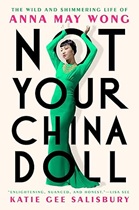
Not Your China Doll: The Wild and Shimmering Life of Anna May Wong – Katie Gee Salisbury

Each day, tourists visiting the City of Los Angeles make their way up to the world-famous Hollywood sign which overshadows the busy metropolis below which became home to the motion picture industry and the destination for people with dreams of becoming stars. However, some stars are home grown as they say and grow into adults with the film industry right in their backyards. In January 1905, a family of Chinese ancestry welcomed a daughter named Wong Liu Tsong who later became known to the world as film star Anna May Wong (1905-1961). In the fifty-six years that she lived, she went from a student helping in her parents’ laundry business to an international star who rubbed elbows with names cemented in Hollywood’s history. But there is more to her story than film roles, press photos, and statements to the media. Behind the scenes her life was far more complicated, and those complexities are unraveled in this biography by Katie Gee Salisbury, which thoroughly explores the late film star’s life.

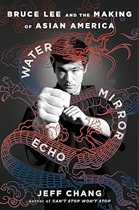
I first learned of Anna May Wong while reading Jeff Chang’s ‘Water Mirror Echo: Bruce Lee and the Making of Asian America‘. Years before Bruce left his mark on the film world, Wong was blazing her own trail. But I asked myself why had I not heard of her before? After finishing Chang’s book, I sought out material about Anna May Wong and found this book which was everything I had been searching for. The stage is set in Los Angeles where her parents Wong Sam Sing (1860-1949) and Lee Gon Toy (1886-1930) have made home for themselves and their growing family. We travel back in time when discrimination against Asians was socially acceptable and codified in legislation. I must warn readers that some of the subject matter may be difficult to accept. The Chinese Exclusion Act of 1882 hangs over the story like a dark cloud, and even when Anna becomes famous, she still cannot escape the scrutiny by United States Immigration officers as she travels to and from the country of her birth. But early on she was a simple teenage girl in a typical family with strong work ethic and connections to the old country, but Hollywood was the place which both captivated her and held her attention.

As the story progresses, it becomes clear that Anna is not the typical Chinese girl. And through a series of events, she finds her way into the film industry which at that time, had never shown Asian stars in leading roles. To say that Hollywood is a dark place would be an understatement. I am sure that many of us have heard stories about the underside of Tinsel town. Anna May Wong entered this world, and her life was never the same for better and worse. There are dehumanizing and humiliating experiences in the story, and even people who are allegedly “progressive” contribute to the cycle of bigotry which kept her from reaching the stardom she could have obtained. And there is also the practice of “yellowface” which would be seen today as a concept from another planet, but it was standard practice during her era. To reinforce the absurdity of it, Salisbury includes the story of the fictional Charlie Chan, played by Swedish actor Warner Orland (1897-1938). This role which brought him fame and wealth also resulted him becoming both typecast and a victim of substance abuse. It should be noted that Orland was one of several actors to play Chan. Despite the insulting practice, Asian stars did find work, but for Anna, the life changing success she craved came from another continent called Europe.

I was not surprised that she found success across the Atlantic Ocean, due to the obstacles non-white performers faced in America. She had learned the brutal reality of show business and had been changed by her visits to New York City’s Harlem neighborhood and other places which stood in stark contrast to Los Angeles. Along the way she forms friendship will starts from all over, and her friendship with the late Paul Robeson (1898-1976) is a heartwarming part of the story. As she climbs the stardom ladder, she also contents with attention from male suitors. However, there is a major issue with her love interests manifested in the disturbing concept of miscegenation which made it impossible for a life with a husband who was not Chinese. That would change in 1963 when Supreme Court ruled in the case of Loving v. Virginia 388 U.S. 1 (1967) that it was unconstitutional to prevent people of different races to marry. However, by that time Anna May Wong was gone.

Her success in Europe helps elevate her career and I was surprised at the amount of time it took then to travel from one continent to another. But I reminded myself that this was before jet-aircraft for passenger travel. Ships were the main method of travel, combined with rail and surface transit. But that does not stop her from becoming a world-traveler who splits time between multiple continents and even finds time to visit her father in China after he left Los Angeles yearning for life in his ancestral homeland. However, the looming threat from Japan would affect the family later as explained in the book. The trip to China is a mixed bag but it has her in good spirits and there is talk of her starring in a film by Irving Thalberg (1899-1936) called ‘The Good Earth‘ based on the book by author Pearl S. Buck (1892-1973). The film was a hit, but it is also a classic example of how yellowface prevented Asian stars from securing roles they should have landed. The full story as told by the author is hard to believe but this was the reality Wong and Asians faced. What is even more of a gut punch is the tools used by actors dressed in yellow face to prepare for their roles. Frankly, it is a case of adding insult to injury. And this would later be one of the main reasons Bruce Lee was determined to change the perception of Asian stars. Anna Way Wong was far from finished but she soon had another battle to fight with her own body.

Following the success and controversy of ‘The Good Earth’, Wong’s life quiets down a bit. She later finds more success in film and television but is racing against the clock. And this part of the book is heartbreaking. I did not know how severe her personal demons were until I read this biography. A disturbing reality emerges in which we can see how the industry chews up stars and spits them out. Wong was only one of many people both in front of and behind the camera whose lives ended in a downward spiral. By the time I finished the book, I came to understand the struggles and pressures she faced in an industry unwilling to fully embrace her talent. Her life story is an account of what could have been. Thankfully, decades after her death she has begun to receive the attention she rightfully deserves. And although she is long gone, her memory lives in articles, films, and books like this which preserve the life and legacy of a forgotten star in the murky world of motion pictures. The story is beautifully written, and while reading I felt as if I were transplanted back in time to roaring 1920s and 1930s before Germany sparked a second world war. For readers interested in the life of Anna May Wong, this is must read. You will see why she was not your China doll.

ASIN‏: ‎B0C7TVJKSZ
Publisher: ‎Dutton, March 12, 2024

Water Mirror Echo: Bruce Lee and the Making of Asian America – Jeff Chang

During the short span of thirty-two years, martial arts expert and film star Bruce Lee (1940-1973) single-handedly changed the view we have of Asian action stars. His movements on camera left audiences speechless and his peers in awe of his speed and reflexes. His sudden death on July 20, 1973, sent shockwaves across the planet, and the void left by his departure has never been filled. I saw this biography by author Jeff Chang and knew instantly that I must read it. And having finished the book, I say with conviction that this is the Bruce I did not know. But I also have a deeper understanding of his trials, tribulations, and the complicated relationship America has had with immigrants from Asia. 

We are introduced to Lee Hoi-Chuen (1901-1965) and Grace Ho (1907-1996), who have emigrated to the United States, making a home in San Francisco where their son Bruce is born on November 27, 1940. Bruce arrives as World War II is raging, and America has its Asian residents under surveillance as fears of Japanese sympathy have become a heightened concern. Chang explores the history of immigration laws aimed at Asian immigrants which range from highly restrictive to the complete exclusion of Chinese. The history is dark and includes facts that I was not aware of personally. However, I was aware the 1882 Chinese Exclusion Act which is by far the most shocking and disturbing piece of legislation. Today it seems unthinkable that such a law was passed but it happened and was official policy, extended through the Geary Act of 1924 before being repealed by Congress in 1943. This section of the book may be upsetting for readers, particularly those of Asian ancestry. Lee Hoi-Chuen and his family move back to Asia, settling in Hong Kong where Bruce’s childhood is on display. As I read, I could see his personality take shape complete with the tint of arrogance we see on scene, mischievous pranks, and the signs of a young man with enormous potential yet to be tapped into. There was one person who did see something in Bruce, and when he meets Yip Man (1893-1972), the Bruce we know begins to take shape.

The book shifts gears when Bruce is sent back to America, to comply with immigration law. And this is a part of his story which has been misunderstood for several decades. I have personally had conversations with friends who did not know Bruce Lee was born in the United States. Today we would call him an “anchor baby”, but American was his home by birth. He returns to the United States without his parents, and his life takes more twists and turns as he enters adolescence and confronts the realities of racial discrimination. We see the intimate side of Bruce as he moves from California to Washington State, makes friends, enrolls in college, falls in love and dives deeper into martial arts which becomes the center of his world. But the world-famous movie star is still years away.

When Bruce decides to begin teaching martial arts, the story becomes more interesting as his students are from all demographics. In fact, his first student and close friend may surprise readers. I smiled as I read the story and frowned when I read about Bruce’s moments when he feels down. Chang’s writing pulled me into Bruce’s life, and I could feel the emotions as the story moved forward. He also includes Bruce’s own words through journal entries, letters and comments to friends which help us form a complete picture of who he was and what drove him to success. There are two key moments in the book which take Bruce’s life in a different direction. The first major event in his life occurs when he meets Linda Emery who becomes one of the most important people in his life. The two married in 1964, but their relationship was complicated by several factors which Chang discusses. The second major event occurs in 1966, when the television show ‘The Green Hornet‘ premiers with Bruce starring as Kato. The show was short-lived, but it did get Bruce’s foot into the door of Hollywood. But the industry still struggled with Asian stars. Change dissects the problem of Hollywood and the section about the Charlie Chan films left me shaking my head. Frankly, it is a bad as “blackface”. Bruce is keen to this and understands that the film industry has a dysfunctional view of Asians.

Bruce’s purpose in life continues to take shape, but the book is haunted by his own premonitions that he would not live a long life. I was not aware that Lee had predicted his own early death. This sent chills down my spine and adds a sense of urgency to everything he does in the story. While teaching, he forms more friendships with Hollywood stars such as James Coburn (1928-2002), Steve McQueen (1930-1980) and Roman Polanski, which are important to his navigation of the entertainment industry. And the bond he had with basketball legend Kareem Abdul Jabbar is heartwarming. However, the stage is set for Bruce’s success when he decides to visit Hong Kong and meet with Raymond Chow (1927-2018), the president of Golden Harvest pictures. The two men envision a series of films to bring kung fu to audiences worldwide but have stiff competition in the Shaw Brothers Studio, a massive film empire created by brothers Run Run Shaw (1907-2014), Runme Shaw (1901-1985), and Runje Shaw (1896-1975). The cat and mouse game between the Shaws and Chow, over Bruce’s star potential plays out in the story and the success of the film ‘The Big Boss‘ (1971) only deepens the rivalry. For Bruce, it was a godsend because another aspect of his life hidden from the public is his financial struggles. In fact, there are several occasions in the book when the family is at rock bottom. But as Golden Harvest turned out films their fortunes improved and Bruce began to shape the film that cemented his legacy in film history.

As I continued reading, I was amazed at the difficulties Bruce faced in making ‘Enter the Dragon‘ which endures to this day as his masterpiece. The movie is all Bruce, yet producers still struggled with allowing stars creative control. Sadly, that issue exists today. But Bruce knew what he wanted to show on screen and explicitly stated so. Snippets of interviews he gave and heated discussions with studio executives confirm his commitment to changing the way audiences viewed Asian stars. In hindsight we know that Bruce prevailed, but we also see that physically he is in rough shape, and a back injury at home which is often overlooked may have marked the first stage towards his premature demise.

Following the success of the Big Boss, Bruce finally finds the stardom he had been searching for. But there is a dark cloud hovering over the story, and the stress and physical exhaustion become eerily apparent. On May 10, 1973, the alarm bells go off as Bruce has a severe medical incident on set requiring hospitalization. I felt a chill as I read of the confusion doctors had about his condition and the story gets much darker. Eventually July 20, 1973, arrives and it is Bruce’s last day alive. Chang approaches the end of his life with the right balance and sticks to what is known. Debates about how Bruce Lee died continue with conspiracy theories rampant. A detailed discussion of his death and the events of that day have been presented by the History Channel in a special which you can view on YouTube. After his death, I could feel the gravity of it while reading. The Bruce I came to know in the book was far more complex and misunderstood that I could have ever anticipated. And I understand the water mirror echo.

In the spring of 2023, the Tribeca Film Festival screened Enter the Dragon as part of a fiftieth anniversary celebration. The theater was jammed packed and we had a blast. After the film ended, the presenters that night surprised us with an in-person discussion with Angela Mao Ying who played Bruce’s sister in the film. It was a surreal moment and hearing her explain how Bruce selected her for the film and the friendship they formed stirred emotions both in the audience and on stage as Ying herself wiped away tears when discussing his legacy. Five decades after his death, he was as popular as ever and will remain an icon in pop culture. There have been imitators and rip-offs but there will never be another Bruce Lee. If you are a fan of Bruce Lee and curious about his life, this is the book you must read. I cannot recommend it enough. 

“I have already made up my mind that in the United States I think something about the Oriental, I mean the true Oriental should be shown”. – Bruce Lee, The Pierre Burton Show – 9/12/1971

ASIN ‏ : ‎ B0DR8B82SZ
Publisher ‏ : ‎ Mariner Books, September 23, 2025

Waco: David Koresh, the Branch Davidians, and a Legacy of Rage – Jeff Guinn

While browsing through recommendations, I noticed this book by author Jeff Guinn. The cover alone speaks volumes, but I remember the events which transpired in Waco, Texas in the winter and spring of 1993. The media descended on the scene as federal law enforcement personnel and Texas State officials conducted a raid on the small group of buildings owned by the religious group known as the Branch Davidians. When the siege ended, a scene of devastation emerged which revealed the full scale of the tragedy. Amond the deceased was the group’s leader David Koresh (1959-1993) who had risen from obscurity to become the mythological figure his devoted followers believed would lead them to salvation. As I looked at the cover, I realized that although I knew of the siege at Waco, I did not know how the Branch Davidians came into existence or how Koresh ended up at their doorstep. Guinn answers those questions and provides a wealth of information in this book which is a step-by-step analysis of the history of the Branch Davidians and the fate awaiting them in the early months of 1993.

The first question I asked myself was who were the Branch Davidians? We have extensive information regarding the siege, but the group’s history is equally important. Guinn takes a deep dive into their interesting back-story and the vision of Victor Houteff (1889-1955) and his Davidian Seventh-Day Adventist Group. While Houteff is not directly related to Koresh’s Branch Davidians, his story is fascinating, but it is only the beginning of a long and convoluted journey to the ascension of David Koresh. The author pieces together the history seamlessly and the narrative is easy to follow as the Davidians go through their changes while different leaders emerge and depart. One of the most bizarre stories is that of Ben Roden (1902-1978), wife Lois Roden (1916-1986) and their son George (1938-1998) whose actions are off the rails. And when a new convert named Vernon Wayne Howell arrives, the story takes a sharp turn and sets the Davidians down a path of no return.

Howell’s entry into the story is uneventful. In fact, he comes across as another drifter who is searching for purpose in life and finds the Davidians to be what he is looking for. However, he soon becomes close to Lois Roden in ways I did not expect and begins to amass power and control within the Davidians. He also changes his name to David Koresh. George Roden is aware of Koresh’s power moves and two become engulfed in a dangerous feud which leads to law enforcement stepping in. The story is wild and a sign of the dangers that lie ahead. In order to understand Koresh’s vision, Guinn revisits the story of a self-proclaimed messiah named Dr. Cyrus Teed (1839-1908). I had not heard of Cyrus Teed but his story is intriguing, and the similarities between Teed and Koresh’s beliefs and actions cannot be overlooked. Further, Lois Roden herself also found value in Teed’s words as she maintained control over the Davidians. But when George Roden makes his departure from the group and Lois begins her physical decline, Koresh makes moves to solidify his power and stage is set for his version of the Branch Davidians to become reality.

After Koresh becomes the uncontested leader of the Davidians, the group begins to branch out and the followers who enter the fold come from all over. I was surprised to learn of the number of foreign nationals who had joined the Davidians. This is unusual but it also explains why Koresh later becomes paranoid of immigration officials raiding their compound at Mt. Carmel. In hindsight, we know that the Davidians had much larger problems than immigration violations. In fact, the bureau of Alcohol, Tobacco and Firearms (“ATF”) soon had the Davidians on their radar after learning that the group had been stockpiling weapons. And the role of convert and defector Marc Breault is crucial in revealing the group’s inner workings. However, Koresh’s own actions are just as telling and disturbing. And his obsession with females of various ages is unsettling. It soon becomes clear to the ATF and the State of Texas that the issue of the Branch Davidians must be resolved. However, completing that task did not have any easy answers and by the time it was resolved, both ATF agents and Branch Davidians were dead, and Mt. Carmel was reduced to smoldering ruins.

Guinn takes us through the series of events leading up the raid, including the confusion among law enforcement, compounded by the change in presidential administrations. A new commander-in-chief William J. Clinton had taken office and needed Senate confirmation of his selected Attorney General Janet Reno (1938-2016). In time both would settle into office and Waco became their nightmare. There is one thing I noticed which slipped past me before, and that is the absence of the Federal Bureau of Investigation (“FBI”). Initially, the FBI was not involved in the planning of the raid and had no direct role in it. The bureau does enter the story later as the standoff intensifies and negotiations with Koresh become strained. Planning and execution of the warrant to enter the compound is not without complication, and the miscommunication would have severe implications. And the underestimation of Koresh’s knowledge of the ATF’s pending raid proved to have deadly consequences for ATF agents. As the day of raid approaches, I could feel the suspense increase and soon the moment arrives when shots are fired and all hell breaks loose. There is a lot to unpack, and Guinn summarizes the events perfectly. On a side note, Netflix has a docuseries about Waco which is very good, and readers will find even more information there which would have been impossible to cram into one book. Regardless of the disturbing details, it becomes clear that the raid in Waco is nothing short of horrific. Thankfully, lives were saved and some children do make it out of Mt. Carmel, but for those who remained behind, there was no happy conclusion. I will not go into detail here as Guinn provides the grim realities of the standoff, but it suffices to say that the aftermath is not for the faint of heart. The fallout is mind-bending and I still get chills when I think of the Branch Davidians.

The dispute as to whether the United States Government or the Branch Davidians were at fault will continue, I am sure. Guinn does not place complete blame on either side but presents the facts and leaves it to readers to form their own opinions. What I found was a tragedy which occurred through mistakes on both sides, leaving what Guinn accurately describes also as a legacy of rage. I would only add that it is also a legacy of destruction from which those involved have not fully healed. History always repeats itself, and somewhere on earth there is another David Koresh building a legion of followers. My hope is that the mistakes at Waco are not repeated. This is a particularly good look at Koresh, the Branch Davidians and the raid that changed America. Highly recommended.

ASIN ‏ : ‎ B0B3Y9T3SJ
Publisher ‏ : ‎ Simon & Schuster, January 24, 2023

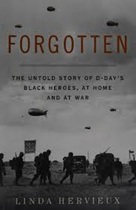
Forgotten: The Untold Story of D-Day’s Black Heroes, at Home and at War – Linda Hervieux

On June 6, 1944, Allied forces launched a combined military assault across five beaches in Normandy, France during World War II (1939-1945). The assault was costly but the success of troops in storming German defenses, showed the military brass in Berlin that the war would be lost. The mission titled ‘Operation Overlord’ set the stage for the collapse of the Third Reich. And when German General Alfred Jodl (1890-1946) signed an unconditional surrender at Reims, France on May 7, 1945, millions of people around the world felt relieved. However, for America’s Black soldiers, the battle was far from over, and they would soon return to a nation in which they had another war to fight for civil rights. Their service in the war was overlooked for a considerable number of years but in the past two decades there has been a resurgence of stories regarding the contributions of Black Americans in World War II. Author Linda Hervieux re-examines the historic D-Day invasion and the forgotten roles of its Black heroes.

Discretion is advised to readers sensitive to descriptions of racial discrimination. There are parts of the book both shocking and mind boggling, but Hervieux pulls no punches in showing the experiences of Black men who found themselves in the military. As a sample of the substantial number of men who served, the author focuses on a select few whose stories serve as a representation of common patterns throughout the book. But before we reach D-Day, Hervieux discusses the dark climate in America prior to the war in which Jim Crow was raging unrestrained. And this is a crucial section of the narrative because it helps to explain why the military became a destination for young men with limited options. But make no mistake, many of the men knew that the military was not free of prejudice and they would have to fight in more ways than one and the biggest challenges they faced were not only physical but the mindset of superior officers and politicians who firmly believed that Black troops could never perform correctly on the battlefield. Hervieux dives deep in this prevailing assumption that was not only dehumanizing but also completely wrong as she shows later in the book.

After building up the suspense and pulling at the reader’s emotions, the author changes gears and takes us to Europe where Black troops found a whole new world unlike anything they had experienced in the United States. However, there were people in high positions in government in Europe who held some of the same absurd ideas as their American counterparts, but the reality was that the war required soldiers and in order to defeat Nazi Germany that mean a full-scale onslaught with troops from all over. At Normandy, we are re-introduced to the carnage which ensued as troops stormed the beaches. The scene is hellish, and I felt chills while reading of the devastation awaiting troops as they battled sea sickness and confronted the reality that they may not survive the landings on the beaches. But for the soldiers who did survive, the German retreat was a breath of fresh air, and if you were Black, then your life was about to change in ways you did not expect. As we step back from the battlefield, Hervieux discusses the interactions between the people of Europe and the black faces from America. And what she reveals is uplifting, heartwarming and heartbreaking, but not for the reasons one may expect.

Admittedly, I was not fully aware of the issues behind the scenes in European towns as American officers sought to enforce Jim Crow in another country. Today it seems mind-bending, but the world was a vastly different place in the 1940s. However, the people of Europe who are unfamiliar with Jim Crow have a unique experience with the Black troops and it will change the way you view World War II.  The scenes in the book range from heartwarming to surreal, as Black troops learn about the world outside of America and enemies within. To be clear, not every American commander was prejudiced against Black troops. In fact, there are several in the book who realized that the military’s segregation policies hurt far more than it helped, but their voices were drowned out by a system which needed time to change itself. And that change does come as the Black troops prove themselves on the battlefield. Their enriching stories told beautifully by the author helped break the facade of Black inferiority. And the civilians they met helped them understand how dysfunctional America had become with its own citizens. They returned home with a new sense of pride, but their ordeals were far from over.

As I read the book, I could not ignore the elephant in the room. Black troops who served saw a separate way of life in Europe free from Jim Crow and blessed with the dignity of being treated as a human being should. And it forced the question of how could America fight racism in Europe while allowing it at home? For Black troops it was an open wound which could not heal until their own government began to change their lives back home in the United States. The author addresses this hotbed topic, including the complicated legacy of the G.I. Bill which could have been a far more effective tool than it was. In Washington, politicians became keenly aware that change was needed, and the wheels are set into motion by President Harry S. Truman (1884-1972) in 1948. However, several decades would pass become the White House stepped in and began awarding long overdue medals to World War II’s Black heroes. Some men were still live to see their day while others had passed on. But their names are a part of history and as the author winds down the story, we share their special days with them as America pays homage to its veterans.

This book is amazing, and it will stir emotions, but history is rarely pleasant. It forces us to confront dark truths which have been carefully hidden. America has come a long way since World War II, and there is still a long way to go but what is crucial is that the past is never forgotten so that it is not repeated. Highly recommended.

In June 2009, six decades after he landed on the shores of Normandy, Bill Dabney returned to France at the invitation of the French government. On the sixty-fifth anniversary of the landings, under a bright blue sky, Bill and other aging veterans received accolades from the world’s most important leaders at the American Cemetery overlooking Omaha Beach. President Obama shook his hand.”

ASIN ‏ : ‎ B00PQRH7KS
Publisher ‏ : ‎ Harper, October 27, 2015