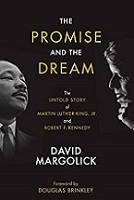
 On January 6, 2021, I and millions of people in America and abroad watched the events at the U.S. Capitol in which thousands of individuals breached security and entered the historic building in the belief that the 2020 Presidential Election had been stolen from Donald J. Trump. As I watched the video footage, a sense of gloom came over me due to the realization that the pillars of our vision of democracy were under siege. Personally, I have no political affiliation and regardless of which party we belong to, none of them are above reproach when our government is threatened from within or abroad. By evening, the dust had settled over Washington and officials began to piece together the chain of events that left several dead, dozens injured, and hundreds detained or the target of criminal investigation. Messages from family members and friends started to arrive on my phone with nearly if I had seen the events in Washington, D.C. The insurrection forced many of us to confront unsettling realities and acknowledge that threats exist all around us. Further, the day also showed how far America has strayed from the principles it professes to believe in.
When I find myself attempting to understand the present or the future, I instinctively turn to the past for the answers. History is an invaluable tool if applied correctly. Amazon must have sensed that I was in need for another lesson when this book by author David Margolick showed up in my list of recommendations. I have previously written about both men on the cover, former U.S. Attorney General and Senator Robert F. Kennedy (19125-1968)(D-NY) and civil rights leader Dr. Martin Luther King, Jr. (1929-1968). Their deaths occurred roughly two months apart in 1968 and some have said more than once that America never recovered. The nation was forced to live with the endless questions of what if they both had lived. Each man had a sense of duty to change America for present and future generations. And though they had met in person on few occasions, they were connected in the civils right movement and in death. The violent decade of the 1960s claimed many victims and their murders brought an end to what the author calls the promise and the dream. But there is far more to their story than some may realize. Publicly they did not present an image of harmony but behind closed doors they were critically important to each other. The private side of their relationship is explored here in this remarkable account of two human beings who had achieved nearly deity status as America grappled with social and political change.
I would like to point out that there are no smoking guns in the book regarding the assassinations of each. The crimes are discussed but briefly and constrained to small sections in the much larger story. Readers who are interested in the assassination will find William Pepper’s “Orders to Kill: The Truth Behind the Murder of Martin Luther King” and “The Assassination of Robert F. Kennedy: Crime, Conspiracy and Cover-Up” by Tim Tate and Brad Johnson to be very good. The author’s focus here is on the relationship beween Kennedy and King which went through several phases due in part to the administrations of John F. Kennedy (1917-1963) and his successor, Lyndon B. Johnson (1908-1973). The Kennedys had been criticize for not taking a stronger stance in defense of civil rights. Margolick re-examines the issue and in the process, we see Bobby’s role in a much clearer lense. The story is well-known, but I believe that Margolick presents the narrative in a thorough format which reveals that the Kennedys did act and had John Kennedy survived Dallas, U.S. forces most likely wiould have withdrawn from Vietnam and civil rights legislation would have been the focus in 1964. Johnson did turn Kennedy’s dream into a reality in July 1964, but America still had a long way to go. In fact, Bobby wisely observed that:
“You could pass a law to permit a Negro to eat at Howard Johnson’s restaurant or stay at the Hilton Hotel,” Kennedy said. “But you can’t pass a law that gives him enough money to permit him to eat at that restaurant or stay at that hotel.”
This quote is important for several reasons. The first is that many had been focused on the civil rights act and rightfully so but having the legal right to something and access to it are two different things. The second is that it showed Kennedy realized that more than legislation would be required to change the plight of Black Americans in the United States. In all fairness, Kennedy had undergone his own transformation as the gritty reality of life in America’s ghettos hit home. His personal journey is one of the highlights in the book and it is not hard to see why he attained such a large following. To many Black Americans, he was a candidate who understood or “got it”. Curiously, Martin Luther King, Jr. never gave official statements endorsing Robert Kennedy or his brother and stayed largely out of politics and elections. But he did seek an audience with politicians whom he knew were crucial to changing America. Both presidents and Bobby have their encounters with King in the book and the differences in the interactions King has with all three are interesting. But each encounter is overshadowed by the wiretaps placed on King by the Federal Bureau of Investigation (“FBI”) under the grip of J. Edgar Hoover (1895-1972). As an official of the Justice Department, Hoover’s boss was Kennedy himself who knew of and gave consent to the taps on some occasions. The saga is revisited and reveals the dirty tricks the bureau was willing to employ to bring down King whom Hoover considered to be a “communist”. The former director’s paranoia knew no bounds and his massive accumulation of secrets on those in powers safeguarded his thirst for power and intention to remain the head of the FBI which he did until his death in 1972. The FBI never did prove that King was a “communist” but surely did try.
As John Kennedy moves through his presidency, he is confronted not just with the threat of nuclear war but of unrest at home. But it was not until things exploded in the deep South that his administration began to realize the powder keg they needed to diffuse. Civil rights activists were determined to integrate the South and eradicate Jim Crow. But first, blood would have to be spilled even if it made the Kennedy Administration uneasy. Those tragic events are revisited and may be upsetting to some readers. The visual recording of violent scenes by the media had thrust the reality of racial discrimination into the homes of millions of Americans. In Washington, the president and his administration knew it had to act because if it did not, things would soon go from bad to deadly. The attorney general was not about to let that happen. And when action was needed, Kennedy stepped to the plate and his role in several key events are cemented in American history. Of course, activists were still leery of the new administration but on person had this to say:
“You can fault the Kennedys in many ways on civil rights, but there are three things for which you must give them credit: their talk, their appointments, and Bobby Kennedy,” the head of the Americans for Democratic Action and one of the liberal stalwarts of mid-twentieth-century politics, Joseph Rauh, was to say.
Eventually, the story progresses to the trip to Dallas where John Kennedy met his tragic fate. Bobby’s life is turned upside down and he exist in a sort of limbo for a significant period of time. In the wake of his brother’s death, Kennedy realized that he had gone from one of the most powerful figures in Washington to someone who would soon be an outsider as the Johnson Administration took over. However, he soon found himself again and eventually becomes a senator representing my beloved State of New York. Watching the events play out is King who is the observer of all things and on occasion makes himself heard in Washington. John Kennedy’s death had opened both King and Bobby’s eyes to the fact that they too would meet an early demise. Their fatalism is conveyed in the book and I felt a chill as I read how each had essentially predicted his own violent death. It was not lost on either that America had become engulfed in a climate of hate and that threat that still exist today. But when asked about their premonitions of early deaths and the threats to their lives, each accepts both as conditions that apply. Kennedy gives an even more blunt assessment of it with this statement:
“I’ve got to present myself to the people as intimately as possible and get rid of some of these old bugaboos about me — let them know that I’m a human being.” But what would it do to the country, he asked, to lose another person of his stature? “That wouldn’t be good, but I can’t help that,” Kennedy replied. “If they want to get me, they’re going to get me — whether it’s in a crowd or whether I’m alone. I play Russian roulette every morning when I get up.”
And as for King, he was even more bleak:
Befitting someone under constant threat, King talked about death incessantly and matter-of-factly. (The producer Abby Mann, who was to do his life story, asked him in 1966 how the film would end. “It ends with me getting killed,” King replied. “He was smiling, but he wasn’t joking,” Mann recalled.)
Despite the constant threat of death, each moved forward in their determination to bring true change to American society. Kennedy continues to evolve and moves closer to where King is already at. It is almost as if Martin was waiting for him. Throughout the book we are witnesses to the transformation of the future candidate who eventually becomes the visionary that many had hoped for and wanted several years earlier. But as it is sometimes said, we do not choose the time, the time chooses us. As I read through the book, I appreciated the author’s telling of the story in which we see the dance the two do around each other although they know their fates are intertwined. Further, Margolick does offer clues that the two spoke at great length privately but gave the impression publicly that they were cordial at best. And in a tragic irony, following Bobby’s death, the widows of all three slain figures (JFK, RFK and MLK) have a meeting that their husbands may have wanted to have on a regular basis. In death, many were united in ways they did not wish for.
After finishing the book, I developed even more respect for Robert F. Kennedy and have deeper affection and grief for the loss of him and Martin Luther King, Jr. The promise and the dream they were, and their deaths are some of the darkest moments in American history. But on a positive note, the change that each desired continues to happen although there is still more work to be done. As we look to the future we can return to the past and revisit the words and actions of these two legendary figures. The key test will be for each of us to ask ourselves what type of country we want to live in. In the book, we revisit a night when Kennedy had returned home from a trip to a poverty stricken location. He entered the house in a somber mood and as his daughter explained:
“He said, ‘I’ve just come in and seen a family live in a room smaller than our dining room, with their tummies distended and sores all over them because they don’t have enough to eat and they don’t have healthcare,’” Kennedy’s eldest daughter, Kathleen Kennedy Townsend, later recalled. “‘Do you know how lucky you are? Do you know how lucky you are? Do something for this country.’”
Kennedy had seen the face of poverty; a face Dr. King knew all too well having made his own journey across America. What stood out to me in the book is although the two had infrequent contact, they were remarkably similar in many ways. Quite frankly, they would have made a great team at whatever they did. Sadly, any discussions they did have off the record are now lost to history. But it is clear from their statements and writings that there did in fact exist affection and respect between the two. And I will always feel that one of Kennedy’s greatest speeches was his unscripted remarks in Indianapolis after Dr. King was shot and killed on April 4, 1968. For Martin, his speech at the Washington Monument is part of the American Experience and remains one of the best oratorical deliveries in history.
The amount of history contained in this book is both staggering and beautifully re-told by Margolick. I absolutely loved how the narrative flowed without any lag or drifting into any particular direction. The story is streamlined, and as we move through time in the 1960s we can see its brutality and sources of hope. I understand even more why my dad has always said that the 1960s “scared the hell out of him”. Many figures met their ends during the 1960s but the list of names is too long to include here. Heroes and icons were cut down before their time due to fears of unity, revolution and progress. America will need to look at itself in the mirror as we move forward and combat the threats of unfounded radical ideology and misinformation. Threats to our democracy must be challenged and eliminated. The pillars upon which we place our faith in the system of government that has been adopted around the world must be protected not only for our time but future generations. And maybe we can once again have a dream and a promise. Highly recommended.
ASIN : B07R6VMYHP

 A few years ago, I visited San Francisco and decided to take the boat ride around the bay under the Golden Gate Bridge. As the vessel made its way back to the dock, it traveled around the eastern side of the defunct prison once known as Alcatraz. The facility has long been closed but seeing it in person puts the stories about it into a new perspective. To some, the prison was simply known as “the rock”. Regardless of what it was called, it was home to some of America’s most dangerous criminals. And make no mistake, a decision to send an inmate to Alcatraz was not made lightly. Further, inmates knew that if you were sent to Alcatraz, you better be prepared to spend a lot of years there. Alvin F. Karpis (1907-1979) spent three decades at Alcatraz and in the annals of American history, he remains one of the most prominent crime figures from the outlaw era that saw the rise of such as John Dillinger (1903-1934), George “Baby Face” Nelson (1908-1934) and the deadly duo of Bonny Parker (1910-1934) and Clyde Barrow (1909-1934). Unlike many other outlaws, Karpis not only survived the 1930s but was eventually released from Alcatraz. This is the story his time on the run, capture by the Federal Bureau of Investigation (“FBI”) and later years as a free man.
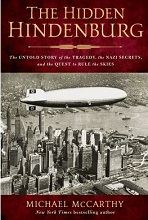 On May 6, 1937, the German aircraft LZ 129, officially known as the Hindenburg, crashed upon landing in Lakehurst, New Jersey. The crash claimed the lives of thirty-two people. Sixty-two people survived the disaster and later gave statements regarding what they saw and heard in the air ship’s final moments. In Berlin, the Third Reich went into crisis mode and grounded all Zeppelin air ships until authorities could figure out what went wrong. The accepted explanation for the disaster is that an electrostatic discharge ignited hydrogen leaking through an outer cover which resulted in a fast-moving fire that caused the air ship’s demise. The case seemed open and shut but is there more to the story? Author Michael McCarthy addresses that question and others about the Hindenburg’s history, Nazi Germany’s rise to power and the aftermath of the Hindenburg’s final voyage to America.
 Recently the world-famous Carnegie Hall in the midtown section of Manhattan announced its schedule for 2021-2022. After the history changing year of 2020, the music venue is set to resume operations as music lovers return to enjoy all that it has to offer. Opened in 1891, Carnegie Hall remains one of the most prestigious concert venues in New York City and keeps the name of its creator alive many years after his death. Andrew Carnegie (1835-1919) long ago cemented his place in American history as a successful philanthropist and one of the driving forces behind the expansion of the American steel industry. In his later years he sat down to write his life story that became this engaging autobiography.
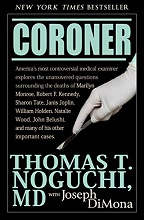 This may come as a shock to some, but I have always found the topic of death fascinating. I find it so because how we leave here often explains how we lived when we were alive. I am sure we have all asked the same question upon hearing of someone’s death: what was the cause? To determine the cause, care and faith is entrusted to the talents of forensic pathologists who become masters at unraveling the mysteries behind the final moments in the lives of humans. In the City of Los Angeles, pathologists have often faced heavy workloads in a city has seen its share of violent crime. For many years, Dr. Thomas Noguchi was the lead coroner in the County of Los Angeles and was tasked with performing some of the most important autopsies in history. In this short but highly engaging account of the cases that stand out, he explains what he found as he examined the bodies of larger-than-life figures Senator Robert F. Kennedy (1925-1968)(D-NY), actress Marilyn Monroe (1926-1962) and several other Hollywood stars. And though there are no “smoking guns”, Noguchi does a masterful job of explaining the forensic approach and how mysteries are sometimes simpler than they appear.
 When I saw the cover of this book, I had to stop for a second to see if I could pull up something from my memory about the Up Stairs Lounge. Satisfied that I had no prior knowledge of the incident described, I decided to buy the book and learn something new. On June 24, 1973, the people of New Orleans awoke to a typically early summer day. But by the time the sun set that day, the entire city was on edge and the patrons of the Up Stairs Lounge, an LGTB friendly establishment, found themselves in hell on earth. Sometime that afternoon, an arsonist intentionally set fire to the building and within minutes, patrons were engulfed by flames and smoke. The deliberate act claimed more than thirty lives with some victims perishing in grisly manners at the scene. Others met their ends while admitted to the hospital and the survivors were forced to confront mental and physical scars from one the deadliest days in New Orleans history. And the Metropolitan Community Church, which was friendly to the LGBT community, lost one-third of its membership. Author Robert W. Fieseler revisits that dark day in which the LGBT community New Orleans changed forever.
 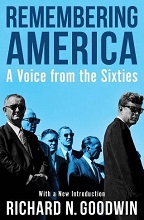 On more than one occasion my father has commented that the 1960s was the scariest decade of his life. The threat of Nuclear War, increasing tensions in Southeast Asia and the growing Civil Rights Movement captivated American society and the world. During one conversation he turned and said to me “at the time of the Cuban Missile Crisis, we didn’t know if we would live to see tomorrow or die in a nuclear exchange with the Soviet Union”. The assassinations of several activists and politicians spread fear across the nation and to many, it seemed as if America was on the verge of total anarchy. Richard N. Goodwin (1931-2018) worked in the administrations of Presidents John F. Kennedy (1917-1963) and Lyndon B. Johnson (1908-1973) and helped draft some of the most memorable speeches given by the iconic figures. In 1988 he completed this memoir which was re-published in 2014, of the decade he spent in politics with two presidents and two presidential candidates. And the result is a spellbinding account of a critical time in American history during which the country underwent profound heartache and change.
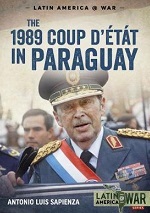 In the Colombian capital of Bogotá, protests which began on April 28 have increased and has resulted injuries to more than eight hundred people. The demonstrations are the result of public frustration with the country’s economic crisis that has been accelerated by the Covid-19 pandemic. The country has a long history of social unrest and what is taking place today is a scene common across Latin America, a region familiar with political and social unrest. The issues that have plagued Latin American nations have been compounded the by tyranny of right-wing dictators that solidified their power in the wake of World War II. On May 4, 1954, the Commander-In-Chief of the Paraguayan Army, Alfredo Stroessner (1912-2006), led a coup d’état that placed him in power of the small South American nation for more than thirty years. In 1989, he was removed in another coup d’état that return a sense of democracy to the country. Author Antonio Luis Sapienza is a native of Paraguay and here he recalls the reign of Stroessner and its impact on his nation.
 While reviewing my list of books to read, I did a double take as I read the title of this memoir by Pat Conroy. I had added it for a reason yet at the time, I could not recall why. But I put that aside and decided that there is no time like the present and it might be a hidden gem. It turns out that I was right in my assessment. However, I was not prepared for the incredible story within by Pat Conroy (1945-2016) that sheds light on the lives of those who have been forgotten even in the most powerful nation on earth. I knew that the story centered around education but of course, teaching is never as simple as writing on a blackboard. In fact, what is revealed in the book should remove all doubt that teaching is by any means as easy task. Some of us are naturally gifted to handle a classroom full of students, each with their own peculiar personality. In many ways, the teacher is conductor working the orchestra to fine tune all the instruments and produce a symphony that is pleasing to the ears. Conroy is the conductor here and what he accomplished on Yamacraw Island, South Carolina, will leave you sad, angry, and happy at the same time.

You must be logged in to post a comment.