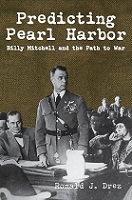
Predicting Pearl Harbor: Billy Mitchell and the Path to War – Ronald Drez

billySeveral days ago, America marked eighty-three years since the Japanese military attacked the U.S. Naval Base at Pearl Harbor, Hawaii. The attack claimed the lives of 2,403 people and paved the way for America’s entry into World War II. On December 8, the day after the attack, President Franklin D. Roosevelt (1882-1945) declared the attack a “Day of Infamy”. Four years later, Japan surrendered following the use of two atomic weapons by the United States Air Force. In the years that followed, there would be speculation as to whether the White House knew in advance that Pearl Harbor would be attacked. The issue remains controversial but there were officials who had predicted a Japanese military attack in the Pacific. Among them was the late Col. William Lendrum “Billy” Mitchell (1879-1936), an early pioneer of air defense whose premonitions were vindicated by the success of Air Force General Curtis E. Lemay (1906-1990) during World War II. Today Mitchell is a footnote in history, but this seasoned commander never wavered in his outspoken belief that Japan would attack America in the pacific. This is his story and how America’s military brass missed a crucial opportunity to take the lead in air defense. 
You may be wondering why you have never heard of Billy Mitchell. Sadly, he died in 1936, three years before German Chancellor Adolf Hitler (1889-1945) gave the green light for the German Wehrmacht to invade neighboring Poland and ignite the second world war. However, his importance to history cannot be overlooked. But the key to understanding Mitchell’s relentless crusade to change the mindset of military commanders lies in the Japanese empire itself, often misunderstood from a historical context. The author provides a thorough discussion of the closed-door policy held by Japan and the risk of execution by those who dared to enter its vicinity and even Japanese seeking to return home. The expedition by U.S. Naval Officer Matthew C. Perry (1794-1858) which is discussed in the book, was a pivotal moment in world history but far from the end of the story. In fact, Japan was the beast that was now wide awake. 

Mitchell was a World War I veteran, but his focus had shifted to the Pacific which he came to believe was the perfect avenue for Japanese expansion. His reasons are explained methodically by the author who relays Mitchell’s own observations and writings about what he learned as he toured the Far East in 1923. In America, he knew he was facing an uphill battle but believed that demonstrations were key. Thus, we learn from the story of several demonstrations of air power which left commanders speechless and proved that air combat was a reality. Mitchell was on the money, but the military was not yet ready to listen. Undeterred, his mission to change the view of air power proceeded, but he soon found enemies from within. 

As I read the story, I kept asking myself why very few people in high command were watching Japan. The author reviews the country’s movements in the years before Pearl Harbor as its empire expanded across Asian. Further, Japan’s departure from the League of Nations on March 27, 1933, alarm bells should have been ringing throughout the nation. Readers will see the pieces of the puzzle come together as the Land of the Rising Sun ramps up its war effort. Mitchell and the late Gen. Homer Lea (1876-1912), an officer in the army of Chinese President Sun Yat-sen (1886-1925), had both warned of Japanese influence but to no avail. But Mitchell would not give up and we eventually reach the final act of the book when he is tried before a military court due to his refusal to abandon support for a dedicated air defense system. 

The court trial proceeded like the staged event Mitchell expected but he came out swinging, backed by public opinion and supported by fellow aviators who later made their claims to fame. While reading I had hoped that Mitchell would prevail, but he knew his fate was sealed. The court testimony is riveting and shows the politics at play in the armed forces. But in the end, Mitchell could not escape the court-martial waiting for him. The sad conclusion marks the end to a valiant effort to alert America to a growing threat in the Far East. Unfortunately, it would take the attack at Pearl Harbor to wake up America’s military which then pushed for an air defense network and combat network. Mitchell’s chilling warnings in his report on the Pacific were shunned and ignored but later came back to haunt the American military. But the air force would not let his memory die, and the B-29 bomber conducted the missions that would have made Mitchell proud. The author writes in smooth narrative that keeps the reader engaged from start to finish. And at the end of the book, we are given another story about events on the Pacific Island of Niihau which provided the blueprint for internment of suspected foreign sympathizers here in America. Highly recommended. 

“With us air people, the future of our nation is indissolubly bound up in the development of air power.” – Col. Billy Mitchell

ASIN ‏ : ‎ 1455623156
Publisher ‏ : ‎ Pelican Publishing (August 15, 2017)

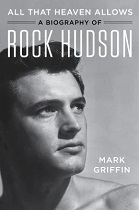
All That Heaven Allows: A Biography of Rock Hudson – Mark Griffin

rockThe 1980s stands out as a decade beloved for the changes across the globe. It was a time of  shock and awe, as Hollywood won us over with classic films, the Soviet Union began its decline, and a new disease caught the world’s attention. Originally described as a “gay cancer”, Human Immunodeficiency Virus (“HIV”) and its advanced form, Acquired Immunodeficiency Syndrome (“AIDS”), forced everyone to pay close attention as people from all social classes of life succumbed to it. On October 2, 1985, Roy Scherer, Jr., known to the world as Rock Hudson (1928-1985), became another victim of the disease, but his death shocked the world not only because of the virus, but because he was a Hollywood star whose gay lifestyle had been carefully hidden from the public. With Hudson’s passing, secrets began to emerge in the form of lawsuits and “tell-all” interviews. However, there is more to his story as told here by author Mark Griffin in a biography that is both revealing and tragic.

Hudson is part of the “Golden Age” of Hollywood when stars were able to create carefully crafted images impervious to the prying eyes of fans and blackmailers. Unlike today’s world in which social media exposes any and all things, in Rock’s time, privacy was paramount, and it required a team of professionals who excelled in damage control. But who was the real Rock Hudson? I picked up this book to satisfy my own curiosity about a star who became a statistic of the AIDS epidemic. The story begins in Winnetka, Illinois, in the Scherer household, which proves to be anything but stable. In fact, his father’s actions toward his family left me speechless. Mother and son pick up the pieces and another male figure enters the picture, but he too was not the male figure the young child needed. But all was not lost, and the story takes interesting twists and turns as Roy, Jr. inches closer to his destiny.

I was surprised to learn that not only was Hudson a legendary star, but he was also a veteran. Like other actors of his time, he enlisted in the U.S. Navy and served during World War II. His military service is discussed, and what we learn is interesting. There are no smoking guns but signs to the lifestyle that had to be contained. Upon discharge from the military, he moves out west and attempts to reconnect with his biological father who had relocated to California. This part of the story is where we take a sharp turn and series of events play out that usher his arrival into Tinseltown. And the man responsible for that is Henry Wilson (1911-1978), who singlehandedly transformed Roy Scherer, Jr. into Rock Hudson. Prior to reading this book I did not know Wilson’s story or his role in shaping Hollywood stars. He left a complicated legacy full of accomplishments and dark revelations. The details are unnerving but not entirely surprising. The term “casting couch” did not come about overnight. Despite Wilson’s personal satisfactions, he did transform Hudson into a leading star, but one issue remained which threatened to derail everything Rock and others like him had accomplished.

An irony in the story is that once Rock became famous, it became increasingly necessary to hide any trace of the actor’s sexual orientation. The lengths to which Wilson does is surreal when viewed from today’s point of view. But sixty years ago, stars could not publicly come out as gay, lesbian, or transgender. The gay rights movement still had much ground to break across America. In Rock’s case, an image of a fierce lady-killer riding high on success was the prescribed course of action from Wilson and his team, and is a tactic employed by other agents who found success in sham marriages and women posing as “beards”. As Rock’s fame surges, the efforts to hide his orientation also increase, but behind the scenes Rock had his own drama and the story takes yet another turn when Wilson is pushed out and replaced by Tom Clark, a publicist who was both a blessing and a curse to Rock.

Hollywood was priority number one and Hudson was a professional at his craft. Through anecdotes included in the book and behind-the-scenes looks into production sets, it is apparent that he was beloved by those who knew him. And his sexuality was an “open secret”, just as it was for others in the industry. In fact, a scene that plays out with his “wife” Phyllis Gates (1925-2006) as she makes a cross-country trip before their wedding caught my attention and is a reminder that everyone has carefully guarded secrets. From the beginning, it is clear that the marriage is doomed, and when it ends, Rock is left to his own devices. But father time spares no one, and we also see an aging star who no longer has Hollywood as his playground. The downward slope commences but the tragic finale does not immediately play out. First, there is more to Rock’s personal life.

The third act which begins to play out, sees Clark on the east coast, and the arrival of Marc Christian McGinnis (1953-2009), whose actions after Rock’s death raised eyebrows. The controversy surrounding his life and actions are topics for another book and the author does a respectable job of addressing Christian’s role without devoting too much time which would have detracted from Rock’s story. However, Christian was with the star towards the end of his life. Attempting to pinpoint when Hudson became infected with HIV is futile, but there is a section in the book which revisits an encounter with former First Lady Nancy D. Reagan (1921-2016) which set off my alarm bells. Readers who are familiar with the breakout of Kaposi’s Sarcoma will instantly understand what is taking place. And once the illness begins to attack his immune system, the final stage of his life takes shape. His decline is rapid, including noticeable weight loss, fatigue and other conditions associated with the virus. And when death comes for him, there is no fanfare or dramatic ending but the silencing of a star who made his mark on Hollywood and was forced to live a life of secrecy. But he remains an icon of the Golden Era in Hollywood. This is the life of the late and great Rock Hudson.

ASIN ‏ : ‎ B075JDGVHL
Publisher ‏ : ‎ Harper; Reprint edition (December 4, 2018)

The Betrayal of Anne Frank: A Cold Case Investigation – Rosemary Sullivan

anneOn August 4, 1944, Dutch Police Inspector Karl Josef Silberbauer (1911-1972) and a team of officers arrived at 263-267Prinsengracht to conduct an inspection and arrest of any Jews in hiding. That day, eight people were taken from the annex. The youngest, Annelies Marie “Anne” Frank (1929-1945), was forced to leave behind her diary which she kept as the occupants remained hidden during World War II, as the Third Reich’s military executed German Chancellor Adolf Hitler’s (1889-1945) vision for world domination.  Seventy-nine years have passed since the conflict concluded but the question remains, who betrayed Anne Frank and the other occupants of the secret annex? Author Rosemary Sullivan and a team of seasoned investigators formed a unit to investigate the raid at the warehouse and determine who gave officials the information they needed to send Frank and her fellow annex residents to their deaths.

A commonly held belief is that the police received a tip about people hiding in the annex. That raises the issue of who would have wanted to give up the annex’s residents and why? The team tackles the matter from every angle and there are a few things that stand out which place the case in a vastly different light. From Anne Frank’s own words in ‘The Diary of a Young Girl’, we know that the warehouse underneath the annex had been burglarized at least three times. And during the last break in, the men in the annex had gone to inspect the damage and had been seen by people outside the building. However, there is no evidence that any of those people betrayed them. The key to solving the puzzle may be found in post-war events that reveal open secrets.

I do recommend reading Frank’s diary before starting this book, but it is not required. The reason is that Anne’s recap of day-to-day events provides a vivid picture of life inside the annex, complete with the hope, tension and terror that gripped them each day. In this investigative report, the team jumps straight into the raid and its aftermath. Suspicion of who betrayed them began instantly. Of the warehouse workers suspected as being an informant, Willem Van Maaren (1895-1971) stands out the most. Although he was not well-liked and distrusted, the evidence against him is scant and his guilt was never proven. But there are others who may have had a stake in the raid on the annex, and the suspense increases as the investigation unfolds.

Following the war, Anne’s father Otto (1889-1980) returned to Amsterdam and learned that his family had died in the Holocaust. He is responsible for the publishing of Anne’s diary, but as the authors show, there was more that he knew about that last day in the annex. Sullivan and the team provide a thorough discussion of Otto’s life, his marriage to Edith Frank (1925-1945), and the family’s exodus from Nazi Germany in 1933.  Otto was a very shrewd businessman with extensive contacts and knew more about the Dutch Police and Nazis that I first suspected. And an encounter with an employee named Job Jansen, Sr. (1887-1952) provides insight to his awareness of the danger surrounding him, his family and the Jews in Amsterdam. The Jansen story is interesting and adds another level of intrigue. But the mystery only gets deeper as the book progresses.

There was a surprise in the story that caught me off guard. Otto had a dedicated and loyal employee named Miep Gies (1909-2010) who secured Anne’s diary after the raid. In later years, she gave interviews about the annex and raid, and a statement she made in one discussion caught my attention. If she was being truthful when she spoke, then that leads me to believe that Gies knew who the betrayer was. As to why the identity remained secret, it is possible she held the same position as Otto who issues a similar statement. Gies undoubtedly knew more than she was willing to say for reasons she took with her to the grave. But she was candid, a witness to history and the person who had to console Otto when he learned that his wife and daughters had died. But the story is far from over.

To understand how the betrayal occurred, the authors focus on the Jewish community itself in the Netherlands. And to my dismay, the country deported more Jews than any territory outside of Germany. But how did they accomplish this? There are two clues in the Jewish Council, an organization the Germans had compelled them to institute and the compromised Jews who had been flipped by Nazi officials into trapping those in hiding. If you are Jewish and lost relatives in the Holocaust, this part of the book will be difficult. But even if you are not Jewish, it is still difficult to accept. The acknowledgment that Jews betrayed other Jews is a component of the story that required further exploration. Sullivan and her team take a deep dive into this area, uncovering crucial and disturbing information.

Two people enter the story which changes the narrative immensely. The first is Anton Christiaan “Tonny” Ahlers (1917-2000) a Dutch nazi and bounty hunter, and the second is Arnold van den Bergh (1886-1950), a Dutch notary. Both men had compelling reasons to betray Otto and the annex’s occupants, but did they? Ahlers was a nefarious figure and a blackmail artist, and very well could have tipped off the police. The full story is told within, and it is surreal. Van den Bergh’s story is a bit different. As a Dutch notary, he was in an extremely  prominent position and had secured benefits under Nazi rule. However, he and his family had come under scrutiny and were subject to deportation. Did he give up the Franks to save himself and his family? You can be the judge.

The investigative team exhaustively researched the case and with a careful process of elimination, clarifies who did not betray those in the secret annex. Further, they provide convincing evidence to support their conclusion as to who did. After this book was published, it was critizied heavily for the theories it presents. Towards the end of the book, the author addresses those criticisms and how they proceeded with their work. And in regard to the biggest critique of the book’s hypothesis, it is something that had been known when Otto returned to Amsterman and not created by the investigative team. Depsite the negativity from the literary field, what the authors present strongly supports Otto and Mies’s statements regarding the betrayer. But this is just my opinion. Please read it for yourself and find out what we do know about the betrayal of Anne Frank.

“In attempting to determine how Adolf Hitler had taken control, the US Office of Strategic Services commissioned a report in 1943 that explained his strategy: “Never to admit a fault or wrong; never to accept blame; concentrate on one enemy at a time; blame that enemy for everything that goes wrong; take advantage of every opportunity to raise a political whirlwind.” Soon hyperbole, extremism, defamation, and slander become commonplace and acceptable vehicles of power.” 

ASIN ‏ : ‎ B0BLSQLV3L
Publisher ‏ : ‎ Harper Perennial (January 17, 2023)

Exit Wounds: A Vietnam Elegy – Lanny Hunter

HunterOn October 19, 1965, North Vietnamese soldiers fortified their positions surrounding the Plei Me camp located twenty-five miles south of Pleiku City. Before nightfall, the soldiers launched the first major offensive of the Vietnam War, a conflict that lasted ten years and deeply divided two countries. One of the soldiers who fought and survived the battle is Lanny Hunter, a former medical officer in the United States Army Special Forces. This is the story of his military service, the offensive at Plei Me, and his return to Vietnam in 1997 to locate Y-Kre Mlo, a Montagnard interpreter who remained in Vietnam following America’s withdrawal.  

Hunter’s book does not follow the traditional autobiography format. Instead, we shift gears between current-day return to Vietnam and his memories of from the war. This approach gives the book an enhanced feeling of authenticity as we follow his journey back to Vietnam in two different time periods full of memories that will last a lifetime. Other veterans have returned to Vietnam in search of closing, internal peace, and other personal reasons. One book I recommend is ‘Goodbye Vietnam‘ by William Broyles in which the author examines his service in the war and where America went wrong. Hunter had no desire to return but a message helps to change his mind, and he soon boards a Boeing 747 bound for Ho Chi Minh City (formerly Saigon). By his own admission, he had a range of emotions returning to Indochina and as we see in the story, the combatreflexes were dormant but still present. However, he soon begins to adjust to a new Vietnam free of NVA soliders, landmines and other horrors of war. And when he reunites with Y-Kre, the story takes on a sentimental tone that remains until the end.  

The siege at Plei Me takes center stage, and Hunter revisits the battle through his role as a medic.  His descriptions of battlefield wounds and deaths are not to be taken lightly and emphasize the severity of warfare. As he treats the injured soldiers, his medical training kicks into high gear but there are  also occasions in the story where his combat training was needed. While doing his best to survive the siege, Hunter is seriously injured but mends his wounds and ensured that he remained in country to continue his role as a medic. His service in Vietnam was not solely centered around Plei Me, and there are other stories in the book of his actions as a doctor, including treatment of sexually transmitted diseases and wounds inflicted during drunken fights between “allies”. The anecdotes are interesting and provide more context for the ugliness of war. 

During his return visit, he eventually finds Y-Kre, and their reunion is heartwarming. And it was in this book that I learned more about the Montagnard people and their role in the Vietnam War. Y-Kre’s story of how Vietnam changed after the war is dark, and the way in which he and other Montagnard’s were abandoned by the United States Government is heartbreaking. He survived the war and its camps, but it took many years for him to recover both physically and mentally. Hunter also explains the war itself, including America’s escalating involvement into the conflict which originated when the French sought to reclaim its colonial possessions following World War II. But they underestimated the charismatic Ho Chi Minh (Ngyuen Sinh Cung)(1890-1969), North Vietnam’s first leader and the father figure in the war for independence. Hunter provides his perspective as a soldier trapped in a war doomed from the start through this statement which is a sobering truth:  

“Well-versed in Cold War facts and steeped in Cold War rhetoric, I was ignorant of Vietnam’s long, complex history. In this, I was little different from my government, its military leaders, and my commander in chief. The United States had overlooked the first rule of war: “Know your enemy.”

Ho Chi Minh was a complex figure, but he was not anti-American. In fact, he had lived outside of Vietnam for thirty years before returning to the nation of his birth in 1941. And one of his places of residency was my hometown of New York City. Following Japan’s defeat in World War II, Vietnam began to see itself in a different light and Ho recognized that America’s recognition of their government was critical to success. As Hunter explains here again: 

“Between August 1945 and February 1947, Hồ sent the American government eleven diplomatic communiqués pleading for an interest in the plight of the Vietnamese and, in particular, for protection from the French. Neither Truman, nor the State Department, acknowledged a single communication. Instead, America supported France in her effort to retain her colonial empire.” 

The die had been cast and in August 1964, incidents and alleged incidents in the Gulf of Tonkin provided the spark that catapulted America into Vietnam. As Hunter’s tour continued, he came to know the enemy composed of men such as himself. They were husbands, sons, cousins, and fathers determined to defend their country against imperialism by any means necessary. American military leaders struggled to understand this but infantry soldiers and officers who paid attention to the North Vietnamese came to learned their resolve and developed a form of respect for their opponents’ tenacity and dedication. And when he later returns to Vietnam, Hunter encounters former officers who have fought their own personal battles to put the war behind them and find peace in their lives. As I read the story, I could see the author’s challenges in facing men who fought against America on the battlefield thirty years prior. Regardless of which side troops were on, the horrors of war remained and Hunter opens up about his own issues with a condition once deeply misunderstood. 

When my uncle returned from Vietnam, he had to readjust to the world as my father has explained. While aboard the aircraft returning to the United States, senior officers instructed the troops to take off their uniforms before entering the terminal due to anti-war protestors and demonstrations. Taking off one’s uniform is simple but confronting Post-Traumatic Stress Disorder (“PTSD”) is not. Hunter is not immune to it and discusses his acceptance of the condition and the effects of war on those who survive. Sadly, other veterans died before being able to heal and took to their graves, memories that haunted them night after night. As part of the healing process, the author visits the Vietnam War Memorial in Washington, D.C. and finds the names of the men whom he knew during his time in country. Through his words, their memories and sacrifices live on. 

After making his rounds in Vietnam and making peace with the past, Hunter returns to the United States but there is still more to the story. The war will always be with him. To help with this, the veterans have  meetups the veterans have where they re-live their shared experiences and how the war changed each one of them. The snippets of conversation highlight the immense bond formed by men in combat. It is unbreakable and life long. Hunter’s recollections about the friendships between the men is a fitting end to a story about the Vietnam War that is sure to keep you intrigued from beginning to end. Highly recommended.

ASIN ‏ : ‎ B0C1QNBLZ5
Publisher ‏ : ‎ Blackstone Publishing (October 10, 2023)

An American Requiem: God, My Father, and the War that Came Between Us – James Carroll

RequiemOn August 1, 1961, United States Secretary of Defense Robert S. McNamara (1916-2009) established the Defense Intelligence Agency (“DIA”) which became operational on October 1, 1961. The new agency was assigned the task of acting as a central hub for the coordination and monitoring of the United States intelligence apparatus. In the wake of the Bay of Pigs Invasion in April 1961 and its disastrous aftermath, President John F. Kennedy (1917-1963) sought to regain control over America’s intelligence operations. McNamara tapped Lt. Gen. Joseph Carroll (1910-1991), a former special agent for the Federal Bureau of Investigation (“FBI”), to lead the DIA in its assigned mission to place power of the intelligence community in the hands of the president. Carroll and and his wife Mary had five sons, one of whom is the author of this book, James Carroll.  This is his story of how he found his way in the Church, his differences of opinion with his father on society’s issues, and how events during the 1960s altered the relationship between them.

Carroll, his siblings, and parents are the typical American family of the 1960s on appearance. For James, his middle-class upbringing progresses without fanfare. However, for his father Joseph, things were far more serious as the Cold War and Vietnam heated up. Domestically, the Civil Rights Movement was pressing full steam ahead and became a hotbed issue across America. Ideologically, father and son found themselves on opposite ends of the spectrum as the younger Carroll found a calling in religion. And as he moves priesthood to the delight of Francis Cardinal Spellman (1889-1967), he finds himself developing a negative view of the war, dedicated support for civil rights, and irritation at the claim of a “missile gap” with the Soviet Union.  The seeds had been planted and in 1969, Carroll was ordained into the priesthood to the delight of his parents who are proud of their priest son.

The Vietnam War remains controversial and has been called America’s “least popular” conflict. My uncle who served in Vietnam, recalled that when flying home after his tour, senior officers told troops to change into civilian clothes before leaving the aircraft and going home due to the hostile protestors waiting for returning soldiers. He went on to describe the names they were called, and soldiers being spat on by anti-war demonstrators. As the war rages, James becomes more disillusioned with the war, but he also knows that the relationship with his dad will become strained should his anti-war position become officially known, due to the father’s high rank in military circles. It becomes a cat and mouse game as the author explains the efforts, he employed to prevent his father from seeing his anti-war efforts at a time when Washington was committed to victory.  His analysis of the conflict and decisions by senior officials provokes thought, and highlights the miscalculations made by Washington in supporting the regime of South Vietnamese President Ngo Dinh Diem (1901-1963), whose assassination casted a dark omen over the conflict and preceded Kennedy’s assassination in Dallas, Texas in November 1963. Eventually, the war did end, but the two Carrolls still had a rough road ahead.

In 1974, Carroll left the priesthood and shocked his parents. His decisions and feelings about it are explained, as well as the fallout at home as his staunchly Catholic parents learn that their son is leaving the clergy. It is a tough section in the book, and I can only imagine the pressure Carroll was under as he came to realize that he wanted a different path in life, which included a wife and kids who also are discussed in the story. In fact, there is one section regarding a road trip where his wife confronts him regarding the senior Carroll’s actions behind the wheel.  But what we also see is the first stage of decline for Joseph as he falls victim to a condition many of us have witnessed in our families. The author takes us step by step as the family does its best to support the aging patriarch, all the way to the end until he passes away surrounded by family.

When I finished the book, I was thoroughly satisfied with the purchase. Carroll writes beautifully, and the story is as American as you can get. The difference in opinions from one generation to the next, compounded by faith and issues of morality are what make the story relatable. Regardless of where we come from, every family has its struggles, and for the Carrolls, those challenges had long lasting effects. But the author never stopped loving his father and that should not be lost to the reader. Surely, there are tough moments in the book, and when the two do have difficult discussions, the elder Carroll’s softer side does come out. But he was also a man of code, and his profession required a level of discipline at a time when the world was on the brink of nuclear war and social upheaval had gripped the planet. And despite their challenges, both father and son are what make the story as compelling as it is.  Highly recommended.

First, that no human being has the right to sit in absolute judgment of another. Second, the essential note of our relationship to God, and to each other, must be forgiveness.” – James Carroll

ASIN :‎ B0062EAWVU
Publisher :‎ Mariner Books; Reprint edition (April 1, 1997)

Caesar: Life of a Colossus – Adrian Goldsworthy

CaesarRecently, I was searching for new material to read but was not sure which subject matter I should choose. The choice was made for me when I saw this book on the Roman General and Statesman Gaius Julius Caesar (100 B.C. -44 B.C.). Of course, the name is known worldwide, but how well do we know the real story behind the man whose murder has become a case study for betrayal? Personally, I knew that there was much to learn about his life, and I decided to take the plunge and give this a read. Having finished the book, I can say that there is far more to extraordinary story than the last moments on March 15, 44 B.C., when his life reached its conclusion in Rome. Adrian Goldsworthy looks at Caesar’s life in this book which gripping from beginning to end.

Most of us have seen the films ‘Gladiator‘ (2000) and the controversial ‘Caligula‘ (1979). Both films provide their own shock value through visual recreations of the life in the ancient world with the latter earning its contested reputation due to the graphic portrayals of sex on screen. Although fiction, the films do contain some truths. There are other films regarding the same, and they provide their own interpretation of an era that seems barbaric today. Life in the ancient world was survival of the fittest and those unable to meet its brutal expectations did not fare well. And in this mix of greed, violence, sexual promiscuity and deception, Caesar navigated his way to an unthinkable position of power that proved to be his downfall. But to understand his death, we first must learn his life’s journey which begins in 100 B.C.

The story begins like a standard biography, providing us with a glimpse into young Caesar’s life and maturity into a young man. However, the story changes gears when Caesar’s father dies unexpectedly when he is in his teens. And when war erupts in 74 B.C., the young man answers the call to serve in battle, setting him on a path that would last the rest of his life. Throughout the book I found the discussions regarding Caesar’s military service fascinating, and they provided me with a better understanding of his historical importance. But I warn readers that post-battle events are testaments to the brutality of the period in which Caesar and his contemporaries lived. Those who found themselves on the losing end of a conflict could expect slavery, pillage, and things far worse. Caesar is in the middle of these events, and his actions, both positive and negative, are explored for the reader to judge. Further, the author writes in a steady narrative that maintains the right pace and suspense to keep readers intrigued.

In addition to his military campaigns, Caesar was a noted statesman, and the author provides a good analysis of how government in Rome functioned, and the ways in which the seasoned warrior used his fame and success for ascension in society. However, we also learn of Caesar’s fondness for women, aside from his first and second wives. The author pulls no punches about the adultery that transpired, and Caesar was not the only figure to engage in it, but his reputation did suffer tarnish because of it. And more than one woman he chose, had family and social connections that later proved to be ironic twists in his demise, as we learn in the book. Today he would be considered a sex addict and held in the same light as celebrity figures currently in their own legal troubles for nefarious reasons, but in the ancient world, his behavior was common but not condoned.

While Caesar was winning military campaigns, his detractors were keeping a watchful eye over his success. They had not forgotten about the corruption scandals Caesar found himself amid. The incident is discussed by the author and reveals a complex figure. I was surprised at the amount of time Caesar spent outside of Rome in military service. In comparison to a tour of duty today, campaigns in the ancient world were extensive and as shown through Caesar’s story, one could spend years away from home. But he was determined to return to Rome and become a consul. However, plotters were waiting and determined to never let him assume the title. And thus, we arrive at the Civil War of 49 B.C., which left behind an extensive number of dead, including opponents Pompey (106 B.C. – 48 B.C.) and Marcus Porcius Cato (95 B.C. – 46 B.C.). Both had made their opposition to Caesar clear, believing him to be a dictator in the making. They were equally prophetic but the stories behind their positions are crucial to understanding the later plot to take Caesar’s life.

In hindsight, we know Caesar prevailed in the Civil War, but it came with a cost. The opposition to his increasing power, wealth, and rule upon returning to Rome, created a simmering tension. But before we reach the climactic ending we know is coming, there is the entry into the story of two popular figures from the ancient world: Cleopatra VII Thea Philopator (69 B.C.- 30 B.C.) and Marcus Antonios (83 B.C. – 30 B.C.) (“Mark Antony”).  While Cleopatra becomes a love interest of Caesar, Mark Antony plays a significant role in the military campaigns which later bring him success. However, he is not without his own demons addressed in the book. Both would outlive Caesar before meeting their own tragic fates in 30 B.C., but their importance to the story at hand cannot be overlooked. We have heard the story of the senators who assassinated Caesar, but the full extent of the conspiracy is what deserves more context. The author goes deep into the conspiracy, and the links connecting the plotters. Marcus Junius Brutus (85 B.C. – 42 B.C.) is the most popular of Caesar’s killers, but in reality, he was just one of dozens of men who desired to see Caesar’s reign ended. In fact, the conspiracy was far larger than we might have been led to believe. The magnitude of Caesar’s rule came to life in the pages of this book, and it was clear that he attained everything and then lost it, for the Republic has always been more important than one man. This is the life and death of Julius Caesar. Highly recommended.

ASIN ‏ : ‎ B0015R3HJS
Publisher ‏ : ‎ Yale University Press; 1st edition (September 22, 2006)

The Rise and Fall of Jim Crow – Richard Wormser

crowIn 1954 the United States Supreme Court issued a historic ruling in the matter of Brown v. Board of Education which declared that segregation in public schools was unconstitutional. The groundbreaking decision widened the doors for the growing  Civil Rights Movement which was gaining traction across America. However, in the South, the system of Jim Crow was refusing to die, and found support from staunch segregationists determined to resist the Government’s involvement in matters they viewed as being within their state’s authority. In hindsight we can see today that the resistance was futile and compliance with the Supreme Court would be enforced. Jim Crow did fall, but it did not happen overnight. Further, in understanding its demise, we must also focus on its rise, and how, and why it was allowed to happen. Author Richard Wormser provides a recap of the rise and fall of Jim Crow in America, and why these important lessons are still relevant. 

On April 9, 1865, Confederate General Robert E. Lee (1807-1870) and his troops surrendered to Union General and future President Ulysses S. Grant (1822-1885) in Appomattox Court House, Virginia, signaling the final stage of the American Civil War. For Black Americans, the Confederacy’s defeat was welcome news, along with the realization that slavery was gone for good. The former slaves had freedom, but a new challenge emerged for them and lawmakers. How would the former slaves be incorporated into mainstream society? In the South, former slaveowners were left without their source of manual labor as new freed slaves left their former places of bondage for good. In Congress, Republicans wasted no time in reshaping the United States with the goal of healing a nation that tore itself apart. However, the South was far from finished and sought to rise again. As the story here opens, we revisit the time after the war, when Americans treated their wounds, physically, emotionally, and psychologically. 

It would be impossible to discuss the reconstruction period after the war without mentioning U.S. President Andrew Johnson (1808-1875) who gave the South the lifeline it needed to recover and re-enforce its platform of racial segregation. However, the book is not a biography of Johnson and the attempt to impeach him in 1968 is discussed but briefly. What is given focus are his actions to thwart attempts by Republicans to ensure that the states part of the Confederacy paid fully for their war against the North and the facture of the Union. Johnson was so effective that less than fifteen years after the war, the South had removed itself from the destitution that was widespread during the conflict. And as Wormser points out: 

“By 1876, Democrats had regained control of every Southern state except Louisiana and North and South Carolina.”

Once the Democrats regained control of the South, Jim Crow found its footing and would make life unbearable for millions of Black Americans across the region. The system was designed with a focus on brutality and retribution for past events. I warn readers that the descriptions of the violent acts committed against minorities will be difficult to read. Readers sensitive to this subject matter should use discretion. But for those who are willing and able to understand America’s dark past, these sections are crucial because they also helped set the stage for Jim Crow’s downfall. Admittedly, it is hard not to recoil in disgust at what we learn about life under Jim Crow. Today it would be unimaginable for a city in America to operate in such a manner. But prior to the decision in Brown v. Board of Education and legislation by Congress, it was the reality for millions of people viewed as being less than human. 

Jim Crow’s brutality was no secret, but what was happening in Washington as it flourished? The author discusses the White House and the inaction by presidents who sat idling while Jim Crow held the South in its grip. Some were reluctant to act and even supported keeping Blacks contained to the lowest levels of society such as President Woodrow Wilson (1856-1924) whose administration was a Godsend to Jim Crow. That dark period is covered in the book and will leave readers speechless. Local authorities were just as dark and even worse depending on the territory. But in 1914, events in Europe would ignite the spark behind the Civil Rights Movement. On June 28, 1914, Gavrilo Princip, a Bosnian Serb, assassinated Archduke Franz Ferdinand (1863-1914) setting off World War I. For Black Americans, service in the military was seen as a path for recognition that would continue the lengthy line of enlistment by blacks since the American Civil War. But this time, the meaning was more profound as troops returned home with a purpose after serving in Europe where they witnessed society standing stark contrast to America. The genie was out of the bottle and accelerated ‘The Great Migration‘ (1910-1970). 

As blacks continued to gain ground, an organization which had been created in 1909, continued to advocate for Black Americans: the National Association for the Advancement of  Colored People (“NAACP”). This section of the book was interesting and I appreciated the discussion about Walter White (1893-1955) and the risks he took to expose the horrors of Jim Crow and lynching. It is surreal how close he came to death while he investigated the American nightmare. The times were dangerous but there was no turning back, and Black Americans were determined to change America. And in time, another war would see them rise to the occasion. But this time, Jim Crow would not survive. In fact, its demise is due in part to President Harry S. Truman (1884-1972) who was outraged at the treatment returning Black soldiers faced in America where their service meant nothing under Jim Crow. The bold actions by Truman revisited in the story, changed the military, and also pushed him towards reelection in 1948. But more importantly, it was a severe blow to Jim Crow itself which was under attack from all angles. 

Anyone with clear foresight could see that Jim Crow was destined to the trash heap of history. It was only a matter of when. Well, following the 1954 Brown v. Board of Education decision, a new generation of activists rose to the occasion, and they would not rest until minorities in America were afforded equality under the law. We all know their names but those are stories for another time. When I finished the book, I sat for a moment and thought of how much America has changed. There are dark moments in the story, and I found myself enraged while I read certain sections. But it also made me appreciate the United States even more. This book is an incredible discussion of how American split in half, reunited, gave way to a new reign of terror before correcting course. The movement never ends, but the times we live in now are far better than what we read about in books like this. And the most important lesson, we learn from the author’s exhaustive efforts is that Jim Crow should never happen again. 

ASIN:‎ B00IHCNOLK
Publisher : St. Martin’s Press (April 8, 2014)

The New Deal: A Modern History – Michael A. Hiltzik

hiltzigOn March 4, 1933, a new era in American politics was ushered into Washington as Franklin D. Roosevelt (1822-1945) (“FDR”) became the 32nd President of the United States, and succeeded Republican President Herbert Hoover (1874-1964). In doing so, he inherited a nation in financial turmoil and economic uncertainty in the wake of the Great Depression. The new president was determined to fix the country’s financial woes and embarked on a radical plan which became known as the “New Deal”. This collection of legislation, government agencies and fiscal policy became Roosevelt’s signature accomplishment, but he did not live to see its success due to his sudden death on April 12, 1945. We know the results of his policies but what took place behind the scenes as Roosevelt battled congressional opposition, logistical issues, and dysfunction within his administration as he sought to get America back on track? Author Michael Hiltzik answers those questions and others in this book which is crucial in understanding America’s transformation following the economic crash of 1929.

Before proceeding, it should be noted that this story is not about World War II or Roosevelt’s successor Harry S. Truman (1884-1972). In fact, the discussion prior to the war and the book concludes before German’s march into Poland on September 1, 1939. As the story unfolds, Hiltzig focuses on the transition from Hoover’s Republican administration to Roosevelt’s Democrat administration, and the grievous issues waiting for FDR. The transition is far from smooth and the disconnect between the outgoing leader and incoming leader is vividly clear. But once Roosevelt is in office, the story changes gears and picks up in pace as he commences his plan to reshape the United States.

In the weeks leading up to the inauguration, we are introduced to the men and women who played pivotal roles in Roosevelt’s success such as U.S. Secretary of Labor Francis Perkins (1880-1965), U.S. Secretary of the Interior Harold L. Ickes (1874-1952), Presidential Advisor Harry L. Hopkins (1890-1946) and advisor Louis Howe (1871-1936). Roosevelt’s team faced a daunting challenged in changing America’s future, but as we learn in the story, they were instrumental and invaluable in guiding Roosevelt and executing orders when needed. And without them, the New Deal may not have been. What I found interesting is most of his cabinet members remained with him until his death and played crucial roles in assisting FDR on his mission for change. However, Howe’s death was heartbreaking, and he receives a fitting acknowledgment in the story for his influence as a presidential advisor. Although FDR had his supporters, he also had his opponents which included members of the Democratic Party. One unsettling event is the pushback from New York Governor Al Smith (1873-1944) whose fall from grace and exodus from politics is re-told here, and decades later it still comes across as surreal.

The Great Depression had left America reeling financially, and FDR realized that drastic plans were needed to change course. However, that would not be easy with Republican opposition and pushback from the Southern Democrats in the Senate, who were cautious of the new president and staunch defenders of the southern way of life, supported by segregation and Jim Crow. In 1933, he went on the offensive when Congress passed the National Industrial Recovery Act of 1933, which gave way to the creation of the National Recovery Administration (“NRA”) under the leadership of Hugh S. Johnson (1882-1942). The controversial director was a staunch of FDR’s plan, but his own personal demons, explained the book, cast a dark cloud over the administration’s purpose. Johnson’s story is surreal yet tragic, and we can only wonder what his capabilities would have been had it not been for his dark side. However, the bright side of the legislation was the creation of the Public Works Administration, followed in 1934 by the Works Progress Administration, the latter of which had a significant impact on the nation. As the author points out:

“The output of one agency alone, the Works Progress Administration (renamed the Works Projects Administration in 1939), represents a magnificent bequest to later generations. The WPA produced, among many other projects, 1,000 miles of new and rebuilt airport runways, 651,000 miles of highway, 124,000 bridges, 8,000 parks, and 18,000 playgrounds and athletic fields; some 84,000 miles of drainage pipes, 69,000 highway light standards, and 125,000 public buildings built, rebuilt, or expanded. Among the latter were 41,300 schools.”

As he eyed the nation’s recovery, Roosevelt began to envision a financial security system for Americans as they aged. The concept was visionary but faced opposition. Would it be left to the government or the states? It was an important question that is scrutinized in the story by the important figures, including an appearance in the story by Louisiana Senator Huey P. Long (1893-1935) whose statements have become part of legend. The maneuvers behind the scenes are fascinating and allow us to see how life-changing policy is imagined, drafted, and subsequently signed into law. In this situation, that law became the Social Security Act of 1935. Long did not live to see its impact due to his assassination on September 19, 1935, in Baton Rouge, Louisiana. However, millions of Americans can vouch for the foresight by Roosevelt, as Social Security has become a crucial source of income for older, retired Americans.

There are many high moments in the book but dark parts as well, in particular the sobering reality that the New Deal was good policy but for Black Americans, their struggle did not improve as expected. In fact, the gap between White and Black Americans widened in some ways as the government rolled out new policies to push America forward. Jim Crow was alive as well, and the Southern Democrats in the Senate would not entertain any civil rights bills. Roosevelt knew he could not afford to lose their support but faced constant pressure to take a stronger stance on racial injustice in America. Politically it makes sense, but morally it is up for debate. The author tackles the subject head on and pulls back the layers of the New Deal’s real effect on Black Americans. But, regardless of Roosevelt’s decision and actions, race continued to grow as a hotbed issue in America and the coming war with Germany, Italy, and Japan, would force it upon millions of people around the world.

The story begins to wind down as we approach 1938. The NRA had come and gone, and in Europe, tensions were brewing as the German Chancellor Adolf Hitler (1889-1945) set his sights on carving up the continent for the Third Reich’s expansion. In America, the threat becomes increasingly real, and the New Deal would be forced to take a back seat to the war effort. But before the battles and occupation of foreign territory by Axis powers, America was rebuilding itself in monumental ways through Roosevelt’s ideas. And although he did not change the Supreme Court in the ways he intended, he understood how important their decisions are to the lives of every American. The story of his showdown with the Supreme Court is also told here, and it is a tale we have seen play itself out in recent times as the 45th President, Donald J. Trump, made his choices for the highest court in the land. The past is always prologue. If you want to know more about the New Deal and the goals of Franklin Roosevelt’s administration, this is a must read.

ASIN ‏:‎ B004INH9UO
Publisher ‏:‎ Free Press (September 13, 2011)

Radiant: The Life and Line of Keith Haring – Brad Gooch

HaringThroughout the years, I have been asked what life was like in New York City during the 1980s. I explain that the city was dangerous, the subway was as bad as it looked in pictures, and the skyline looked vastly different from what we see today. And people were doing their best to survive in the concrete jungle. Despite the rough conditions, there was no time like it and there has not been a time like it since. The 1980s remains a decade like no other. In 1978, a young transplant from Kutztown, Pennsylvania named Keith Haring (1958-1990), made his way east and found a home in the “City That Never Sleeps”. No one knew it at first, but over time, Haring would become a prominent figure in New York City’s artist circles and left a legacy as his creativity came to life. This is his story by author Brad Gooch, who takes us back in time to an era when life moved fast, people partied hard, and a new virus became a ruthless killer.

Prior to reading the book, I did have knowledge of Keith Haring and some parts of his life. Further, he appears in the Netflix docuseries ‘The Andy Warhol Diaries‘ (2022) in archival material. However, that series is about Warhol (1928-1987) himself and a good look into his personal side. There is some debate regarding the diaries which were edited by his close friend Pat Hackett who also appears in the series to give interviews. I noticed that both Haring and Warhol were natives of Pennsylvania. A coincidence for sure, but that might partly explain Haring’s adulation for Warhol as he navigated the art scene. But before we reach Keith’s arrival in New York to study at the School of Visual Arts, we first learn about the family’s life in Kutztown during the late 1950s when Senator Richard Nixon (1913-1994) was gaining popularity as a presidential candidate, and the Republican Harings were all for his election to the presidency. However, Keith shows early signs that he will be the child that is different, and it is not long in the story before he charts his own path, to the consternation of his mother Joan and father Allen. Pennsylvania is a beautiful state, but Keith wanted more in life, and New York City finds itself in the crosshairs. And it is there that his life and New York City history changes.

As Keith settles into his new surroundings in New York City, we follow him as he begins to make friends and explore his artistic side. The pace of the book is steady without feeling rushed at times or slow moving. But as life picks up the pace, so does the story. Haring’s sexuality was no secret to those who knew him or followed him, but the story of how he discovered it and the relationships he had during his lifetime are crucial in understanding his life and the art he created. I once heard someone comment that artists view the world through a different lens. That applies here as Haring struggled with his sexual orientation before embracing his attraction to men. The stories of his partners are also told here, adding a deeply personal side to the story. Juan Dubose (d. 1989) and Juan Rivera (1957-2011) are the love interests who find themselves walking in Haring’s shadow as he travels the globe riding the wave of fame. Both were committed to Haring who comes off at times oblivious to the emotional harm he causes to others. But, at times Haring was at war with himself as he partied into the morning hours and indulged in a steady supply of narcotics. However, it was the 1980s, so no one should be surprised that cocaine was a drug of choice in many circles. By no means was Haring a drug addict, but his creativity sometimes had help.

Following his initial entry into the art scene, his rise moves quickly, and the names we have come to know appear in the book. Besides Warhol, Haring becomes friends with Jean-Michel Basquiat (1960-1988), Tseng Kwong Chi (1950-1990) who captures Keith’s adventures in photos and a young singer going by the stage name of Madonna. Basquiat appears in the story on a handful of occasions, and I did learn something about his apartment that I did not know previously. Warhol’s appearances in the story are in social settings, typically at a night spot and some journal entries he makes about Keith are provided. I have made a mental note to myself to read Warhol’s diaries as I have had the book for several weeks. During the day, the artists created and brainstormed but at night was when the parties began, and as Haring’s life moves forward, we re-live New York City’s after-dark scene as Manhattan’s gritty and unpredictable landscape becomes a playground for the rich, famous and anyone looking for a fun time. In one place, Keith and his crew party regularly to music mixed by legendary NYC D.J. Larry Levan(1954-1992), whose mix of the Nick Straker Band’s ‘A Little Bit of Jazz‘ will make anyone move their feet. Admittedly, I was surprised to see Levan’s name in the story. To be sure, he is known among the older generation of clubgoers and party animals who once turned Manhattan upside down but to today’s generation, he is unknown. Gooch left no stone unturned. Keith was soaring high, but we know there is a dark side to the rush of fame and NYC underworld. Eventually, his friends become sick, with each showing similar symptoms with sudden physical decline. A storm was brewing, and Keith knew life for all of them would never be the same again.

While New York City’s gay nightlife continued to thrive, three thousand miles away in San Francisco, events would soon unfold that shattered any illusions that America could ignore a new silent killer. Originally called the “gay cancer“, HIV and AIDS changed our way of life. Haring, his lovers and friends are all at elevated risk and as the news from California spreads across the country, it becomes apparent that the virus is far more serious than believed at first. In the Golden City, reporter Randy Shilts (1951-1994) was capturing history which he later turned into the best-selling book ‘And The Band Played On.  I must warn readers that the story takes an emotional turn as Haring’s friends succumb to the disease. Keith is aware of his own mortality and eventually learns that he too has contracted Kaposi’s Sarcoma, an indicator of HIV infection which is later confirmed. At this point it becomes a race against the clock. But before leaving, Haring makes sure to accomplish as much as possible, resulting in a trove of work, murals that have stood the test of time, and trips abroad to experience all that life has to offer. But even he could not outrun fate and his decline towards the end is heart wrenching. And although we know it is coming, it is a life gone too soon as AIDS continued to tear across America. The author did a good job of telling Keith’s story while also addressing the growing AIDS crises.

In his short life, Keith Haring lived a lifetime and left his mark on New York City through his art which can still be viewed today. He found his place in a city contending with financial peril, an understaffed police department, real life scenes from the ‘Death Wish’ films, subway vigilantes, the Italian American Mafia, crack cocaine, and a murder rate through the roof. But that same city was also a hotbed of creativity and inspiration, and a place where “getting lost” could open doors to social networks once unimaginable. If you lived in New York City during Haring’s time or are curious about that unbelievable decade, you must read this book which brings the past to life in vivid detail.

ASIN :‎ B0C3J5T7VT

© Harper Publishing, 2024

The Diary of a Young Girl: The Definitive Edition – Anne Frank, Otto Frank , Mirjam Pressler and Susan Massotty

AnnA couple of weeks ago I was in search of a new book to read, however, an old favorite popped up in my list of recommendations. I had previously read and reviewed ‘The Diary of a Young Girl’ by Annelies Marie “Anne” Frank (1929-1945) but I noticed this 75th anniversary edition which drew me in further, and I decided to read it again.  I have always found it fascinating that Frank had no idea her private diary would one day become a best-selling book. Her mind was pre-occupied with things one would expect from a teenage girl. However, it was also occupied with war raging across Europe as the Allied forces collided with the Axis powers during World War II.

The prior review I wrote in 2015 was brief, but it touched on important aspects of the story and times. After reading her diary again, I have a deeper understanding of Anne and what happened leading up to their last days in hiding. The diary begins shortly before the family relocates to the annex, and Anne provides a succinct description of how unbearable life has become for Jews in Amsterdam. This part should come as no surprise to anyone who is familiar with her story and that of World War II.  The diary contains nothing about life in Germany, but Nazi ideology had spread extensively, and the Netherlands had already fallen into German hands. The Franks and their fellow Jewish neighbors were living in an occupied zone. The family soon arrives at the attic where they are joined by several others, whose names are slightly altered by Anne in the diary in which she writes to the fictional reader “Kitty”,  in memory of the cat she left behind, Moortje. Her housemates, the Van Pels, become the Van Daans, and Fritz Pfeffer (1889-1944) becomes Mr. Dussel.  Additionally, there are several others who are not Jewish and live outside of the annex and do their best to help when possible. Daily life inside the attic takes center stage with all the drama one would expect. And having visited the attic myself in person, I remain astounded that all of them found refuge in such tight quarters. However, their lives were on the line as the Third Reich tightened its grip over Europe and commenced the “Final Solution“.

As I read the diary, I was struck by Anne’s maturity at such a youthful age. Of course, there are times where she comes off as obnoxious and defiant, and other occasions when she is not the nicest to her mother Edith (1900-1945). In fact, there are several journal entries in which Anne explains a confrontation which had occurred earlier in the day resulting in the two not speaking. However, she does love her mother, but their bond stands in stark contrast to the overwhelming love she had for her father Otto. He was by far, the person she was closest to and cherished the most. He also had the unfortunate role of mediator as his wife and daughter clashed. Otto returned the favor to his daughter after surviving the war by publishing her diary which has become the gift that continues to give. But I do not want to forget Anne’s older sister Margo (1926-1945), who appears on occasion throughout the diary but rarely in favorable light. While Anne did not dislike her old sister, there was a sibling rivalry. Added to the issues within the Frank family are the interactions with the fellow residents in the attic. To say that things were tense would be an understatement. There are fights over food, territory, opinions on the war, and child raising with jealousy providing a source of ignition for conflict. However, Anne is not oblivious to what drives the dysfunction, and I agree with her assessment. The situation in the attic was far from normal, and they lived under tremendous strain and fear, side by side daily until the end, on August 1, 1944, her last journal entry. But, the question remains, were they betrayed?

To the best of my knowledge, there is no conclusive evidence of anyone informing the local authorities, but Anne provides a clue that might explain the chain of events that led up to the discovery. In her journal, she writes about three burglaries that took place while the family was in hiding. The third and final break-in she details was the most serious as the men in the attic were seen from the outside as they responded to the after-hours incident. Although they were spotted, the police did not arrive that night. However, there were other things taking place at the warehouse underneath the attic that the family may not have been aware of. The break-ins and the suspicious activity in the warehouse may have caught the attention of the Dutch police. It is known that it took about an hour before they discovered the secret annex, but it is unclear if that was the sole reason for their visit. Of course, it is possible that they were betrayed but the answer may be lost to history.

Anne was a gifted writer and fiercely determined for her age. She was also incredibly young, and still had much to learn about the world. There are times she comes across as spoiled in the book, but other times keenly observant. I did remind myself that she was only fifteen when the annex was discovered. All the things you might expect from a teenage girl are here, but that makes her story even more relatable. She was not a celebrity and understood the danger they faced due to being Jewish. And in one of the notations made in this edition, we learn that she intentionally kept some sections under guard for personal reasons. In another diary entry, she makes a remark about her journal being read ten years later and its reception. If only she could see how important her diary became. It remains one of the most important books of World War II. Anne was not afforded the chance to mature into adulthood and learn the error of her ways. Had she lived, I believe she would have come to understand and cherish her mother and older sister Margot. I cannot say whether Peter Van Pels (1926-1945) would have become her beau, but the signs were certainly there.

If you have the chance to visit Amsterdam, please be sure to visit the annex museum if you have not done so already. It is a moving experience that I cannot put into words. But if you cannot make it there in person just yet, Anne’s diary provides a wealth of information about their lives during one of the darkest periods in world history. Highly recommended.

I get frightened myself when I think of close friends who are now at the mercy of the cruelest monsters ever to stalk the earth. And all because they’re Jews.” – Anne Frank

ASIN‏ :‎ B0041OT9W6

© Anchor Publishing, 2010