
The Mafia Hitman’s Daughter-Linda Scarpa with Linda Rosencranci

scarpaThis book is not by any means, an investigative report into Scarpa’s activities.  For the full story on his crimes, relationship with the FBI and its aftermath, the best book that comes to mind is Peter Lance’s ‘Deal With The Devil‘ which chronicles Scarpa’s working relationship with the bureau which spanned several decades.   This is his daughter Linda’s story infused with the recollections a few selected family members and a friend of the family.   The book serves as her journal of what life was like under the roof of the feared mobster whose name sent chills down the spine of many.  Similar to Albert DeMeo, Phil Leonetti and Anthony Colombo,  Linda’s story reveals the ugly and tragic truth of life in a mafia family.   And what we learn through Linda is that no one escapes that life unharmed in some sort of way whether it’s mentally, physically or emotionally.  Prison, murder and other acts of violence become routine occurrences, leaving the surviving family members to grieve for those lost in street wars and deadly encounters of other sorts.

Scarpa, like most other mobsters, did protect his family from the life he led up to a point.  And as we see with Linda, as she ages and learns more about the streets and the life her father has chosen, the stark reality of “the life” hits home awakening her to the bitter truth surrounding the nature of her father’s business.  She is frank with what she knew and what she felt and through her words, we are to see the level of dysfunction plaguing their social circle resulting in a deadly web of violence.  And as the internal struggle for power escalated into an all out war, she is forced to confront even more, the knowledge that her father has murdered men and will murder many more before his own demise from AIDS related complications in June, 1994.

A good portion of the book is narrated by Linda’s mother, “Big” Linda, Scarpa’s widow. And through her recollections, we learn about the true nature of the relationship between Scarpa and the FBI.  A valuable asset during the civil rights era, Scarpa never received pubic credit for his role in breaking those cases, but Linda sets the record straight as she traveled with him on more than one occasion.   And sadly, he was left out of the movie “Mississippi Burning” due to the highly sensitive nature of his working relationship with the bureau.  Former FBI Agent Lin DeVecchio was charged with being complicit in murders carried out by Scarpa, but was acquitted on all charges.  The nature of his relationship with Scarpa came under close scrutiny and in this book, that topic is also discussed freely by both mother and daughter.  It is left up to the reader to decide the level of DeVecchio’s complicity in Scarpa’s activities.

This story by his daughter is moving and filled with all of the elements that could make a modern-day gangster film.  Marriage, divorce, mistresses, money, power and violence all make an appearance throughout the book.  But the one thing that stands out is that nothing is glorified.  There is no glamour or gloating and she is pointedly clear that there are no winners.   What is left are her, her mother and other relatives trying to put their lives back together and even though more than 20 years have passed, their lives continue to be in need of repair.  For some, that healing may never come and others go on trying to live the best life that they can.  Her father is long gone as is her brother Joey, tragically murdered himself on the same Brooklyn streets his father once ran.  For Linda, life will never be the same again and through this, she shares her story to inform others of the risk taken by a life of crime and violence and reminds us that not only do our actions affects us, but they also can affect everyone around us even after we’re long gone from this earth.

ISBN-10: 0786038705
ISBN-13: 978-0786038701

Destined to Witness: Growing Up Black in Nazi Germany-Hans J. Massaquoi

20180602_234529On January 19, 2013, Hans J. Massaquoi,  the former editor of Ebony magazine and writer for Jet magazine, died at his home in Jacksonville, Florida at the age of 87. Born in Hamburg, Germany in 1926, the late Massaquoi is famously remembered for this critically acclaimed autobiography recounting his memories of his childhood in Adolf Hitler’s Nazi controlled Germany.  The result of the union between a German mother and Liberian father, the young boy grows up in a tyrannical web of racial discrimination and systematic extermination of the members of society considered to be undesirable.  This is his story and the memories he shares are vivid, shocking and ultimately tragic.  Germany has come a long way since World War II. And although it still struggles with right-wing Neo-Nazi extremist groups, the days of the Third Reich are long gone.  But as Massaquoi shows us, there was a time where hate and racial ideology ruled society and made life for any non-Aryan, a living nightmare composed of daily humiliation and suffering.
Massaquoi begins by tracing his heritage on both sides of his family before he enters the world in January, 1926.  As a kid, he has German friends, classmates and relatives whom he greatly adores.  But as Adolf Hitler becomes Reichskanzler in 1933 and the Nazi regime places Germany in a stranglehold, he finds himself labeled as an outcast and is faced with daily reminders of the prevailing myth of Aryan supremacy.  His memories are sometimes heartbreaking and for most kids today, his experiences will seem surreal.  But under the Third Reich, there was nothing surreal about it, it was his daily reality.  His childhood is composed of a mix of characters,from fanatical Nazis, love interests, American G.I.s and others, some of who were stringent proponents of racial equality.  And as the war rages, he continues to grow up without a present male figure but under the tutelage  and wisdom of his mother who served as his protector and guide in the only ways she knew how.

Lon before the surrender of Berlin, many Germans knew the war would end in defeat and never-ending embarrassment and prosecution of those responsible for the war and the murder of millions of Jews.  As the allies came closer to victory and nearly obliterated Germany with air raids,  the Nazi infrastructure began to collapse and after Hitler’s demise and the liberation of Berlin, many Germans breathed a sigh of relief, including Hans and his mother.  But his story doesn’t end there, in fact, it is there that is picks up even more speed and we follow him as he befriends American troops while boarding American ships and even becomes an unofficial entrepreneur as he hustles on the street.

Unsatisfied with life in post-war Germany, Hans makes his move, first to Liberia, where his father re-enters the story and finally, to the United States of America where he would live out the rest of his life.  Serving in the military, majoring in journalism and becoming a husband and father, Massaquoi achieves what is considered to be the American dream.  He made a return to Germany to see his homeland after 18 years and the emotions he goes through reinforce the notion that no matter where we go in life, our home will always be where we trace our beginnings.  For many like Massaquoi, it’s bitter-sweet in that the very placed he called home, almost caused his extinction.  This memoir pulls at our moral compass forcing us to confront our own prejudices and reminds us that less than 100 years ago, a brutal tyrant and a racist regime nearly conquered Europe and threatened the safety of the Western Hemisphere.  And as Hans points out, there were so very few black people in Germany that they were disregarded on most occasions leaving them destined to witness.

ISBN-10: 0060959614
ISBN-13: 978-0060959616


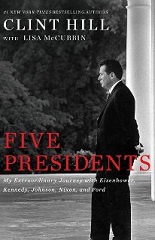
Five Presidents: My Extraordinary Journey with Eisenhower, Kennedy, Johnson, Nixon and Ford-Clint Hill with Lisa McCubbin

clint hillThe 20th Century was filled with some of the most earth-shattering events the world has ever seen.  The home video shot by Abraham Zapruder that recorded the assassination of John F. Kennedy stands as one of the most important pieces of motion picture ever captured.  During that film, as former Firs Lady Jacqueline Bouvier Kennedy reaches to the trunk of the car to retrieve a portion of JFK’s skull, a secret service agent can be seen leaping on the trunk of the car as the motorcade sped down the Stemmons Freeway en route to Parkland Hospital.  The agent, Clint Hill stands out in the film as only one of two agents to make any major movement to help the fatally wounded Kennedy and Gov. John Connally. Hill would go on to serve three more presidents and today is a best-selling author with several books published about his time working in the United States Secret Service.

Teaming up with Lisa McCubbin, who worked with Hill on his first book, ‘Mrs. Kennedy and Me’ and subsequent memoir ‘Five Days In November’, Hill recounts his experiences during a career that stretched over five administrations, beginning with the legendary Gen. Dwight D. Eisenhower.  The secret service of today is far advanced from the days of Eisenhower’s administration and as Hill shows us, the secret service was still developing as the agency tasked with the daily protection of the commander-in-chief.  As Eisenhower’s administration comes to an end, a new president takes office and his administration would change Hill’s life forever.  Primarily assigned to guard Mrs. Kennedy, she and Hill become close friends and as fate would have it, he was included in the motorcade on November 22, 1963.   The murder of JFK and the swearing-in of Lyndon Johnson are still surreal and continue to capture the public’s attention as more books are published about that day.

Moving on to Johnson’s administration, we see the stark contrast between the two presidents.  But Hill allows us to see the private side of LBJ, not often seen or discussed in books or magazines. He would stay with Johnson throughout the remainder of his term until the top office in the land was assumed by Richard M. Nixon.  Nixon’s presidency and the events that followed would shock not only Hill but the entire nation.   The Vietnam War and Watergate scandal permanently marked Nixon’s time in office and his resignation is the only one to have ever occurred by a sitting U.S. President.  The prior resignation of then Vice-President Spiro Agnew began to erode the already crumbling confidence in the U.S. government.  And by the time that Gerald Ford took office, things had reached the point where the nation was threatening to become unhinged.   Regardless of their personal shortcomings or questionable judgment calls, Hill stood by each one and recalls his time with each and remarks fondly and gracefully on the proud career he left behind.

This book is not a “smoking gun” about JFK’s murder nor is it a gossip column.  It is a memoir by a remarkable person who had an even more remarkable career.  His life was and is extraordinary by far and in the book an entire cast of characters make an appearance such as Arnold Palmer, Frank Sinatra and even Elvis Presley.  Assassinations and attempted assassinations,  infant deaths, racial tension, war and social change are relived as Hill’s memory comes alive.  And as he Hill points out, not many agents have worked in as many details as himself making his story all the more valuable as a piece of history recounting America’s most dangerous moments.

ISBN-10: 1476794138
ISBN-13: 978-1476794136


Without A Doubt – Marcia Clark with Teresa Carpenter

clarkOn October 3, 1995, I was in my sophomore year at Bishop Loughlin Memorial High School in Brooklyn, New York.  Not long after the lunch periods had ended, our classes were interrupted as the teachers informed us that the verdict in the O.J. Simpson murder trial was scheduled to be read.  We stopped class and turned on the television to witness what we all knew was a historic event.   When the verdict was read and Simpson was found not guilty, the school erupted in cheers and howls.  None of us wanted to see Simpson convicted of murder and to many African-Americans, he was proof that you could in fact make it to be someone in America if you were a person of color.  After the acquittal of the police officers involved in the beating of motorist Rodney King, racial tensions had peaked across the nation and the Simpson trial would showcase the issue of race to the fullest.  The images of Marcia Clark, Robert Shapiro, Christopher Darden, Johnnie Cochran and Det. Mark Fuhrman have permanently been burned into the memory of nearly every American who watched the gripping trial from start to finish.

Today, the trial is long forgotten and Simpson sits in jail having been convicted of armed robbery on October 3, 2008.  Marcia Clark and Christopher Darden are no longer at their old posts.  Robert Shapiro still practices law today at 73 years of age. Tragically, Johnnie Cochran died on March 29, 2005 after a long fight with a brain tumor.  Lance Ito is still in the legal system trying cases but no longer as a judge.  And Det. Mark Fuhrman is now retired from the force.  The trial captivated the world and caused a deep divide between Americans of all colors.  Like every major trial, the Simpson case was full of interesting characters, questionable rulings and ended in a most shocking manner.  Marcia Clark, the former lead prosecutor, has penned her thoughts and recollections on the case in this phenomenal account of the effort to win a murder conviction against Simpson.  Partly an autobiography, Clark takes us back in time to her early life and her path to becoming a litigator. And by chance, she lands the prosecution of O.J. Simpson, the case that changed her life and career.  The evidence is revisited, the statements analyzed and the games played by the litigants explored leaving no stone is left untouched with Clark even revealing some of her own private secrets that serve to put her passion and energy into a new light to be absorbed by the reader.  I’m quite sure that even today, most of the American public is probably still completely unaware of many of these things.  Her approach is no-nonsense and straight to the heart of the case infused with her reasons for why she believed Simpson was guilty without a doubt.  And contrary to what many believed at the time, there was never an ax to grind, but only her job as lead prosecutor to see justice done regardless of the defendant’s status in society.

After reading this book, I was forced to ask myself many questions, some of which have an unfavorable answer.  Clark, as she recalls the trial of the century, forces us to examine how easy it is to be blinded by race and perceptions of both injustice and equality.  In Simpson, millions of African-Americans saw a man they considered to be one of their own as someone who “made it”.  But as we follow Clark through the case, we have to ask, is that really the case?  Or was Simpson completely detached from the African-American community?  Nicole Brown Simpson and Ronald Goldman are long gone,  remembered by their loved ones of their short tenures on earth.  The murders, gory and brutal, showed the worst of what human beings are capable to doing to each other. The beauty in this memoir is that we are able to see how and why bias can exist in a court of law and the unfortunate results that arise as a result.  And even today, as murder trials are conducted across the country, each defendant is forced to wonder if they too will get a jury of their peers. And if they don’t, just how much will race be a factor? And if jurors are intent of serving with racial bias in their hearts, then what does that say for democracy and the concept that justice is blind?

The Marcia Clark of today is a woman wise beyond her years, a veteran of the American judicial system.  Hindsight is her best ally as it allows her to take us back and re-examine the entire case from start to finish.   Some of us will read this book and think that O.J. is still innocent while others, will be read the book and have their belief in his guilt  reconfirmed.  No matter which side of the fence you find yourself on, this book stands as an invaluable look into the trial of the century. She originally finished the book in 1997 but added a new foreword in the wake of the deadly police shootings that have taken place over the past couple of years.  Her comments about the state of America, race relations and criminal procedure serve to educate the reader about what really happens inside of the courtroom and behind the scenes.

ISBN-13: 9781631680687

My Grandfather Would Have Shot Me: A Black Woman Discovers Her Family’s Nazi Past-Jennifer Teege

16923849739_a73717f925_bOn September 13, 1946, Amon Goeth, the former commandant of the Kraków-Płaszów concentration camp, is executed for his actions during World War II  after a trial and conviction by the Supreme National Tribunal of Poland.  Goeth was brought to life on the silver screen in Steven Spielberg’s classic film ‘Schindler’s List’ in which he is played by actor Ralph Fiennes.  The film is moving and one of the most haunting to have even been produced about the Holocaust.  Survivors of the Holocaust vividly recalled memories of the remorseless killing committed by Goeth and those under his command. Several decades later, his life is revisited, not by a random author, but by his granddaughter Jennifer Teege, a child of a German mother and Nigerian father who discovers her family’s past and struggles with her own identity in this biography that is bound to leave the reader speechless.

Jennifer’s story and those of other descendants of Third Reich leaders, most notably Gudrun Himmler and Niklas Frank, shed light on an often overlooked part of the second World War.  Following the Allied victory and occupation of Germany, the families of Nazi officials were often in turmoil.  Hunted by the Allies, many Nazis fled to other countries, some committed suicide, others were executed and under the CIA’s Operation Paperclip program, some were even relocated to the United States.  Their descendants were left to confront the individual’s past actions and the policies of the Third Reich under Adolf Hitler.  And it is this past which haunts not only Jennifer, but her mother Monika, Goeth’s daughter who was only 10 months old when he was executed.

The book begins in Hamburg, and we are with Jennifer in the library as she discovers a book about Amon Goeth. Recognizing the last name, she begins to ask herself questions and puts together the puzzle that is her past.  And as she learns about her grandfather, the man who struck terror in the hearts of thousands of Jews, she is faced with the grim reality that yes, her grandfather would have shot her during his reign of terror.  In her youth, the remaining link to her grandfather was her grandmother Irene, who until her own death from suicide in 1983, remained loyal to Goeth.  Having lived with Goeth at the camp, she conceived Monika while Goeth was still legally married to another German woman.  The inner battle she fights regarding her feelings toward her late grandmother whom she loved dearly, is heartbreaking and reminiscent of the struggle of many others whose parents and grandparents committed horrific crimes under the banner of the Third Reich.

Teege’s story is an amazing one,  filled with many trials and tribulations.  We follow her as she struggles with depression, how to tell her Israeli friends about her past, establish relationships with both of her biological parents, love, a family of her own and ultimately, her acceptance of her family name.  To the generation of today, World War II is something that’s mentioned in textbooks. But a large number of people around the world who are still alive,  memories remain fresh from a time in history when the security of the world as we know it, was in danger of being completely destroyed.  For people such as Monika Goeth and Jennifer Teege, the war always remains in the present in the form of Amon Goeth, whose deeds and name will continue to live in infamy.  And as we learn Jennifer’s story, we are forced to ask ourselves what would we do if we were in her place? It’s an answer I’m sure many of us would struggle to find.

ASIN: B00XGLGEMS


Eleanor Roosevelt Volume 2: The Defining Years 1933-1938-Blanche Wiesen Cook

e-roosevelt-vol-2In volume I of her three-volume biography of the late Anna Eleanor Roosevelt (1884-1962), Blanche Wiesen Cook explored the early life of the pioneering First Lady of the United States.  We learned about her family history, both intriguing and tragic, upbringing by close relatives, her marriage to Franklin and his election of the presidency of the country.  The book closes as the family assumes their role as the new occupants of the White House.  In this second volume, their story continues with the new President finding himself embattled on several fronts as the depression rages, Adolf Hitler threatens world peace and domestic social tensions threaten to tear the nation apart.  The First Lady also finds herself fully immersed in ongoing current events that cause concern for citizens across the country.  And it is during this time period, 1933-1938 that she defines herself as she finds her calling as a champion of women’s rights and advocate of equality and well-being for Americans of all ethnic backgrounds.
Towards the end of the first volume, Lorena “Hick” Hickok (1893-1968) enters Roosevelt’s life and becomes a constant companion and according to the letters analyzed by the author, intimate of the First Lady.  Hick would be one of several people to make up her close circle, and all of them are examined in detailed in this excellent continuation.  Tragedy seems to stand out in this volume as several people close to the First Lady die bringing an end to long-term and mutually supportive relationships.  Among these the late aviator, Amelia Earhart (1897-1937). Undeterred, she continues her quest for civil rights and a firm stance by the United States against German aggression.  These stands would cause strain in her relationships with her relationship with Hick being tested on the issue of racial discrimination, a cause which consumed a large portion of the First Lady’s political life.

As war threatens to erupt in Europe and the old standing tradition of segregation and Jim Crow is challenged domestically, the First Lady continues her transformation into one of the finest women in American history.  Her beliefs and crusades were not without opposition and the behind-the-scenes battles and power plays are exposed revealing the reluctance to act and sometimes treasonous actions of members of the State Department and of FDR’s own cabinet.  The first couple’s personal lives would also be tested with three children in doomed marriages and emergency surgeries for various ailments.  But throughout all of it, the pioneering First Lady never wavers in her campaigns cementing her legacy as one of a kind.

The aggression of Nazi Germany fueled by the maniacal Adolf Hitler (1889-1945), put the world on notice that a new empire was strengthening in Europe.  The Nuremberg Laws combined with Kristallnacht, blatant discrimination and humiliation of Europe’s Jewish citizens, laid the foundation for the First Lady’s campaign for American intervention and support for refugees fleeing the Nazi menace.  FDR and other leaders were not strong advocates of intervention and their sluggishness to fully act served as chord of discontent in the Roosevelt household.  The cause for Jewish civil rights in Germany and other European nations, supplemented the strengthening civil rights movement here in the United States with regards to racial prejudice against African-Americans and other minorities through unconstitutional legislation and the violent practice of lynching, against which, the pioneering First Lady spearheaded a campaign.  Her actions at the conference in Birmingham, then controlled the infamous Bull Conner and his police department, is one of the shining moments in the book for at the time she took a stand not just for herself but for all Americans.   And today as we deal with social issues that serve to undermine the tremendous progress this nation has made, we can look back at her action and remind ourselves that regression and submission are not options.

A great biography has the ability to remain unbiased, delivering the facts whether they are positive or negative. Cook does a great job of showing the moments where Roosevelt’s actions were questionable.  A native of the South, we see through the author’s words, the continuous effort on Roosevelt’s part to remove herself from her southern upbringing prone to deep-seated racial bigotry.  And at several points in the book, ER herself makes strides to remind herself of the insensitivity that can accompany words.

The third volume of this excellent biography is slated for release on November 1, 2016 and can be ordered in advance on Amazon.com.   Based off of what I have read so far, the  best is yet to come as we see the outbreak of World War II, FDR’s untimely death and the later years of Anna Eleanor Roosevelt.

ISBN-10: 0140178945
ISBN-13: 978-0140178944


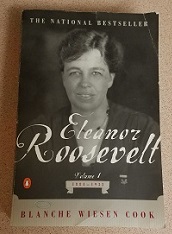
Eleanor Roosevelt: Volume I, 1884-1933-Blanche Wiesen Cook

e-roosevelt-vol-1The President of the United States has what many consider to be the toughest job in the nation.  Tasked with the impossible feat of making everyone happy at all times while often performing highly unpopular actions, the President often goes through a transformation while in office that results in deep reflection later in life. Standing next to each President in modern times, is the first lady who in her own right, has evolved into a major presence with a voice of her own.  This November will mark the end of the Obama administration and as they prepare to leave the White House, I firmly believe the first lady can look back without regret as having served the nation as one of the finest America has seen.   She follows a long line of pioneering first women to have occupied the White House, adding  a touch of grace and class to what used to be a strictly supplementary role. But many  years before Michelle Obama, there was another first lady, who stands out as one of American’s greatest historical figures and whose legacy continues today, Anna Eleanor Roosevelt (1884-1962).
In the first of this three-volume biography, Blanche Wiesen Cook explores Roosevelt’s early life, highlighting the complex family tree and the success and tragedy that surrounded the famed family.  As a niece to the legendary Theodore “Teddy” Roosevelt(1858-1919), she was introduced to politics at a young age and following her marriage to Franklin Delano Roosevelt, she would remain a political and cultural icon for the rest of her life.  Drawing on correspondence that survived throughout the years and the recollections given by those who knew her, Cook’s biography is an intimate account of a woman who never stopped in her effort to change America.

As the reader makes their way through the book, the information learned will be eye-opening and intriguing. The events that unfold in the book seem by today’s standards mind-boggling, but in Roosevelt’s time, America was far different place and as Eleanor’s life comes alive in this brilliant biography, we are transported back in time to when America was struggling with very grave social issues.   But throughout all of this, we see the transformation of a young woman into a grown woman with power and a voice of her own as the most dynamic and controversial first lady of her time.  An aviator, friend of Amelia Earhart, mother of six children, teacher, writer and pioneer of women’s and civil rights, she battled wars on many fronts refusing to give up her causes and surrender her beliefs.

The book ends as she finally makes it to the White House and becomes fully immersed in the Washington, D.C. political culture. Her friendship with Lorena Hickok begins to develop and it would continue for many years to come.  FDR is also facing his own challenges but his toughest test from out of Berlin and Tokyo have yet to come.  It is in the second part, a review of which is forthcoming, that Franklin and Eleanor continue their odyssey as the new and engaging first couple of the United States of America.

ISBN-10: 0140094601
ISBN-13: 978-0140094602

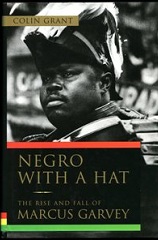
Negro With a Hat: The Rise and Fall of Marcus Garvey-Colin Grant

garveyIn the Bedford-Stuyvesant section of Brooklyn lies Marcus Garvey Blvd, a street named after the late iconic figure in the African-American struggle for civil rights in the United States and abroad. The native son of Jamaica and former resident of London, England,  made his name famous on the streets of Harlem, New York through the formation and activities of the Universal Negro Improvement Association (UNIA).   The organization’s purpose to build up the moral, economical and social status of Black Americans, combined with his “back to Africa” movement, remain defining movements in the African-American experience.  At the time of his death on June 10, 1940,  Garvey was a shadow of his former self after several severe strokes had taken their toll on his aging body.  His death dealt a sever blow to the strengthening movement for equality.  And 76 years after his death, his writings, speeches and life, are still remembered, quoted and analyzed for they  remind us of the importance of standing up for what we believe in.  Garvey remains one of most magnetic figures of the 20th century.

The rise and fall of the Black Start Line is often the focus of many articles about Garvey.  And while the history of the line is unfortunate, the real Marcus Garvey typically remains hidden in the shadows.   But who was Marcus Garvey and why is his story so important to the history of the United States and the movement for civil rights? Colin Grant presents to us the definitive biography of the late icon and his controversial and tragic life.  Born in St. Ann’s Bay, Jamaica, on August 17,1887, to the late Malchus Garvey, he would leave his native Jamaica many times throughout his life,  making his mark across the world.   Grant takes us back in time to witness the rise of the most gifted orators to speak directly to the soul of African-Americans. Garvey’s fiery rhetoric and inviting personality, earned him a legion of believers, intent on following him all the way back to Africa by way of Liberia.

But behind the speeches and mass congregations, the personal life of Marcus Garvey was nothing short of complex, filled with stress, fear, disappointment & violence.  As leader of the UNIA, he would face continuous battles with other leaders such as W.E.B. DuBois.  His success and influence also earned him the watchful eye of the Bureau of Investigation, the predecessor of the Federal Bureau of Investigation, headed by a young J. Edgar Hoover.  Once shot and wounded and suspected in the violent deaths of others, Garvey was no stranger to violence and death.  Grant has carefully researched the episodes and revisits them here showing the behind the scenes movements that helped Garvey rise to fame and which also caused his demise. At many points throughout the book, the reader is forced to confront the fact that Garvey, for all of his good deeds and intentions, was also a seriously flawed person at heart.  But his shortcomings in no way detract from his vision for the complete freedom of Black Americans from the brutal system of racial injustice.

To the youth of today, Jim Crow, the Civil Rights Movement and even apartheid are old terms relating to an era to which they could never relate. But for many older Americans and people abroad, the dark periods that exemplified some of the worst actions humanity has ever witnessed, remain fresh in the mind as if they happened yesterday.  While it will be rare to find someone alive today from Garvey’s generation, there are those among us who can relate to us the importance of his life.  Many years after his death, he was named a national hero in his native Jamaica and across the world his name is still remembered.  He is no longer with us, but left us many writings and speeches to remind us of the importance of self-preservation, respect and the well-being of all of our brothers and sisters from all backgrounds.  For those interested in Garvey’s life to see who the man behind the speeches was, this book is an excellent place to start.


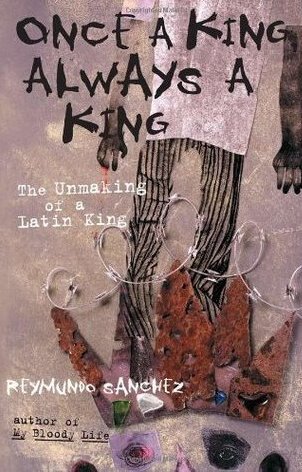
Once a King Always a King: The Unmaking of a Latin King-Reymundo Sanchez

278593-_uy475_ss475_Reymundo Sanchez, the author who brought us his incredible life story in ‘ My Bloody Life: The Making of a Latin King’ returns with this follow-up book about his final defection from the Latin Kings and the phase in his life that begins.  At the beginning of the book, he is still entrenched in the gang life but desperately trying to find a way out.  That way out would come in the form of arrest and subsequent incarceration.  The time he spends in prison opens his eyes and minds to the harsh realities of the gang life and the preciousness of freedom.  The dysfunction and hopelessness he witnesses inside the walls of a prison serve as the catalyst for his final defection from gang life and onto the path of redemption.  The events that follow and his response and adaptation to them, form the nucleus of this incredible story. His perseverance and success in confronting his past demons are some of the best parts of this fascinating story.

In the first book, we witnessed the dysfunctional childhood endured by the young Sanchez, complete with a neglectful mother, abusive stepfather, sexual predators, violence, money, drugs and tragedy.   Some of the same characters make an appearance in the second part of his story but the nature of the relationships are much changed from what they once were.  However, they all play in part in the events that happen and the changes he makes in his quest for a new life.  The new aspect of his life on display here for the first time, is love.  In this part of his life story, we are witnesses to the first real relationship he has with a member of the opposite sex not based on drugs, money or just sex in general.  And as the author points out, this relationship is what finally allowed him to face the demons that haunted him for so many years.   Those same demons however, would not go away quietly and rear their ugly heads at more than one point during the book as the author struggles to keep his composure as he tries to break old habits that insist on dying hard.

Some moments in the book are a tough read but necessary to understand the dramatic transformation that the author goes through. Perhaps the most tragic part of the book aside from family relationships and intimate relationships with women, is that even though you leave a gang, sometimes that life never fully leaves you.  And he realizes that once a king, always a king, even if unwillingly.  And it this message that is conveyed in this eye-opening personal account. Today, Sanchez is no longer a Latin King, but he continues to carry the many scars from his early life, some of which will never fully heal.  He freely admits that he does the best he can but at times, it is far from easy.  His story and message should be read and heard by all young women and men interested in the gang culture and a life of crime and parents wishing for their children to have as normal of a life as possible.  Sanchez’s story is tragic, violent and at times tough to read, but his life and transformation is rare among many of his peers.   It took enormous courage for the author to write these two books, but his story has become a personal favorite of mine and I highly recommend the book to anyone interested in the Latin Kings and the brutal life that exist within a gang.  And in addition to his own story, he also wrote the story of a female gang member, the incredible book ‘Lady Q: The Rise and Fall of a Latin Queen ‘, with former gang member Sonia “Lady Q” Rodriguez.

ISBN-10: 1556525532
ISBN-13: 978-1556525537


Chiang Kai-Shek: An Unauthorized Biography-Emily Hahn

chiang-kai-shekApril 5, 1975-Chiang Kai-Shek dies at the age of 87 in Taipei, Taiwan from the effects of renal failure enhanced by cardiac malfunction.  His death marks the end of the life of one of the most important figures in the history of modern-day China and the 20th century.   As leader of the Kuomintang Nationalist Party, he oversaw efforts to resist the Japanese occupation of China and the efforts of the Chinese Communist Party, led by a young Mao Tse-Tung, to seize control of the Chinese government.  Mao finally succeeded, formally declaring the People’s Republic of China on October 1, 1949. In the years that followed, Chiang’s role in the history of China was often diminished and overshadowed by Mao’s ‘Great Leap Forward’, the controversial plan that brought China to the brink of disaster.  In recent years, Chinese society has seen a surge in freedom movements and the efforts the youths of China to bring change to a system in place for decades.  And as the country continues to see itself transformed as new ideas are presented, many may reflect back in time to a period in which a nationalist was fighting to bring democracy and avoid a Communist empire.

Emily Hahn presents to us this biography of the late leader which follows his life from the small village of Chikow up until his exile to Taiwan following the push forward into mainland China by Mao’s Chinese Communist Party.  Known as the  Generalissimo, the rise and fall of the KMT marked a tragic time in Chinese history in which the nation was caught in a battle between several nations to control the future of China.  His decisions and actions were often questioned and even his loyalty came under scrutiny by officials in the United States government.  However, this is the real Chiang Kai-Shek, the good, the bad and even the mysterious.  A complex figure as all world leaders are, there is no single adjective to accurate describe the late leader.   However, Hahn’s account is an informative and valuable look into his life and the many trials and tribulations that afflicted the legendary figure.   The relationship between the Generalissimo and his foes and allies in the U.S. is a case study in the controversial U.S. foreign policy prior to, during and following the second World War.  Hahn’s account also sheds light on the roots of the Cold War that eventually developed between the United States and Soviet Union.  For a good read on Chiang Kai-Shek, the Chinese Communist Party and the alignment and eventual disconnect between America and Russia, this is a good place to start.

ASIN: B0007DLT00