
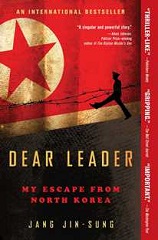
 On more than one occasion during my trips abroad, I came to the realization that I had been blessed to have been born in Brooklyn, New York in the United States of America. And while my country has its share of issues that plague the nation, I do enjoy a level of freedom many people around the world would die to have. Because I was born here, it is far to easy to take for granted the rights and privileges that I enjoy as an American citizen both here at home and when I travel outside the country. I’ve always been fond of personal stories of triumph for they remind me that outside of the borders of the place I call home, many people do not have the luxuries or lifestyle that I do. In fact, in many nations in this world, there is next to nothing for millions of men, women and children.
North Korea, for many years, has been viewed by Americans as a nation cut off from the western world and run by a brutal family dictatorship that has stretched over several generations. Famine, despair and oppression have caused thousand of citizens, soldiers and high-level officials to defect to South Korea in search of a better life. The path to defection is highly dangerous and for those that are caught, it is almost certainly, a painful and slow death. Each survivor that does make it to South Korea has their own story of defection, some so extreme that it will bring tears to the eyes of the listener. This story by Jang Jin-Sung, a former poet of the United Front Department, is an inside look into the life of a young man working in a high position in the government who along with a friend, makes the ultimate decision to defect, leaving his friends and family behind in North Korea. Even before setting out on their journey, the two realize that their decision will have long-lasting ramifications. In fact, Sung, to this day, is considered an enemy of the State in North Korea. But what they would experience was beyond anything they could have imagined and makes Sung’s survival and story, all the more surreal.
Determined to seek asylum in South Korea, the duo makes their frantic escape from Pyongyang, but as the reader soon learns, not every face encountered can be trusted and even those who speak the same language, may be of no help at all. Harsh climates, blizzards, freezing temperatures and extreme hunger, nearly push the two over the edge as they struggle to maintain their sanity and physical well-being. Stuck in a foreign land in China, unable to speak the native language, they must seek out fellow defectors and immigrants from their homeland if they wish to survive. And as we learn, some of these people had hearts of gold, whether they knew it or not, and every move made was a matter of life and death for the two defectors. The native Chinese citizens also play a part in their story and through them, we are able to see the stark contrast between the two nation and their governments. And as we see through Sung’s eyes, a cloak of deception exists in North Korea, forcing everyone to buy into the myth of the Dear Leader.
While his story is one of success and triumph, it is not without tragedy and some of the parts of his story are nothing short of heartbreaking. And it will be unimaginable for those used to living in a western culture, for anyone to live in the manner in which they did in North Korea. But Sung’s story is a reminder that those of us who were blessed to have been born in other nations that we should never take our liberties and freedom for granted for there are many others out their that are envious and risking death to have the same. Sung’s memoir is one more attempt to lift the veil off the destructive, brutal and murderous facade of the Dear Leader.
ISBN-10: 1476766568
ISBN-13: 978-1476766560
 This book is not by any means, an investigative report into Scarpa’s activities. For the full story on his crimes, relationship with the FBI and its aftermath, the best book that comes to mind is Peter Lance’s ‘
 On January 19, 2013, Hans J. Massaquoi, the former editor of Ebony magazine and writer for Jet magazine, died at his home in Jacksonville, Florida at the age of
 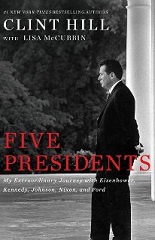 The 20th Century was filled with some of the most earth-shattering events the world has ever seen. The home video shot by Abraham Zapruder that recorded the assassination of John F. Kennedy stands as one of the most important pieces of motion picture ever captured. During that film, as former Firs Lady Jacqueline Bouvier Kennedy reaches to the trunk of the car to retrieve a portion of JFK’s skull, a secret service agent can be seen leaping on the trunk of the car as the motorcade sped down the Stemmons Freeway en route to Parkland Hospital. The agent, Clint Hill stands out in the film as only one of two agents to make any major movement to help the fatally wounded Kennedy and Gov. John Connally. Hill would go on to serve three more presidents and today is a best-selling author with several books published about his time working in the United States Secret Service.
 On October 3, 1995, I was in my sophomore year at Bishop Loughlin Memorial High School in Brooklyn, New York. Not long after the lunch periods had ended, our classes were interrupted as the teachers informed us that the verdict in the O.J. Simpson murder trial was scheduled to be read. We stopped class and turned on the television to witness what we all knew was a historic event. When the verdict was read and Simpson was found not guilty, the school erupted in cheers and howls. None of us wanted to see Simpson convicted of murder and to many African-Americans, he was proof that you could in fact make it to be someone in America if you were a person of color. After the acquittal of the police officers involved in the beating of motorist Rodney King, racial tensions had peaked across the nation and the Simpson trial would showcase the issue of race to the fullest. The images of Marcia Clark, Robert Shapiro, Christopher Darden, Johnnie Cochran and Det. Mark Fuhrman have permanently been burned into the memory of nearly every American who watched the gripping trial from start to finish.
 In volume I of her three-volume biography of the late Anna Eleanor Roosevelt (1884-1962), Blanche Wiesen Cook explored the early life of the pioneering First Lady of the United States. We learned about her family history, both intriguing and tragic, upbringing by close relatives, her marriage to Franklin and his election of the presidency of the country. The book closes as the family assumes their role as the new occupants of the White House. In this second volume, their story continues with the new President finding himself embattled on several fronts as the depression rages, Adolf Hitler threatens world peace and domestic social tensions threaten to tear the nation apart. The First Lady also finds herself fully immersed in ongoing current events that cause concern for citizens across the country. And it is during this time period, 1933-1938 that she defines herself as she finds her calling as a champion of women’s rights and advocate of equality and well-being for Americans of all ethnic backgrounds.
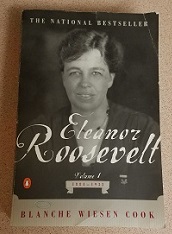 The President of the United States has what many consider to be the toughest job in the nation. Tasked with the impossible feat of making everyone happy at all times while often performing highly unpopular actions, the President often goes through a transformation while in office that results in deep reflection later in life. Standing next to each President in modern times, is the first lady who in her own right, has evolved into a major presence with a voice of her own. This November will mark the end of the Obama administration and as they prepare to leave the White House, I firmly believe the first lady can look back without regret as having served the nation as one of the finest America has seen. She follows a long line of pioneering first women to have occupied the White House, adding a touch of grace and class to what used to be a strictly supplementary role. But many years before Michelle Obama, there was another first lady, who stands out as one of American’s greatest historical figures and whose legacy continues today, Anna Eleanor Roosevelt (1884-1962).
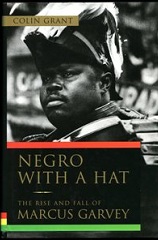 In the Bedford-Stuyvesant section of Brooklyn lies Marcus Garvey Blvd, a street named after the late iconic figure in the African-American struggle for civil rights in the United States and abroad. The native son of Jamaica and former resident of London, England, made his name famous on the streets of Harlem, New York through the formation and activities of the Universal Negro Improvement Association (UNIA). The organization’s purpose to build up the moral, economical and social status of Black Americans, combined with his “back to Africa” movement, remain defining movements in the African-American experience. At the time of his death on June 10, 1940, Garvey was a shadow of his former self after several severe strokes had taken their toll on his aging body. His death dealt a sever blow to the strengthening movement for equality. And 76 years after his death, his writings, speeches and life, are still remembered, quoted and analyzed for they remind us of the importance of standing up for what we believe in. Garvey remains one of most magnetic figures of the 20th century.


You must be logged in to post a comment.