
 “The first lesson a revolutionary must learn is that he is a doomed man” -Huey P. Newton.
Those prophetic words spoken the late Huey P. Newton serve as a reminder of the fate is to be accepted when one decides to become a revolutionary intent on change through armed struggle. Successful revolutions throughout history were often violent with climactic endings that forever changed the history of the nation in which they were executed. Here in the United States, some would argue that the revolution for civil rights has never ended. The faces may have changed but the age-old problems remain. While the days of Fidel Castro and Chairman Mao have long passed, their efforts, successes and failures are case studies for the positive and negative effects of armed struggle. The 1960s proved to be a turning point in both American and world history as young men and women found an ideology they could relate to in the teachings of Marx, Lenin and Engels. The Black Panther Party emerged during this decade giving African-Americans and other minorities a source of pride and confidence against systemic discrimination. Created by Huey and Bobby Seale, the party later became a target of the FBI’s illegal COINTEL program which helped contribute to its self-destruction.
Revolutionary Suicide is Huey’s autobiographical masterpiece takes us deep inside his mind and conscience which was always on and moving in several different directions at once. Functionally illiterate by the time he graduated high school, he would eventually learn to read and write and became a voracious reader resulting in one of the sharpest analytical and political minds the civil rights movement ever produced. Earning a Ph.D from the University of California in Santa Cruz, he evolved into a gifted writer full of energy and raw emotion and his words and thoughts are conveyed in an engaging matter bound to keep the reader engaged. His life was anything but ordinary and he was charged and tried for murder more than once. Known to have a hair-trigger, he admits his past mistakes and his disdain for authoritative figures. It was a trend that would continue his entire life. Defiant and stoic, this is Huey in his own words. And if you like this you might also like David Hilliard’s Huey: Spirit of the Panther.
ISBN-10: 0143105329
ISBN-13: 978-0143105329
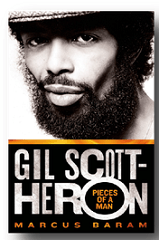 On May 27, 2011, Gil Scott-Heron died of congestive heart failure at the age of
  On July 17, 1959, a shock wave was felt through the jazz industry and a somber mood filled the corridors of the New York Metropolitan Hospital. Eleanora Fagan, known by her stage name Billie Holiday, died tat the age forty-four from the effects of cirrhosis of the liver and the failure of several additional vital organs. In death the final chapter of her short and tragic life reached its foreseeable conclusion. Holiday had struggled with drug addiction and had found herself embroiled in dysfunctional and abusive personal relationships. On stage, she captivated audiences and left her mark as she became Lady Day. Her life story has been revived on Broadway as Lady Day at Emerson’s Grill starring Audrey McDonald. The play became a New York Times’
 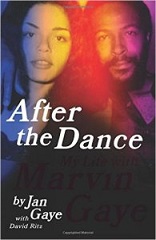 In 1977, sixteen year old Janis Hunter married soul singer Marvin Gaye becoming his second wife following Gaye’s earlier marriage to Anna Gordy, the younger sister of Motown founder Berry Gordy. Their marriage produced two children before the couple divorced several years later. Now in her later years, Janis tells her story of what her life was like being married to the legendary recording artist. As a starstruck teenage girl, she easily falls head over heels for the soul singer whose seductive charming personality, good looks and fast track lifestyle captured her heart and interest. Following the wedding bells, reality set in and a host of demons that plagued Gaye throughout his life rise to the surface transforming the fairy tale marriage into a relationship destined to implode. Marvin’s life was an enigma in itself and it can be said that he never did find peace on earth. His ability to self-destruct and engage in life threatening behavior became staples of his career and were factors in his death after a violent confrontation with his father on April 1, 1984. Depression, a dysfunctional relationship with his father and narcotics formed a deadly triumvirate from which Gaye was never able to escape. Janis became first hand witnesses to this and as a result of her close proximity to him, she also faced her own demons that threatened to consume her own life. This is the true story of what really did happen when she married the man that was once Motown’s prince.
 On May 24, 1963, Attorney General Robert F. Kennedy met with a group composed of authors and civil rights icons at his Central Park South apartment. Among those in attendance were Lorraine Hansberry and her friend and fellow author, James Baldwin (1924-1987). The meeting quickly became volatile as the activists accused the Kennedy administration of dragging its feet on civil rights legislation. Their frustrations at the rampant discrimination in the United States and the inability of the government to take action, boiled over and Kennedy found himself in a hornet’s nest of raw emotion. The meeting left a permanent mark in his memory but in time he would become a vocal advocate for equal rights for all American regardless of race, creed or gender. His resurgence as the candidate of the poor and the downtrodden became the basis for his 1968 president campaign that ended tragically with his assassination in Los Angeles on June 5 ,1968. Baldwin outlived Kennedy by nineteen years and today both are remember for their efforts to transform the American conscious and way of thinking. In recent years, his work has been rediscovered and studied for its messages that were accurate then and are accurate now. Baldwin’s public stance of many topics was blunt and non-confusing. He did not mince his words and his delivery was direct and always mean to stir thought. But for all of his public actions, his private life is a story on its own that shows the author in a completely different light. His friend for many years, David Leeming, wrote this biography of his late friend to show the world who the real James Baldwin was. And what he has composed is a definitive account of the life of the late author.
 When Rodman Edward “Rod” Serling, died on June 28, 1975, he left behind a legion of fans who fondly remembered and loved his hit show ‘The Twilight Zone’. The show is an American classic and every year on New Year’s Day, the Sci-Fi channel runs a full marathon. The show aired from 1959 to 1964, and in those fives years, a legacy was created that shows no signs of slowing down. The popularity of the show has resulted in fan sites, Instagram and Facebook pages, that pay homage to what many be the greatest science fiction show in television history. Classic episodes such as Nightmare at 20,000 Feet starring William Shatner of Star Trek fame and Nothing in The Dark with a young Robert Redford are some of the author’s favorites among a vast collection of outstanding creative genius. But who was the smooth talking man who appeared in a suit at the end of the episode with a cigarette in hand? His daughter Anne answers these questions in this intimate portrait of the man she called her dad.

 On February 21, 1965, Malcolm X (1925-1965) was assassinated at the Audubon Ballroom in Harlem, New York. The image of him laying mortally wounded while surrounded by his close aides shows the savagery employed by his killers. His death was violent and unmerciful, taking place in front of his wife Betty and their six daughters. From the initial volley of shots, it was clear to most that Malcolm’s wounds were fatal. First aid was administered to no avail. Among those who rushed to his side was a friend and dedicated civil rights activist named Yuri Kochiyama (1921-2014). She is rarely mentioned in stories about the legendary Muslim leader but her life was one of dedication to civil rights for all human beings.
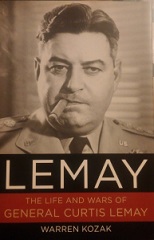 October 1, 1990-General Curtis E. LeMay (Ret.) dies at the age of 83 at March Air Force Base in Riverside County, California. The former General became a legend in the United States Air Force after reorganizing the Strategic Air Command and pushing for the development of the B-29 bomber which changed the Allied effort in World War II. Satirically nicknamed “Bombs Away Lemay”, he developed a reputation as an extreme patriot willing to go to whatever length was appropriate in the protection of the United States. And in Stanley Kubrick’s ‘Dr. StrangeLove’, the character of Jack D. Ripper is based on of Lemay. Warren Kozak’s account of the life of the late General is the definitive account of LeMay’s life.
 FREETHINKING BIBLIOPHILE
You must be logged in to post a comment.