
On  June 30, 1960, the Democratic Republic of the Congo was formed after fifty-two years of Belgian colonization. Its charismatic leader, Patrice Lumumba (1925-1961), served as an inspiration and hope for the people of Congo, who wished to govern themselves and move their country into a new direction. Less than one year later on January 17, 1961, Lumumba was executed in Katanga as a result of a coup by military colonel Joseph Mobutu (1930-1997). The assassination and seizure of power by Mobutu, set in motion a cycle of violence that has continued for more than five decades. Between 1994 and 2003, the conflict known as “Africa’s first world war” ravaged the country and caused the deaths of an estimated five million people. Rebel groups continue to operate in various regions of the country, continuing the system of violence. In 2005, Anjan Sundaram was finishing his final semester at Yale University, where he graduated with a degree in advanced mathematics. After forming a friendship with a cashier, he made the decision to abandon a career in corporate American and move to the Congo, where he would ply his trade as a foreign correspondent in one of the most tumultuous places on earth. This book titled “Stringer’ is a memoir of his time in the Congo and the many people that became a part of his life.
As the book opens, Anjam has just had his phone stolen and is trying desperately to get it back with no luck at all. He eventually finds his host family, who are relatives of the cashier at Yale. His dwellings are primitive by western standards and his fan soon becomes the desired object in stifling heat. He soon learns that as the saying goes, he is not in Kansas anymore. Kinshasa is gritty and daily life is hard without relief. His housemates, Nana and Jose, do their best to help him along but even they have their moments that nearly push Anjan to the brink. He soon begins to run low on money and realizes that soon desperation will set in. At the suggestion of a friend, he offers his services a field reporter for the Associated Press. He is quickly hired and his job as a journalist soon takes him into the belly of the beast far removed from the polished campus at Yale University.
As the story moves forward, the author provides information on the Congo’s history where needed to give the reader an idea of why certain conditions currently exist. And though he does mention Lumumba, the book is not meant to be a thorough history of the Congo. For additional reading, I do recommend Leo Zeilig’s “Patrice Lumumba: Africa’s Lost Leader“, which is an excellent biography of the late leader. The focus here is about what Sundaram sees and hears as he moves throughout the Congo consider by many to be parts unknown. The scenes he describes are surreal but a reflection of the turmoil that continues to engulf the country. The threat of death hangs over him throughout the book in the form of rebel patrols, shady cab drivers and even a touch of malaria. As I read the story, I was sure I had the same thought as many others who have read it: he must be crazy to give up a promising career to migrate to the Congo. The author realizes his choice would be surprising to many but it is clear that his decision was based on a real desire to truly experience a conflict that remains one of the worst in modern history.
The true gift of the book is Sundaram serving as eyes and ears on the ground to show others the truth about life in the Congo. The descriptions he gives sound like hell on earth with the lack of sanitation, devalued currency, corruption and the near total collapse of a political system. Mock elections and the continuing cycle of dictatorship do little to inspire the people with the belief that one day their nation will embrace true democracy. Hanging over the book is the ghost of Mobutu, whom the author discusses at several points in the book. His grip on the country, many years after his death, is apparent all over. It is a nightmare that replays itself as conflict rages between government forces battling insurgent rebel patrols. Massacres, pillage and systemic murder are the tools of the trade, highlighting the prevalence of death in the Congo. Sundaram is the Associates Press’ eyes on the ground and soon moves over to the New York Times. As an American of Indian descent, his presence in the Congo is both the source of curiosity and hostility. Ethnic divisions and fears of the Central Intelligence Agency’s role in Congolese affairs, result in a cloak of suspicion traveling with him everywhere he goes. On more than one occasion, his admission to being a “reporter” is the source of agitation to those who prefer to operate in secrecy.
Undoubtedly, there is more to the Congo story than what it presented here. And while I would have liked the book to have gone just a little longer to see how Sundaram eventually leaves the Congo for good, the story stands on its own merits. It is a very profound account of life in the Congo, where nothing is guaranteed. Life is expendable and democracy is reduced to a catchphrase. The reality is painstakingly explained here in an account that will open the eyes of many who are only vaguely familiar with the country that had the potential to set a new course for the continent of Africa. Good read.
ISBN-10: 0385537751
ISBN-13: 978-0385537759
 President John F. Kennedy (1917-1963) is known primarily from his time in the White House and untimely death but many forget that he was also an accomplished writer. In the well-received “
 When I saw this book on Amazon, I was a skeptical as to what I found find inside of it. However, the nearly five star reviews convinced me to inspect it a bit further. I took the plunge and ordered it to see exactly what Shelby Steele had to say about race, a topic that continues to either unite or divide people in America. The phrase “content of our character” is known to many of us. It was the pivotal moment of Dr. Martin Luther King, Jr.’s (1929-1968) “I Have a Dream” speech on August 28, 1963. Fifty-seven years have passed since that monumental moment in American history and the question remains, do we judge each other on the content of our character? Further, have we progressed as a society or is America still the same place it was when Jim Crow made life miserable for millions of black Americans and others who emigrated to the United States in search of opportunity?
 I decided to change gears and take a look at the former Roman Emperor Marcus Aurelius (121 AD – 180 AD) who is known for the classic work ‘Meditations’. During his reign he earned a reputation as a stoic philosopher and this book is a collection of 12 of his works taken throughout his life that highlight some of his most inner thoughts with regards to his fellow man, life and the gods. This translation was completed by the late classical scholar George Long (1800-1879). I cannot comment on the accuracy compared to the original work but the book did receive high ratings by other readers. Putting that aside, I did find the book to be a very thought provoking read and a nice break from my usual regimen of historical non-fiction.
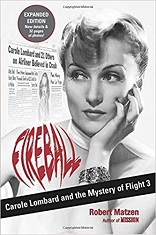 Aviation is truly one of the world’s modern marvels. To say that it has made the world smaller is an understatement. There is something mystical and surreal about moving through the air at 39,000 feet, at speeds in excess of 500mph. Every flyer knows that there are inherent dangers when we take to the skies. Pilots are incredibly skilled and make the experience seem like magic to those of us in the cabin. And air travel is safer today that at any point in history but there many tragedies over the years that we have learned from in order to make air travel as safe as possible. Seasoned pilots will tell you that the early days of aviation were quite dangerous and flying literally was like rolling the dice. On January 16, 1942, movie star Carole Lombard (1908-1942) was a passenger on TWA Flight 3, a flight that began in New York and had a final destination of Burbank, California. Most of the trip was routine, but a sudden change of events in Las Vegas, changed the course of history and resulted in one of the deadliest aviation accidents of the 1940s. Shortly after takeoff, the plane crashed full speed into Mt. Potosi, causing the aircraft to disintegrate upon impact. There were no survivors.
 I decided to take a break from the reviews and address a question that I am often asked. “Why do you love to read?”, is the question I am presented with by people who are aware of my passion for books. I could offer a cliché answer but the truth is more intricate than that. I firmly believe that each bookworm, as we are often referred to, has their own personal reasons for reading and the category of material that he/she prefers. Regardless of the reason, their love of books is something that unites us.
 Theranos was supposed to the company that changed health care forever. The Silicon Valley startup had issued a bold proclamation that it had developed technology that could analyze a person’s blood and screen it against a multitude of known conditions, thereby providing early detection of sometimes fatal conditions. The startup attracted attention and investments from big name players, all highly interested in the potential of what promised to be a revolutionary product. Today, Theranos is gone, having officially become defunct in September, 2018. Its proposed device nicknamed “Edison”, never materialized into the product it was designed to be and the fall of Theranos left many with shock, frustration and anger. But why did a small company with such a game-changing idea, fail to live up to its potential? John Carreyrou is a journalist with the Wall Street Journal who received a tip about an obscure Silicon Valley startup plagued by internal problems and using deception as a tactic to accumulate investors. His investigation has resulted in this best-selling account of the rise and fall of Theranos.
 Social media is literally a modern marvel that has engulfed in its clutches, billions of people around the world. Facebook, Twitter and Instagram remain the top three platforms for those wishing to step inside the world of “social networking”. Additionally, other platforms such as LinkedIn cater to specific audiences who do not belong to the mainstream sites. Even this blog is considered a form of social media. Regardless of what we use, social media has changed the way the world works and that trend will only continue. But what if we all decided to delete our accounts? What would happen and how would our lives change? Jaron Lanier is a silicon valley insider who once helped engineer the very social media platforms billions of people use daily. In this direct to the point book, he makes it clear that he believes we should all delete our social media accounts right now.
 FREETHINKING BIBLIOPHILE
You must be logged in to post a comment.