
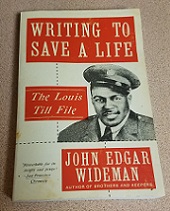
 The images that were published in Jet magazine of Emmett Till’s (1941-1955) mutilated corpse still cause readers and viewers on the internet to recoil in shock. With their graphic detail and macabre detail, the pictures of Till’s face become burned into the memory of anyone who has seen them. The story of Till’s murder at fourteen years of age because of allegedly “whistling or cat-calling a white woman” is a dark reminder of the ugly history of racism that prevailed in American culture. Today such a crime is unimaginable, but in 1955 it was not only very real but also encouraged by rabid racists with a vendetta against people of color. In January, 2017, Carolyn Bryant Donham, the woman at the center of the Till story, allegedly admitted that her claims were false. Regardless, the mere thought of such an act was more than enough to get a Black American lynched at that time and Till became one more victim on a long list of senseless murders carried out by maniacs emboldened by racist ideology. Till’s murder was creepy, appalling and downright shocking but another part of the story which is just as dark is the execution of his father Louis Till (1922-1944) by the Unites States Army in Civitavecchia, Italy, after being convicted of being part of the rape of two Italian women, one of whom was murdered during the crime. Till never gave any statements about his innocence nor did he confirm his guilt but the army had what it needed and he fell victim to the hangman’s noose taking any facts with him to his grave. After his death, details of the execution were withheld from his widow Mamie but were revealed ten years later. His final resting place is at the Oise-Aisne American Cemetery and Memorial in Fère-en-Tardenois, France.
The thought that both father and son were executed because of perceived slights against white women is chilling and it is impossible to escape the aspect of race. Two young Black men accused of having committed crimes against white females could not and would not be permitted to survive. Their deaths are reminder of the misguided belief of the pursuit and dominance over white females by black males. Sadly, it is a misconception that still exist to this day. But what exactly did happen in Civitavecchia? Undoubtedly a crime did take place and most likely by the hands of U.S. servicemen. But there is always the requirement of conclusive evidence and in this case, there is much we do not know. But author John Edgar Wideman decided to take another look at Till’s case, even requesting and receiving a copy of the military’s case file by way of the Freedom of Information Act (FOIA). In the book he does not include the entire file and moves between excerpts of it and his own story which is recounts as he writes about Till. The style of writing might confuse some readers but I believe Wideman presented it that way because of the parallels between his life and Emmett’s. In fact, I would go as far as to say that Wideman is presenting to the reader an idea of the struggle of many Black American families during a time of fierce racial prejudice. But the focus of the book is on Louis Till and it is here that I think it falls just short of hitting its mark.
Wideman’s personal story is highly interesting and he does a great job of showing the plight of Black families in America during his and Emmett Till’s childhood. But I think that more of the Louis Till file should have been presented. He concludes that he could not save Till from either prison or the hangman but from the portions of the file that he does include in the book, it is clear that reasonable doubt exist as to whether Till actually did the crime. And this is where the book should have reached its pinnacle. But this does not happen and the book’s slightly abrupt ending makes the reader yearn for more or some sort of closure. Sadly it never comes. And we are left to wonder about what actions, if any, Till did take on that night. In Wideman’s defense, the Army’s file had no index and was disorganized. I would not be surprised if some portions of it were removed or lost over the passage of time, making a definite conclusion beyond the reach of anyone today. None of figures involved with the case are alive preventing us from having the benefit of spoken words from those that were there. We are left to rely on the case file and our own beliefs. But I think one area where Wideman may have succeeded is igniting interest in Louis Till’s case in those that have read this book. I believe that there is more the Till’s case than we currently know and some day, another independent investigator may uncover the truth about his conviction and execution.
The book is a good read and just enough to get an idea of what did happen to Louis Till. But I believe it could have been much more effective with the inclusion of more of the file and some sort of definite conclusion even if it were the author’s belief. I do not know if Wideman will publish another book on the file but time will tell. For those looking to know more about Till’s sad and tragic life, this is a good resource to have.
ISBN-10: 1501147293
ISBN-13: 978-1501147296
 Eighty years after her disappearance and death, the life and tragic ending of Amelia Earhart (1897-1937) continues to incite curiosity not only among researchers but the general public in the United States. She is remembered as one of aviation’s true female pioneers and her ill-fated trip with navigator Fred Noonan (1893-1937) in July, 1937, is considered one of history’s greatest unsolved mysteries. Similar to the deaths of John F. Kennedy and James R. Hoffa, myths, half-truths , conspiracy theories and fabrications have plagued the investigations into their final moments. Officially, their disappearance remains unsolved but there are many who believe that the U.S. Government knows far more than it is willing to admit.
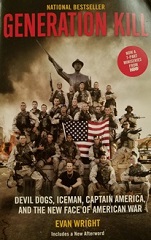 Fourteen years have passed since the United States military invaded the nation of Iraq and deposed its former ruler Saddam Hussein. President George W. Bush had declared Iraq America’s number one enemy and vowed to remove Hussein from power. Hussein fled but was captured in December, 1993 and eventually executed for his crimes against his own people. For many Iraqis and Americans, his death was long overdue and they bid farewell to one of history’s worst dictators. Critics of the war remain and remind us that our military is still in Iraq and no clear permanent solution to establish true democracy is in place. The war is as controversial as those that precede it. But for the men and women that served in the war, their stories are often unnoticed. However in this phenomenal story, Evan Wright brings their story to light for the world to see what warfare was like for thousands of troops. In March, 2003, he accompanied the First Reconnaissance Battalion as the invasion begins. The group becomes known as First Recon and is tasked with clearing town after town until the Iraqi army capitulates. Baghdad eventually falls, Hussein escapes and the marines have done their job for the time being. America celebrates and Bush stands stoically as the armed forces once again succeed. The infantry soldiers return to civilian life or choose to remain enlisted. Their stories fade in time and their names are often never heard of by the mainstream public. But just who are these brave souls and why do they voluntarily put their lives on the line? Wright explores this and more in the book that became a New York Times Bestseller and inspired the HBO hit series of the same name.
 Grandmothers are one of the most sacred parts of the family structure. In some cases, the grandmother also takes on the role of the child’s mother. Their wisdom gained through years of rearing children and watching them grow into adults gives them a unique perspective of life. My maternal grandmother, Jean Williams Franks (November 18, 1934-February 14, 2017) departed from this earth on Valentine’s Day at the age of eighty-three. She died peacefully at home after two years of declining health. She resisted to the end but was unable to overcome the conditions that continued to plague her. She is survived by many relatives, friends and others who knew her in passing.
 As recent events have shown, America continues to struggle with freedom and equality for all of its citizens. And while great progress has been made over the past 50 years, there is still much ground to cover and many thins to understand. A friend once told me that Black Americans are unique in the world for a variety of reasons but mainly because there is no other group of people similar. At first I didn’t quite understand where she was going with the conversation, but the more I listened and the more I began to digest her words, I came to understand the meaning behind her words and why they sparked such deep thought within me. Her words however, only covered a fraction of the entire story and as author Tom Burrell points out, the story of the Black American is a long and tragic one that is still not fully understood. In this exceptional testament to the current day status of Black Americans, Burrell forces the reader to open the eyes and mind as we explore the enduring myth of Black Inferiority (BI).
 FREETHINKING BIBLIOPHILE
You must be logged in to post a comment.