All the Young Men: A Memoir of Love, AIDS & Chosen Family in the American South – Ruth Coker Burks with Kevin Carr O’Leary

I was browsing recommendations when I saw this book which received a near five-star rating on Amazon. Knowing that obtaining a rating that high was not easy, I decided to take a further look, and in the process, I discovered a gem of a book which I could not stop reading. The location for the story is in Arkansas, in the heart of the American South, or the “Bible Belt”. Ruth Coker Burks starts off the story with a visit to the past where a young man named Jimmy is declining to the effects of acquired immunodeficiency syndrome (“AIDS”) and is treated like a leper by the nursing staff. Coker refuses to sit idling while Jimmy enters the final stage of life and performs actions unheard of at the time. And this begins a long journey into the AIDS epidemic and the struggle to treat and bury the young gay men diagnosed with the killer disease during the height of the crisis.

Readers old enough to remember the emergence of the human immunodeficiency virus (“HIV”) and AIDS, will recall the fear and paranoia which gripped the United States. What was originally seen as a “gay cancer” in San Francisco, became a nationwide threat when doctors learned that the disease did not discriminate based on sexual orientation or ethnic background. AIDS was equally destructive to every section of society it reached. I must warn readers that this book will trigger a range of emotions, including anger, joy, shock, and grief. And if you lost someone close to the virus, it will be like a step back into time to a dark period when answers were short in supply. Coker goes through each, and learns that in the Deep South, religion trumps all else.

In addition to her occupation as a nurse, Coker is also a single mother to daughter Allison who becomes not only a dependable assistant, but also a source of wise words when her mother is feeling conflicted. But the friends they make provided them with a second family who treat them with the love and kindness close relatives fail to deliver. However, her family drama takes a back seat to the lives of the gay men who have been disowned by their families, ostracized by society, and even refused the dignity of a formal sendoff when they die. Coker refused to accept this and morphs into a guardian angel whose devotion and relentless pursuit of assistance for the men is nothing short of incredible. But that does not mean the journey was easy. In fact, there are moments in the book which are beyond infuriating and will leave readers shaking their heads. And of course, there are secrets in Arkansas, some of which reminded me of James Baldwin’s novel ‘Giovanni’s Room‘. However, the bright moments arrive in the men we meet whose larger-than-life personalities are momentary reprieve from the looming grim reaper. And as I read, I found myself becoming acquainted with them as well as they told their stories and accepted their fates which they knew would end in death.

Life for gay men diagnosed with AIDS was incredibly difficult but there are other people in the book who provided help to Coker when needed. They are in the shadows, but the influence is undeniable, and Coker was not afraid to lean on them when needed. Their actions are not the focus of the book, but they helped in ways which were crucial at a time when being seen publicly with an AIDS patient was taboo. The story of Ryan White (1971-1990), included in the narrative, is just one example of long reach of HIV and how a virus reshaped an entire decade and changed world history. And sadly, in Coker’s account, we see health professionals refusing to even set foot in a room with a patient afflicted by the virus. Today it seems unthinkable that a doctor would refuse to treat an AIDS patient, but in the time period when but in the time when current information was scant, this was the reality. I felt Coker’s rage as I read of her encounters with hospital staff who wanted no part of any AIDS patients. But those encounters only fueled her resolve to help even more, and she pulls off successful projects and even earns an invitation to the inaugural ball of fellow Arkansas native and friend, President William J. Clinton.

To say that Coker suffered personal setbacks due to her goal would be an understatement. There is immense personal sacrifice, and another person may have broken under the strain. However, she continues to move forward determined to ensure as many people as possible are protected from HIV and cared for after a positive diagnosis. And in the process, she left a legacy of compassion and humanity which is on display here in one of the best books I have ever read about the AIDS epidemic. Highly recommended.

ASIN ‏ : ‎ B085MMH732
Publisher ‏ : ‎ Grove Press, February 22, 2023

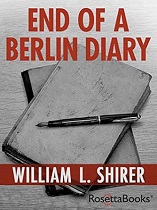
End of a Berlin Diary – William L. Shirer

In December 1940, American Journalist William L. Shirer (1904-1993) made his departure from Germany as World War II intensified. On September 1, 1939, the Germany military crossed into Poland and ignited the word conflict mankind has seen to date. After arriving back on United States soil, Shirer turned the journal he maintained while living abroad into the best-selling book ‘The Berlin Diary: The Journal of a Foreign Correspondent 1934-1941 ‘. The book is a fascinating first-hand account of the Nazi seizure of power in Germany and the road to war. Following Germany’s defeat in 1945, Shirer returned to the country to survey the damage inflicted from Allied forces. This is the journal of his time in Germany following the collapse of German Chancellor Adolf Hitler’s (1889-1945) Third Reich, the trials at Nuremburg and the final days of former Nazi party officials and military officers. 

The book begins with Shirer back home in America, traveling from city to city. However, Germany remains in his thoughts and soon enough he is on his way back to the country he left as World War II heated up. I can only imagine the emotions Shirer felt upon his return, but what he writes in the journal makes it clear that he is both shocked and saddened to see the physical condition of locations he once frequented. As I read, I could picture the devastation he confronted as he drove through streets which one held Hitler’s rallies, restaurants, and other meeting places for social interaction. The physical destruction comes as no surprise due to the relentless Allied bombings and infantry operations as American, British, and Soviet troops closed in on Berlin. But Shirer is focused on more than that and takes a deep dive into the secret Reich documents discovered which reveal the road to war planned by Hitler and his co-conspirators. 

As Shirer explores the documents, the diary takes on more of a history book format in which planning sessions and other meetings are examined. While this does not fit the typical format for a “journal”, it does have a place due to his accounts from the trials at Nuremberg where captured Nazi officials face justice. I did find the secret documents interesting, and there are revelations within them about Hitler’s true feelings towards the Japanese and Soviet Union. Further, they remove all doubt as to Germany’s intention to violate Poland’s independence. The looming war eventually begins and at first, Germany rides a wave of success. But the entry of the United States into the conflict and the decision by Hitler to turn on the Soviets, were the initial stages of failure in the downfall of Nazi Germany. The mistakes made by Hitler and the insanity surrounding his war planning are on full display, and by 1943 it was clear to many that Germany would lose the war. But the concluding chapter was still two years away. 

Among the documents he focuses on are statements by people in Hitler’s underground bunker who had knowledge of Hitler’s death and the movement of his remains. This is a long-discussed topic, and we may never know for certain, but the statements provided are interesting. The people interviewed are also certain that Hitler died in the bunker and did not escape to South America. Aviator Hanna Reitsch (1912-1979) was one of the last people to see Hitler alive and was firm in her statement that he died in the bunker. Her interview is included as well as Shirer pieces together the last moments of the Reich’s leader.  

Eventually Shirer makes his way to Nuremberg to witness the trials of the Nazi officials. His reporter skills kick into high gear as he notes the mannerisms and reactions of the men who plotted world domination and sent millions of Jewish people to their deaths. The list of characters is too long for this book and Shirer does not attempt to cover the entire trial in his journal. However, he provides enough for us to see the unsavory and ridiculous people who made up Hitler’s cabinet, and why power in the wrong hands is extremely dangerous. It should also be noted that Shirer had interacted with Nazi officials personally as Hitler rose to power. He is not merely an observer but someone who was very well acquainted with the defendants and encountered them regularly as he wrote the Berlin Diary. He was a witness to history and his return to Germany provided more than enough proof that leaving in 1940 was a wise decision. 

While I do admit the Berlin Diary is rated higher in reviews, I personally liked this follow-up. Further, it was never intended to be the final word on the Nazi story. However, Shirer did cover that extensively in his masterpiece ‘The Rise and Fall of the Third Reich: A History of Nazi Germany‘, which I strongly recommend for anyone interested in Hitler’s rise, the war, and the downfall of his empire. If you have read the Berlin Diary or are curious as to what Shirer found when he went back to Germany, this book should be added to your list. 

“One more wise remark from Plutarch that seems deadly timely today. Of the machinations of Cæsar, Antony, and Lepidus, which finally brought Cicero to his doom, he remarks: ‘Thus they let their anger and fury take from them the sense of humanity and demonstrated that no beast is more savage than man, when possessed with power answerable to his rage’. ” – The Berlin Diary, William L. Shirer 

ASIN ‏ : ‎ B07H185X8F
Publisher ‏ : ‎ Rosetta Books (September 6, 2016)

The Andy Warhol Diaries – Andy Warhol and Pat Hackett

This statement may be bold, but there will never be another Andrew Warhola (1928-1987), known to the world as Andy Warhol. The undisputed king of pop art remains an iconic figure, vividly remembered for his bright colored wigs, thin frame, and soft-spoken nature. He seemed to be everywhere and knew everyone and was firmly entrenched in popular social circles. But behind the fame, there was a different Andy, misunderstood and overlooked. Several years before his death, Warhol asked his close friend Pat Hackett to help in transcribing his personal diaries. The pages totaled over twenty thousand but were condensed by Hackett into a final product suitable for publishing. This Kindle version is condensed slightly further but it is still an impressive eight-hundred forty-two pages which cover the years 1976 to 1987. Warhol died on February 22, 1987, following surgery to have his gallbladder removed, which explains the abrupt ending of the diaries. However, there is more than enough material in the book to satisfy Warhol fans.

The book is not a biography at all. Warhol does mention family members but only regarding the day’s diary entry. This is a collection of daily observations about work, friends, the New York City nightlife, and his inner struggles. If you watched the Netflix series ‘The Andy Warhol Diaries’, then this book will feel like closure. I watched the docuseries and thought it was one of the best Netflix has released. Of course, the producers could have added more material because Andy’s life was a non-stop show which reached a heartbreaking conclusion. But surprisingly, in the diaries, Andy himself is not the over-the-top eccentric character you might expect. In fact, those around him steal the show and what Andy recorded is nothing short of wild. His diaries also confirm that the lifestyles of the rich and famous are sometimes out of control.

As the diaries progress, we become familiar with Andy’s social circle which consist of fashion designer Halston (1932-1990) and boyfriend Victor Hugo (1948-1994), author Truman Capote (1924-1984), rockstar Mick and wife Bianca Jagger, fashion columnist Diane Vreeland (1903-1989), Interview editor Bob Colacello, and fashion designer Diane von Furstenberg. I did notice that Jed Johnson (1948-1996) is rarely mentioned. Johnson’s role as an employee at Warhol’s Union Square office and love interest following the 1968 shooting of Andy by Valerie Solanis (1936-1988) that nearly killed him, naturally gave me the expectation to read more about his life with Warhol. However, that is not the case here. Jed is mentioned but in passing, and the most significant entry is when he moves out of their place in December 1980. Understandably, the end of their relationship was difficult for Warhol and whether he omitted Johnson intentionally or whether Hackett left those pages out at his request I do not know. Jed is discussed extensively in the Netflix docuseries.

Readers will notice that early in the day, the diary entries are mundane but as night falls, and New York City comes to life, the entries heat up as the gang meets up for nights of mayhem with the famed Studio 54 being their home base. The entries are unreal, and yes, there are copious amounts of drugs, alcohol, and debauchery. Frankly, if you know anything about Warhol and his crew, then the diaries are everything you expect. Some are more extreme than others, but each has his or her own set of problems making the narrative more intriguing. Andy’s observations are revealing and humorous. They were stars but as we see, their personal lives were all over the place. Andy’s diaries reveal the human side of people known to the public through a carefully crafted image. The veil is lifted here to reveal their fears, anger, concerns, and moments of reflection. But of all the people he discussed, Victor Hugo stands out as the most outrageous rascal of the bunch. He was an exciting, daring, obscene yet tragic figure whose own story is a discussion for another time.

After Jed moves out, Andy finds himself in a sunken place, but he finds a new crush in Paramount movie executive Jon Gould (1953-1986). There is not much of a story here except for random entries by Andy discussing their phone calls, infrequent times together and where their relationship was going. However, Andy does say that Gould had asked him to be kept out of the diaries, and that may be the explanation for the lack of material. But this results in more confusion about the nature of their relationship which seems to have been asexual. And when Gould becomes the latest victim to a deadly new virus spreading among gay men, the wedge between them began to grow.

As Andy details his daily routine, travels abroad and escapades at night, we also see that he fears the virus originally termed the “gay cancer”. Warhol did not contract the virus himself due to his lack of sexual activity. In fact, in one diary entry, he flatly states that he “does not do anything”. He was idle but the virus was all around him and after Gould’s admission to New York Hospital in 1984 for pneumonia, Andy gave instructions to his housekeeper which are explained in the diary, which highlights his fear of the mysterious virus. While I read of the demise of close friends and famous stars who had contracted HIV, I found myself transported back in time to re-live the shock I had when the news broke of those stories. It was a dark time, and no one who lived through the 1980s will ever forget the shock of HIV and AIDS. Andy was spared HIV, but he had his own health battles which rise to the surface in the book. His notorious gallbladder, which resulted in that fateful surgery in February 1987, was not a sudden illness. There are multiple diary entries in which he discusses the problem and his diet, which was not very friendly towards it. And his alcohol consumption only added fuel to the fire. Warhol was aware of this and pokes fun at himself and acknowledges when he is falling short of where he should be. And despite his fame, endless list of friends and acquaintances, intimacy was missing. Had he lived, would Andy have found true love? We will never know.

These diaries are a roller coaster ride and a trip down memory lane. The book is full of guest appearances and steps back in time to the 1980s art scene where young ambitious creators such as Keith Haring (1958-1990) and Jean-Michel Basquiat (1960-1988) were making their names known. Andy talks about both, with strong focus on his relationship with Jean-Michel whose drug use was an issue for many years prior to his sudden death. I did notice the affinity Warhol had for Basquiat’s mother and her island cuisine. Readers interested in the lives of both will enjoy Brad Gooch’s ‘Radiant: The Life and Line of Keith Haring‘ and Phoebe Hoban’s ‘Basquiat: A Quick Killing in Art‘. Here they each play a part in Andy’s life, along with the others who compose the cast of characters entrenched in the world of Andy Warhol. Colacello also wrote about his time with Andy in ‘Holy Terror: Andy Warhol Up Close. Andy’s notes and comments force us to confront the realities of fame, tragedy, race, creativity, and mortality. Warhol was brilliant at watching and creating, and social media would have been heaven on earth for him. For us older readers, these diaries are the old school version of today’s platforms known as Facebook, Instagram, and Twitter. Andy Warhol was one of a kind. This book is far from short, but if you want to know more about Andy Warhol and the people in his world, this is highly recommended.

ASIN ‏ : ‎ B002WAUVQ4
Publisher ‏ : ‎ Grand Central Publishing (November 11, 2009)

The Diary of a Young Girl: The Definitive Edition – Anne Frank, Otto Frank , Mirjam Pressler and Susan Massotty

AnnA couple of weeks ago I was in search of a new book to read, however, an old favorite popped up in my list of recommendations. I had previously read and reviewed ‘The Diary of a Young Girl’ by Annelies Marie “Anne” Frank (1929-1945) but I noticed this 75th anniversary edition which drew me in further, and I decided to read it again.  I have always found it fascinating that Frank had no idea her private diary would one day become a best-selling book. Her mind was pre-occupied with things one would expect from a teenage girl. However, it was also occupied with war raging across Europe as the Allied forces collided with the Axis powers during World War II.

The prior review I wrote in 2015 was brief, but it touched on important aspects of the story and times. After reading her diary again, I have a deeper understanding of Anne and what happened leading up to their last days in hiding. The diary begins shortly before the family relocates to the annex, and Anne provides a succinct description of how unbearable life has become for Jews in Amsterdam. This part should come as no surprise to anyone who is familiar with her story and that of World War II.  The diary contains nothing about life in Germany, but Nazi ideology had spread extensively, and the Netherlands had already fallen into German hands. The Franks and their fellow Jewish neighbors were living in an occupied zone. The family soon arrives at the attic where they are joined by several others, whose names are slightly altered by Anne in the diary in which she writes to the fictional reader “Kitty”,  in memory of the cat she left behind, Moortje. Her housemates, the Van Pels, become the Van Daans, and Fritz Pfeffer (1889-1944) becomes Mr. Dussel.  Additionally, there are several others who are not Jewish and live outside of the annex and do their best to help when possible. Daily life inside the attic takes center stage with all the drama one would expect. And having visited the attic myself in person, I remain astounded that all of them found refuge in such tight quarters. However, their lives were on the line as the Third Reich tightened its grip over Europe and commenced the “Final Solution“.

As I read the diary, I was struck by Anne’s maturity at such a youthful age. Of course, there are times where she comes off as obnoxious and defiant, and other occasions when she is not the nicest to her mother Edith (1900-1945). In fact, there are several journal entries in which Anne explains a confrontation which had occurred earlier in the day resulting in the two not speaking. However, she does love her mother, but their bond stands in stark contrast to the overwhelming love she had for her father Otto. He was by far, the person she was closest to and cherished the most. He also had the unfortunate role of mediator as his wife and daughter clashed. Otto returned the favor to his daughter after surviving the war by publishing her diary which has become the gift that continues to give. But I do not want to forget Anne’s older sister Margo (1926-1945), who appears on occasion throughout the diary but rarely in favorable light. While Anne did not dislike her old sister, there was a sibling rivalry. Added to the issues within the Frank family are the interactions with the fellow residents in the attic. To say that things were tense would be an understatement. There are fights over food, territory, opinions on the war, and child raising with jealousy providing a source of ignition for conflict. However, Anne is not oblivious to what drives the dysfunction, and I agree with her assessment. The situation in the attic was far from normal, and they lived under tremendous strain and fear, side by side daily until the end, on August 1, 1944, her last journal entry. But, the question remains, were they betrayed?

To the best of my knowledge, there is no conclusive evidence of anyone informing the local authorities, but Anne provides a clue that might explain the chain of events that led up to the discovery. In her journal, she writes about three burglaries that took place while the family was in hiding. The third and final break-in she details was the most serious as the men in the attic were seen from the outside as they responded to the after-hours incident. Although they were spotted, the police did not arrive that night. However, there were other things taking place at the warehouse underneath the attic that the family may not have been aware of. The break-ins and the suspicious activity in the warehouse may have caught the attention of the Dutch police. It is known that it took about an hour before they discovered the secret annex, but it is unclear if that was the sole reason for their visit. Of course, it is possible that they were betrayed but the answer may be lost to history.

Anne was a gifted writer and fiercely determined for her age. She was also incredibly young, and still had much to learn about the world. There are times she comes across as spoiled in the book, but other times keenly observant. I did remind myself that she was only fifteen when the annex was discovered. All the things you might expect from a teenage girl are here, but that makes her story even more relatable. She was not a celebrity and understood the danger they faced due to being Jewish. And in one of the notations made in this edition, we learn that she intentionally kept some sections under guard for personal reasons. In another diary entry, she makes a remark about her journal being read ten years later and its reception. If only she could see how important her diary became. It remains one of the most important books of World War II. Anne was not afforded the chance to mature into adulthood and learn the error of her ways. Had she lived, I believe she would have come to understand and cherish her mother and older sister Margot. I cannot say whether Peter Van Pels (1926-1945) would have become her beau, but the signs were certainly there.

If you have the chance to visit Amsterdam, please be sure to visit the annex museum if you have not done so already. It is a moving experience that I cannot put into words. But if you cannot make it there in person just yet, Anne’s diary provides a wealth of information about their lives during one of the darkest periods in world history. Highly recommended.

I get frightened myself when I think of close friends who are now at the mercy of the cruelest monsters ever to stalk the earth. And all because they’re Jews.” – Anne Frank

ASIN‏ :‎ B0041OT9W6

© Anchor Publishing, 2010

War Diaries: 1939-1945 – Astrid Lindgren

astridWhen I learned that Astrid Lindgren (1907-2002), the author of the fictional character Pippi Longstocking, had kept a diary during World War II, I was instantly intrigued. Like millions of others, I remember Pippi Longstocking and the impact it had on pop culture here in America and abroad. But who would have known that the character she created almost remained hidden from the public? The story behind the character is contained within as well as a different view of the war, from neutral Sweden. When I started the book, I had realized that I had forgotten Sweden’s neutrality. But that is not to say the Swedes did not have an opinion of Adolf Hitler (1889-1945) and the Third Reich. In fact, Lindgren is very vocal about the expanding war and the terrors of the Nazi regime. However, there is also another side to the diaries, and that is her family life, which includes her roles as a mother and wife. Her diaries encompass a range of topics but come together to reveal a woman deeply concerned about society and the effects of warfare.

This is the first book that I have read from the Swedish point of view. In contrast to neighboring countries, Lindgren humbly explains that shortage of food and supplies was not a significant issue in Sweden. There are occasions where the author feels guilt for the excesses they have at home, but the nation’s neutrality undoubtedly affected its ability to remain stable. However, the Swedes were aware of the war’s developments, the plague of the Jewish people attempting to flee Germany, starvation across Europe and the monstrous acts committed on people deemed “undesirable” within Reich territories. Lindgren was deeply affected by what she read and carries a heavy heart from start to finish. At one point she sadly explains that: 

“Poor human race: when I read their letters I’m staggered by the amount of sickness and distress, grief, unemployment, poverty and despair that can be fitted into this wretched earth”

The wave of terror Germany unleashed across Europe led to Lindgren lamenting the human capacity for war. In one entry she questions why England and France were slow to respond to the growing threat from Berlin. Readers interested in the slow response to the Germany arms build-up will find ‘Why England Slept‘ by John F. Kennedy (1917-1963) to be a thorough analysis of the inaction from London. To be fair, outside of Germany, knowledge of internal movement would have had its limits. But Hitler’s actions building up to the invasion of Poland were no secret. And by the time nations realized how far he was willing to go, the world was at war. For Lindgren, every day became another chapter in a brutal war that claimed millions of lives. The author does her best to remain positive and fills the diary with details about Swedish delicacies, holiday traditions and family matters to which we can relate. But above everything, she desired an end to the war that should never have taken place. 

As we move to 1943 in the book, the tide begins to turn in war and a German victory becomes further from reality. The fighting between the Russians and Germans is the focus in this section. And though America had entered the war by this point, the battles across the Soviet Union were of major importance. She clearly wanted the war over, and Germany defeated but she did not ignore the danger posed by the Red Army and wanted no part of Russia’s army in Sweden. And this is a part of World War II often neglected. The Red Army could be as savage as the Germany Army and in some cases, it was far worse when atrocities were committed. Entries in the diaries will clue readers in. The savagery of the war was not lost on anyone in neutral territories, but that neutrality was of the utmost importance as she acknowledges towards the end of the book. 

The section focused on 1944 sees an elated author as the Americans invaded and former Nazi territories were liberated. The Soviets are still battling Hitler’s troops on the eastern front and Germany is in trouble. Step by step the allies push back Germany divisions and as 1945 approaches, hope builds for the war’s end. The suspense can be felt in her words as news of Allied victories filter in. And by the time 1945 arrives, the world is waiting for Germany’s collapse which comes at the end of April. She follows the news from Berlin of Hitler’s defeat and demise but finds herself shocked at the introduction of the atomic bomb. She contemplated what she learned and somberly reflects that: 

“Nineteen forty-five brought two remarkable things. Peace after the Second World War and the atom bomb. I wonder what the future will have to say about the atom bomb, and whether it will mark a whole new era in human existence, or not. The peace is not much to put one’s faith in, with the atom bomb casting such a shadow over it.”

The war ended but the reality of atomic weapons became very real. There are other entries in the diaries about nuclear weapons and her concern about their place in society. But the sense of relief that the war had ended cannot be overstated. Today it may be hard for us to understand how dark the future looked during her time. But her diaries provide a valuable resource to understand a time when the world was at war. Her family survived the war, and she created a character that still entertains children today. But she also carried with her dark memories of the years in which Adolf Hitler embarked on a quest for world domination. Highly recommended. 

ASIN:‎ B01M299IMP

Papa Hemingway: A Personal Memoir – A.E. Hotchner

HemingwayOn July 2, 1961, legendary author Ernest Hemingway (1899-1961), took his own life in the small town of Ketchum, Idaho at the age of sixty-one.  His suicide shocked fans and even today, the details of his death are unsettling and puzzling.  It seems unthinkable that the man who wrote For Whom the Bell Tolls and Old Man and the Sea, would end his life in such a tragic manner.  However, what we see from the public view often stands in stark contrast the reality behind the scenes. And one of the best ways to understand the life of the departed is to learn from those that were closest to them as their lives came to an end.  A. E. Hotchner (1917-2020) spent fourteen years with Hemingway as the author moved from one city to the next across the globe in what can only be described as an extraordinary life. This is his memoir of the time he spent with the man he called Papa.

Interestingly, Hotchner points out early in the book that no one is really sure why Hemingway pulled the trigger.  And although he did see Hemingway shortly before his death, he never thought that Papa would take that final and tragic step.  This quote by Hotchner explains it best:

“I was his close friend for fourteen years, right up to the day he died. I knew about his life: the adventures, the conversations, the dreams and disillusions, the triumphs and defeats of this complicated, unique, humorous, intense, fun-loving man who was Ernest Hemingway but I cannot tell you why. No one can.” 

The world had lost one if its greatest literary minds and no one could ever replace Ernest Hemingway.  But the focus here is not on his death, but the incredible life he lived as he aged and matured. Hotchner had been dispatched to conduct an interview with Hemingway but got cold feet at the last moment. He sent Hemingway a short letter and to his surprise, the author called himself to set up a meeting.  Neither could have known that a fourteen year friendship would develop as a result.   And to say the two had a wild ride would be an understatement.

Hotchner did not write a biography of either Hemingway or himself here and readers in search of an account of the author’s life will not find the entire story here although there is a short discussion of the important facts in Hemingway’s life, in particular his service in the military and four marriages.  However, in the account here, his last wife Mary Welsh Hemingway (1908-1986) appears largely through the second half of the story and was with him up until the very end. And while she does not have a speaking role in the story, her importance in Hemingway’s life cannot be over-stated.  As Papa explains to Hotchner later in the book, he truly did love Mary who remained devoted to him even as he slowly unraveled. But before that happened, she enjoyed life with Papa as well as Hotchner and those memories are presented here to show the larger than life character we have come to know and revere.

The story begins in Havana, Cuba in the years before a young lawyer named Fidel Castro (1926-2016) seized the country and forced Fulgencio Batista (1901-1973) to flee into exile.  Life is easy and for a big name author such as Hemingway, heaven on earth. At the time Hotchner meets him, he is much older but still the fascinating figure the world was shown.  Cuba became a second home for Hemingway and Hotchner would spend a great deal of time there. In fact, he explains that:

“Over the years, with the exception of 1956 and 1957, when I was living in Rome, I visited Ernest in Cuba at least once a year, often more, and daiquiris at the Floridita, pigeon shoots, excursions on the Pilar, and days at the finca became familiar.” 

From the moment Papa enters the story, he takes it over and we become witnesses along with Hotchner as we watch the show.  A scotch is never far away and always accompanies a sharp line of wit from Hemingway that sprinkles humor into every situation.   And even when other celebrities enter the story, Hemingway is always jovial with an endless supply of quips about those he has come to know which include the likes of Marlene Dietrich (1901-1992) and Gary Cooper (1901-1961).  The friendship between Cooper and Hemingway is deeply moving.  Shortly before Cooper’s own death, Hotchner saw him one last time and the legendary actor passed along these poignant words for his close friend:

“Please give Papa a message. It’s important and you mustn’t forget because I’ll not be talking to him again. Tell him … that time I wondered if I made the right decision”—he moved the crucifix a little closer so that it touched his cheek—“tell him it was the best thing I ever did.” “I’ll tell him.” “Don’t forget.” “Don’t worry, Coops, I‘ll tell him.” He died ten days later.

We do not know if the message reached Papa, who had only weeks to live himself. But it captures the deep bond between the two friends who each left their mark on the American experience.  It seemed as if everyone loved Papa and quite frankly, I cannot blame them as the Hemingway we come to know in the book is the star of the show.  Whether it was his near disastrous trips with Mary in Africa or the comedy of errors that takes place as he and Hotchner gallivant across the globe, Papa is never short on material to brighten any situation.

As the story moves along, we see changes in Papa’s physical condition and health issues become a central part of the story. We do learn of some ailments but even Hotchner did not the full extent of Papa’s health troubles. However, what we do learn gives rise to the question, did Hemingway know something about his health that he kept from those around him as he decided to take his own life?  Hotchner notes a change in Papa’s writing and appearance.  And their conversations take on a much darker and confusing tone.  It becomes clear that Papa is having a breakdown one step at a time and those around decide to step in.  He would find solace at the Mayo Clinic but even the doctors there did not understand the demons running through the mind of Ernest Hemingway.   And those demons became too much to bear as Papa first tries and then later succeeds at making his departure from this world in a hauntingly tragic manner.  Hotchner was expectedly devastated after learning of Papa’s death and this memoir is a fitting tribute to his late friend who captivated an entire planet and still stands out today as one of the greatest writers in history.  It is place he will continue to hold for all eternity.  If we can take one thing from Papa, I think it is this summation by Hotchner:

“Ernest had had it right: Man is not made for defeat. Man can be destroyed but not defeated.

Highly recommended.

ASIN : B079YK2JQT