
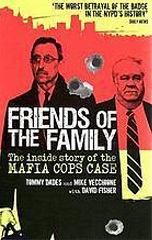
 On October 18, 1986, Betty Hydell answered the doorbell and her home and was confronted by a police officer looking for her son James. She politely told him that Jimmy not home and she did not know his exact whereabouts. At the time, she had no idea that she would never see her son James again. Several hours later, he was picked up by two men in what appeared to be an unmarked police car. However, he never arrived at the local precinct and no record was made of any arrest. It was if he simply vanished into thin air and to this day, his body has never been found. It became one of the many cold cases on file in Brooklyn South. His brother Frank, had is own encounters with the two and on one occasion Betty even confronted the officer looking for him as she drove her car past his unmarked vehicle. Frank was later murdered April, 1998 after visiting a gentleman’s club in Staten Island, New York.
On November 6, 1990, Edward Lino, a capo in the Gambino Crime Family, was shot execution style as he sat behind the wheel of his car after being pulled over on the Belt Parkway in South Brooklyn. Lino’s death became a cold case until it was learned that he was pulled over by two men in what appeared to be an unmarked police car. A photo of Lino slumped over in his car shows the execution style murder in graphic detail and for some, brings backs memories of the days when mobsters were killing each other across New York City with reckless abandon. Hydell’s disappearance and Lino’s murder remained cold cases for many years and no one then could have imagined that they would both come back to haunt those involved and help reveal one of the biggest scandals in the history of the New York City Police Department.
But who were the two men in what appeared to be an unmarked police car? Their identities nearly remained a secret for good if not for a book and a television appearance on Sally Jessy Raphael. Former NYPD Detective Louis Eppolito had written about his life on the force and his family background, appropriately titled ‘Mafia Cop’. He had starred in Hollywood films, including a bit part as “Fat Andy” in Martin Scorsese’s Goodfellas (Warner Bros., 1990). On that fateful day of his television appearance, Betty Hydell was one of millions of viewers watching the former detective promote his book. I can only imagine the shock on her face as she watched the television screen listening to the former detective who once came looking for both of her sons. For NYPD Detective Tommy Dades, this was a major fire among the smoke that surrounded Eppolito and his former partner, Steven Caracappa, who died on April 8, 2017, while incarcerated in Butner, North Carolina. Dades’ investigation, supported by the Brooklyn District Attorney’s office, opened up Pandora’s Box, revealing a cast of characters who conspired to commit crimes that many thought to be unthinkable.
Michael Vecchione is a senior figure in the Brooklyn District Attorney’s office, and at age 63, continues to serve the City of New York. He and Dades go back a long way and when it became apparent that two cops had gone rogue, both knew that this case would be one they would never forget. This is their recollection of the development of the case and how and why it was then taken over by the U.S. Attorney for the Eastern District of New York. The story at first resembles an intricately woven puzzle with each piece coming into the picture as the story moves forward. And as each revelation comes to light, I was as shocked and confused as Dades and Vecchione were then. But the seduction of the case keeps them lured in and both are determined to do whatever they can to bring down the two corrupt cops who had since retired and moved to Las Vegas. But this was no ordinary cold case and it quickly became apparent that there was far more than meets the eye.
It should be noted that this is not the story of the lives of Eppolito and Caracappa. While the authors do provide some background information on them, they never go into extensive detail but provide the information when necessary to the narrative at hand. This is the inside story of the case to bring them to prosecution, a case which almost completely fell apart after a District Court Judge reversed his own ruling. At times the story seems surreal as we meet mobsters Anthony “Gaspipe” Casso and Burt Kaplan, who died in July, 2009. And like a Hollywood production, the story takes off as the mobsters reveal staggering numbers of robberies and murders. But the cream of the crop were their tales about the cooperation and services of two NYPD Detectives. To most people, the story seemed absurd and I remember reading about the trial in the newspapers. Hardly anyone though that two cops could have been pulling off hits for a crime family and shaking down criminals. But the truth is that we had seen it before with the corruption scandal of the 90s, Michael Dowd and through the testimony of Frank Serpico. But what was horrifying is that Eppolito and Caracappa had been accused of taking the corruption to a higher and far more deadly level. In short, this was a whole other ball game and both the Brooklyn DA and U.S. Attorney’s office knew this to be a cold hard fact.
Many of us would like to believe that the effort to bring the deadly duo to justice was the result of a concerted effort by law enforcement. But as the authors point out, this was far from the case and almost from day one, a web of suspicion developed as the FBI and U.S. Attorney began to see the payday in prosecuting the two cops. At that point it was game on and the cat and mouse spectacle between the State and the Government bordered on the unbelievable. They pull no punches in this book and lay out the case from start to finish. And while the government did get a RICO Act conviction that was later affirmed by an appeals court, the case nearly crumbled under its own weight. But the justice system worked as it was designed giving prosecutors the victory they desired. Today, Eppolito and Casso are still alive but will both spend their last days in prison. We can only guess as to how many more crimes occurred that were never revealed. Those are secrets that all of them will undoubtedly take to the grave. But this book by Vecchione, Dades and Fishers, gives us an inside look into what might possibly be a black hole of crimes between mobsters and law enforcement that have escaped prosecution. In fact, the crimes that are revealed are so mind-boggling that I found myself not wanting to put the book down at times because I could not wait to see where the investigation would lead next.
In the end, the prosecutors and cops scored a victory, but on personal levels, many sacrifices were made and these are also revealed in the book, showing the human and personal side of the major players. Their lives are not glamorous and in fact, during the case, they would each go through their own personal dramas that might have pushed others over the edge. Incredibly, the remain dedicated to the case while trying to save marriages, professional relationships and even their sanity while the work on bringing two of their own to justice. Today as they look back on the case, I am sure they will smile with satisfaction at having achieved justice for Betty Hydell and the families of the other victims of the killer combination of gangster and cops. Eppolito has maintained his innocence from day one, even in the face of overwhelming evidence. As he sits behind bars, I can only assume that he has pondered his past and how it shaped the future he his now living. He will take many secrets with him to the grave but he and Caracappa will forever be known as the mafia cops. This is a story of crime, dishonor and the prevail of justice in the City of New York.
ISBN-10: 073228533X
ISBN-13: 978-0732285333
 On July 10, 2013, the Hon. Nicholas G. Garaufis of the Eastern District of New York ruled that former Bonnano Crime Family boss Joseph Massino was to be
  October 23, 1935- Arthur Flegenheimer, better known as Dutch Schultz, is gunned down with two of his associates at the Palace Chop House in Newark, New Jersey. Schultz was mortally wounded as he stood in front of a urinal in the men’s restroom. He survived for another day before dying on October 24, 1935 at the age of thirty-three. Today, the Palace Chop House is gone, having been demolished to make way for additional
  January 26, 1962, Naples, Italy – Salvatore Lucania, also known as Charlie Luciano and Lucky Luciano, dies of a massive heart attack at Naples Airport at the age of 64. The aging mobster had suffered several recent heart attacks and had arrived at the airport to meet film producer Martin Gosch, who was to adapt a screenplay of the legendary mobster’s life. Luciano had resided in Italy since February, 1946 when he left New York Harbor for the last time. The terms of his parole, granted after lending his help to the allied effort in World War II, required that he leave the United States and never return. Tragically, it wasn’t until death that he was allowed to come home when he was interned at St. John’s Cemetery in Middle Village, Queens, New York.
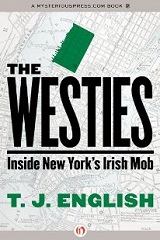 In New York City history, the Italian-American mafia has always captured the public spotlight in regards to organized crime headlines. The five families, filled with larger than life characters, captivated the American public becoming glorified in films and music. But at one time in New York City, in a small neighborhood known as Hell’s Kitchen, the Irish mafia controlled the streets. T.J. English takes us back in time to when Hell’s Kitchen was one of the most dangerous parts of New York City. Today the area has changed substantially. The faces have changed and the area once known to harden criminals, has seen a surge in gay and lesbian residents. The bars are still there but the area has become a focal point for New York City nightlife. The violence is long gone but some of the remnants from the past will always remain.
 On December 19, 2005, Vincent “The Chin” Gigante, died at the age of 77 at the Medical Center for Federal Prisoners in Springfield, Missouri. The late mafia boss gained notoriety on the streets of Little Italy as he walked about in a bathrobe speaking incoherently to himself and those around him. He became known in the media at the “Oddfather”. His death marks the end of an era as the late Gigante is considered to be among the last of the old-fashioned Mafioso who controlled the streets of New York City. The former boxer, trigger man and boss remains a legend in organized crime history.
 DeMeo and his crew of psychopathic killers engaged in killing on a scale that rivaled the actions of the former crew of contract killers out of Brownsville, Murder, Inc., during the early half of the 1900s. And although he’s been deceased since 1983, his name and reign of terror remain legendary in mafia history. Gene Mustain and Jerry Capeci bring us their account of DeMeo’s reign of terror in this excellent investigative report that gives the full story of the rise and fall of one of the most violent street crews in New York City history. Carefully researched and aided by firsthand accounts of former associates and witnesses, the duo revisits the past and the early lives of Antonio “Nino” Gaggi, Roy DeMeo and Dominick Montiglio, the only surviving member from DeMeo’s crew.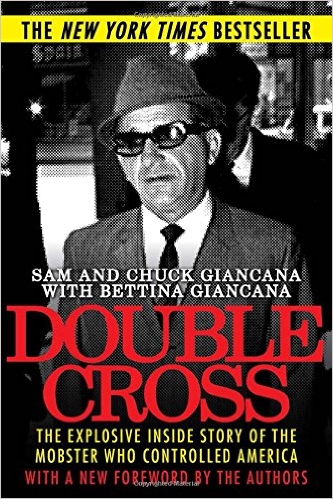
 The film “Black Mass” featuring Johnny Depp as the notorious Boston criminal James “Whitey” Bulger, took us inside the old Boston underworld and the power struggle between the Irish and Italian organized crime organizations that turned the city into a battle zone. Bulger’s story, due in part to documentaries, media coverage and books, is well-known. But what isn’t widely known, is the story of the Winter Hill gang’s most efficient and feared killer, Johnny Martorano. In the film, Martorano is played by actor W. Earl Brown. Howie Carr presents us with this chilling account of Martorano’s early life, his descent into the crime world, affiliation with Bulger, arrest and decision to become a testifying witness against the Winter Hill gang and numerous individuals targeted in law enforcement investigations. And what he reveals is a gritty underworld full of corruption, drugs, sex, money and murder. All of the infamous Boston gangsters make an appearance including, Donald Killeen, Indian Al, Wimpy Bennett, Gennaro “Jerry” Angiulo and Tommy King.
 On June 4, 1994, Greg “The Grim Reaper” Scarpa died of AIDS related complications at the Federal Medical Center in Rochester, Minnesota. The former mobster is known as one of the most feared killers in mafia history. Joseph Valachi is thought to be the first made member of a La Costra Nostra family to shed light on the dark secrets held by the mafia. Following Scarpa’s death, it came to light that he had been an informant for the FBI as early as 1953 preceding Valachi by ten years. Unlike Valachi, he never testified and while an informant he continued to operate on the streets of New York with sometimes very deadly consequences. From all accounts, he took part in or played a supporting role in dozens of murders, some of which remained unsolved. His son, Greg Scarpa, Jr., is still incarcerated but has renounced his former life as a mobster and continues his quest to have his conviction reviewed and his jail time reduced. I was previously familiar with the author Peter Lance, having read his book ‘A Thousand Years For Revenge’ as a sophomore at the John Jay College of Criminal Justice. This book on Scarpa came as a recommendation from Amazon and I jumped at the chance to read this engaging and shocking expose. And while the cover of the book is highly enticing on its own, what’s contained is the pages of this book is nothing short of mind-boggling and will make you question everything you thought you knew about the trials and convictions of mobsters, most notably, John Gotti, Vic Orena, Sr., Sammy “The Bull” Gravano and Anthony “Gaspipe” Casso. And next to Scarpa, Casso figures prominently throughout the book and his relationship with the government is just as fascinating.
 FREETHINKING BIBLIOPHILE
You must be logged in to post a comment.