Killers of the Flower Moon: The Osage Murders and the Birth of the FBI – David Grann

I was in the search for a new book and saw this title by David Grann which caught my attention because I knew that I had seen the name before. Then I realized that a Hollywood film of the same name had been released starring Leonardo DiCaprio, Lily Gladstone and Robert De Niro. I have yet to see the film and in hindsight, having read the book first may be a bonus. The movie is on my watchlist and if it is close to the story told within, I can expect a powerful film from director Martin Scorsese. Prior to reading the book, I was not familiar with the Osage murders in Oklahoma during the early 1900s. As a result, I learned the story for the first time, and after finishing the book, I felt anger and sadness. But despite the range of emotions triggered by the story, the book is excellent and the suspense kept me glued to the book as I learned the story of a dark time in Oklahoma’s history.

The book begins with the disappearance of Anna Brown (1885-1921) on May 21, 1921. We soon learn about Anna’s family history and the Osage tribe to which they belong. Her sister Molly Burkhart (1886-1937) and husband Ernest Burkhart (1892-1986) quickly emerge as the central figures in the story, and begin a desperate search for Anna. However, there is more than meets the eye, and to understand Anna’s fate, the author explains the Osage tribe and their relocation from Kansas to Oklahoma by the United States Government. The move proved to be a blessing and a curse but the statistics regarding the Osage’s financial status left me speechless. I was not prepared for the jaw dropping numbers presented by the author. But it was easy to see how they became targets for the violence which arrived at their doorsteps. The situation is made more complex with the mixed marriages between Osage women and white men. Today the couples would not earn a second glance but in the 1920s, Native Americans were still sadly viewed as “savages”. Statements by Ernest’s aunt in the book reflect this mindset. At first, the mixed marriages provided me with a sense of hope but as the layers are pulled back on murders, the plot thickens in ways I did not expect. And this resulted in me wanting to read even more of the book as the saga continued to unfold.

Every story regarding the dark side of human nature has an antagonist, and this book is no different. Here, that person is William K. Hale (1874-1962). It did not take long to realize that Hale was a strange character, and he cast a dark cloud over the story. I could feel the shift in the mood through the author’s words as I learned of Hale’s background and his actions regarding the Osage. The feeling I had about Hale was right on the mark. In Washington, D.C., the Osage murders did not go unnoticed and the Bureau of Investigation, later renamed the Federal Bureau of Investigation (“FBI”), found itself involved with the case after its director J. Edgar Hoover (1895-1792) dispatched special agents under Tom White (1881-1971) to solve the case and bring the murderers to justice. White had his hands full but soon learns that there are dark secrets in the Osage case, and his investigation also highlights the mistakes made by local police. But he gets a break when the home of local resident Bill Smith implodes. The fallout from the collapse of the Smith house soon leads White on another path that goes into the heart of the Osage murders, and what he learns will leave readers reeling. If the story had you on the edge of your seat up until this point,  you had better hold on tight because it soon takes another turn into the dark.

At first, I was not sure how the Smith case would help break the murder investigation, but like a series of dominoes, people begin to fall, and the truth begins to come out, and I could not believe what I read. The tragedy of the Osage tribe is heartbreaking, and the way in which they were targeted is repulsive. Actions of those cursed with greed highlight the power money has over people and the lengths to which people are willing to go to obtain wealth. However, justice prevails and there are prison sentences handed out. And while they may seem light to some readers, I was both surprised and grateful that justice was done in a time when being Native American still provoked disgust and discrimination. But just when you think the story is over, the author takes us another ride in the epilogue where he discusses a disturbing aspect of the Osage murders that the police and FBI have not fully addressed. And the question emerges; how many murders have occurred which were never solved? And how long did the crimes occur? And did the perpetrators have the protection of local officials? The full truth will never be known, but the author presents a chilling case for a far more disturbing trend which had developed in Osage territory.

After I finished the book, I had a moment of silence for Anna Brown and the Osage tribe members whose lives were taken due to greed and vindictiveness. Their story is a tragic tale of Native Americans whose lives were upended, improved and then imperiled. We are unable to go back in time and correct the wrongs done to them, but we can honor their legacy by never forgetting their story. I did not know what to expect when I began this book but it has become a story I will not forget.  This book is well-written and well-researched, and the story is told in a narrative which maintains the right mix of elements to convey the author’s words. And when I do watch the film about the Osage murders, I can reflect back on Grann’s work which I am grateful to have discovered. Highly recommended.

ASIN ‏ : ‎ 0385534248
Publisher ‏ : ‎ Doubleday, April 18, 2017

The Lockerbie Bombing: A Father’s Search for Justice – Jim Swire and Peter Biddulph

On the evening of December 21, 1988, Flora Swire boarded Pan Am Flight 103 at London’s Heathrow Airport for a transatlantic flight to John F. Kennedy International Airport in New York City. At 7:03 p.m. (GMT) the Boeing 747 leveled off at 31,000 feet. Moments later an explosion ripped the fuselage apart as the aircraft passed over Lockerbie, Scotland. All 250 passengers and crew died, along with several fatalities on the ground. Jim and Jane Swire were at home when news broke of the disaster and immediately thought of their daughter Flora who was on the doomed flight. And sadly, it was soon confirmed that she had died in what became one of the most infamous air disasters in history. Here, Jim Swire tells the story of their family’s ordeal as they seek answers and justice for the death of Flora and the other souls who perished that night. 

This book was published in 2021, thirty-three years after that horrific night but the pain is still there for the Swires. Jim takes us back to the days before the disaster to explain Flora’s reasons for the trip and to provide a picture of their lives which were abruptly changed. Life for the Swires is typical of the average family, and when Flora decides to visit the United States, nothing seems unusual. But unbeknownst to her and other passengers, there were people planning an act of air terrorism which remains one of aviation’s darkest moments. Further, it served as inspiration for the the long-term ambitions of other terorist most notably  Ramzi Yousef, convicted for his role in the bombing of the World Trade Center in Lower Manhattan on February 26, 1993. And by the time a conviction was secured, Swire would learn about the complicated world of diplomacy and hidden agendas. 

Flora’s death is beyond devastating and leaves the Swires with unanswered questions. Along with other families, he begins to search for answers and on October 1, 1990, a Fatal Accident Inquiry begins into the cause behind the destruction of Pan Am Flight 103. Swire also mentions the Lockerbie Air Disaster Group, composed of attorneys on both sides of the Atlantic, but its origin and plan remains mysterious throughout the book and I have not see anything further on it. As more evidence continues to evolve the story takes a sharp turn when Swire decides to visit Libya and confront its leader Muammar al-Quaddafi (1942-2011) about the country’s role in the crime. The move is shocking and results in a range of reactions explained by the author. In the United States, the Department of Justice announced Abdelbaset al-Megrahi (1952-2012) and Khalifa Fhimah as participants in the crime, and both men are put on trial. However, Swire begins to see that there is more than meets the eye.

As I read, I took note of strange aspects of the case which are still troubling. The statements of a break-in near the baggage where Pan Am 103 was parked by Raymond Manly, a security guard at Heathrow Airport, are unsettling. And the revelation of warnings sent to the airlines in the weeks leading up to the Pan Am disaster is gut wrenching. However, there is another dark side to the story which Swire addresses, but the full account is too long for the book. On July 3, 1988, the USS Vincennes shot down Iran Air Flight 655 over the Persian Gulf. This incident would come to haunt the investigation and subsequent trial and remain on Swire’s mind as the Lockerbie investigation and trial progressed. The appearance of a key witness named Tony Gauci (1944-2016) is also a pivotal moment in the story, but as readers will learn, there is more to his role and his testimony raised even more questions about the strength and accuracy of the prosecution’s case. The disturbing details surrounding Gauci’s role are discussed and raise questions regarding his truthfulness and the timeline of events. And the actions of powerful figures following al-Megrahi’s conviction and appeals, result in Swire’s view of western governments being altered. He and others believed that the Popular Front for the Liberation of Palestine General Command (PFLP-GC) was behind the bombing. Their arguments are compelling but officially the case is closed. However, it is up to the reader to decide if the convictions were the final word in the matter. 

I have recently learned that actor Colin Firth stars as Swire in the BBC television series ‘Lockerbie: A Search for Truth‘. While I have yet to watch it, the series is on my list of television shows to catch up on. There are also air crash investigation documentaries on YouTube about the Pan Am 103 disaster which are thorough. Of course, there are secrets about the disaster which will be lost to history, but we do have an accurate picture of a tragedy that had ample warning in the weeks leading up to it. And on September 11, 2001, the world would learn again about the importance of air safety after Boeing commercial jets struck each tower of the World Trade Center in my hometown of New York City, the Pentagon in Washington, D.C., and the last jet crashing in Pennsylvania. I admit that going through airport security can feel like a hassle but it should remind us of the importance behind screening as the person sitting next to us may not have our best interest at heart. The victims of Pan Am Flight 103 will never have the security of modern screening, and their senseless deaths remain haunting and tragic. But we can be assured that Jim Swire will continue to search for the truth until his last day on this planet. Highly recommended. 

ASIN ‏ : ‎ B093YRXZ7C
Publisher ‏ : ‎ Birlinn (July 6, 2021)

Jackal: The Complete Story of the Legendary Terrorist, Carlos the Jackal – John Follain

On the night of June 27, 1975, two French internal security agents named Raymond Dous and Jean Donatini arrived at 9 Rue Tollier in Paris, France along with Michel Moukharbal, a suspect being investigated by French police for attacks against the Israeli airline El Al at Paris-Orly Airport. Before the night was over, all three men were dead and a fourth serious wounded resulting in a manhunt issued by France for Ilich Ramírez Sánchez known to the world as “Carlos the Jackal“. Prior to reading the book I was familiar with his name and parts of his story but did not have the full account. I picked up this book which I saw in my list of recommendations and decided to make the purchase and step into the world of the Jackal.

From the beginning of the book it is apparent that the story will be anything but ordinary. Ramirez’s childhood is unusual and his father’s obsession with the Soviet Union and Vladimir Lenin (1871-1924) is strange considering the fact that the family resides in Venezuela. At home things are not well and his parents’ divorce when Carlos is a teenager proves to be a pivotal moment in his life. Eventually, his mother relocates with the children to Europe and this sets off a chain of events in his life that lead to him becoming one of the most wanted fugitives on the planet. When he gravitates towards Marxism at the Patrice Lumumba University in Moscow, there is no turning back as the Jackal begins to take shape and an usual story develops which sees him move through Europe and the Middle East leaving a trail of death and destruction.

If I had to choose one word to describe Ramirez’s life from this point on, that word would be chaos. Between fatherhood, a marriage, and alliances with Middle Eastern governments as an unofficial agent of terror, the book is a roller coaster ride of insanity. However, what is equally disturbing as the attacks he conducted with subordinates is the support he received from multiple countries. In 1970 he joined the Popular Front for the Liberation of Palestine and remained steadfast in his support which inspired his radicalism. As part of his tool kit, he employed fake passports, fake identification, cash, safe houses, connections in high places and a long list of people willing to follow his every move. The story feels like a tale from Hollywood as the Jackal goes wild. The brazen raid in Vienna, Austria on December 21, 1975 at Organization of the Petroleum Exporting Countries (“OPEC”) headquarters is just one of the insane missions executed by the Jackal.

During his escapades he also finds love when he encounters Magdalena Kopp (1948-2015). Their story is equally surreal but their union did produce Ramirez’s second child. However, being the wife of a world-wide fugitive is not sustainable, and authorities are constantly on their heels. Slowly, the walls begin to close in and the fall out is unpredictable but the comeuppance for a life of crime. Kopp’s fate ironically in Paris, sets off a deadly series of actions by Carlos who is beginning to lose his grip on reality. Sadly, the collateral damage was high and only increased the pressure on French intelligence to capture him at all costs. Following the collapse of their marriage, Kopp makes another decision to relocate which is curious and proves that truth is stranger than fiction. As for Carlos, fate would not be as kind, and he continues to travel through the Middle East eventually finding refuge in Sudan. But it is here where his career concludes as French intelligence make good on their promise to apprehend him for the events in June 1975. His capture and extradition to France is climactic, but was it legal? The author lays out the facts of France’s actions for the reader to decide. But it does prove that when you are a wanted man, governments will not stop until they have you.

The trial in which Carlos is tried and convicted is discussed by the author, and although his life was on the line, Ramirez moves with a detached reality that is both odd and amusing. However, the deaths as a result of his actions are not and when justice is metered out, the story of Carlos the Jackal is over. He remains alive today but no longer able to live out his fantasy of a revolutionary playboy jetsetting across the planet and living the fast life. If you need a book about the life of Carlos the Jackal, this is a good place to start.

ASIN ‏ : ‎ B00IQY3E64
Publisher ‏ : ‎ Arcade; Reprint edition (July 1, 2011)

Blood Royal: A True Tale of Crime and Detection in Medieval Paris – Eric Jager

On the night of November 23, 1407, Louis I, duke d’Orléans (1372-1407), younger brother of Charles VI (1368-1422), was violently murdered in Paris, France, by a group of masked assailants who escaped on horseback. Initially, investigators had little information but tasked a local detective named Guillaume de Tignonville (d. 1414) to find Louis’s killers. This book caught my attention due to my fondness for true crime material. The title alone gave me the idea that the material might be macabre, and to a certain extent it is. However, it is also a classic detective story with a plot twist that is shocking and unbelievable. Author Eric Jager takes us back to medieval France in 1407 to unravel a murder that sent chills down my spine.

Prior to reading the book, I was not aware of this historical event and had little knowledge of medieval France. As a result, the book felt like a new lesson in world history. I must warn readers that Louis’s murder is gruesome, and the description of the crime by the author is graphic. The crime is horrific, but what I also noticed was the descriptions of the living conditions for Parisians and the system of rule under Charles and Louis. Frankly, life in the medieval era was not for the faint of heart. Dysentery, pestilence, famine, and warfare routinely threatened people as they did their best to survive each day. After learning about daily life, the story changes when a mysterious man in a robe appears looking for a place to rent. After initial difficulty, he succeeds in renting space from a local family who could not have known that this act would set off a chain of events which lead to the duke’s assassination.

The back story to the duke’s reign is discussed, and it becomes apparent that Louis is anything but ordinary. Further, he has a few vices which earned him his fair share of enemies. And even for the medieval world, some of his actions were both appalling and egregious. The lead investigator de Tignonville finds himself facing a monumental task in finding the duke’s assassins. And here is where the art of solving crimes takes center stage. There are no modern-day forensic tools, this is a classic whodunit with the investigator using the established process of elimination and a laser focus to track down the murderers. But when his investigation takes him to a place he never expected, the story takes a sharp turn which guarantees the fallout will leave no one unscathed.

When the murderer was revealed in the book, I recoiled in shock. But as Jager explains the history between Louis and the person who plotted his death, the pieces of the puzzle fall into place. A deadly cat and mouse game had developed ensured that France would never forget its blood climax. Eventually, the public learns of the plotter’s identity, but what happens next is nothing short of surreal. In fact, it will make you question the concept of justice. Humiliation and absurdity become recurring themes, and even the famed detective is not immune. Complicating matters are personal issues among people in high positions of power, which are centered around fame, money, and infidelity. I guess in that sense, not much has changed today. Louis’s death left the nation in a vulnerable position and when England becomes aware of the turmoil in Paris, all bets are off, and the suspense heightens as conflict arrives at France’s doorstep. The descriptions of violent encounters and their aftermath are raw but also show the reality of those on the losing end of conquest during that time. Invasion was merciless and there was little pity for the losing side. But France did not take British encroachment lying down, and many Frenchmen would answer the call to serve at the Battle of Agincourt (October 25, 1415). Sadly, some people we learn about do not survive the conflict. But their determination to resist Brutal rule in service of France is noted.

Francophiles may possess in depth knowledge of this time in the country’s history. But for the rest of us learning for the first time, Jager’s book is a good place to begin. It is a well-researched and thorough account of a vicious crime that is straight out of a horror film. And that crime brought France to the brink of ruin. It is a case study of the dangers of greed and gratuitous violence. Paris is a different country today, but it too has its dark past which comes alive in the pages of this investigative report which will satisfy the curiosity of true crime lovers.

“Louis’s murder had plunged France into a bloody civil war, leading to a devastating English invasion under Henry V, followed by a brutal foreign occupation that began to lift only with Joan of Arc”.

ASIN ‏ : ‎ B00CO7FI54
Publisher ‏ : ‎ Little, Brown and Company; Illustrated edition (February 25, 2014)

The Accountant’s Story: Inside the Violent World of the Medellín Cartel – Roberto Escobar with David Fisher


escobar

On September 14, 1986, United States President Ronald Reagan (1911-2004) gave a speech to the nation on the Campaign Against Drug Abuse. And though he did not mention names of drug lords, those with knowledge of the flood of narcotics entering the United States aware that Reagan was also speaking to Pablo Emilio Escobar Gaviria (1949-1993), the head of the Medellín cartel who had earned a place on Forbes’ list of the world’s wealthiest figures. Seven more years passed before Escobar met his fate on December 2, 1993, but prior to the final act of his life, Escobar continued to earn billions of dollars as cocaine became the drug of choice. There are countless documentaries, films, and articles about Pablo, but his brother Roberto has remained in the shadows. His role as the organization’s accountant and proximity to his brother, allowed him to witness the rise and fall of the Medellín cartel. And this is his story of that world and what really happened in their lives as Pablo became the most wanted drug lord in the world.

Before reading this book, I knew of Roberto Escobar, but I did not know his personal story. I did expect it to mirror Pablo’s but the perspective from Roberto’s view is unique on its own and raises questions about morality that I did not expect. Further, what he reveals adds more complication to the legend and infamy of Pablo. After a brief explanation of the family’s history which traces its maternal routes to Spain, Roberto focuses on the young Pablo who has no interest in narcotics. In fact, Robert explains that “in 1974 Pablo was studying political science at the Universidad de Antiochia. There are many who believe Pablo was an uneducated man who succeeded only through drugs. That simply is not true.” But the most significant aspect of the early Pablo’s life is his vision of becoming president of Colombia. It may sound comical looking back in hindsight, but the book leaves no room to believe that Escobar was insincere about this. And though he was trafficking narcotics, he did want to be president of the country.  This is supported by Pablo’s successful political campaign in which he ran for Congress and was elected. Of course, the drugs were never far away but as we learn from Roberto, Pablo did not start out as a narcotics trafficker nor did the violence in Colombia start with the Medellín cartel. Those who are from Colombia or have visited Latin America may find this sobering statement from Roberto that “Colombia has always been a country of violence. It was part of our heritage” to be hauntingly accurate.

After engaging in the transport of contraband and a narrow escape from police, Pablo realizes that he needs another stream of revenue and learns about a paste made from coca leaf extracts. It is chance event that changes history and the lives of all Colombians. But Pablo was unknown outside of Colombia early in his career and the leap from domestic trafficker to public enemy number one of Washington is a fascinating story, and Roberto delivers the goods. We learn that America was always a good drug market and traffic from Colombia and other parts of South America flew under the radar. But that all changed in 1979 when The United States and Colombia signed an extradition agreement to extradite drug traffickers to America to stand trial. It was a move in the making and changed the lives of Pablo and Roberto permanently. However, before that took place, Roberto knew that America was an entirely different arena and recalls that “for the entire family, our lives changed forever the day my brother decided to send his drugs to America“. War was declared and it has not let up to this day. And to drive home the significance of the agreement, Roberto goes on to explain that “Although none of us knew it at the time, the wars had actually begun in 1979, when the United States and Colombia signed a treaty that declared drug trafficking a crime against the United States and permitted Colombian traffickers to be extradited to the U.S. It was that law that changed everything.”

Within Colombia, Pablo and his family enjoy life as they could have never imagined with unlimited access to cash, enforcers, and political influence. However, I could not overlook the deeds by Pablo for the poor people of Colombia. And this part of the book presents a duality the remains constant throughout the story. We know Pablo is dealing drugs, but he also becomes a Robin Hood type figure who commits unbelievably generous acts of kindness, one of which is Barrio Escobar which stands to this day. The complicated nature of Pablo is observed by Roberto who cautions his sibling when needed and provides explanations for the decisions they make. And to be fair, Roberto does not shy away from criticizing his brother in the book when necessary. The best example is Pablo’s entry in politics which the author strongly disagreed with. But that was only the beginning in a bitter feud with the Colombia Government that included the Cali cartel, police hit squads and the notorious group of killers called Los Pepes. Colombia was turned into a bloodbath and the Escobars were the top prizes to be captured. The stories from Roberto are unbelievable and show that the idea of safety was a foreign concept for victims of the drug wars. The violence escalates in the book as expected and readers may want to use discretion.

Any story about Escobar must address the elephant in the room and that is the sad fate of Avianca Airlines Flight 203. Roberto explains that he did not know of any plot, but had he known he would have stopped Pablo. There is no smoking gun and any discussions about it were hidden from Roberto, most likely to protect him from prosecution. This act combined with the attacks on government buildings, political assassinations and deadly battles with Colombian police units, catapulted Pablo to a level of infamy from which he has never descended and never will. Yet while these things were taking place, he was still committing acts of kindness to those in need. But he was firm in his determination to never be incarcerated in an American jail and was clear to Roberto that he would rather die on Colombia soil than sit in a United States prison. In the end he got his wish.

Following the Avianca tragedy, the writing is on the wall, and we know that Pablo will not escape alive. But there is still more carnage to come, and Colombia saw more bloodshed before the drug lord was ambushed and eliminated. Roberto recounts those finals weeks with Pablo and the feeling they both had as the walls closed in. Both were deeply affected by the isolation from their children and Roberto goes through three marriages while telling the story. The Escobar name became a liability and the bounty placed on their heads resulted in death coming from all angles. But following Pablo’s demise, their mother takes action to end the battles with the Cali cartels and rebel groups with astonishing courage. Roberto suffered a different fate and his ordeal in prison at the time of Pablo’s death and its aftermath are beyond shocking. It is a miracle that he is alive today. The glory days of the Medellín cartel are gone but drug trafficking continues to exist. But there was a time when a simple man from Colombia with an unobstructed vision of destiny became the poster boy for the cocaine trafficking industry. And along for the ride was his brother Roberto who served as the accountant, confidant and voice of reason when needed. If you want to know the real story of Pablo Escobar, this book is a must read and a welcome addition to the books we have now about the man who entrenched himself permanently in the history of Colombia.

“It is impossible to even imagine how much money remains put away somewhere, probably never to be discovered. People who managed millions of dollars got killed without telling anyone where the money was hidden. Or they took the money and disappeared when Pablo was killed. I feel sure there are undiscovered coletas in houses all throughout Colombia—but also in New York and Miami, Chicago and Los Angeles, and the other cities in which Medellín did business. I am also certain there are bank accounts in countries whose numbers have been lost and forgotten and never will be opened again.” 

-Roberto Escobar

ASIN:‎ B001RIO2IU

The Killing of Tupac Shakur: Who Did It and Why? – Cathy Scott

scottAt 4:03 p.m. on September 13, 1996, rap star Tupac Shakur (1971-1996) died from gunshot wounds he received on September 7 while riding in the passenger seat of a BMW driven by former Death Row Records CEO Marion “Suge” Knight on the Las Vegas strip. Shakur was twenty-five years old and left behind a complicated legacy that remains a top of discussion in rap music culture. I remember with vivid clarity the shock that was felt when his death was announced and have always believed that a part of the rap music genre died with him that day. Officially his murder is listed as unsolved and an open case by the Las Vegas Police Department. Off the record, it has been alleged and believed that Crips gang member Orlando “Baby Lane” Anderson (1974-1998) pulled the trigger of the gun that ended Shakur’s life. The case is filled with rumors, mysteries, and chilling facts. Journalist Cathy Scott stepped into this murky world to set the record straight on Shakur’s murder.
Anderson was never charged by Las Vegas Police for Shakur’s murder but the physical altercation between the two earlier that night at the MGM Grand Hotel did provide a highly probable motive. He had been attacked and beaten by an entourage composed of Shakur, Knight, and affiliates of Death Row Records, who were visiting Las Vegas to attend the Mike Tyson – Bruce Seldon boxing match. The incident was captured on camera and the footage is widely available on the internet for those who have yet to see it. After the shooting on the strip, Anderson was questioned but not detained by police. In interviews following the rapper’s death, he maintained his innocence, and any secrets he did have went with him to his grave when he himself died from gunshot wounds on May 29, 1998. For a more thorough examination of Orlando Anderson’s story, I recommend Lolita Files’s ‘Once Upon a Time in Compton, which provides a more detailed analysis of the raids by the Los Angeles Police Department and Compton Police Department on Anderson’s homes and the evidence that was seized. The information is based on the work of former Compton Gang Unit detectives Tim “Blondie” Brennand and Robert Ladd.

It should be noted that no “smoking gun” exists here in the book. If it had, Scott would have certainly been heralded as the person who finally revealed the truth. Instead, the book is a thorough and chronology of the events that night, the subsequent investigation, and the relevant murder of rapper Christopher “The Notorious B.I.G.” Wallace (1972-1997), whose death on March 9, 1997, seemed to indicate that it was open season on rappers. Interestingly, I found that although I have followed the Shakur case since the shooting, there were things that I learned here that I had not previously known. Further, Scott does not subscribe to any conspiracy theories, thus removing any trace of bias in the book. She is the investigative reporter relaying to the reader what she discovered.

Before discussing the murder, the author sets the stage by exploring the background of Death Row Records and its founder. Readers who have watched the documentary ‘Welcome to Death Row‘ will be familiar with the label’s history and the role of convicted drug dealer Michael “Harry O” Harris. The documentary is far more extensive in the amount of information provided but Scott includes the right amount here to provide an overall picture of how Suge Knight accumulated power in the American music industry. The life of Tupac is also discussed and anyone who has not seen the film ‘Tupac Resurrection‘, should view it either before or after reading this book. In 1995, the lives of Knight and Shakur crossed paths when the CEO offered Tupac a way out of prison. Contrary to widely held belief, Suge Knight did not bail Tupac out of jail but did facilitate the move. The truth about who bailed him out can be found in this New York Times article. Before their meeting was over, Tupac promised that he would put Death Row on the map. He did not exaggerate.

On September 7, 1996, Shakur attended the short-lived boxing match between Tyson and Seldon. While walking through the lobby, his entourage spotted Anderson standing by himself. The story that has persisted over the years is that Trayvon Lane whispered something in Tupac’s ear that caused him to take off running towards Anderson. Investigators later learned that Anderson was part of a group that had assaulted Lane and taken his Death Row chain and medallion and the Lakewood Mall in July 1996. To this day there is speculation regarding what Lane said since he has never given interviews and Shakur is deceased. What is clear is that Tupac was intent on getting to Anderson. Following the assault at the MGM, all hell broke loose as shots were heard on the strip. Police rushed to the scene to find Shakur and Knight wounded. The author goes through the events minute by minute capturing the chaos that ensued. She also reveals that multiple cars did chase the white Cadillac seen by witnesses but there is no further mention of what happened as a result. Finding witnesses willing to talk proved to be a challenge for investigators but one member of the rap group “The Outlaws” named Yafeu Fula (1977-1996), did tell detectives that he was able to see the shooter’s face. The lost opportunity to utilize his knowledge is an additional tragedy in the book and his fate will leave readers speechless.

There was one part of Scott’s discussion of Orlando that did stand out with regard to the lawsuit filed by Anderson against Shakur’s estate and Afeni’s countersuit. Both were pending at the time of Anderson’s death but there had been a surprising turn of events in the case hours before his death. Anderson was no saint, but it is hard to answer the question as to who he really was. The facts presented by Scott stand in contrast to the street reputation of “Baby Lane”. On the A & E show ‘Who Killed Tupac‘, his brother and cousin adamantly stated that Anderson did not shoot Shakur. While reading the book a sense of gloom overcame me due to the story serving as an example of the black-on-black violence that continues to plague inner-city neighborhoods. The author is mindful of this and includes statistics that are sobering. As relayed by Scott,

Statistics show that black-on-black gun violence has been the leading cause of death for black youths 15 to 19 years old since 1969. From 1987 to 1989, the gun homicide rate for black males 15 to 19 increased 71 percent. Of the roughly 20,000 murders committed each year in the U.S. between 1991 and 1995, 50 percent were cases involving black victims.

After Shakur was admitted to the hospital, the level of craziness continued to escalate. Due to Shakur’s notoriety, the hospital found itself a target of the press, prank callers and enemies of the slain rapper. In the years since this book was published, YouTube has become a powerful platform for video presentations and multiple people affiliated with Death Row Records have spoken publicly about the events in Las Vegas. Kenya Ware was a stylist for the record label and Shakur. She spoke with him shortly before the shooting and stated in interviews that as they sat on the Las Vegas strip stunned, passing cars continued to taunt the Death Row entourage. It is not clear if Scott knew this at the time, but she does recall discussions she had outside the hospital with more than one person who told her that they knew who did it and the shooters were not from Las Vegas. That explains the retaliation shootings discussed in the book that erupted across Compton, California in the wake of Shakur’s death.

Inside the hospital, the scene was somber and tense. Scott brings the past alive and discards anything that is hearsay. Her possession of the official autopsy report placed her in a position to stick to the facts of how the rapper died. Stories about Tupac’s final days at the hospital are endless and filtering truth from fiction is a challenge. However, she sticks to the facts and keeps the story streamlined and void of useless gossip. In doing her due diligence as a reporter, Scott spoke to hospital personnel who revealed the absurd phone calls they received. After Shakur died, the number of calls increased, and what the callers were in search of speaks volumes about human nature. Afeni Shakur (1947-2016) had flown to Las Vegas after learning her son was shot and endured days of agony before the end came for him. But she might not have known at the time that her work on behalf of her son was just beginning. Scott discusses Afeni’s actions after her son’s death and her contributions to his legacy. Sadly, Afeni passed on May 2, 2016.

The elephant in the room is the feud between Shakur and Wallace but the author refutes any claims that Bad Boy Records CEO Sean “Puffy” Combs played a role in Shakur’s death. In fact, the entire book is filled with clarifications of long-running rumors with no basis in fact. One rumor is the belief that Suge Knight orchestrated the hit. I never believed the theory nor did the author. Knight, who is serving a twenty-eight-year prison sentence on unrelated charges, has always denied being behind the shooting. She also puts to rest conspiracy theories that claim Shakur is alive after having faked his own death. This book was published in 2002, nine years before the publication of former Los Angeles police officer Greg Kading’s ‘Murder Rap‘ in which Orlando Anderson’s uncle Duane “Keefe D” Davis reveals how Shakur was allegedly killed. Scott was not aware of these claims at the time she wrote this but further complicating matters is that Davis’s claims are unable to be verified as the three other people whom he said were in the car are deceased. Personally, one part of Davis’s story that always bothered me was if he participated in the murder, then why were there no attempts on his life that we know of? And why haven’t Las Vegas police arrested him if he is confessing to being part of the murder? I do not know if Scott will publish a follow-up to his book or a revision addressing Davis’s claims, but if she does, it will be an enjoyable read. Kading has made a name for himself on the matter, but I strongly recommend readers listen to a podcast called ‘The Dossier’ which focuses on the murder of Christopher Wallace and its connection to Shakur’s death.

In recent years, interest in the murders of both rappers has increased and it is remarkable that more than twenty years later, we are still talking about their lives. Both are tragedies in which two young men died far too young. I will never forget the sense of loss felt when their deaths were announced and the realization that rap feuds had moved from the records to the streets. On one of the busiest nights of the year on one of the busiest streets in the country, Shakur was shot and killed in front of hundreds of witnesses, yet his murder remains unsolved as the television show of the same name shows. We may never know the full truth about the shooting that took his life, but this is the story of his murder as it happened in September 1996. Highly recommended.

“I’m not saying I’m gonna change world. But I guarantee that I will spark the brain that will change the world. So keep your head up. Do what you gotta do. And then inside of you, I’ll be reborn“.                    – Tupac Amaru Shakur

ASIN: B00IYS049C

The Making of Lee Boyd Malvo: The D.C. Sniper – Carmeta Albarus and Jonathan M. Mack

MalvoIn October 2002, a series of murders occurred between the states of Maryland and Virginia, and the federal District of Columbia that spread fear and panic across the United States. News reports of a sniper moving across the area and striking at will, left law enforcement scrambling and citizens seeking arms and shelter. I remember watching the nightly news in anticipation that the police had captured the person(s) responsible for the crimes. On October 24, 2002, the nation felt relieved when John Allen Muhammad (1960-2009) and Lee Boyd Malvo were arrested while sleeping in their Chevrolet Caprice near Myersville, Maryland. Both were tried and convicted, with Muhammad receiving the death penalty and Malvo being sentenced to life in prison due to his age at the time of the murders. Muhammad was executed on November 10, 2009, at the Greenville Correctional Center in Jarratt, Virginia and Malvo remains in prison today.
Malvo’s age drew intrigue from doctors and legal analysts with all wondering how a seventeen-year-old kid could have committed unimaginable crimes. John Allen Muhammad had become a second father to Malvo and had deeply influenced Malvo’s thoughts but what was not fully understood was how and why he was able to control his under-age conspirator. Carmeta Albarus is the president of CVA Consulting Services, Inc. and was hired during the investigation into the crimes to find information on Malvo’s background. As part of her work, she met with Malvo extensively and served as an advisor throughout his trial. This book is her explanation of what she discovered as the pieces of his life came together.

To understand Lee Boyd Malvo, we must travel back in time to the Caribbean nation of Jamaica where Malvo was born on February 17, 1985, to Leslie Malvo and Una James. The story is typical at first, but it soon becomes clear that trouble is brewing between Malvo’s parents. They eventually part ways and as the author shows, Malvo’s life was never the same again. Prior to reading this book, I did not know what Albarus reveals in this book. Malvo is a textbook case of the dangers that exist due to broken homes. The relationship between Malvo and his mother Una is unquestionably the root of the issues that came back to haunt both in later years. As I read the book, I could not believe what transpired between the two and the number of missed opportunities to provide Malvo with the foundation a child needs. However, there are times when Malvo knew his actions were wrong and he even admits to them. Further, Albarus was able to get close to him due in part to their shared Jamaican ancestry. This undoubtedly helped her gain Malvo’s trust and access to the demons that haunt him to this day. But even she could not have fathomed the level of dysfunction that existed because of a fractured relationship between mother and son and a dark figure eager to unleash a reign of terror.

Readers will notice that Malvo is never in one place for too long. His arrival in Antigua changed his life and set into motion a series of events that culminated with Malvo pulling the trigger on innocent victims. Una’s absence from Antigua could not have come at a worse time for John Allen Muhammad had also arrived on the island and from the start, he makes himself known as a disciplinary who can connect with the youth and influence their actions and thoughts. The information Albarus uncovered is overwhelming, yet it also explains why Malvo was drawn to the mysterious Muhammad. I knew that Muhammad had been in the military but there were details of his personal life of which I was not aware. He too was haunted by his past and Antigua served not only as a recruitment station but also as a place of refuge from America. However, he is without question the antagonist in the book. Had the two not been arrested, the number of victims would have been far higher. The two drifters found what they were looking for in each other and before long, a son would be lost, a father gone, and a nation would find itself on high alert.

The writing style used in the book is fluid and does not exude bias or condemnation. In fact, Albarus does an excellent job of analyzing Malvo and letting him speak for himself about his turbulent life. But at no time does she absolve him of guilt and confronts him on several things. He murdered innocent people, but this book poses the question, would he have done so had his home been stable and he had not John Allen Muhammad? The evidence presented by Albarus strongly indicates that he would be a free and functional adult today had his circumstances been different. It is rare for youths of Malvo’s age at the time of the murders to commit such heinous crimes and when they do happen, people are left to wonder why. In profiling Lee Boyd Malvo, Albarus tackles the tough questions getting to the root of the issues he had. And those issues played a significant role in his inability to think independently, walk away from Muhammad and confront the unresolved issues between him and his mother. To be fair, there were people who tried their best to help Malvo while enduring the wrath of his mother Una. Despite their efforts, the young Malvo never found a haven. And as Albarus states frankly:

“We believe that if even one person had stood up for Malvo to keep him in a positive foster placement, such as with the Maxwells, free from his mother’s constant disruption of the positives in his life, he would not have been susceptible to Muhammad’s machinations.” 

The book is not an attempt to lay blame for the crimes elsewhere. It is a thorough discussion of what happens when we fail children. My brother and I were lucky to have both parents at home as kids and we are more fortunate today to still have them in our lives. The late rap star Tupac Shakur once said that “you need a man to teach you how to be a man”. Truer words have rarely been spoken. Malvo himself is cognizant of the role his own father played in his development. Albarus notes that:

“As I tentatively brought up the subject of Malvo’s life in Jamaica, he spoke passionately about his biological father, Leslie Malvo. “He gave me balance. My dad was the nurturer.” That balance was upset when the bond with his biological father was broken.” 

Towards the end of the book, I could not help thinking that there somewhere out there is another Lee Boyd Malvo who is in danger of falling into the wrong hands. The key is reaching him or her before it is too late. For Lee Boyd Malvo, that time has passed, and he has the rest of his life to think about the actions that led to his permanent incarceration. The families of the victims will never fully heal and the names of John Allen Muhammad and Lee Boyd Malvo will remain infamous for an eternity. If you remember the D.C. Sniper attacks and have unanswered questions about the relationship between Malvo and Muhammad, this book is highly recommended.

ASIN:‎ B008ZSGTL8

The Wrong Carlos: Anatomy of a Wrongful Execution – James S. Liebman and the Columbia Deluna Project

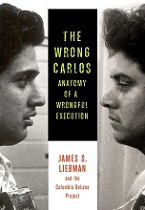
carlosOn the evening of February 4, 1983, twenty-four-year-old Wanda Lopez arrived at the Sigmor Shamrock gas station in Corpus Christi, Texas, to begin her shift as a gas station attendant. She never finished that shift. After noticing a suspicious male brandishing a knife, Lopez called police not once but twice before she was savagely attacked and fatally wounded. In less than one hour, police arrested twenty-year-old Carlos Deluna and charged him with the murder. Deluna entered a plea of not guilty and chose to stand trial where he was convicted and later sentenced to death. On December 7, 1989, he was executed at the Texas State Penitentiary at Huntsville. Prosecutors had secured a conviction and put forth the notion that justice had been served in the State of Texas. However, Deluna maintained his innocence from the start and stated more than once that he knew who did kill Lopez. The name “Carlos Hernandez” became an area of interest, yet officials claimed that no such person existed, nor had he been incarcerated in Texas. But were they telling the truth? And was justice served in Deluna’s execution? James S. Liebman and the Columbia Deluna Project examined the Lopez murder and the fate of Carlos Deluna to uncover what really happened and find the truth behind a dark story that will send chills down the spine of readers.
Before reading this book, I was not familiar with Carlos Deluna or the murder of Wanda Lopez. But that quickly changed as I began to read this unsettling and thought-provoking account of the justice system failing to deliver due process. The book focuses on the Lopez murder early on as expected. From the start, the crime itself makes no sense and we learn early that a couple of the witnesses whom the police questioned remained haunted by that night. And their admissions regarding what they saw or thought they saw that night, set the stage for the saga to come, and presents the basis for doubt of Deluna’s guilt. After presenting the subsequent statements of witnesses to the crime, the authors take us back to that night in February 1983 when Wanda Lopez lived her last moments. Readers sensitive to graphic descriptions of violence and crime scenes may find this part of the book difficult. However, the scene and actions of forensic investigators will have enormous consequences later in the story, when the authors review the collection of vital evidence.

Deluna was assigned legal counsel and the job of defending him fell on Hector De Peña and James Lawrence. De Peña had no experience in defending a capital murder defendant, but Lawrence was an experienced trial lawyer. To their credit, De Peña and Lawrence do their best to mount a defense but come across naive to the determination of prosecutors to see their client convicted and sentenced to death. Despite the State’s imposing presence, De Peña and Lawrence also made mistakes in defending their client. Deluna insisted all along that he was innocent and was adamant that Carlos Hernandez was the man responsible for Lopez’s death, yet it seemed as if no one took him seriously. But just who was Carlos Hernandez and was he as dangerous as Deluna stated?

I have read accounts of countless murder suspects, but few come across as deadly and cold-blooded as Carlos Hernandez. Frankly, the man was pure evil and his propensity for violence towards women is chilling and on full display in the book. He is undoubtedly the darkest figure in the story but incredibly, he was well-known to law enforcement and had committed offenses before and after Lopez’s murder. And as readers will learn, prosecutors were aware of his existence but made no attempt to present him in Deluna’s trial. Deluna’s counsel failed to follow leads that might have taken them to Hernandez. As someone who works in the legal field, I found myself staring in disbelief at the legal practice conducted by the prosecution and defense. And I kept asking myself why a man like Carlos Hernandez was allowed back on the streets of Texas when authorities knew how dangerous he was? And why did Deluna’s lawyers fail to call witnesses who could have provided the jurors with vital information about Deluna’s personal issues and Hernandez’s existence?

I warn readers that Hernandez is a dark figure, but the mini biography provided by the authors does provide explanations as to why he became a monster. To say that his family was dysfunctional would be an understatement. As for Deluna, the authors also provide a biographical sketch of him, and his back story explains his own path in life. Surprisingly, the two men both named Carlos were not strangers to each other and it is this part of the story that seemed to be lost on all counsel. As I read, I kept scratching my head at the missed opportunities to locate Carlos Hernandez and put an end to the mystery. And considering the multitude of crimes that Hernandez committed and his own admissions, it does make one wonder how he evaded punishment so many times. There was more to his story than the State wanted defense counsel to discover. The authors provide another crucial piece of evidence in their assessment that directly addresses the eyewitness testimony: side-by-side photos of both men. When I saw the photo of both men side-by-side, I could not tell them apart and would have picked “the wrong Carlos” myself. Without the aid of DNA technology, eyewitness testimony and forensic evidence were the tools of the trade, and the police made a mess of both.

Earlier I mentioned that the crime scene and actions of investigators had an enormous impact on the trial. The way it impacted the trial is explained by the authors who pay close attention to the handling of evidence and the failure to preserve clues that could have proven conclusively the guilt or innocence of the correct person. If you have watched any modern-day crime show such as “The First 48”, then you know the collection of evidence is the primary concern of investigators. Readers will find themselves aghast as the actions of crime scene investigators. I could not believe what I was reading. If new detectives need a case study on what not to do, it can be found here. Though they did not know it at the time, the actions of investigators helped seal the fate of Carlos Deluna.

It becomes clear in the book that Deluna is headed for conviction. The deck is stacked against him. Following the guilty conviction, the next phase of determining whether he should die was a foregone conclusion. However, he and his family never gave up and exhausted the appeals process to secure his freedom. Yet again, Deluna had legal counsel who neither prepared the case appropriately nor sought to find the mysterious Carlos Hernandez who was hiding in plain sight. The book is both spellbinding and overwhelming. And to think that his happened in America where we are entitled to due process is upsetting. If Carlos Deluna was not a poor man of Mexican heritage but a rich man of another background, he might be alive today. And Carlos Hernandez would have found himself on death row.

Admittedly, Carlos Deluna was no angel and had been in trouble with the law himself before Lopez’s murder. However, his cognitive and emotional issues were neglected throughout his life and resulted in him finding companionship with people who only knew violence and dysfunction. Today Deluna would have at his disposal programs and counseling to help with his issues but in 1983 in a poor part of Texas, help was almost non-existent and slow cognitive development was stigmatized. I never met Carlos Deluna, but I now know his story. Despite everything he went through, he left his family with these words that show a man resigned to his fate and adamant about his innocence:

“I want to say I hold no grudges. I hate no one. I love my family. Tell everyone on death row to keep the faith and don’t give up. —Last words of Carlos DeLuna, December 7, 1989, as recorded by the Texas Department of Criminal Justice.” – Carlos Deluna

This is the story of Carlos Deluna, Carlos Hernandez, and a murder in Corpus Christi, Texas that shows how society and the criminal justice system failed those they were designed to protect.

ASIN:‎ B00KV1KP9O

John Wayne Gacy: Defending a Monster: The True Story of the Lawyer Who Defended One of the Most Evil Serial Killers in History – Sam L. Amirante and Danny Broderick

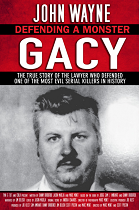
gacy On May 19, 1994, American serial killer John Wayne Gacy (1942-1994) was executed by lethal injection at Stateville Correctional Center in Joliet, Ill, after being convicted of multiple murder charges. It is  believed by some people that there were more victims of Gacy that have never been identified. The truth went to the grave with Gacy but what is on the record are the thirty-three homicides attributed to Gacy during his reign of terror. His attorney, Sam Amirante, had just started his own private defense practice when Gacy sought him out for legal representation. Amirante could not have known that his first client would catapult him into the public spotlight in ways none one could have imagined. This is the story of how it happened and how Amirante’s life changed while he defended one of America’s deadliest serial killers.
I previously reviewed the book by former prosecutor Terry Sullivan titled Killer Clown: The John Wayne Gacy Murders that focused on the efforts by law enforcement and the district attorney to build a case against Gacy. It is an interesting look into how the murder investigation developed and the impact it had on police and the people of Illinois. Amirante’s book is equally as effective but views the case from the other side. Essentially, how do you defend a monster who has just told you about murders that he has committed? After getting himself drunk, Gacy arrived at Amirante’s office for a pre-arranged visit and confessed to his lawyers that he had committed multiple murders, leaving Amirante and his partner speechless. It soon becomes clear that insanity is the only defense. But how do you defend a man who does not think there is anything mentally wrong with himself? There was no “blueprint” in dealing with a client like John Wayne Gacy and Amirante had been given an impossible task. But to his credit, he mounted a defense in the face of enormous evidence that proved Gacy’s guilt, in particular the human remains found in the crawl space underneath his house. Readers may wonder how Amirante was able to do his job knowing that thirty-three men lost their lives at the hands of Gacy. The answer is quite simple and Amirante delivers the explanation showing his belief in the legal system he swore an oath to uphold:

“It’s much easier to hate the bad guy than it is to support the hard reality that if we are to continue to enjoy our freedoms, if our Constitution is to survive, it has to be supported in all circumstances, even when to do so seems hard.” 

Whether he believed Gacy would be found innocent by reason of insanity is not entirely clear. In fact, Amirante explains on multiple occasions throughout the book how the evidence helped seal Gacy’s fate. And in a twist of fate, it was a small photo receipt belonging to Nissan Pharmacy Kim Byers was found in Gacy’s house that unraveled the murder mysteries. And though the receipt belonged to someone who was still alive, it established that Robert Jerome Piest (1963-1978) had been in Gacy’s house. The fallout from that discovery eventually led to Gacy’s arrest and showed America the dark side of human nature.  According to people who knew him, Gacy was well-liked, successful and viewed as a family-oriented person. Neighbors could not believe that the man they said hello to, had been murdering young men and burying them underneath his home and dumping other remains in nearby rivers. But the evidence did not lie and with Gacy’s statements, jurors found it fairly easy to convict him. But to his credit, Amirante was a shrewd lawyer and wins small victories through the trial. Law students and those interested in legal practice will appreciate his explanations of the criminal defense system and the strategies used to save Gacy’s life, if possible.

Amirante does not attempt to exonerate Gacy for his behavior. But he did believe that Gacy suffered from some level issue of mental disability. But his client’s ability to compartmentalize various aspects of his life made defending John Wayne Gacy an insurmountable task. And even when he was convicted of the murders, Gacy was mentally somewhere else. A sentence of capital punishment was handed out, but Gacy appeared to be indifferent to his own fate. As Amirante explains:

“Only one person in the room was dry-eyed, only one. John Wayne Gacy stood at the defense table, bewildered and lost.”

There are mysteries of Gacy’s life that are lost to history.  He is no longer here to explain his past actions in further detail. That may be a good thing as his past deeds are some of the most macabre in American history. Despite his atrocious crimes, he was entitled to due process, a component guaranteed under the laws of this nation. Amirante knew his client was a monster, but he had a job to do as a defense lawyer.  And in this book, he does it admirably, even at great personal sacrifice. His family went through quite an ordeal as detailed in the book and it should not be overlooked by readers, how difficult it must have been for him to defend his client.  To Amirante’s disappointment, Gacy was convicted by a jury of his peers, and I believe rightfully so. Serial killers will always be with us but that should never deter us from understanding how they are created in the hopes that future killers can be prevented. John Wayne Gacy will remain a case study in homicidal rage and a killer that continues to haunt America.  We may not like the legal system at times and might prefer the court of public opinion, but if we believe in the constitution, then even the worst of us are innocent until proven guilty.  This book is a prime example of an attorney who deeply believes in the American legal system and performed a task that many would have avoided. Good read.

“There are two reasons that will cause good men to abandon their long-standing, dearly held morals, values, and principles and revert to more primitive, barbaric practices to resolve conflict. That is when their hearts are filled with anger or when their hearts are filled with fear.” 

ASIN ‏ : ‎ B005HJ9MOE

Manson in His Own Words – Charles Manson with Nuel Emmons


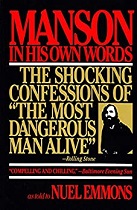
Emmons The name Charles Milles Manson (1934-2017) is among the most notorious in American history.  During August 8-10, 1969, followers of Manson committed a series of gruesome murders that shocked the country and revealed the dark side of human nature.  Though Manson never committed any of the murders himself, he helped coordinate their efforts and provided the encouragement needed for the heinous deeds to be carried out.  Among the victims was Folger’s coffee heir Abigail Folger (1943-1969) and actress Sharon Marie Tate Polanski (1943-1969). Initially, law enforcement was mystified by the crimes, but a break came in the case through the boasting and subsequent confession of Susan Atkins (1948-2009) who was being held on murder charges in the death of Gary Hinman (1934-1969).  Her statements and evidence gathered by investigators lead directly to Manson and others involved.  Manson received a death sentence for his role in the crimes, but his sentence was commuted to life in prison after the California Supreme Court declared the death penalty unconstitutional in 1972. He remained in prison until his death on November 19, 2017.  The general consensus is that Manson was the epitome of evil but who was he behind the scenes?  And how did he have such a hold over so many people?  Was Manson and evil genius or a fraud one would expect to find in the fictional Oz?  Nuel Emmons asked himself similar questions and decided to find out for himself by visiting Manson in prison.  And the result is this book which gives Manson a platform to speak for himself.  

Books of this nature are always subject to controversy because the debate will arise as to how much is the speaker’s own words and what percentage of the book was revised or added by editors.  Emmons explains that he knew Manson from prison where he had served time for a variety of crimes.  By the time he interviewed Manson he had put his own criminal life behind him.  What is clear is that Emmons did visit Manson and had served time with him so there is no reason for me to doubt that he spent considerable time with him.  I am certain that some parts of the manuscript were cleaned up by Emmons and the publishers, but I also believe that Manson did provide a significant amount of the information found in the book. And what I read stands in stark contrast to the image of Manson found in pop-culture. 

Manson begins with his childhood which has been discussed countless times.  An absent father and dysfunctional mother-son relationship set him down the wrong path from an early age and his experiences at the Indiana School for Boys shattered the remaining innocence found in children and young adults.  I warn readers that this part of the book is not easy to read.  We will probably never know the whole truth about Manson’s experiences there, but they did change his outlook in life.  Marriage and fatherhood enter the story and I learned a few things about Manson that I was unaware of before.  But as I read through the book, I began to see how he was failed by those closest to him and those in positions of power who could have changed his life.  He evolves as a creation and reflection of our society.

It is not long in the story before Manson begins to pick up fellow drifters and build a following.  After obtaining a van from a pastor whose daughter he had eyes on, his journey across America kicks into high gear.  And one by one, newcomers enter his circle and begin to follow “Charlie” anywhere he decides.  The word cult might be too strong to describe the situation, but Manson could have easily accumulated the number of followers that believed in figures such as David Koresh (1959-1993) and James Warren “Jim” Jones (1931-1978).  But the question still remains, why did they follow Manson?  From what is found in the book, it is apparent that Manson is no genius and in fact, he points out his failures more than once.  Of course, there are times where Manson makes himself out to be a good Samaritan but even that is up for debate.  His selfishness and lack of direction in life set the stage for his followers to do his bidding even at the expense of their own freedom and the tragic loss of life that came later.   His flock began to see him as almost godlike but the dysfunction brewing under the surface soon rises to the top. The use of narcotics combined with black market money-making schemes soon places Manson in tough positions and the actions of followers Charles “Tex” Watson and Susan Atkins initiated the downward spiral that culminated with the Tate-Labianca murders.  

Manson tries to absolve him of guilt in the Gary Hinman debacle but personally I was not convinced.  But he does admit that he could have prevented the Tate-Labianca murders but chose to do nothing.  And his rational for his followers’ actions is just mind boggling but does reaffirm that widespread belief that Manson was out of his mind.  But perhaps the darkest part of the book is his reaction to all of the murders.  This should remove all doubt that there was a “softer” side to Charles Manson.  This part of the book falls in line with the man we know from the media.  Emmons largely stays behind the scenes as Manson is talking but he does make this statement towards the end which I believe accurately sums up the myth of Charles Manson: 

“The “God” he perhaps was to his followers was turned into a monster for the rest of us. Yet Manson has no superhuman powers, neither divine nor demonic. The image of “the most dangerous man alive” bears little resemblance to the man I have been visiting these past seven years. Perhaps the myth of Charles Manson satisfied our hunger for sensationalism, but certainly it also absolved us of the darker side of the humanity we share with him.”

Charles Manson is gone forever but his ghost and past deeds will remain with us for an eternity.  This is an interesting look at figure who was once believed to be the most dangerous man in America.  Whether that was true or not is up to you. 

ASIN ‏ : ‎ B004I6DD56