Southern Storm: Sherman’s March to the Sea – Noah Andre Trudeau

In September 1864, the Union Army continued to advance across the South, and had made its way to Atlanta, Georgia, and engaged Confederate before General John B. Hood (1831-1879) eventually gave orders to evacuate as the Union continued its onslaught under the command of Major General William Tecumseh Sherman (1820-1891). Having taken Atlanta, Sherman and Union commanders set their sight on the rest of the state in an effort to cripple the Confederacy. This book by author Noah Andre Trudeau tells the story of Atlanta’s ordeal and Sherman’s “March to the Sea” which changed the American Civil War.

Before continuing, I must point out that the book is not a biography of Sherman. While some aspects of his personal life are part of the story, they are far and few in between. The author’s focus is on Sherman’s march across the South and its impact on the war. Early in the story we are introduced to the military figures on both sides of the war whose lives would be irreversibly changed by the raging conflict. Sherman is by far the most complex figure in the book but emerges as a brilliant tactician determined to see the Confederacy’s downfall. In an unsettling irony, he held racially biased views of blacks whose lives would also be changed by the war he was attempting to win. It should be noted that Sherman was not the only Union troop who did think blacks had a place in society equal to whites as can be seen in the book. And across the South, Sherman became the face of evil for his successes on the battlefield. However, what cannot be denied is his importance to the campaign across Georgia culminating with the fall of Savannah on December 22, 1864.

The story is captivating from start to finish, and the author provides maps as each significant chapter begins to provide readers with a geographical idea of where the troops are located at that time. Admittedly, it is a challenge to keep up with their movements but as the story progressed, it became clearer as to the path they had embarked on. Readers may benefit from keeping their own map nearby. There is a wealth of information on troop formation, supplies and post-battle events, and the added component of newly freed blacks, which presents more logistical challenges to Sherman and his fellow leaders. Frankly, as the South fell, the ramifications increased tenfold with each passing battle. What I also found to be interesting are the sections which detail interactions between Union troops, and the residents of Georgia who despise the Yankees for “interfering” with their way of life. As for Sherman, he had his orders and would not stop until the Confederacy surrendered.

As I mentioned before, Sherman was complex and an irony which I could not overlook was the adulation he received from blacks whom he held in low regard. However, to his credit at no point in the story is he either rude or abrasive towards any of them and is always cordial. Sherman’s views and dismissal of anything he considered trivial are common throughout the book. While troops wanted to win and survive, the war was life-changing for blacks. Freedom at all costs was a price they were willing to pay, and Sherman embodied the savior they felt could make this a reality. Sherman was victorious and disciplined but his racial views did not go unnoticed. The concern was so great that it earned him a visit from Secretary of War Edwin M. Stanton (1814-1869). The full story is contained within and serves as a complicated mark on Sherman’s resume. Despite his personal feelings towards blacks, politicians, foreigners and southerners, Sherman is never overly cruel to anyone. In fact, at times during the story he is compassionate yet firm in his position. And his cold detachment is also what allowed him to be the commander needed if the Union were to succeed. He understood war and what was required to end it, even if that meant doing things you do not necessarily like or agree with.

Although Union troops were successful, they did suffer casualties and the war between North and South was nothing short of horrific. Recaps of the battles and the threats soldiers faced are provided to underscore the brutality of the campaign. While Union troops fraternized with freed blacks and scavenged properties which once belonged to southern families, the threat of death never wavered. Sabotage, disease, infection and battlefield wounds created a mix of danger which followed the Union all the way to Savannah. On the other hand, the reality of the situation began to sink in as Confederate troops were unable to hold their positions. Trudeau details the faults of the Confederacy starting with its president, Jefferson Davis (1808-1889). Following the fall of Atlanta, it becomes clear in the book that nothing is going to stop Sherman’s march, and as the suspense heightens, the fall of Savannah comes into focus. But first there was another mission to accomplish, and we revisit the taking of Fort McAllister which sealed Georgia’s fate and places the remaining Confederate forces in Union crosshairs. The saga is retold beautifully by the author who maintains the right pace throughout the book as the conclusion we are waiting for approaches. With a necessary supply line open, Savannah’s fate was sealed.

The fall of Savannah and the implications for the South cannot be overstated, and when Sherman wires Washington, the news is earth shattering. However, the war was far from over and the Union march continued. Sherman had accomplished one of the most important objectives of the war and his legacy was cemented in capture of Savannah. Looking back, we see a resolute soldier who found success, but a man who could escape personal grief nor disavow his racial prejudices. But above all, he valued the Union which was above any person or state, and his goal was to punish the people who had dared to break it up. A complex figure indeed but also a part of American history. The book is exhaustively researched and from start to finish it kept me on edge. Trudeau also includes anecdotes and memories from troops who survived the war which gives the book an added feeling of intimacy as we are able to read their words as they witnessed history. When I finished the book, I neither hated nor glorified Sherman, but did appreciate his abilities as a Union commander. He was flawed but he never presented himself as perfect and I did not expect him to be. To the South, he may always be the man who helped bring down their way of life, and in the North a celebrated figure. But both sides can agree that the Civil War cannot be studied without examining his impact.

SAVANNAH, GEORGIA, December 22, 1864 To His Excellency President Lincoln, Washington, D.C.: I beg to present you as a Christmas gift the city of Savannah, with one hundred and fifty heavy guns and plenty of ammunition, also about twenty-five thousand bales of cotton. W. T. SHERMAN, Major-General

ASIN ‏ : ‎ B001AO0I7K
Publisher ‏ : ‎ HarperCollins e-books

The Hillside Stranglers: The Inside Story of the Killing Spree That Terrorized Los Angeles – Darcy O’Brien

During the 1970s and 1980s, the City of Los Angeles became home to some of the most notorious serial killers in American history. Serial murder was not a new concept, but the Robbery Homicide Division of the Los Angeles Police Department had its hands full as death spread across the City of Angels. Among these notorious killers were two cousins originally from Rochester, New York, who turned Los Angeles into a hunting ground and became known to the public as the Hillside Stranglers. Angelo Buono, Jr. (1934-2002) and Kenneth Bianci unleashed a wave of terror across Southern California as they lived out their sadistic fantasies. Their convictions and imprisonment were a relief to the people of Los Angeles, but their story is more extensive than the infamous crimes. Award-winning author Darcy O’Brien looks at the story in this book that is chilling, haunting, and true crime at its best.

Before continuing, readers should be aware that the descriptions of crimes committed by Buono and Bianci by the author are graphic and will be upsetting to readers sensitive to true crime material. I winced several times as I read the details of their crime spree, and I typically have a strong constitution regarding the subject matter. Franky, the story is not for everyone. But I also understood that the severity of their crimes could not have been told any other way and the text by O’Brien drives that point home. The real-life events which transpired across Los Angeles were far more brutal in nature and I can only imagine the terror and physical pain the victims felt at the hands of the merciless killers. At one point it felt as if the two were invincible, but the LAPD assigned its best to the case and the two detectives who stand out in the story are storied investigators Frank Salerno and Bob Grogan. The case would prove to haunt everyone involved, and Grogan’s life goes through a transformation of its own as the book progresses. But at no point does he waver in his determination to catch the murderers. 

In between the crime spree and detectives’ investigation, we also learn the back stories of Buono and Bianci. Their roots are in my home state of New York, but their crimes consumed the West Coast. The dysfunction of both, combined with criminal activity and psychopathic tendencies, set the stage for the darkness to engulf Los Angeles. Buono’s life is nothing short of mind-bending, and Bianci’s was not much better. I soon realized that they were dangerous many years before the string of murders. In the beginning of the book Buono is residing by himself and Bianci later joins him after moving to the West Coast. And what develops is a co-dependence which functions on anarchy. It would have deadly consequences for the young women of Southern California. 

The story of their crimes is shocking enough but added to this is that both fathered children of their own. And that casts an even darker cloud over the story which descends into further insanity with each passing crime. But a decision by Bianci to leave the Los Angeles area after detectives begin to suspect the two, would have life-altering consequences for the two and prove to be the first stage of failure of the Hillside Stranglers. Seeking to reconcile with the mother of his son, Bianci relocated to Bellingham, Washington. At first, there seems to be the sense that he has found a new life and escaped justice. But as we soon see, Bianci was nowhere close to reformation and soon turned Bellingham upside down and caught the attention of the LAPD.

Once the investigation heats up, the graphic descriptions of the crimes begin to subside. The focus shifts to police work and this part of the book pulled me in as Grogan and other homicide detectives begin to piece together the disturbing actions of Buono and Bianci, the latter of which helps blow the case open. But before that happens, a charade of multiple personalities takes place with the added component of a stolen identity. Added to the circus is the groupie Veronica Compton, who landed an extensive prison sentence of her down due to unwavering devotion to the incarcerated Bianci. The story is surreal and makes one wonder how people become enamored with the darkest segments of society. 

Buono’s subsequent arrest and the trial of both consume the remainder of the book, and it is also a roller coaster ride. The actions by the district attorney, defense counsel and even a juror left me wondering about the merits of the criminal justice system. However, there is a voice of reason in Judge Ronald M. George who issues a critical ruling on a motion which changed the course of the trial. And despite the evidence, prosecutors still had to prove their case which they do and secure a conviction for both. The jury had its own issues as explained in the book, and it reminded me of the problems that arise when people are sequestered for extended periods of time. As the trial reached its conclusion, I also felt relieved even though it is 2025 and I am nowhere close to Los Angeles. The book kept me glued to its pages even though I previously knew who Buono and Bianci were and was aware of other aspects of the case. While reading, I could easily picture Los Angeles and feel the suspense gripping the streets. I have previously visited the city and told my fiancé at the time that I felt a strange vibe there but could not explain it fully. Part of the feeling was that I was aware that Los Angeles has a very dark side to it.

The case of the Hillside Stranglers concluded forty-one years ago and Bianci remains in prison, but their legacy remains a haunting reminder of the dangers which lurk all around us necessitating vigilance and the dedication of the people of law enforcement. Hollywood has attempted to capture the crimes of the stranglers for the silver screen with both a television drama called ‘The Case of Hillside Stranglers‘ (1989) and motion picture called ‘The Hillside Strangler‘ (2004), but their story, as told here, will stay with you long after you have finished this book.

ASIN ‏ : ‎ B00KQZY3LQ
Publisher ‏ : ‎ Open Road Media (July 1, 2014)

Patrick Henry: Champion of Liberty – Jon Kukla

Henry

On July 4, 2024, America will once celebrate its independence from Great Britain and creation of the United States. The year 1776 was a turning point for North America, a continent destined for radical change, bloodshed, transformation, and redemption. The colonists living under British rule understood that independence would be costly. However, overreach from England and the passage of legislation intended to enrich its coffers, proved to be too much. What started as small conversations, soon emerged as a revolution that produced some of the most prominent figures in American history. Among them was the late Patrick Henry (1736-1799), one of America’s founding fathers and the first Governore of the State of Virginia. History classes and pop culture have referred to his famous line “give me liberty, or give me death!”, but Henry was far more interesting. This biography by Jon Kukla takes a look at Henry’s life and the founding of a nation.

As I began to read, it dawned on me that Henry had never served in the Federal Government. At first, I thought to myself that it was odd but having read the biography, I understand his decision to remain in Virginia. And despite his reluctance to serve in a presidential cabinet, he became one of the strongest voices for independence. But first, we learn about his early life in Studley, Virginia when the thought of a United States had not yet been conceived. As I read the book from the comfort of my modern-day home, I imagined life in the 1700s and the hardships people endured. Life was not easy but there were colonists who had no issue with British rule and thought independence was far-fetched. However, life changed with the passage of legislation from England that placed the colonists in a financial chokehold. On March 22, 1765, the British Parliament passed the Stamp Act, and this piece of legislation provided the final spark needed to ignite the American Revolution. But where was Henry throughout all of this? Well, he was not off to the side keeping his thoughts to himself. In fact, next to Samuel Adams (1722-1803), Henry emerges as a leading figure in the quest to end British tyranny and live freely in a new nation. The author does an incredible job of re-creating the past as we follow Henry’s path as the suspense heightens. Familiar names enter the story as the small group of conspirators evolves into a movement.

Britain was aware of the colonists’ growing frustrations and plans to revolt. Its attempts to quash rebellion but it soone becomes clear that the movement for independence cannot be stopped and a battle was brewing. What ensues is a cat and mouse game between the colonists secretly meeting and corresponding, and the British seeking to break apart the “troublemakers” causing dissention in the colonies. And before long, the war is on. However, Henry does not find himself on the front lines with troops but instead with other visionaries who began to shape what would become the United States Government. And for good reason. Readers with a strong interest in America’s creation will love this part of the book. While reading, I could feel the excitement as vision became reality and colonies became the Union. Of course, there were bumps along the way with disagreements over policy and the war effort itself. In one case, Henry makes a crucial decision that cemented a lifelong friendship with America’s first leader, George Washington(1732-1799). And the elephant in the room is the issue of slavery which became increasingly abhorred as cries for freedom echoed across the colonies. Henry was no stranger to slavery, having inherited slaves like other leading figures of his time. But to his credit, he was vocal about its ills and the need for its removal. However, the dilemma he faced was the same issue the first Republican President, Abraham Lincoln (1809-1865) would face decades later when American became embroiled in a civil war. But, while serving in Virginia’s government, Henry does make strides to abolish slavery. Today it sounds unreal that a discussion was needed but in the late 1700s, humand bondage was a way of life in many parts of the world.

Following the British defeat, the founding fathers realized there was work to be done. And this is where the story takes an interesting turn. The creation of a new country was no small feat, but Henry and his fellow patriots had a vision they believed in. Of course, there were hiccups along the way as we see in the book. Henry was unwavering in his beliefs, and his steadfast nature earned him the respect of his peers, even when they disagreed. There were those who learned this the hard way as we see in the interactions with future U.S. President Thomas Jefferson (1743-1826) and New York State’s first Chief Justice, John Jay (1745-1829). The rift between Henry and Jay is interesting, and I learned of it for the first time in this book. Jefferson’s fallout with Henry is also intriguing, but for reasons different from the situation involving Jay. But what is perfectly clear is that Henry would never budge from the things he passionately believed in and fought for. And this brings us to his position on states’ rights. Of all the founding figures I have read about, Henry is by far the most vocal when it comes to states’ rights and limited federal government, arguments that occur to this day. And interesting, what sets off the chain of events is a suggested policy by the Government about the debt from the war which sets off the alarm bells in Henry’s mind.

Following his retreat from government, Henry’s life becomes quiet as the book reaches its conclusion. And the final moment we know is coming arrives and marks the end of an extraordinary life. Today he is best known for a slogan, but in his time, Patrick Henry was both feared and respected. And without him, American history might be vastly different. He was flawed as we all are, but no one could question his commitment to a nation free of British rule and joined together as the United States. Highly recommended.

ASIN : B01MQ3LVJP

The Heart of Everything That Is: The Untold Story of Red Cloud, An American Legend – Bob Drury and Tom Clavin

CloudIn the 1800s, the United States was a rapidly growing nation that had evolved from thirteen British colonies to a country seeking to expand across North America. The ideology of “manifest destiny” propelled the drive west into the unchartered and unknown. White settlers who dared to venture past America’s borders faced severe dangers with no guarantee of military aid. But all knew that the gravest dangers outside of the United States were the Native American tribes who called the continent home. As explorers and American military personnel moved further west, the native tribes reaffirmed their commitment to preserving their way of life. Washington’s plan for establishing more territory set the two opposing cultures on a collision course that spread violence, mistrust, and cast a dark cloud over American history that exist to this day. The names of Sitting Bull (1831-1890) and  Crazy Horse (d. 1877) are legend, but there were other warriors who struck fear across the continent and wanted fugitives as Washington sought to solve the “Indian problem”. Among them was Red Cloud (1822-1909), an Oglala Sioux who caught the attention of the U.S. Government as his united front of warriors handed America a horrific defeat at what became known as the “Fetterman” massacre. This is the story of Red Cloud’s life, America’s war against Native Americans, and the fallout from the conflicts which turned the continent red.
Before continuing, I want to point out that this book is not for the faint of heart. It is the raw uncut truth which will be upsetting to readers sensitive to descriptions of violence and the tragedies that befell people on both sides. Should you choose to read the book, understand that this is a dark chapter in American history that you did not learn in grade school. Drury and Clavin pull no punches, and it is clear during the story that the America we know today is vastly different from what life was like during the violent 1800s when the United States was still charting its course and went to war with itself as the issue of slavery divided the North and South.

Red Cloud’s story begins near the Platte River in modern-day Nebraska, in 1822. His people, the Oglala, are a subtribe of the Lakota people, whose homes could be found in what are known as the Dakotas today (North and South). The authors provide a good course on Sioux history, their customs, and Red Cloud’s early life in which he comes of age at a time when change began to spread across North America. in 1836, one of the most shocking Indian raids occurred at Fort Parker in Texas, as discussed by S.C. Gwynne in the book ‘Empire of the Summer Moon‘.  The story of Hugh Glass (1783-1833), brought to life in the 2015 film ‘The Revenant‘, provides interesting insight into life at that time. The film is fictionalized in certain aspects but does provide realistic examples of the threats one faced when outside of America’s borders. I assure you that the film is tame compared to what happens in this book.

As Washington’s war against the Indians heats up, the battles become more intense and both sides dig in for a protracted struggle. Both sides score victories, but what happens to those on the losing side is beyond words. It is fair to say that if the American troops caught you, your chances of survival were far higher than if the Native Americans found you. In fact, what happened to settlers and troops unfortunate enough to be caught alive at the hands of the Oglala and other tribes such as the Comanches, is horrifying. And it should come as no surprise that for some troops, suicide was a preferred option to capture. But the authors provide an explanation for the Indian’s actions which I had not heard previously. And while it does not explain all the barbarity on display, it does clarify their attitude to the remains of fallen enemies. Regardless, what happens to the captured settlers and soldiers in the book should be a sobering reminder of the deadly environment which dispersed across the continent. It should also be noted that Native American tribes had their own wars against each other before the arrival of Europeans, and those battles were just as deadly as what we see take place regarding American exploration.

Red Cloud soon makes his entry into the battles as he matures into a young man, with a wife at home. On a side note, the story of his marriage and the tragedy surrounding that affair adds a sorrowful footnote to his story. But warriors were needed, and in time Red Cloud would prove himself in ways no one could have predicted. On the American side, the job of containing Red Cloud and the union of tribes fell on Commander Henry B. Carrington (1824-1912) and Captain William J. Fetterman (1833-1866). And this is where the stage is set for the battle that will change history. As the saga plays out, we witness the Indians’ ability to circumvent American military operations and the soldiers’ underestimation of their opponents’ determination to keep white faces out of their territory. The missteps on the American side become hauntingly clear and I could not help developing a sinking feeling as the decisive battle inched closer. Whether it was miscommunication, ego or stubbornness is lost to history, but the failure to follow orders, make uninformed decisions and the lack of intelligence surrounding the Indians’ plans, doomed the mission from the start. The climatic battle on December 21, 1866, is re-told in all its savagery, as blood is spilled, and lives are lost. The post-battle recapitulation will leave readers speechless. The carnage to be found is second only to Gen. George Armstrong Custer’s (1839-1876) last stand at the Battle of Little Big Horn in June 1876. Fetterman suffered a stunning defeat, and the reality of native resistance struck Washington at its core. In 1868, the Treaty of Fort Laramie was signed, however, it would soon be violated leading to more conflict as settlers encroached on Indian territory. Despite fierce resistance, Indian tribes realized that America’s military might was too strong and accepted placement on reservations. Sadly, there are tribes now extinct due to the battles for control of North America. As for Red Cloud, he survived until his own passing 1909, but he had secured his place in history as the Indian who withstood an American military attack and handed its forces a demoralizing loss. This is American history; the good, the bad and the ugly. It is also a definitive account of Red Cloud’s rise and fall.

ASIN: B00BSAZ614

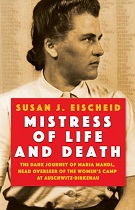
Mistress of Life and Death: The Dark Journey of Maria Mandl, Head Overseer of the Women’s Camp at Auschwitz-Birkenau – Susan J. Eischeid

Version 1.0.0

In 1941 I joined a party organization the Deutsche Frauenschaft and in the summer of 1942 joined the NSDAP. At this time the SS men in the camp sent out a questionnaire stressing that all guards had to belong to the party.” – Maria Mandl

The above statement from former Auschwitz-Birkenau women’s camp guard Maria Mandl (1912-1948), gives the impression that the once proud Nazi party member reluctantly embarked on a journey which involved the persecution of thousands of prisoners detained in the Third Reich’s concentration camps. However, the truth is far more disturbing. In fact, Mandl was known as one of the Reich’s most dangerous overseers and guard who sought to enhance her standing within the Reich. In the annals of World War II history, the female camp guards are sometimes a footnote in discussions. But the dark reality is that many of them were equally as deadly and sadistic as their male counterparts. And like other former officers, many also made homes for themselves outside of Germany as the Third Reich collapsed in April 1945. Readers familiar with the exodus of Germans at the end of the war may recall the name of Hermine Braunsteiner (1919-1999), a former guard at the Ravensbrück and Majdanek concentration camps who was discovered living in my hometown of New York City, in a small part of Queens called Maspeth. In 1973, she was extradited back to Germany where she received a life sentence in 1981. Mandl’s story is much shorter but just as unsettling. This is the life and death of the infamous guard as told by author Susan J. Eischeid.

Before starting the book, I did not know about Maria Mandl. I had heard the name Ilse Koch (1906-1967) and Irme Grese (1923-1945) whose actions during the war earned them a place on the dark side of history. Here, I learned about Mandl with a blank canvas that filled up quickly. Her early life is unremarkable in the sense that she came from a stable home with loving parents and no trace of dysfunction that warranted her future behavior. In fact, the family is so typical that it is hard to understand her descent into tyranny as a female guard. I concur with the author who opines that her thirst for power trumped her moral compass and provided justification for the horrors to come. And what becomes clear very quickly is that she accepted and enjoyed her newly obtained power after joining the ranks of the Reich guards.

I must warn the reader that Mandl was highly disturbed and unhinged at times. Her erratic and often contradictory behavior on display in the book led me to believe that she suffered from undiagnosed psychological ailments. The changes in mood and actions are like an alternating current, and at times it is not clear where Mandl’s mind is. This is further complicated by her love life, which is just as crazy as the actions of the camp guards. On a side note, the author explains a few things about camp behavior that will make readers cringe. I think the word that best comes to mind is debauchery. Mandl learned firsthand what it meant to “give oneself to the Reich”. Her firsthand experiences and lack of a stable companion only served to increase the tensions at the camp, with Mandl unleashing her rage on female prisoners. Living conditions at the camp were sub-human as anyone familiar with the holocaust knows and those conditions are described in the book to reinforce the inhumane treatment that endured. However, Mandl seemed to delight in humiliating other women and the acts recalled in the book are mind boggling. In one instance, the camp has an orchestra that practices and performs as others are being sent to their deaths. It is both macabre and surreal. And in the middle of this is Mandl whose dark and twisted mind tries to rationalize her actions. Her story is so absurd that at one point, she tries to convince others of how she tried to “help” or “save” the prisoners she treated like trash. The cognitive disconnect is hard to believe at times. I can only imagine the author’s thoughts as she compiled the story of Mandl’s life.

Upon her arrival at Auschwitz, the story takes a darker turn as that camp was known for its methods of madness. Within the camp, we learn of the rivalries between guards and the misogynistic attitude towards female guards from their male counterparts who saw them useful for a “good time” only. Even more unsettling are the intimate relationships between guards and prisoners on both sides of the aisle. The dysfunction within the Reich knew no bounds. Mandl joins the mix of insanity and continues her contradictory behavior. The stories are strange, upsetting and mystifying. Further, they will remove all doubt that Mandl “cared” for her prisoners. Sure, there were some situations where she took “pity” on a prisoner and spared her wrath for that moment. But those occasions were far and few in between and not the normal course of business.

As the book progresses, we know that liberation will eventually come to the camp as the Allied forces closed in on Berlin. When the collapse takes place, it becomes every man for himself with thousands of former guards left to fend for themselves and find a way out of Germany before the Soviet Army moves in. Capture by American forces was much more preferred as it offered a better chance of living out the remained of the year in jail instead or a long-term sentence instead of execution. Mandl tried her best but as we see in the book, she is eventually detained and later stands trial. I could not help myself, but while reading the story of proceedings, the image of Kate Winslett in the 2008 film ‘The Reader‘ came to mind. The fictional Hanna Schmitz is not seen on film committing the atrocities attributed to Mandl, but she was a war criminal and paid for her crimes. Like Schmitz, Mandl tried to offer the same excuse of “following orders”. No one bought that story, and it becomes clear in the story that Mandl’s days are numbered. And when she makes her exit from the story, the author describes the last swift moments that marked the end of the life of a Nazi guard responsible for death, heartache, and destruction. In her home village of Münzkirchen, her family was left to wonder how their little girl grew into a monster. Sadly, her father was kept in the dark regarding many things to protect him, but he was aware that his daughter had become what he despised. Mandl’s story is a tragedy in all respects and brings home the realities of war.

This is not a “delightful” book. It is dark at times, but also a reminder of the Third Reich’s insanity as World War II raged and the regime commenced the “Final Solution”. Maria Mandl met her end in 1948 but left a wake of terror that remained implanted in the memories of those who survived the horrors of the camps. This well-presented discussion of Mandl’s life inside the Reich and her fall as Germany’s unimaginable defeat became a reality shall remain a testament to humans’ uncanny ability to destroy themselves and those around them.

ASIN : ‎B0C15WQYJ2

One Child: The Story of China’s Most Radical Experiment – Mei Fong

fongOn September 25, 1980, the Central Committee of the Chinese Communist Party (“CCP”) took an unprecedented step in drafting an open letter to party members urging support for the “One-Child Policy” initialized by former CCP leader Deng Xiaoping (1904-1997).  The policy became controversial and set into motion a series of events that threaten the long-term stability of the nation known as the “Red Dragon”. Author Mei Fong is a former reporter for the China bureau of the Wall Street Journal and lived in the country for a significant period. This book is an examination of the one child policy and the dark reality of life in China. 

Radical policies are not alien to China. In fact, the nation had already experienced the “Great Leap Forward” instituted by Mao Zedong (1893-1976) in 1958. However, the One-Child Policy was different, and it had devastating effects on multiple levels. The grim reality is revealed in this book that peels back the layers on what took place as the CCP made good on its word. I warn readers that some sections of the book are difficult, in particular discussions about pregnancy terminations. And though there are no brutally graphic descriptions of aggression, the weight of the situations can be felt. Such scenes are unimaginable in the West but in China under the one-child policy, procreation came with staggering risk. The chances of being caught did not deter all couples, and babies were born. But the preference for male babies, coupled with the one-child policy, opened the door for a system dysfunction the author highlights throughout the book. The policy may be obsolete, but the damage it did continues. 

As I read the book, I could only shake my head at the unwelcomed changes in Chinese society. A surplus of bachelors, an aging population, and lack of new births has placed China in a tough position. Currently, the alarm bells have gone off within China that it needs more people. The problem for the CCP is that you cannot undue decades of dangerous policy overnight, and that is a central theme in the book as we learn of the horror stories from the Chinese men and women brave enough to talk to Fong. Their experiences are surreal but sadly normal under the restrictive policy. However, the book contains far more than just a battle over having multiple children. In fact, there are other areas she explores which are mind boggling. 

Readers who have lived in China or are deeply familiar with Chinese society will know and understand what Fong discusses. But for others who are unaware of the dark side to the CCP’s rule, there is a wealth of information to process. Fong takes us inside the international adoption market, supported by the CCP, private lives of men who paid for wives only to see them flee during the night, and the sex doll industry, flourishing as the result of an imbalance between genders. These parts of the book are dark, but necessary in understanding how a misguided policy has damaged those it was designed to protect. The book also focuses on the growing problem of China’s aging population and what it means for the future. 

In the middle of these issue is Fong’s own story as a wife going through the maternity process in China, providing her with a first-hand view of what expectant mothers confront as they carry a child. She eventually leaves China but is sure to open the reader’s eyes to the surrogate market, which thrives in the book. There is also a disturbing section about the possibility of genetic manipulation that will make the hair on your neck stand up.  The author pulls no punches here and lays it all out for the reader to absorb. China will eventually recover at some point, but the past is always prologue. For China, things may become very dark before the light returns. Until then, the policies of CCP leaders will continue to haunt the People’s Republic of China. And this book is crucial in understanding how and why. 

ASIN :‎ B00QPHNV4E

The Last Days of Stalin – Joshua Rubenstein

rubensteinOn March 5, 1953, Soviet Union leader Joseph Vissarionovich Stalin (1878-1953) died at the age of seventy-four after suffering a massive stroke several days earlier. On March 1, he was found incapacitated on the floor of his dacha, unable to speak or move. The man who had sent thousands of people to their deaths, came face to face with father time but could not escape his fate. Upon hearing that Stalin had died, Soviet citizens felt relieved even if they could not publicly express their feelings. For thirty years Stalin served as the General Secretary of the Communist Party of the Soviet Union, and during that time, held the Soviet Union firmly in his grip. But as he advanced in age, his own mortality became a reality as a series of health events took place before the final emergency that left him at death’s door. But what really happened during the days Stalin clung to life? And what was the fallout from his death behind the scenes? Joshua Rubenstein re-examines the final days of the Soviet leader to assess what really did happen behind the Iron Curtain. And the result is a thorough and pleasing discussion of Stalin’s terror, his demise and the dysfunction left in his wake.

Physically, Stalin was not an imposing figure, standing between 5’5″ and 5’6″ in height. And cosmetically, he was not easy on the eyes. Yet he controlled the Soviet Union and struck fear in the hearts of those around him and those who stood in front of him.  Rubenstein goes deeper into Stalin’s menacing presence by revisiting the words of former First Secretary of the Communist Party of the Soviet Union Nikita Khrushchev (1894-1971) who worked directly under Stalin:

“As Khrushchev once admitted, after a meeting with Stalin no one ever knew if he would return home alive. To the public, they were his “comrades-in-arms.” In reality, they were potential victims as long as he remained in charge.” 

Make no mistake, Stalin struck fear in the hearts of everyone, regardless of position or even family relation. But to understand how his death changed history, the author revisits the dark side of the late leader, paying close attention to the rise in anti-Semitism within the Soviet Union that gave way to persecution and ugly acts of violence against Russian Jews. As I read the book, I had to conclude that Stalin and his henchmen were just as bad if not worse that the perpetrators of the Third Reich in Nazi Germany. The author does clear up an important question regarding any plans by Stalin to deport Soviet Jews.  If he did have any plans in mind, they went with him to the grave. There was no joy to be found within the Soviet Union, only suspicion and fear. Ironically that system of fear prevented him from being helped at the time he needed it the most with everyone afraid to enter his private room. But by the time someone did, it was too late.

After Stalin is pronounced dead, the Soviet Union found itself in a weird place. His death inevitably created a power vacuum, but the first step was to put forth a united front to the prying eyes of western nations. But the reality was that the removal of Stalin presented opportunities for subordinates to rise in the ranks. And that struggle is included in the story as well. As the story progresses, another villain emerges in the form of Lavrentiy Pavlovich Beria (1899-1953) the director of the Soviet secret police and the man who carried out Stalin’s darkest orders. Following Stalin’s death, officials saw an opportunity for the party to reform its image by reinstating personal freedoms and commuting prison sentences. The latter of the two had adverse effects that officials somehow failed to anticipate and correct. But they were willing to accept the minor losses to accomplish the main goal. Beria had the unfortunate luck of being unpopular and a relic of what had become the “Stalin era”. He meets his fate in the book and some would say rightfully so. But Rubenstein has another take on it which sums up the Soviet Union in the wake of the leader’s death:

“The party had carried out a political exorcism, offering up Beria as a sacrificial lamb to atone for the sins it refused to acknowledge.”

In Washington, there is confusion about how Stalin’s death will affect American and Soviet relations. But no one knew how to manage the situation. President Dwight D. Eisenhower (1890-1969) enters the story and his administration aided by former Secretary of State John Foster Dulles (1888-1959) is forced to confront the Soviet issue and the increasingly powerful People’s Republic of China and the Korean War. The White House eventually settled on a course of action, but the main action was taking place within the Soviet Union as Stalin’s former underlings were confronted with the reality that the party had to continue with new leadership. There were winners and losers and the Soviet Union kept moving forward until its dissolution in December 1991. When the hammer and sickle came down for the last time, it signaled the end of an era. But the ghost of Joseph Stalin will remain with us as a reminder of the dangers of tyranny and paranoia. The final curtain call in the life of Joseph Stalin was a sad affair but the comeuppance from years of deadly policy and brutality that knew no bounds. This is a fascinating and valuable look at his final days and the impact his death had across the world.

SIN: B01F5NGDIO

Last Train to Memphis: The Rise of Elvis Presley – Peter Guralnick

elvis1In the afternoon of August 16, 1977, legendary recording artist Elvis Aaron Presley (1935-1977) was found unconscious at his Graceland mansion in Memphis, Tennessee and later pronounced dead at a local hospital. Forty-five years have passed since his death, but his fans remain lol keeping the singer’s memory alive, and rightfully so. Presley changed history and gave credence to the genre known as Rock n’ Roll. His death at the age of forty-two is tragic and was featured in an episode of the Reelz television show ‘Autopsy‘ (S3.E2). Coverage of his death is extensive but the story of his origins in Tupelo, Mississippi and Memphis, Tennessee are stories to be known if we are to understand how Presley rose from obscurity to become the music legend. Author Peter Guralnick is an admitted Elvis fan and in this phenomenal look at Elvis’ rise to fame, he captures the essence of the Presley family story equally as significant as the triumphs that came later through the only son of Vernon (1916-1979) and Gladys Presley (1912-1958).

This book is the first part of a two-volume biography of the late singer and ends well before his final days in 1977. Here, the author focuses on Elvis’ early life and what he writes speaks volumes about the American dream, the South and how much society has changed since Elvis caught his big break. The story begins in Tupelo, Mississippi, a place I was unfamiliar with prior to reading this book. Presley and his parents reside there briefly in the book before making the move to Memphis for better pastures. In Tupelo, there are trials and tribulations including the story of Elvis’ twin brother Jesse who died in infancy. Further, the family’s financial situation touches on the difficulties faced by Americans in the wake of the Great Depression. Families were left with tough decisions heavily based on the best opportunity for financial success and security. Recalling the words of Vernon, the author explains that:

“There were times we had nothing to eat but corn bread and water,” recalled Vernon not long before he died, “but we always had compassion for people. Poor we were, I’ll never deny that. But trash we weren’t…. We never had any prejudice. We never put anybody down. Neither did Elvis.”

For the Presleys, Memphis was the next destination and this city proved to be more than they could have ever bargained for. And as we see in the book, by the time he reaches nineteen, Elvis has already caught the eye of people in the music business with an eye for talent. But what I also noticed in the book is that as he gains notoriety, he is still a “kid” in many ways. And this human side of the singer is what makes this such a good biography. We can witness a young Elvis as an aspiring singer but more importantly, as a young man coming of age at time when music was slowly changing.  But even he had to navigate complex social structures, in particular Jim Crow which separated Blacks and Whites. Presley remarks more than once in the book that the Black singers are where he drew his inspiration. But the laws were firmly in place, and it should come as no surprise that Memphis later became a hotbed of activity. However, Elvis is frank about his love of music and its origins. This remark by him in the book is telling for its honesty:

“The colored folks been singing it and playing it just like I’m doin’ now, man, for more years than I know. They played it like that in the shanties and in their juke joints, and nobody paid it no mind ’til I goosed it up. I got it from them. Down in Tupelo, Mississippi, I used to hear old Arthur Crudup bang his box the way I do now, and I said if I ever got to the place where I could feel all old Arthur felt, I’d be a music man like nobody ever saw.”

As the story progresses, Elvis grows before our eyes. But his mother Gladys is his guardian angel, and their bond is heartwarming. It is a well-known fact that Presley loved his parents deeply and always yearned to return home to see the family. Their son was becoming popular, and that meant talent agents, musicians and women coming around the family. Multiple figures enter the story as Elvis becomes an item and have their effect on his life to varying degrees. The entrance of Thomas Andrew “Colonel” Parker (1909-1997) changes the story significantly and it is not long before Elvis is on his way to stardom. The money started rolling in but not without its problems, which are covered in the book. It’s a familiar story of underpaid workers, jealousy and the seductions that come with a traveling show. There are romances and friendships, and it is telling that everyone had nothing but kind words for the Elvis they knew who remains true to his character throughout the book and displays a humbleness that stems from his family’s experiences. The scenes described regarding his performances are surreal but fact. And it is imperative to remember that Presley was also pushing the limits of censorship due to his dance movements on stage which caught the eye of local police departments on more than one occasion. He learns to move fast but despite his fame, there was one person he could not avoid, Uncle Sam.

Towards the end of the book, Elvis gives in and reports to the U.S. Army for duty. He fits in well and this part of the book is filled with interesting tidbits of information about his time in the military. But the book’s darkest moment comes when Gladys passes away while he is enlisted. The hurt and shock of his mother’s death is felt through the author’s words, and I began to feel as if Elvis was never the same after this event. He returns to the military, but he heads back heartbroken and in fragments. And with that the story concludes. I am eagerly anticipating the next part of the biography which unfortunately will include Elvis’ own demise. But before the story is over, I will continue to enjoy learning about the king of Rock n’ Roll and his shorty but extraordinary life. Highly recommended.

ASIN:‎ B006L8928G

It’s Not Easy Bein’ Me: A Lifetime of No Respect but Plenty of Sex and Drugs – Rodney Dangerfield

rodneyAfter finishing the most recent book from my reading list, I was in search of something different to change gears. I came across this book while browsing recommendations and the cover instantly caught my attention. I vividly remember the legendary comedian Rodney Dangerfield (1921-2004) and the endless laughs he provided to households across America and abroad. But sadly, I knew very little of his personal life. I have heard that there is a dark side to comedy and behind the jokes there is often trauma and tragedy. I was not sure what to expect when I started this book but before it was over, I realized I did not want it to end. Dangerfield died on October 5, 2004, but the book was published after his death. His life was a roller coaster ride and anyone who remembers him will enjoy the book. The story is a mixed bag with the good, the bad and the ugly. But it is also full of laughs and moments of reflection by a man in his senior years aware that Father Time comes for everyone.

Dangerfield’s early life was not pleasant as he explains in the book. Born Jacob Cohen in Deer Park, New York, his parents could not have known their son would become one of the most popular comics in America. But as readers will learn, they had their own issues and young Jacob was not afforded the luxury of a “childhood” as one would expect. In fact, the story is surreal, and the level of dysfunction is shocking. As he matures, he finds his calling in comedy but did not instantly become a hit. Further, if fate had not intervened, the world may have never known Rodney Dangerfield. However, everything happens for a reason and his rise to fame is nothing short of inspiring. And as the title says, there was plenty of sex and drugs along the way, plus two wives and two children. The comic opens up about his family’s struggles and reveals the challenges that come with fame.

Throughout the book readers will find the comic’s jokes strategically placed as one chapter ends and begins. The snippets are hilarious and I had to restrain myself heavily while riding the subway. But I am sure that other passengers noticed the constant grinning as I read Dangerfield’s words. The material is edgy and gave me a sense of gloom when I realized that a comedian like Dangerfield could not perform his routine today without risk of heavy censorship. Times have changed significantly. As he revisits the past, he also tells stories regarding other comedians who struggled early in their careers before catching their big breaks. It is astonishing how influential Dangerfield was to scores of aspiring comics. Seasoned readers will recognize the names in the book but for younger readers, YouTube will provide a source of archival footage for the names mentioned. Personally, I had a ball reading this book and laughed out loud when possible.

Early in the book, Dangerfield explains that he is at the age of eighty-two and aware that time is short. Towards the end of the book, he discusses the health struggles he endured and recovered from. His health was an issue on more than one occasion as he explains but he kept pushing forward and would have lived forever if possible. I surmise that with this book and the memories he left behind, he will live forever.  And for a man who claimed to never get any respect in his routine on stage, he commands it here. If you need a good laugh, you will not be disappointed with this book.

ASIN ‏ : ‎ B002JB3EBK

Goodbye Vietnam – William Broyles


BroylesSeveral weeks ago, during a phone call with an uncle on my father’s side, he opened up about his service in Vietnam, in particular, his return to the United States after his tour was over. He painfully recalled being confronted by mothers wanting to know why he returned, and their sons did not. He continued by describing the hostile environment soldiers returning from Vietnam faced due to the unpopularity of the war. Years would pass before Vietnam veterans finally received the attention and understanding they deserved regarding their experiences in Southeast Asia. The war is far in the past, but I know my uncle carries with him dark memories of what he saw and had to do in order to survive his tour. In 1988, the television show China Beach (1988-1991) premiered and became a hit with viewers. One of the producers, William Broyles, had served in Vietnam and served as a technical consultant. Viewers might not have been aware that before the show made its debut, Broyles had made a return trip to Vietnam to understand how and why the American mission failed and the effects of the war upon the Vietnamese people. This book is the story of his return trip and what he learned from the people he was once required to kill as a soldier. 

Readers may wonder why any soldier would return to the place where they once faced death. But as Broyles explains in the book, there were things he needed to understand that could explain his experiences. The war is considered a failure from a mission objective point of view. But the question still remains, what exactly was the mission in Vietnam? On April 30, 1975, after American troops were withdrawn, Saigon quickly fell to the North Vietnamese Army (“NVA”). Without the support of the United States, South Vietnam faced the reality that unification would take place but not exactly in the way that anti-communists had hoped. Broyles is under no illusions and bluntly states: 

“We had our own myths, of course, chief among them that we were helping the people of Vietnam as we bombed their villages, their crops, and their country into a bloody, soggy mess. And in our own history we have customarily gone to war as the protectors of virtue and morality, battling the evil empires of the Huns, the Nazis, the Communists. Our cause was just, therefore we were just. But in Vietnam we came to terms with history.” 

Early in the book, Broyles points out that he was not a supporter of the war but did honor his draft notice, reporting to duty for eventual service in Vietnam. He proved to be an adaptive commander and during the book, he shows how his men helped him become a better squad leader. However, it is also clear from his words, that Vietnam would be a loss if America continued the war with a disjointed approach. Upon his return to Vietnam, he finally had the chance to speak with former enemies who embraced him openly and without hostility. The Vietnamese had the uncanny ability to accept that the war was a different time and that life goes on. I cannot say the same would apply universally to other nations once at war with the United States. Broyles learns critical information about the North Vietnamese effort and the weaknesses they found and exploited on the American side. What they reveal will shock readers and cause them to wonder why American commanders did not understand these concepts. Broyles provides a clue: 

“The men who got us into these wars are my generation, but they didn’t serve in Vietnam. They avoided it, dodged it, found reasons not to serve, just as their children don’t serve in their wars today. Anyone who fought in Vietnam could have told them how this story turns out, but they never asked.”

The wealth of information provided by the former NVA commanders is unreal. While America had superior weapons, we lacked key fundamental principles that the Vietnamese understood and exploited. And after reading what they tell Broyles, the American failures throughout the war are easier to understand. The author also discusses the role of Ho Chih Minh (1890-1969) and how the United States lost an opportunity to develop a critical ally. And the drafting of the Vietnamese constitution might result in readers recoiling in disbelief. Readers familiar with the name Archimedes Patti (1913-1998) will quickly understand the missed opportunity with the North Vietnamese government in the wake of World War II. 

No story about Vietnam is complete without an understanding of the devastation caused to the Vietnamese people and their land. Broyles does not shy away from the topic and is fully aware of how much they suffered during the conflict. Further, he highlights the tragic results of the misunderstanding by American forces of the Vietnamese way of life. Frankly, it seemed as if no one had taken the time to understand how the Vietnamese viewed themselves. Due to either arrogance or reluctance, young men like Broyles and my uncle were sent to war in a conflict that claimed 58,000 American lives and resulted in over 1 million Vietnamese deaths. But if we are to prevent another Vietnam, Broyles’ account of his return to the country will be invaluable. Soldiers go when they are called sometimes without knowing why they are sent. But they understand they have a job to do even if it is not popular. For the veterans of the Vietnam War, acknowledgment and acceptance have taken a long time to come to fruition. There was once a time when veterans of the war would not tell people they had served. The reason is best explained by Broyles as he brings his story to a close: 

“We had been willing to give our lives for our country, no less than our fathers had been at Normandy and Iwo Jima. This war, however, was different. We lost. And the country that sent us did not take us back into its arms. It either hated the war or simply wanted to forget it.”

ISBN-13: 9781480404335