
 On March 5, 1953, Soviet Union leader Joseph Vissarionovich Stalin (1878-1953) died at the age of seventy-four after suffering a massive stroke several days earlier. On March 1, he was found incapacitated on the floor of his dacha, unable to speak or move. The man who had sent thousands of people to their deaths, came face to face with father time but could not escape his fate. Upon hearing that Stalin had died, Soviet citizens felt relieved even if they could not publicly express their feelings. For thirty years Stalin served as the General Secretary of the Communist Party of the Soviet Union, and during that time, held the Soviet Union firmly in his grip. But as he advanced in age, his own mortality became a reality as a series of health events took place before the final emergency that left him at death’s door. But what really happened during the days Stalin clung to life? And what was the fallout from his death behind the scenes? Joshua Rubenstein re-examines the final days of the Soviet leader to assess what really did happen behind the Iron Curtain. And the result is a thorough and pleasing discussion of Stalin’s terror, his demise and the dysfunction left in his wake.
Physically, Stalin was not an imposing figure, standing between 5’5″ and 5’6″ in height. And cosmetically, he was not easy on the eyes. Yet he controlled the Soviet Union and struck fear in the hearts of those around him and those who stood in front of him. Rubenstein goes deeper into Stalin’s menacing presence by revisiting the words of former First Secretary of the Communist Party of the Soviet Union Nikita Khrushchev (1894-1971) who worked directly under Stalin:
“As Khrushchev once admitted, after a meeting with Stalin no one ever knew if he would return home alive. To the public, they were his “comrades-in-arms.” In reality, they were potential victims as long as he remained in charge.”
Make no mistake, Stalin struck fear in the hearts of everyone, regardless of position or even family relation. But to understand how his death changed history, the author revisits the dark side of the late leader, paying close attention to the rise in anti-Semitism within the Soviet Union that gave way to persecution and ugly acts of violence against Russian Jews. As I read the book, I had to conclude that Stalin and his henchmen were just as bad if not worse that the perpetrators of the Third Reich in Nazi Germany. The author does clear up an important question regarding any plans by Stalin to deport Soviet Jews. If he did have any plans in mind, they went with him to the grave. There was no joy to be found within the Soviet Union, only suspicion and fear. Ironically that system of fear prevented him from being helped at the time he needed it the most with everyone afraid to enter his private room. But by the time someone did, it was too late.
After Stalin is pronounced dead, the Soviet Union found itself in a weird place. His death inevitably created a power vacuum, but the first step was to put forth a united front to the prying eyes of western nations. But the reality was that the removal of Stalin presented opportunities for subordinates to rise in the ranks. And that struggle is included in the story as well. As the story progresses, another villain emerges in the form of Lavrentiy Pavlovich Beria (1899-1953) the director of the Soviet secret police and the man who carried out Stalin’s darkest orders. Following Stalin’s death, officials saw an opportunity for the party to reform its image by reinstating personal freedoms and commuting prison sentences. The latter of the two had adverse effects that officials somehow failed to anticipate and correct. But they were willing to accept the minor losses to accomplish the main goal. Beria had the unfortunate luck of being unpopular and a relic of what had become the “Stalin era”. He meets his fate in the book and some would say rightfully so. But Rubenstein has another take on it which sums up the Soviet Union in the wake of the leader’s death:
“The party had carried out a political exorcism, offering up Beria as a sacrificial lamb to atone for the sins it refused to acknowledge.”
In Washington, there is confusion about how Stalin’s death will affect American and Soviet relations. But no one knew how to manage the situation. President Dwight D. Eisenhower (1890-1969) enters the story and his administration aided by former Secretary of State John Foster Dulles (1888-1959) is forced to confront the Soviet issue and the increasingly powerful People’s Republic of China and the Korean War. The White House eventually settled on a course of action, but the main action was taking place within the Soviet Union as Stalin’s former underlings were confronted with the reality that the party had to continue with new leadership. There were winners and losers and the Soviet Union kept moving forward until its dissolution in December 1991. When the hammer and sickle came down for the last time, it signaled the end of an era. But the ghost of Joseph Stalin will remain with us as a reminder of the dangers of tyranny and paranoia. The final curtain call in the life of Joseph Stalin was a sad affair but the comeuppance from years of deadly policy and brutality that knew no bounds. This is a fascinating and valuable look at his final days and the impact his death had across the world.
SIN: B01F5NGDIO
 In the afternoon of August 16, 1977, legendary recording artist
  After finishing the most recent book from my reading list, I was in search of something different to change gears. I came across this book while browsing recommendations and the cover instantly caught my attention. I vividly remember the legendary comedian Rodney Dangerfield (1921-2004) and the endless laughs he provided to households across America and abroad. But sadly, I knew very little of his personal life. I have heard that there is a dark side to comedy and behind the jokes there is often trauma and tragedy. I was not sure what to expect when I started this book but before it was over, I realized I did not want it to end. Dangerfield died on October 5, 2004, but the book was published after his death. His life was a roller coaster ride and anyone who remembers him will enjoy the book. The story is a mixed bag with the good, the bad and the ugly. But it is also full of laughs and moments of reflection by a man in his senior years aware that Father Time comes for everyone.
  Several weeks ago, during a phone call with an uncle on my father’s side, he opened up about his service in Vietnam, in particular, his return to the United States after his tour was over. He painfully recalled being confronted by mothers wanting to know why he returned, and their sons did not. He continued by describing the hostile environment soldiers returning from Vietnam faced due to the unpopularity of the war. Years would pass before Vietnam veterans finally received the attention and understanding they deserved regarding their experiences in Southeast Asia. The war is far in the past, but I know my uncle carries with him dark memories of what he saw and had to do in order to survive his tour. In 1988, the television show
 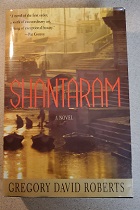 This review will be different from my normal write-up as I have stepped back into the world of fiction. This book came as a gift, and it is one that I will cherish infinitely. But before I continue, I want to point out that this book is long. In fact, it is over nine hundred pages in length and not for the faint at heart. If the length of the book does not deter you, then you will find an incredible story that will remain with you for years to come. And by the time the story ends, readers will be eager to learn more about the lives of the characters that come to life in this spellbinding tale.
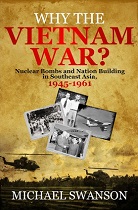 Fifteen days from now, the fifty-eight anniversary of President John F. Kennedy’s (1917-1963) murder will be upon us. His death continues to remind America of a lost opportunity and leader taken before his time. His presidency inspires debate to this day with some believing that he brought the country dangerously close to nuclear war with the Soviet Union. Others feel that he had yet to reach his full potential as a leader. The truth is far more complicated and both sides often omit the difficulties Kennedy faced behind the scenes from those within his own administration. After the disastrous Bay of Pigs invasion which led to Kennedy firing top officials of the Central Intelligence Agency, he then found himself under pressure to intervene in the nation of Laos. Again, Kennedy resisted, drawing the ire of the Joint Chiefs of Staff and Cold-War hawks in Washington. But the hawks were determined and saw Vietnam as the next battlefield to confront “Soviet influence”. But the question that has always haunted this nation is why did we get involved in Vietnam? What threat did North Vietnam pose to the United States even though it is more than thirteen thousand miles away from American soil? My uncle who served in Vietnam has only spoken of his experiences a handful of times. He keeps the war suppressed in his memory and does his best to stay secluded during July 4th celebrations as the fireworks remind him of being in combat. I often wondered if he has asked himself why he was deployed thousands of miles away from home to a country some Americans did not know existed prior to the conflict. Michael Swanson asked himself about Vietnam and has explored the war paying close attention to its origins and this book is the first of what will be a multi volume set about America’s involvement in Southeast Asia.
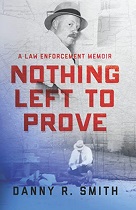 A friend whom I have known since elementary school recently finished twenty years with the New York City Police Department. Though eligible for retirement, he continues to serve the city where he was born. I and other friends have never failed to remind him to be careful on the dangerous streets of New York. Long hours, dangerous criminals and bureaucratic obstacles can sometimes make being a police officer a difficult and thankless job. And when I watch the hit show
 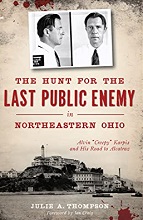 A few years ago, I visited San Francisco and decided to take the boat ride around the bay under the Golden Gate Bridge. As the vessel made its way back to the dock, it traveled around the eastern side of the defunct prison once known as Alcatraz. The facility has long been closed but seeing it in person puts the stories about it into a new perspective. To some, the prison was simply known as “the rock”. Regardless of what it was called, it was home to some of America’s most dangerous criminals. And make no mistake, a decision to send an inmate to Alcatraz was not made lightly. Further, inmates knew that if you were sent to Alcatraz, you better be prepared to spend a lot of years there. Alvin F. Karpis (1907-1979) spent three decades at Alcatraz and in the annals of American history, he remains one of the most prominent crime figures from the outlaw era that saw the rise of such as John Dillinger (1903-1934), George “Baby Face” Nelson (1908-1934) and the deadly duo of Bonny Parker (1910-1934) and Clyde Barrow (1909-1934). Unlike many other outlaws, Karpis not only survived the 1930s but was eventually released from Alcatraz. This is the story his time on the run, capture by the Federal Bureau of Investigation (“FBI”) and later years as a free man.
 It truly is amazing that a person can learn so much about the future by examining the past. In America, there are parts of our nation’s history that people find difficult to control. Race is at the top of the list and continues to find itself the topic of discussions as the country grapples with instances of systematic discrimination and overt acts by individuals. However, America is also a very great nation that has the courage to critically examine itself. The problems we have are not new but instead, more attention is now being paid to them. And I honestly believe that to remedy those issues, we must continue to look at the past for it provides many valuable lessons from which we can learn. I picked up this book because 1) I have been a fan of Lorraine Hansberry (1930-1965) for many years and 2) I knew that the book would contain a wealth of highly intellectual discussions about American society that have relevance, even today. And I can say unquestionably that this short book is a good look at Hansberry’s brilliant mind that was able to dissect America in ways that sets the stage for meaningful dialogue and change.
  Undeniably, slavery is one of America’s darkest moments. It was an extremely dehumanizing system of exploitation and violence that destroyed families, claimed lives and helped propel the nation towards the Civil War. Even today, the issue is hotly contested as we continue to reconcile with its residual effects. We have come a very long way from the era of legalized slavery in the United States but still have a long way to go before achieving true equality for all. Black Americans have long suffered grave injustices but there is no need to go into them here. Instead, the focus will be on this autobiography that was written by a former slave named Harriet Jacobs (1813 or 1815 – 1897). In the book, the main character has the pseudonym of Linda Brent, who is the slave of the book’s antagonists, Dr. Flint and his family. And what she reveals about her life reaffirms the many dark truths about a slave’s life.

You must be logged in to post a comment.