
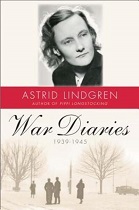
 When I learned that Astrid Lindgren (1907-2002), the author of the fictional character Pippi Longstocking, had kept a diary during World War II, I was instantly intrigued. Like millions of others, I remember Pippi Longstocking and the impact it had on pop culture here in America and abroad. But who would have known that the character she created almost remained hidden from the public? The story behind the character is contained within as well as a different view of the war, from neutral Sweden. When I started the book, I had realized that I had forgotten Sweden’s neutrality. But that is not to say the Swedes did not have an opinion of Adolf Hitler (1889-1945) and the Third Reich. In fact, Lindgren is very vocal about the expanding war and the terrors of the Nazi regime. However, there is also another side to the diaries, and that is her family life, which includes her roles as a mother and wife. Her diaries encompass a range of topics but come together to reveal a woman deeply concerned about society and the effects of warfare.
This is the first book that I have read from the Swedish point of view. In contrast to neighboring countries, Lindgren humbly explains that shortage of food and supplies was not a significant issue in Sweden. There are occasions where the author feels guilt for the excesses they have at home, but the nation’s neutrality undoubtedly affected its ability to remain stable. However, the Swedes were aware of the war’s developments, the plague of the Jewish people attempting to flee Germany, starvation across Europe and the monstrous acts committed on people deemed “undesirable” within Reich territories. Lindgren was deeply affected by what she read and carries a heavy heart from start to finish. At one point she sadly explains that:
“Poor human race: when I read their letters I’m staggered by the amount of sickness and distress, grief, unemployment, poverty and despair that can be fitted into this wretched earth”
The wave of terror Germany unleashed across Europe led to Lindgren lamenting the human capacity for war. In one entry she questions why England and France were slow to respond to the growing threat from Berlin. Readers interested in the slow response to the Germany arms build-up will find ‘Why England Slept‘ by John F. Kennedy (1917-1963) to be a thorough analysis of the inaction from London. To be fair, outside of Germany, knowledge of internal movement would have had its limits. But Hitler’s actions building up to the invasion of Poland were no secret. And by the time nations realized how far he was willing to go, the world was at war. For Lindgren, every day became another chapter in a brutal war that claimed millions of lives. The author does her best to remain positive and fills the diary with details about Swedish delicacies, holiday traditions and family matters to which we can relate. But above everything, she desired an end to the war that should never have taken place.
As we move to 1943 in the book, the tide begins to turn in war and a German victory becomes further from reality. The fighting between the Russians and Germans is the focus in this section. And though America had entered the war by this point, the battles across the Soviet Union were of major importance. She clearly wanted the war over, and Germany defeated but she did not ignore the danger posed by the Red Army and wanted no part of Russia’s army in Sweden. And this is a part of World War II often neglected. The Red Army could be as savage as the Germany Army and in some cases, it was far worse when atrocities were committed. Entries in the diaries will clue readers in. The savagery of the war was not lost on anyone in neutral territories, but that neutrality was of the utmost importance as she acknowledges towards the end of the book.
The section focused on 1944 sees an elated author as the Americans invaded and former Nazi territories were liberated. The Soviets are still battling Hitler’s troops on the eastern front and Germany is in trouble. Step by step the allies push back Germany divisions and as 1945 approaches, hope builds for the war’s end. The suspense can be felt in her words as news of Allied victories filter in. And by the time 1945 arrives, the world is waiting for Germany’s collapse which comes at the end of April. She follows the news from Berlin of Hitler’s defeat and demise but finds herself shocked at the introduction of the atomic bomb. She contemplated what she learned and somberly reflects that:
“Nineteen forty-five brought two remarkable things. Peace after the Second World War and the atom bomb. I wonder what the future will have to say about the atom bomb, and whether it will mark a whole new era in human existence, or not. The peace is not much to put one’s faith in, with the atom bomb casting such a shadow over it.”
The war ended but the reality of atomic weapons became very real. There are other entries in the diaries about nuclear weapons and her concern about their place in society. But the sense of relief that the war had ended cannot be overstated. Today it may be hard for us to understand how dark the future looked during her time. But her diaries provide a valuable resource to understand a time when the world was at war. Her family survived the war, and she created a character that still entertains children today. But she also carried with her dark memories of the years in which Adolf Hitler embarked on a quest for world domination. Highly recommended.
ASIN: B01M299IMP

 In the 1989 film ‘
 On January 15, 1953, President Harry S. Truman (1884-1972) gave his farewell address after serving as the Thirty-Third President of the United States. He had taken office on April 12, 1945, after the death of President Franklin D. Roosevelt (1882-1945). At the time of Roosevelt’s death, allied forces were pushing further into German territory to bring the Third Reich to its knees. In the Pacific, the war against Japan continued to rage but in less than six months, it too surrendered after the devastation left by two atomic bombs. In the first four months that Truman was in office, the entire world changed in ways no one could have imagined. Had Roosevelt lived, the war might have ended differently, and domestically, America might have moved forward at a different pace. He did not live to see his post-war plans come to light and for Truman, the title of president was thrust into his lap. He had never wanted the presidency but due to circumstance, he had become what author A.J. Baime calls the accidental president.
 Seventy-seven years ago, allied forces defeated Adolf Hitler’s (1889-1945) Third Reich and the Axis powers, bringing an end to World War II. In the years following Germany’s defeat, historians have authored books, filmmakers have published documentaries and social media provides endless content about the man who ignited a world conflict. In the wake of the war, outspoken critics of the Third Reich were vindicated in their belief that Hitler would cause Germany’s destruction. He nearly succeeded and following the nation’s surrender on May 7, 1945, the German people faced the cruel reality that their country was in ruins, they were widely despised and faced years of rebuilding, de-Nazification and coming to terms with what had been done in their name. As we have sought to understand the aura of Hitler and his ascension to the position of Chancellor, sharp focus was needed on how and why the Nazis were able to take over Germany. Author William Sherian Allen decided to focus on the town of Northeim to examine the Nazi seizure of power. Northeim lies in the Lower Saxony area of Germany and between the years 1922-1945, the Nazis executed their plan to take over Germany one town at a time. This is the story of how it was done.
 More than seventy years have passed since the end of World War II, yet it still fascinates historians and students. The number of books written about Adolf Hitler (1889-1945) and the Third SS Reich are perhaps the most written about any conflict and leader in history. The former Austrian vagabond rose to power in Germany and plunged the entire world into the deadliest conflict in the history of mankind. The emergence and use of the atomic bomb by American forces ushered in the nuclear age and set the stage for the Cold-War which lasted until the dissolution of the Soviet Union in December 1991. In my list of recommendations, I saw this title regarding the expulsion of Germans following the war. At first, I was not sure which expulsion was being referred to but quickly realized that it was pertaining to the Germans that were living in Nazi occupied territories outside of Germany. During the war, many of them enjoyed security and a stable life but in the wake of Germany’s defeat, nationalist governments came to power in former occupied territories, and they turned their wrath towards the German people that had been living within their borders. A staggering number of Germans were forced from their homes and sent back to Germany with no clear or concise plan for reintegrating them into a Germany struggling to recover and rebuild. And this is one part of the war that is often not discussed but a topic that should be known.
 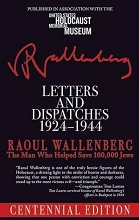 I am always on the lookout for stories that I have not yet heard and names of people I am not yet familiar with. When I saw the cover of this book, I tried to jog my memory with regards to the name of the author. I finally realized that I did not know of Raoul Wallenberg (1912 -1947?) but I knew instantly that I had to read this book. Admittedly, I am always interested in the personal correspondence of figures from the distant past to see how information was shared in the years before E-mails, SMS and social media. The cover of the book directly describes what is contained within which is a collection of the letters between Raoul, his grandfather Gustaf Wallenberg (1863-1937) and Raoul’s mother Maj von Dardel (1891-1979) whose replies to her son are not included.
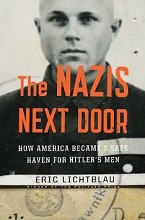 Seventy-five years have passed since Germany suffered defeat in World War II. Adolf Hitler (1889-1945) escaped justice by shooting himself with a pistol after watching Evan Braun (1912-1945) succumb to the ingestion of a poison laced capsule. Allied forces had hoped to put Hitler on trial for the whole word to see but the Austrian menace had no desire to fall into their hands. While the hunt was on for other high-ranking Nazi officials, a secret operation was underway to bring hundreds of Hitler’s former conspirators to the United States as Washington began to prepare for the Cold War against the Soviet Union. The mission was given the name Operation Paperclip and during its existence, some of the most notorious figures of the Third Reich were given a free pass to America and welcomed with open arms. Author Annie Jacobsen thoroughly examined the secret plan in her best-selling book
 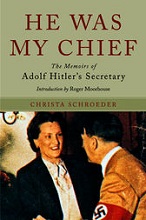 Recently, I reviewed the memoir of Traudl Junge (1920-2002) who served as one of Adolf Hitler’s (1889-1945) secretaries during World War II. Her book,
  FREETHINKING BIBLIOPHILE
You must be logged in to post a comment.