

I have often heard the saying that “desperate times call for desperate measures”. In times of war, I am sure it holds true on more occasions that can be counted. During World War II, the threat of German infiltration into American society was very real and sabotage a critical issue. Foreign enemies knew that the key to weakening America was covert tactics that allowed access to its shores. In New York City, the waters in and around the Big Apple were especially vulnerable and critical. But there was one problem. The military lacked crucial intelligence to stop foreign subversives from conducting their missions. That all changed with a plan that became known as “Operation Underworld“. To this day it is still taboo but as World War II raged, Allied commanders used every tool at their disposal to defeat the Axis powers. And part of that toolbox was organized crime figures whose legacies are cemented in history.
The author provides a back story to the events to come by revisiting the actions of President Franklin D. Roosevelt (1882-1945) which focus on ethnic groups suspected of being loyal to Italy, Japan, and Germany. Military officials were aware of sabotage in waters along the Northeast coast but powerless to stop it and espionage. Soon all options are on the table and the story shifts gears when the Office of Naval Intelligence (“ONI”) steps up and introduces its top-secret plan that is executed by Commander Charles R. Haffenden. But first Haffenden needs a point of contact and finds his man in mobster Joseph “Socks” Lanza (1904-1968). The Luciano Crime Family enforcer also ran the Fulton Fish Market and his control over the area provided an ear to the streets which comes into play as the plan is put into action. His control over the rackets also provided an ear to the streets and the ONI was determined to use this asset. However, Lanza is not a mob boss and has limited power in his section of Manhattan. The ONI soon realizes that to aid the war effort and strike a blow against the Axis powers, it needs the help of the big names in the game. One of these people is Mafia titan Charles “Lucky” Luciano (1897-1962), who had been convicted on June 7, 1936, of compulsory prostitution and sentenced to thirty to fifty years in prison. However, even behind bars, Luciano still controlled the family that carried his name. But Haffenden could not walk into the prison and speak to him directly. The covert nature of the plan required shrewd ideas to provide cover and the ONI enlisted the help of Luciano’s lawyer Moses Polakoff (1896-1993) and the man known as the “Mob’s accountant”, Meyer Lansky (1902-1983).
Black takes us back in time and behind the walls of the Clinton Correctional Facility in Dannemora, New York where we learn of the harsh conditions surrounding Luciano’s incarceration. The prison is dark, cold, and far removed from Luciano’s former residence at the Waldorf Astoria hotel. But a blessing arrives when Polakoff mentions that the government needs the mob’s help, and it might help Luciano get out of prison earlier than expected. But the gangster is still not fully convinced but Lansky’s presence and advice helps sway him to the Allied cause. And to his benefit, Luciano is moved to Great Meadows Prison in Comstock, New York, closer to New York City and in far better condition. After he agrees to help the ONI, the web of cooperation is formed that remains intact through most of the book.
What is interesting about the book is while the war is raging, Luciano and the other mobsters are doing their part to help the ONI while at the same time conducting their usual mafia related business which includes murder, narcotics, and all sorts of mayhem. It could be argued that the book is not just a story about the secret ONI plan but also a good discussion of the mob’s presence in New York City during that time. Eventually the Axis powers collapse and the war ends. But Luciano remained in prison. The remaining parts of the book discuss his attempts to be released from prison by the same man who convicted him, former New York Governor, Thomas E. Dewey (1902-1971). Although the two had no personal connection, I found it interesting that they could not escape each other as their lives proceeded in different directions. But Black does show that Dewey had moved on from his prosecutor days and Luciano had become a memory for him. As for Luciano, Dewey would always be the man who wrecked his life and was the reason he eventually was deported back to Italy. The saga behind Luciano’s expulsion from America is re-told here in gripping detail with famous mobsters Joe Adonis (1902-1971) and Frank Costello (1891-1973) making an appearance in the story. And admittedly, it is hard not to like Luciano, but I also noted that he was a career criminal who had no issue giving orders for someone’s death and going against the code of the streets when needed such as in the feud with Vito Genovese (1897-1969). But his importance to the Allied effort cannot be overstated.
As one would expect, the story of Luciano’s help leaks out, but I was not prepared to learn how far the ONI went to destroy any trace of government contact with the mob boss. The final days of Haffenden’s career left me speechless. And had it not been for a decisive action by Dewey to clear his own name and the actions of Manhattan District Attorney Frank Hogan (1902-1974), parts of the story may have been lost forever. Of course, some parts of Operation Underworld were lost forever but the record still stands, and the story told within is sure to be of interest to history buffs with an affinity for World War II. The war has long been over, and Luciano has been gone since 1962, but it is an incredible story and part of New York City history. Highly recommended.
ASIN: B09RGLWNKW
 When I learned that
 In the 1989 film ‘
 On January 15, 1953, President Harry S. Truman (1884-1972) gave his farewell address after serving as the Thirty-Third President of the United States. He had taken office on April 12, 1945, after the death of President Franklin D. Roosevelt (1882-1945). At the time of Roosevelt’s death, allied forces were pushing further into German territory to bring the Third Reich to its knees. In the Pacific, the war against Japan continued to rage but in less than six months, it too surrendered after the devastation left by two atomic bombs. In the first four months that Truman was in office, the entire world changed in ways no one could have imagined. Had Roosevelt lived, the war might have ended differently, and domestically, America might have moved forward at a different pace. He did not live to see his post-war plans come to light and for Truman, the title of president was thrust into his lap. He had never wanted the presidency but due to circumstance, he had become what author A.J. Baime calls the accidental president.
 Seventy-seven years ago, allied forces defeated Adolf Hitler’s (1889-1945) Third Reich and the Axis powers, bringing an end to World War II. In the years following Germany’s defeat, historians have authored books, filmmakers have published documentaries and social media provides endless content about the man who ignited a world conflict. In the wake of the war, outspoken critics of the Third Reich were vindicated in their belief that Hitler would cause Germany’s destruction. He nearly succeeded and following the nation’s surrender on May 7, 1945, the German people faced the cruel reality that their country was in ruins, they were widely despised and faced years of rebuilding, de-Nazification and coming to terms with what had been done in their name. As we have sought to understand the aura of Hitler and his ascension to the position of Chancellor, sharp focus was needed on how and why the Nazis were able to take over Germany. Author William Sherian Allen decided to focus on the town of Northeim to examine the Nazi seizure of power. Northeim lies in the Lower Saxony area of Germany and between the years 1922-1945, the Nazis executed their plan to take over Germany one town at a time. This is the story of how it was done.
 More than seventy years have passed since the end of World War II, yet it still fascinates historians and students. The number of books written about Adolf Hitler (1889-1945) and the Third SS Reich are perhaps the most written about any conflict and leader in history. The former Austrian vagabond rose to power in Germany and plunged the entire world into the deadliest conflict in the history of mankind. The emergence and use of the atomic bomb by American forces ushered in the nuclear age and set the stage for the Cold-War which lasted until the dissolution of the Soviet Union in December 1991. In my list of recommendations, I saw this title regarding the expulsion of Germans following the war. At first, I was not sure which expulsion was being referred to but quickly realized that it was pertaining to the Germans that were living in Nazi occupied territories outside of Germany. During the war, many of them enjoyed security and a stable life but in the wake of Germany’s defeat, nationalist governments came to power in former occupied territories, and they turned their wrath towards the German people that had been living within their borders. A staggering number of Germans were forced from their homes and sent back to Germany with no clear or concise plan for reintegrating them into a Germany struggling to recover and rebuild. And this is one part of the war that is often not discussed but a topic that should be known.
 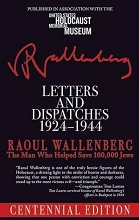 I am always on the lookout for stories that I have not yet heard and names of people I am not yet familiar with. When I saw the cover of this book, I tried to jog my memory with regards to the name of the author. I finally realized that I did not know of Raoul Wallenberg (1912 -1947?) but I knew instantly that I had to read this book. Admittedly, I am always interested in the personal correspondence of figures from the distant past to see how information was shared in the years before E-mails, SMS and social media. The cover of the book directly describes what is contained within which is a collection of the letters between Raoul, his grandfather Gustaf Wallenberg (1863-1937) and Raoul’s mother Maj von Dardel (1891-1979) whose replies to her son are not included.
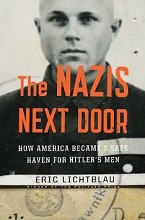 Seventy-five years have passed since Germany suffered defeat in World War II. Adolf Hitler (1889-1945) escaped justice by shooting himself with a pistol after watching Evan Braun (1912-1945) succumb to the ingestion of a poison laced capsule. Allied forces had hoped to put Hitler on trial for the whole word to see but the Austrian menace had no desire to fall into their hands. While the hunt was on for other high-ranking Nazi officials, a secret operation was underway to bring hundreds of Hitler’s former conspirators to the United States as Washington began to prepare for the Cold War against the Soviet Union. The mission was given the name Operation Paperclip and during its existence, some of the most notorious figures of the Third Reich were given a free pass to America and welcomed with open arms. Author Annie Jacobsen thoroughly examined the secret plan in her best-selling book

You must be logged in to post a comment.