
 On August 4, 1944, Dutch Police Inspector Karl Josef Silberbauer (1911-1972) and a team of officers arrived at 263-267Prinsengracht to conduct an inspection and arrest of any Jews in hiding. That day, eight people were taken from the annex. The youngest, Annelies Marie “Anne” Frank (1929-1945), was forced to leave behind her diary which she kept as the occupants remained hidden during World War II, as the Third Reich’s military executed German Chancellor Adolf Hitler’s (1889-1945) vision for world domination. Seventy-nine years have passed since the conflict concluded but the question remains, who betrayed Anne Frank and the other occupants of the secret annex? Author Rosemary Sullivan and a team of seasoned investigators formed a unit to investigate the raid at the warehouse and determine who gave officials the information they needed to send Frank and her fellow annex residents to their deaths.
A commonly held belief is that the police received a tip about people hiding in the annex. That raises the issue of who would have wanted to give up the annex’s residents and why? The team tackles the matter from every angle and there are a few things that stand out which place the case in a vastly different light. From Anne Frank’s own words in ‘The Diary of a Young Girl’, we know that the warehouse underneath the annex had been burglarized at least three times. And during the last break in, the men in the annex had gone to inspect the damage and had been seen by people outside the building. However, there is no evidence that any of those people betrayed them. The key to solving the puzzle may be found in post-war events that reveal open secrets.
I do recommend reading Frank’s diary before starting this book, but it is not required. The reason is that Anne’s recap of day-to-day events provides a vivid picture of life inside the annex, complete with the hope, tension and terror that gripped them each day. In this investigative report, the team jumps straight into the raid and its aftermath. Suspicion of who betrayed them began instantly. Of the warehouse workers suspected as being an informant, Willem Van Maaren (1895-1971) stands out the most. Although he was not well-liked and distrusted, the evidence against him is scant and his guilt was never proven. But there are others who may have had a stake in the raid on the annex, and the suspense increases as the investigation unfolds.
Following the war, Anne’s father Otto (1889-1980) returned to Amsterdam and learned that his family had died in the Holocaust. He is responsible for the publishing of Anne’s diary, but as the authors show, there was more that he knew about that last day in the annex. Sullivan and the team provide a thorough discussion of Otto’s life, his marriage to Edith Frank (1925-1945), and the family’s exodus from Nazi Germany in 1933. Otto was a very shrewd businessman with extensive contacts and knew more about the Dutch Police and Nazis that I first suspected. And an encounter with an employee named Job Jansen, Sr. (1887-1952) provides insight to his awareness of the danger surrounding him, his family and the Jews in Amsterdam. The Jansen story is interesting and adds another level of intrigue. But the mystery only gets deeper as the book progresses.
There was a surprise in the story that caught me off guard. Otto had a dedicated and loyal employee named Miep Gies (1909-2010) who secured Anne’s diary after the raid. In later years, she gave interviews about the annex and raid, and a statement she made in one discussion caught my attention. If she was being truthful when she spoke, then that leads me to believe that Gies knew who the betrayer was. As to why the identity remained secret, it is possible she held the same position as Otto who issues a similar statement. Gies undoubtedly knew more than she was willing to say for reasons she took with her to the grave. But she was candid, a witness to history and the person who had to console Otto when he learned that his wife and daughters had died. But the story is far from over.
To understand how the betrayal occurred, the authors focus on the Jewish community itself in the Netherlands. And to my dismay, the country deported more Jews than any territory outside of Germany. But how did they accomplish this? There are two clues in the Jewish Council, an organization the Germans had compelled them to institute and the compromised Jews who had been flipped by Nazi officials into trapping those in hiding. If you are Jewish and lost relatives in the Holocaust, this part of the book will be difficult. But even if you are not Jewish, it is still difficult to accept. The acknowledgment that Jews betrayed other Jews is a component of the story that required further exploration. Sullivan and her team take a deep dive into this area, uncovering crucial and disturbing information.
Two people enter the story which changes the narrative immensely. The first is Anton Christiaan “Tonny” Ahlers (1917-2000) a Dutch nazi and bounty hunter, and the second is Arnold van den Bergh (1886-1950), a Dutch notary. Both men had compelling reasons to betray Otto and the annex’s occupants, but did they? Ahlers was a nefarious figure and a blackmail artist, and very well could have tipped off the police. The full story is told within, and it is surreal. Van den Bergh’s story is a bit different. As a Dutch notary, he was in an extremely prominent position and had secured benefits under Nazi rule. However, he and his family had come under scrutiny and were subject to deportation. Did he give up the Franks to save himself and his family? You can be the judge.
The investigative team exhaustively researched the case and with a careful process of elimination, clarifies who did not betray those in the secret annex. Further, they provide convincing evidence to support their conclusion as to who did. After this book was published, it was critizied heavily for the theories it presents. Towards the end of the book, the author addresses those criticisms and how they proceeded with their work. And in regard to the biggest critique of the book’s hypothesis, it is something that had been known when Otto returned to Amsterman and not created by the investigative team. Depsite the negativity from the literary field, what the authors present strongly supports Otto and Mies’s statements regarding the betrayer. But this is just my opinion. Please read it for yourself and find out what we do know about the betrayal of Anne Frank.
“In attempting to determine how Adolf Hitler had taken control, the US Office of Strategic Services commissioned a report in 1943 that explained his strategy: “Never to admit a fault or wrong; never to accept blame; concentrate on one enemy at a time; blame that enemy for everything that goes wrong; take advantage of every opportunity to raise a political whirlwind.” Soon hyperbole, extremism, defamation, and slander become commonplace and acceptable vehicles of power.”
ASIN : B0BLSQLV3L
Publisher : Harper Perennial (January 17, 2023)
 A couple of weeks ago I was in search of a new book to read, however, an old favorite popped up in my list of recommendations. I had previously read and
 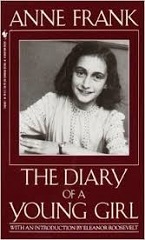 The stories of those who survived the Holocaust have been read by millions and their words a reminder of one of history’s darkest times. Their will to live and courage in reliving their experiences have given the world invaluable treasures in books that have stood and will continue to stand the test of time. Among them is the story Annelies Marine “Anne” Frank (1929-1945), whose diary kept while hiding from the Third Reich, became one of the most popular books in the world. In June, 2013 while visiting The Netherlands, I paid a visit to the Anne Frank Museum. As I entered the museum and made my way up to the attic, I was overcome by chills at just how small it really is. Pictures and words do not suffice, it is something to be seen in person. And it continues to boggle my mind that several people lived in such a compact space. But their will to survive kept them focused on their surroundings and remaining in the attack for as long as possible. Their hiding place was eventually discovered and for many years it was believed that the family was betrayed. However, historians have never found conclusive proof that the family’s location was given to the Sicherheitsdienst (SD) in the form of an anonymous phone call as is widely believed. The truth may remain lost to history. Frank was sent to the Bergen-Belsen camp where she died of Typhus in February, 1945, several days after her sister Margot and would have been simply another victim of the Final Solution if not for her father Otto, who survived the war and returned to Amsterdam where he found her diary. Believing his daughter’s words to be important to future generations, he found a publisher willing to put the words in print. And the result is a literary masterpiece that is read each year by growing numbers of young students across the world.
 FREETHINKING BIBLIOPHILE
You must be logged in to post a comment.