
 In 1954 the United States Supreme Court issued a historic ruling in the matter of Brown v. Board of Education which declared that segregation in public schools was unconstitutional. The groundbreaking decision widened the doors for the growing Civil Rights Movement which was gaining traction across America. However, in the South, the system of Jim Crow was refusing to die, and found support from staunch segregationists determined to resist the Government’s involvement in matters they viewed as being within their state’s authority. In hindsight we can see today that the resistance was futile and compliance with the Supreme Court would be enforced. Jim Crow did fall, but it did not happen overnight. Further, in understanding its demise, we must also focus on its rise, and how, and why it was allowed to happen. Author Richard Wormser provides a recap of the rise and fall of Jim Crow in America, and why these important lessons are still relevant.
On April 9, 1865, Confederate General Robert E. Lee (1807-1870) and his troops surrendered to Union General and future President Ulysses S. Grant (1822-1885) in Appomattox Court House, Virginia, signaling the final stage of the American Civil War. For Black Americans, the Confederacy’s defeat was welcome news, along with the realization that slavery was gone for good. The former slaves had freedom, but a new challenge emerged for them and lawmakers. How would the former slaves be incorporated into mainstream society? In the South, former slaveowners were left without their source of manual labor as new freed slaves left their former places of bondage for good. In Congress, Republicans wasted no time in reshaping the United States with the goal of healing a nation that tore itself apart. However, the South was far from finished and sought to rise again. As the story here opens, we revisit the time after the war, when Americans treated their wounds, physically, emotionally, and psychologically.
It would be impossible to discuss the reconstruction period after the war without mentioning U.S. President Andrew Johnson (1808-1875) who gave the South the lifeline it needed to recover and re-enforce its platform of racial segregation. However, the book is not a biography of Johnson and the attempt to impeach him in 1968 is discussed but briefly. What is given focus are his actions to thwart attempts by Republicans to ensure that the states part of the Confederacy paid fully for their war against the North and the facture of the Union. Johnson was so effective that less than fifteen years after the war, the South had removed itself from the destitution that was widespread during the conflict. And as Wormser points out:
“By 1876, Democrats had regained control of every Southern state except Louisiana and North and South Carolina.”
Once the Democrats regained control of the South, Jim Crow found its footing and would make life unbearable for millions of Black Americans across the region. The system was designed with a focus on brutality and retribution for past events. I warn readers that the descriptions of the violent acts committed against minorities will be difficult to read. Readers sensitive to this subject matter should use discretion. But for those who are willing and able to understand America’s dark past, these sections are crucial because they also helped set the stage for Jim Crow’s downfall. Admittedly, it is hard not to recoil in disgust at what we learn about life under Jim Crow. Today it would be unimaginable for a city in America to operate in such a manner. But prior to the decision in Brown v. Board of Education and legislation by Congress, it was the reality for millions of people viewed as being less than human.
Jim Crow’s brutality was no secret, but what was happening in Washington as it flourished? The author discusses the White House and the inaction by presidents who sat idling while Jim Crow held the South in its grip. Some were reluctant to act and even supported keeping Blacks contained to the lowest levels of society such as President Woodrow Wilson (1856-1924) whose administration was a Godsend to Jim Crow. That dark period is covered in the book and will leave readers speechless. Local authorities were just as dark and even worse depending on the territory. But in 1914, events in Europe would ignite the spark behind the Civil Rights Movement. On June 28, 1914, Gavrilo Princip, a Bosnian Serb, assassinated Archduke Franz Ferdinand (1863-1914) setting off World War I. For Black Americans, service in the military was seen as a path for recognition that would continue the lengthy line of enlistment by blacks since the American Civil War. But this time, the meaning was more profound as troops returned home with a purpose after serving in Europe where they witnessed society standing stark contrast to America. The genie was out of the bottle and accelerated ‘The Great Migration‘ (1910-1970).
As blacks continued to gain ground, an organization which had been created in 1909, continued to advocate for Black Americans: the National Association for the Advancement of Colored People (“NAACP”). This section of the book was interesting and I appreciated the discussion about Walter White (1893-1955) and the risks he took to expose the horrors of Jim Crow and lynching. It is surreal how close he came to death while he investigated the American nightmare. The times were dangerous but there was no turning back, and Black Americans were determined to change America. And in time, another war would see them rise to the occasion. But this time, Jim Crow would not survive. In fact, its demise is due in part to President Harry S. Truman (1884-1972) who was outraged at the treatment returning Black soldiers faced in America where their service meant nothing under Jim Crow. The bold actions by Truman revisited in the story, changed the military, and also pushed him towards reelection in 1948. But more importantly, it was a severe blow to Jim Crow itself which was under attack from all angles.
Anyone with clear foresight could see that Jim Crow was destined to the trash heap of history. It was only a matter of when. Well, following the 1954 Brown v. Board of Education decision, a new generation of activists rose to the occasion, and they would not rest until minorities in America were afforded equality under the law. We all know their names but those are stories for another time. When I finished the book, I sat for a moment and thought of how much America has changed. There are dark moments in the story, and I found myself enraged while I read certain sections. But it also made me appreciate the United States even more. This book is an incredible discussion of how American split in half, reunited, gave way to a new reign of terror before correcting course. The movement never ends, but the times we live in now are far better than what we read about in books like this. And the most important lesson, we learn from the author’s exhaustive efforts is that Jim Crow should never happen again.
ASIN: B00IHCNOLK
Publisher : St. Martin’s Press (April 8, 2014)
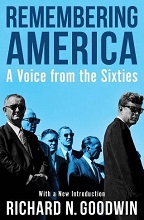 On more than one occasion my father has commented that the 1960s was the scariest decade of his life. The threat of Nuclear War, increasing tensions in Southeast Asia and the growing Civil Rights Movement captivated American society and the world. During one conversation he turned and said to me “at the time of the Cuban Missile Crisis, we didn’t know if we would live to see tomorrow or die in a nuclear exchange with the Soviet Union”. The assassinations of several activists and politicians spread fear across the nation and to many, it seemed as if America was on the verge of total anarchy. Richard N. Goodwin (1931-2018) worked in the administrations of Presidents John F. Kennedy (1917-1963) and Lyndon B. Johnson (1908-1973) and helped draft some of the most memorable speeches given by the iconic figures. In 1988 he completed this memoir which was re-published in 2014, of the decade he spent in politics with two presidents and two presidential candidates. And the result is a spellbinding account of a critical time in American history during which the country underwent profound heartache and change.
 While reviewing my list of books to read, I did a double take as I read the title of this memoir by Pat Conroy. I had added it for a reason yet at the time, I could not recall why. But I put that aside and decided that there is no time like the present and it might be a hidden gem. It turns out that I was right in my assessment. However, I was not prepared for the incredible story within by Pat Conroy (1945-2016) that sheds light on the lives of those who have been forgotten even in the most powerful nation on earth. I knew that the story centered around education but of course, teaching is never as simple as writing on a blackboard. In fact, what is revealed in the book should remove all doubt that teaching is by any means as easy task. Some of us are naturally gifted to handle a classroom full of students, each with their own peculiar personality. In many ways, the teacher is conductor working the orchestra to fine tune all the instruments and produce a symphony that is pleasing to the ears. Conroy is the conductor here and what he accomplished on Yamacraw Island, South Carolina, will leave you sad, angry, and happy at the same time.
  It truly is amazing that a person can learn so much about the future by examining the past. In America, there are parts of our nation’s history that people find difficult to control. Race is at the top of the list and continues to find itself the topic of discussions as the country grapples with instances of systematic discrimination and overt acts by individuals. However, America is also a very great nation that has the courage to critically examine itself. The problems we have are not new but instead, more attention is now being paid to them. And I honestly believe that to remedy those issues, we must continue to look at the past for it provides many valuable lessons from which we can learn. I picked up this book because 1) I have been a fan of Lorraine Hansberry (1930-1965) for many years and 2) I knew that the book would contain a wealth of highly intellectual discussions about American society that have relevance, even today. And I can say unquestionably that this short book is a good look at Hansberry’s brilliant mind that was able to dissect America in ways that sets the stage for meaningful dialogue and change.
  In
In  I find that as I age, I am more focused on historical events that changed the course of America, in particular from Black Americans. It has been said that in order to know where you are going, you have to know where you come from. For millions of Black Americans, the question of identity has been a difficult one to answer. Some prefer the term African-American while others prefer Black-American. And there are some who prefer Afro-American or just simply Black. Regardless of the label, there is a shared history of pain, struggle and the never ending goal for full integration American society. Over the past fifty years, tremendous progress has been made in the United States but there is still much work to be done. But one of the greatest things about America is our ability to correct and learn from mistakes that have lingered for too long. The young generation of today lives in a world far removed from only twenty years ago. Their world is one in which technology is ingrained and life moves at an even faster pace. My father often thinks back to the period of integration and the times where it seemed as if America was going to tear itself apart. Even to him, as a kid it seemed as if the accomplishments by Black Americans over the years were just a pipe dream.
 “The first lesson a revolutionary must learn is that he is a doomed man” -Huey P. Newton.
 August 21, 1971 – George Jackson is
  On May 24, 1963, Attorney General Robert F. Kennedy met with a group composed of authors and civil rights icons at his Central Park South apartment. Among those in attendance were Lorraine Hansberry and her friend and fellow author, James Baldwin (1924-1987). The meeting quickly became volatile as the activists accused the Kennedy administration of dragging its feet on civil rights legislation. Their frustrations at the rampant discrimination in the United States and the inability of the government to take action, boiled over and Kennedy found himself in a hornet’s nest of raw emotion. The meeting left a permanent mark in his memory but in time he would become a vocal advocate for equal rights for all American regardless of race, creed or gender. His resurgence as the candidate of the poor and the downtrodden became the basis for his 1968 president campaign that ended tragically with his assassination in Los Angeles on June 5 ,1968. Baldwin outlived Kennedy by nineteen years and today both are remember for their efforts to transform the American conscious and way of thinking. In recent years, his work has been rediscovered and studied for its messages that were accurate then and are accurate now. Baldwin’s public stance of many topics was blunt and non-confusing. He did not mince his words and his delivery was direct and always mean to stir thought. But for all of his public actions, his private life is a story on its own that shows the author in a completely different light. His friend for many years, David Leeming, wrote this biography of his late friend to show the world who the real James Baldwin was. And what he has composed is a definitive account of the life of the late author.
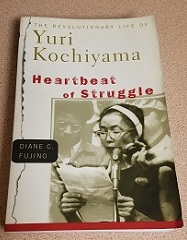 On February 21, 1965, Malcolm X (1925-1965) was assassinated at the Audubon Ballroom in Harlem, New York. The image of him laying mortally wounded while surrounded by his close aides shows the savagery employed by his killers. His death was violent and unmerciful, taking place in front of his wife Betty and their six daughters. From the initial volley of shots, it was clear to most that Malcolm’s wounds were fatal. First aid was administered to no avail. Among those who rushed to his side was a friend and dedicated civil rights activist named Yuri Kochiyama (1921-2014). She is rarely mentioned in stories about the legendary Muslim leader but her life was one of dedication to civil rights for all human beings.
 FREETHINKING BIBLIOPHILE
You must be logged in to post a comment.