George Marshall: Defender of the Republic – David L. Roll

MarshallIf you were to ask me to find one word to describe the late Gen. George C. Marshall (1880-1959), the word that comes to mind is unsung. In comparison to the larger-than-life figures who served in World War II such as President Dwight D. Eisenhower (1890-1969) and Gen. Matthew B. Ridgeway (1895-1993), Marshall remained behind the scenes and helped formulate the plans behind the missions that sustained and propelled the Allied effort. When I saw this book on sale, I decided to take a look into Marshall’s life to learn more about the man whose name was given to the “Marshall Plan“. And what I learned has improved my understanding of World War II, the existential threat from  Adolf Hitler’s (1889-1945) Third Reich, and the conflict’s impact to this day.

Marshall’s story begins in Uniontown, Pennsylvania, a city known for its role in the Underground Railroad, which was supported by the staunch abolitionists who resided there. Among them was Marshall’s mother Laura. The family is typical of what one would expect in late 1800s America. Marshall grows into a fine young man and finds his calling at the Virginia Military Institute. It is here that his introduction to the armed forces begins and is the first step on a journey that took him across the world and made him a part of history. The story picks up in pace after he marries his first wife Lily, but also takes an unexpected turn as we learn of the relationship between Marshall and his older brother Stuart, who disappears from the remainder of the story for reasons explained by the author. Life was good for the young couple in the years that followed, but in 1914, World War I would change everyone’s lives.

The first world conflict was a turning point in history and Marshall was on the front lines to see its effect. His service in the war is discussed by the author and we learn that he performed admirably and earned the respect of those who knew him. But it is not long before commanders realize that Marshall is far more effective as a planner of campaigns. His tutelage under the late Gen. John J. Pershing (1860-1948) would advance his career in ways no one could have imagined. Marshall returns home from the war and resumes his career in the armed forces. The war was over, but he had become convinced that America needed to improve its military for future threats. As can be seen in the book, it becomes an uphill battle before events in Europe begin to change the minds of Americans. In 1927, Marshall would face his first experience with personal tragedy as he confronts his wife Lily’s mortality. Her story is heartbreaking, and it is clear throughout the story that Marshall never fully recovered. A second wife named Katherine enters the story and their life-long romance is included as back drop to main story, which is Marshall’s life in the military which changed yet again on September 1, 1939, when the Third Reich invaded Poland and ignited World War II. On that same day, Marshall was appointed as chief of staff of the U.S. Army and was determined that America would face any threat and win.

Undoubtedly, World War II where the book gains momentum and the suspense increases as Marshall fights for military spending, a draft and sounds the alarm about the growing German threat. However, there was another threat as we see in the book, which later came back to haunt Marhsall and his subordinates. Tensions between the United States and Japan had been increasing before the attack on Pearl Harbor and this was not lost on the Army Chief of Staff or the White House. Roll revisits the weeks before the attack to examine what commanders did know and which actions, they performed to warn commanders at Pearl Harbor of a Japanese operation. And though there is no “smoking gun” that gave precise details of the upcoming attack, there were warning bells that the military should have been on heightened alert. The author does not explore any conspiracy such as President Franklin D. Roosevelt (1882-1945) “allowing” the attack to happen. If Roosevelt knew for certain and did nothing, then that is information he surely took with him to his grave. The author does explore what is know about the Japanese communications which had been decrypted by the military. Once the attack happened, all of that was out the window as America had become drawn into World War II, and Marshall would have to rise to the occasion. The war would touch him in many ways, including personally, as he and wife Katherine suffered their own loss. Further, the war also opened Marshall’s eyes to the experiences of Black soldiers who faced rampant discrimination, segregation, and violence. His faults at understanding the issue of race are presented by the author, and Marshall himself later makes statements about his failures to take needed actions. While it easy to condemn Marshall, I also understood how he viewed things from a military perspective and not a civilian or political vantage point.

There are few words I can say about the savagery of World War II that have not already been said. It remains the most brutal conflict in world history. The Allied victory was won through enormous sacrifice and the brilliant minds of Marshall, subordinate Dwight Eisenhower, and scores of legendary military leaders who fought in America’s defense. Interestingly, without Marshall, Eisenhower may not have made a name for himself in Europe. Their relationship is explored in the book, and I wondered what would have happened if Marshall had taken control of the European Theatre. He may have succeeded Truman as president. But Marshall was not a political person and his aversion to politics is clear in the book. His goals were to defend the nation and improve the military. While reading the section regarding World War II, I noticed that the author streamlined the narrative beautifully. We are given enough information to understand the military operations being launched and the behind-the-scenes interactions with the British who sorely needed American support and the Soviet Union. The relationships were not without friction but what is clear is that without American intervention, the war in Europe may have concluded very differently. In the Far East, China was a simmering hot plate as the battle between Chiang Kai-Shek (1887-1975) and Mao Zedong (1893-1976) heated up. And sitting back examining all aspects was the Soviet Premier Joseph Stalin (1878-1953) whose Red Army helped turn thetide against Nazi Germany. If you love World War II history, this part of the book will have you glued to the pages. At some point we know Germany’s defeat is imminent, and it does come. Following the European victory, we reach the Pacific’s climax with the introduction of the Atomic bomb, and its use on the Japanese cities of Hiroshima and Nagasaki. Following the collapse of the Axis powers, Marshall focused on rebuilding Europe and his vision which became the Marshall Plan, remains a critical part of world history. But, his work was far from done and President Harry S. Truman (1884-1972) would call him back into service again as Asia heated up.

On June 25, 1950, the North Korean military invaded the South and kicked off the Korean War. Marshall would once again find himself involved with a conflict that threatened world peace. Compounding his frustrations and those of Truman, was the tense situation between Washington and Gen. Douglas McArthur (1880-1964). The late general had become both a legendary and mythical figure. But as we see in the book, his unilateral actions, contradictory to White House policy, caused fear and panic that America would be drawn into World War III. The unbelievable story plays out here again but the full story has been covered thoroughly by author H.W. Brands in ‘The General v. The Present: McArthur and Truman at the Brink of Nuclear War. Today we know with hindsight that a world war did not happen, and an armistice was signed on July 27, 1953. But the possibility of a wider war was very real, and Marshall had no illusions of Chinese and Soviet intervention. The Chinese did get involved, forcing several American retreats but the Soviets did not. The world had dodged a bullet. For Marshall, there was not much left to do as he had aged, Mao Zedong had established the People’s Republic of China and the DMZ was created in Korea. He returns to private life following the Korean conflict and the story reaches its own sad conclusion with his passing in 1959. The book is a remarkable account of an incredibly important figure that is sometimes a footnote in history. Marshall is truly an unsung hero. This biography is invaluable in learning about the life of the man who changed the United States Armed Forces.

ASIN‏ :‎ B07JYQV52N

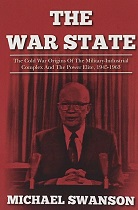
The War State: The Cold War Origins of the Military Industrial Complex and the Power Elite – Michael Swanson

SwansonOn January 17, 1961, United States President Dwight D. Eisenhower (1890-1969) gave his farewell address to the nation as it prepared to inaugurate the incoming president, John F. Kennedy (1917-1963). During his address, Eisenhower warned of the “military industrial complex” and its influence over foreign policy. Four years later, America was on the path to war in Vietnam. Following World War II, the world felt relieved as the fighting ended and the planet began the lengthy process of rebuilding what had been lost. But what was not seen at the time publicly, were the growing hostilities between Washington and Moscow which began to form the nexus of the Cold War. But an important question is why did the Cold War take place? While it is true that it was not a traditional war in that troops were on the ground fighting, the world came close to the brink of nuclear war and had those weapons been used, I might not be sitting here today writing this blog post. Today, the United States military is both feared and admired, and the national defense budget for the year 2023 stands at eight hundred eight-six billion dollars. The figure is shocking, but it was not always this way. In fact, the national defense budget was far smaller as presidents sought to reduce military spending and focus on other domestic programs. But at some point, that changed and the money going towards America’s defense took on a life of its own. Author Michael Swanson explains the reasons why in this book that explores the Cold War’s origins, the military industrial complex and the powerful figures behind the scenes that influenced Capitol Hill and the White House as America locked it sights on the Soviet Union and exerting the United States’ influence around the world.

The author provides a primer early in the book to set the stage for the coming discussion, focusing on the financial costs of both World War I and World War II. While reading this section, I made note of a fact he provides about the collection of income tax that will surprise readers. As the second world war raged, American officials were eager to bring the war to a conclusion and prevent more casualties. Their wishes were granted in the form of two bombs that mankind had never seen before. But there were also other effects of the bomb that did not relate directly to its ability to cause destruction. In Moscow, all eyes focused on Japan as Hiroshima and Nagasaki were destroyed, and Soviet Premier Joseph Stalin (1878-1953) knew that things between the two nations had changed forever. As Swanson puts it:

“The detonation of the atomic bomb on Japan marked the beginning of the Cold War, because it posed an existential threat to the Soviet Union.”

In America, the Soviet Union was also seen as an existential threat to the nation’s safety. However, the country lacked an effective method of gathering intelligence. That all changed during the administration of Harry S. Truman (1884-1972), informally known as the “accidental president”. Truman held concerns about a Soviet arms buildup and knew that it would increase its weapons arsenal. He had to act and approved two key events that changed American foreign policy permanently. On September 18, 1947, Truman signed into law the National Security Act which paved the way for the creation of the Central Intelligence Agency (“CIA”). But he was not done there and as relayed by the author:

“Harry Truman ordered a reappraisal of national security policy. Completed on April 14, 1950, this report, titled National Security Council Report 68 (NSC-68), became one of the most important documents of the Cold War. It set the stage for a massive arms race and advocated intervention throughout the entire world.”

Frankly, the arms race was on, and every president after Truman would have to fight elements within their own government as fears of a “Red invasion” and “nuclear holocaust” spread across America. Radicals in the American government were convinced that there was a “missile gap” and that more weapons were needed. As Eisenhower enters the story, the pace of the book picks up due to the Cold War becoming a reality. In fact, the conflict forms the bulk of the book which finishes before the debacle in Vietnam. Eisenhower was a famed Allied commander during World War II and seen behind the scenes as an effective leader who preferred to move in silence when possible. But he was not naive to the growing influence of the military and powerful figures in Washington who wanted America to flex its military muscle. Today it seems surreal, but it is important to remember that during this time, there were people who deeply believed a pre-emptive strike against the Soviet Union was warranted and that war would eventually come no matter what. Eerily, they accepted the fact that millions of people in both countries would perish in less than an hour during a nuclear exchange. The unbelievable story is told here again, and readers will shake their heads in disbelief. But the story reaches an even higher level of insanity when America elected its first Irish-Catholic president.

John F. Kennedy remains highly popular to this day although he only served one thousand days in office before his murder in Dallas, Texas on November 22, 1963. But during his time in office, multiple crisis brought the United States and Soviet Union close to all-out war. He had inherited the Cold War and a Russian adversary named Nikita Khrushchev (1894-1971). And the pawn in the chess match between America and the Soviet Union was the small island of Cuba which came close to being the starting point for the next world war. Swanson revisits the two events that placed everyone on high alert:  The Bay of Pigs Invasion and the Cuban Missile Crisis. Readers familiar with both will read this section slightly faster but as someone who had read multiple books on the subject, Swanson version is also good. In fact, I found it to be a very condensed version that is easy to follow without reducing the suspense needed to convey the seriousness surrounding both historical events. As for Kennedy and Khruschev, both men found themselves in a similar position within their governments and shared the same vision for peace. However, both also had to contend with the fact that hardliners in their governments were eager for conflict and might go to any lengths to make it a reality. The author’s discussion of the final weekend in October 1962 will show the concern on both sides about a coup to remove people from positions of power. Thankfully, cooler heads prevailed, and nuclear war did not happen. But in Washington, that was not enough for the military industrial complex, and Southeast Asia was placed on its radar. Kennedy died before finalizing his plans for Indochina but his successor, Lyndon B. Johnson (1908-1973) made it clear that he would not reduce America’s presence and by the time the war ended in 1975, fifty-eight thousand American troops died in Vietnam. But that is a story for another time and another book.

Readers may be tempted to wonder why this story is important today if the Cold War is over. Well, the reason is that defense spending has never been reduced and continues to increase. But we must ask why? Which nation is an existential threat to America today? This section by Swanson towards the end of the book sums up the thinking that almost caused a third world war with nuclear weapons perfectly:

“In the 1950s, air force General Curtis LeMay said he had the ability to order SAC bombers to attack the Soviet Union and destroy all of its war-making capabilities “without losing a man to their defenses.” Americans were completely safe, but they lived in constant fear.”

The past is always prologue, and though the Soviet Union no longer exist, the ideological differences between Russia and America remain. But peace should be the goal and there is enough room on the planet for us all if we place value on our lives which are not guaranteed. This is a good discussion about American history and the dark directions the nation took under misguided fanatical warriors who warmly embraced what could have been Armageddon.

“Cold War? Hell, it was a hot war!” – Robert S. McNamara (1916-2009) (The Fog of War, Sony Pictures 2003)

ASIN:‎ B00EWLGXHW

Embers of War: The Fall of an Empire and the Making of America’s Vietnam – Fredrik Logevall

LoevallOur resistance will be long and painful, but whatever the sacrifices, however long the struggle, we shall fight to the end, until Vietnam is fully independent and reunified. ” – Ho Chih Minh (1890-1969)

On March 29, 1973, the last American military unit left Vietnam as the war between the United States and North Vietnamese army moved towards its dramatic conclusion. For the first time, America had failed to reach its objective and suffered over fifty-eight thousand casualties. Vietnamese losses were counted at over two million and the nation also faced the challenging task of rebuilding its cities and villages. Millions of veterans on both sides faced a difficult journey as they rebuilt their lives upon return to civilian life. Ho Chih Minh, who died before the war’s conclusion, was vindicated in his belief that Vietnam would one day be reunited. In retrospect, we are faced with the question, why did the Vietnam War take place? Fredrik Logevall, author of JFK: Coming of Age in the American Century (1917-1956), tells the story of the French defeat and how that loss shaped the future conflict between Washington and Hanoi.

Readers should be aware that this book is lengthy, with slightly over nine hundred pages of text. But contained within these pages is the story I should have learned in school. Regarding the Vietnam War, it is accepted that the conflict began with the events in the Gulf of Tonkin between August 2-4, 1965.  However, America’s role in Indochina has a long and complicated history as the author shows here. To set the stage, the author revisits World War II and the Allied effort. This is critical because that conflict changed the world and gave way to future wars in Korea and later Vietnam. The Japanese defeat left a power vacuum which Ho Chih Minh and the Indochinese Communist Party (“ICP”) capitalized on. The ICP was later dissolved in November 1945 after the founding of the Democratic Republic of North Vietnam.  France was alarmed at Hanoi’s actions and embarked on a campaign to reassert its influence over Indochina. Logevall brings the past roaring to life in this account that highlights the early success and the failures that resulted in defeat. But before we reach the conclusive battle at Dien Bien Phu, we must first understand how and why France failed to recapture Vietnam in the First Indochina War (1946-1954).

The story as told by Logevall is filled with critical recreations of the moments that shaped French policy for better and worse. And as the story develops, it becomes clear that the Vietnamese would seek independence at all costs. There were those in France determined to see Ho Chih Minh fail and were willing to look past the ideology that filled the hearts and minds of the Vietnamese.  Curiously, Washington was also watching Indochina closely without taking any direct action. Agents of the Office of Strategic Services (“OSS”) were aware of the doom Vietnam spelled for any country who entered militarily. One of its operatives, A. Peter Dewey (1916-1945), whose story is told here, became an early casualty in a bitter struggle between Western Democracy and Eastern Communist beliefs. Dewey saw the writing on the wall and attempted to sound the alarm. Another OSS officer, Archimedes Patti (1913-1998), also sounded the alarm and takes a significant step in alerting Washington that may have changed history had it been responded to. As I read the story, I could see that experienced officers and politicians knew that Vietnam was a disaster, and the French were going to fail. One of these people was a young politician named John F. Kennedy (1917-1963) who later as president, inherited the Indochina problem from his predecessor Dwight D. Eisenhower (1890-1969). Kennedy appears sporadically throughout the book, and before he is elected to office in 1960.  Eisenhower receives more of the spotlight after taking reigns from Harry S. Truman (1884-1972) whose stance of Indochina remains firmly in place long after his departure early in the story.

As the French and Vietnamese engage in heavy combat, Washington chooses it side and throws it support behind the French. However, the involvement of the United States remains limited and a premonition of how the later battle between American personnel and North Vietnam played out. But the French do have success in the book which had the North Vietnamese on the defensive. The battlefield scenes are on display and the author takes us through them as history plays itself out before the reader’s eyes.  But what the French did not expect is the assistance to Ho Chih Minh by the man who is credited with the French defeat: Võ Nguyên Giáp (1911-2013).  The role of this strategist deeply trusted by Ho Chih Minh should not be overlooked.  His decisions and actions helped to seal France’s fate and the incredible story is told in all the dramatic detail by Logevall who has a knack for adding the right amount of suspense as the story flows. And like the first volume of his biography of Kennedy, the story here flows easily as well, and kept me engaged from start to finish.

It is imperative to keep in mind that the events taking place in the book occur over a period of nine years from 1946 to 1954.  A swift defeat did not happen for reasons explained by the author and the turning tide of French opinion towards Vietnam should have raised alarm bells everywhere including in Washington.  But the truth is that Vietnam was an extension of the Cold War and the obsession with Communist expansion.  The Soviet Union and Chinese Communist Party are also part of the story, and the Korean War is addressed. But despite fears, neither country entered the conflict to fight the French. But they did provide support for North Vietnam in other ways. In the South, the situation is far from ideal, and this is another aspect of the Vietnam War that is critical to the debacle that ensued. Throughout the story, it is apparent to scores of people that South Vietnam lacked a stable government. The decision to install Ngo Dinh Diem (1901-1963) and his brother as the leaders of South Vietnam was doomed from the start and the tense relationship between Diem and Washington never reached a level where he could completely rely on Washington. And nor did Washington have unwavering faith in the brothers who held on to power only through America’s support. Readers may be wondering how those in power missed so many signs that showed Vietnam would be a terrible mistake. There are reasons not discussed in the book, but the short answer is profit and horrible foreign policy. Even as French losses mounted, Washington continued to increase spending. But it was not enough to stop the final French defeat at Dien Bien Phu in 1954. Two years later in 1956, the last French troops withdrew ending France’s involvement with its former possession. But the story was far from over. Ho Chih Minh and his administration had succeeded in removing the French, but they knew that America was lurking in the distance. During his exit speech, Eisenhower warned of the military industrial complex. Vietnam was undoubtedly on his mind. Detractors will point out that he did not stop or reverse involvement of the United States. Between 1954 and 1964 tensions continued to mount and unification remained the goal of the North. Diem became increasingly unpopular in the South, setting the stage for the Second Indochina War (1955-1795).

The actions by Diem are shocking and horrifying and will cause readers to recoil in shock. Opposition continued to grow, and the warning signs were plenty that the Diem regime would collapse at some point in time. But he continued to receive support even as it became clear that the South could not stand on its own. Communist infiltration and disgruntled factions in the South had increased the threat around the Diem regime.  Nevertheless, Washington had committed to supporting Diem based on the “Domino Theory” which never did pan out. The paranoia about communist expansion applied blinders to the eyes of policy makers and it was decided that Vietnam could not fall. However, they failed to see that the fall had already taken place and the North Vietnamese Army would never surrender. By the time Washington understood this, thousands of American troops died on battlefields across Vietnam and unrest at home plagued two presidents to whom Vietnam became a source of embarrassment and consternation.  America eventually did get out of Vietnam but with damage done to its reputation and generations of people both domestic and abroad scarred for life with memories of warfare. The French experience had provided the necessary blueprint, but it is true that those who do not study their history are doomed to repeat it. This is the story of the French defeat in Vietnam and the beginning of America’s involvement in the most unpopular war it has ever fought. Highly recommended.

ASIN:‎ B007EED4P8

JFK: Coming of Age in the American Century (1917-1956) – Fredrik Logevall

20230304_180326“Never be without a book in your hand”. Those words, spoken by President John Fitzgerald Kennedy (1917-1963) to his youngest sibling, the late Senator Edward M. Kennedy (1932-2009) stayed with me after finishing this Pulitzer Prize winning masterpiece biography by Fredrik Logevall. As I read those words, I pictured bibliophiles all over nodding their heads in agreement. At the age of forty-six, John F. Kennedy was felled by an assassin’s bullet in an act that changed America. The hopes and promise of significant changed died with him in Dallas, Texas on November 22,1963.  And though his successor Lyndon Baines Johnson (1908-1973) was successful in pushing forward groundbreaking legislation, the wound from Kennedy’s murder was destined to never heal.  As someone who has read countless books on his assassination and incredible life, I had a firm grasp on the Kennedy story before starting this book. However, there were parts of Kennedy’s story I learned for the first time. But more importantly, I witnessed a young man coming of age in the century that saw profound change across the globe.

This November will mark sixty years since Kennedy’s sudden death, yet he remains one of the most popular politicians in history.  His legacy is complex with successes and failures. The world came to the brink of nuclear war in October 1962 but was resolved without a weapons exchange to the relief of all. The Bay of Pigs invasion was a nightmare but not without its warnings. But those events await readers in volume two. Had Kennedy secured a second term, I believe he would have been able to accomplish more of the goals he envisioned for the nation. And the key to understanding why his death was so devastating is to find out how who he was as a person and what shaped his views of the world. Logevall begins as expected with a short biography of the Kennedy and Fitzgerald families, and their roots in Ireland. After the marriage of former U.S. Ambassador to Great Britain Joseph P. Kennedy, Sr. (1888-1969) and Rose Fitzgerald (1890-1995), the story picks up in pace as the Kennedy children begin to arrive.  Joe Jr. (1915-1944) arrives first and becomes the son chosen for the dreams Joe Sr. has of a Kennedy in the White House. Jack arrives next and from their childhood to their service in World War II, they maintain a rivalry that may surprise readers. In fact, Logevall sheds light on a plausible reason for the final mission Joe Jr. embarked on that claimed his life. Next in line is Rosemary (1918-2005) whom author Kate Clifford Larson `called “the Hidden Kennedy Daughter” in her book of the same title.  She is followed by Kathleen, who is known affectionately as “Kick” and her closeness to Jack should not be underestimated. The author highlights the importance of Kick in his and the impact of her death at the age of twenty-eight. In short order siblings Eunice, Pat, Bobby, Jean, and Ted arrive and the Kennedy story is never the same again.

Kennedy’s story is well-known, but there are key elements which I believe Logevall expertly homed in on that sets this biography apart from others.  The sibling rivalry with Joe Jr. is interesting because not only is it filled with ironies but because each son was unique, though they did complement each other.  Joe’s physical abilities contrasted with Jack’s intellect, but both excelled in many ways.  When Joe Sr. is appointed Ambassador to the United Kingdom, the family’s life changes significantly and Jack’s exposure to the world takes shape, and until the day he died, never lost touch with events around the globe. The list of countries he visited even before serving in the military is staggering. From an early age, it is clear in the book that Jack had his eyes and ears glued to the world around him and was not content to sit still.  However, the Kennedy story was nearly cut short multiple times as Jack found himself at death’s door.  Logevall revisits the episodes in which Jack’s health took turns for the worst and the young man who later became president nearly met the Grim Reaper. Jack’s famous humor is on display throughout the book, and in one instance where he learns about his own health status and refers himself as “2000 to go Kennedy”.  There is one revelation in the book that caught me off guard but looking back, I can say that I should not have been surprised. This health issue would come back to haunt him later in life but played no part in his demise.

In 1939, German Chancellor Adolf Hitler (1889-1945) set his sights on dominating the European continent and on September 1 of that year, the Third Reich’s armed forces invaded Poland, and ignited World War II.  Joe Sr. was widely known to be an isolationist and that view contrasted with his son Jack, whose travels abroad and extensive knowledge of history had shown him that Hitler had to be stopped and America could not avoid getting involved forever.  After the Japanese attack at Pearl Harbor, the fates of Joe Jr. and Jack were sealed but by the war’s end, Joe Sr.’s plans for his children’s lives had been unexpectedly altered. Jack, and not Joe, would become the Kennedy who took the family to new heights. And to reach those heights, his father instinctively tapped into Jack’s service record and heroic actions after his PT-109 cruiser was destroyed by a Japanese naval vessel. It is an incredible story and almost unbelievable, but Kennedy had earned his stripes and returned home a war hero. Joe Jr. was not so lucky and the murky details about his death are cleared up by the author.

Following Jack’s service, he returns home and begins his journey in the world of politics. Logevall also refutes the idea that Joe Sr. pushed his kids into public office.  In fact, Jack was acutely aware of politics and had his own ambitions. But before he reaches the Senate, the Kennedy family is forced to confront more heartache as the lives of Kick and Rosemary take sharp turns. Without dwelling too much on the circumstances, Logevall explains both events with the right amount of detail to explain what happened and how the family reacted. Kick was the sibling that resembled Jack the closest in spirit and her defiance directly challenged Rose’s puritanical views.  And her choices in men push Rose to the brink and readers will be surprised the family’s response to her passing in 1948.  All of this was not lost on Jack, who confronts his own mortality throughout the book.

Towards the end of the story, Jack’s future wife Jacqueline Bouvier (1929-1994) (“Jackie”) enters the story but the two do not immediately become an item. In fact, there were maneuvers behind the scenes to bring them together and the author shows, and after they do become a couple, issues remain due to a notorious habit of Jack’s which serves as the “elephant in the room” in the book.  Kennedy was widely known for his romances and affairs after marrying Jackie. Personally, I did not pay much attention to the women he had romances with, though I knew of the stories beforehand.  As a young attractive bachelor with money, I am sure Kennedy had his pick of women, but I also had to remember that his roving eye was no secret.  However, after marrying Jackie, it was disheartening to see that his philandering did not slow down. His father had his own affairs, and it was something that Jack may have normalized. Or it might have been a side effect of the treatment plan for his medical condition which was carefully kept a secret from the public as he ran for office.  And at times, he does show an aloofness to his actions, including his habits of not keeping cash at hand and leaving his places of residency is disarray. But if everyone knew about Jack’s ways, then why did women flock to him? The answer is found in Logevall’s biography, which shows that there was no one like him and he was one of a kind.  His uncanny ability to absorb knowledge (enhanced by learning how to speed read) set him apart from peers. And by the time he enters the Senate, his core support unit of Irishmen is formed, and they supported Jack all the way until the last visit to Dallas.  People loved Jack, and women loved him more, and he knew how to reach people. And that is a recurring theme throughout the book. He came of age and was destined to make his mark on the world. His college thesis “Why England Slept‘ still holds a place in World War II literature and a place on my bookshelf.

In the Senate, Jack makes friends from both sides of the aisle, including a young politician from California named Richard Nixon (1913-1994) whom he later faces in the first televised presidential debate during the 1960 election campaign. But that is for the second part of the biography. Here, Jack’s eye is on the 1956 Vice-President nomination, but he finds himself up against fierce and seasoned competition in former Illinois Governor Adlai Stevenson (1900-1965) and Senator Estes Kefauver (1903-1963). And though he did not secure the nomination, a star had been born. The electricity surrounding the Democratic convention can be felt as the author replays the buildup to the climactic moment when the crowd shows it support for the upstart Kennedy. Logevall closes the book out with Jack ready for the future and the years 1957-1963 will bring a whole new set of challenges in his life and his own demise. But I am sure Logevall will tell that story as beautifully as he told this one which was written in a style that did not require any significant notetaking. The story flows so smoothly and is so interesting that I was able to retain what I read with ease. Following Jack was a breeze, and I am ready to see where he goes next.

ISBN-10 ‏ : ‎ 0812997131
ISBN-13 ‏ : ‎ 978-0812997132

Patrice Lumumba: Africa’s Lost Leader – Leo Zeilig

20190409_214533On February 13, 1961, United Nations Ambassador Adlai Stevenson (1900-1965) placed a call to President John F. Kennedy (1917-1963) and informed him that Patrice Lumumba (1925-1961), the first Prime Minister of the Independent Democratic Republic of the Congo, had been murdered a month earlier.  The moment that Kennedy took the call was captured by a photographer and the image shows him with his hand covering his face in shock.   The picture truly does speak a thousand words and Kennedy’s dismay resonated with millions of people around the world.

To a growing following, Lumumba represented hope for a new course to be charted by the continent of Africa. The Congo would lead the way and help other African nations achieve independence and change the world. As the leader of the Mouvement National Congolais (MNC), he stood at the front of the growing movement for independence which occurred on June 30, 1960.  Nearly immediately after his historic election as Prime Minister, his enemies began plotting his elimination.  Brussels became increasingly alarmed as its grip over the Congo became weaker with each day that passed.  And before long, the decision to remove Lumumba became a priority for Belgium and other nations afraid of the rising Congolese star.   In less than one year,  he was dead and all hopes for a new Congo were shattered beyond repair.  There are some people in the Congo who have never moved on from his murder.  To this day, Lumumba remains a martyr in the African struggle for liberation from imperialism.

The first question to be answered is why was the Congo such a desirable location? Leo Zeilig has the answer to that question and many others.  He explores the Congo’s past and in particular the actions of Henry Morton Stanley (1841-1904) and Dunlop Rubber.  Their actions set the stage for the brutal Belgian occupation that ruled the Congo with an iron grip. Racism was a founding principle and enforced through strict segregation.  It was into this world that Lumumba was born on July 2, 1925 in Onalua, located in the territory of Katako-Kombe.  From the beginning, his life was anything but ordinary.

Zeilig did a masterful job at presenting Lumumba’s story so that we can see his development into an adolescent and then young man, forced to navigate a racist society whose goal was to reap enormous profits at the expense of Congolese men and women, often viewed by their occupiers as “savages”.   Lumumba’s path to politics took many turns along the way and his personal life nearly rivaled his political life in intrigue. Zeilig pulls no punches, revealing any facades and clarifying any myths that might exist. Several wives, multiple children and a burning passion for knowledge were just some of the many sides to Lumumba’s life.

The book picks up speed after the election and granting of independence.  Unsurprisingly, the Congo was plagued by tribal divisions which would later become problematic for any chance of unity.  Those familiar with the events of that time will know very well the names of Joseph Kasa Vubu (1915-1969) and Moise Tshombe (1919-1969).   Each would play a role in the removal of Lumumba and what is revealed will surely leave the reader in shock.  Behind the facade of a coalition government, a deadly game of chess ensued, pitting critical figures against each other as the country slipped closer and closer to all out civil war in the wake of the Belgian exodus.  Zeilig covers all angles and puts the pieces together as multiple nations soon join in the call for Lumumba’s removal.  It is hard to put into the words how much of a threat he truly was to western powers.   But Lumumba made several missteps along the way that helped open the door for the actions that resulted in his demise.

Suspense builds in the story and the effort to removal Lumumba kicks into high gear. The young leader is not unaware of opposing forces but believes he has the will of people behind him.  One of the true ironies of his tragic story is that his fate was partly a result of the simmering Cold War between Washington and Moscow.  His efforts at diplomacy are eerily similar to those of Ho Chih Minh and other revolutionary leaders who reached out to Washington and received no response.  We can only ask what if questions today and ponder how things might have turned out different had President Dwight Eisenhower (1890-1969) given Lumumba the courtesy of a meeting.  The actions of Washington pushed many nations toward the Soviet Union, which welcomed the new allies as it attempted to expand its reach beyond the Soviet Republics. In hindsight, we can see with clarity the many errors made by all involved as they sought to outsmart each other in a game of cat and mouse that could have reached catastrophic levels.

The author builds the tension just right as the pending doom in Lumumba’s life steadily approaches.  I could not help feel overcome by a feeling of dread as I read through the sections leading up to the assassination.  The writing was on the wall and I felt myself wanting to tell Lumumba to move faster and leave even quicker.  However, his fate came to pass on January 17, 1961 in the town of Elisabethville.  Unbeknownst at the time, his savage death was a premonition of the future chaos that engulfed the continent and highlighted that moment as the day when the Congo was lost.

I had always wondered what happened to his children and Zeilig followed up with them as he researched this book.   Their experience during and after his death, adds another level of tragedy to an already gripping story.   They join the long list of victims who have suffered following the murder of the person who Zeilig rightfully calls Africa’s lost leader. Lumumba’s story is told beautifully by Zeilig and stands out as a firm biography.  This is the life and death of the late Patrice Émery Lumumba.

ISBN-10: 190579102X
ISBN-13: 978-1905791026

The General vs. the President: MacArthur and Truman at the Brink of Nuclear War – H.W. Brands

On June 25, 1950, 75,000 soldiers from the North Korean People’s Army marched across the 38th Parallel and into the Republic of South Korea.  In the wake of World War II, the country had been split between the Communist North under Kim Il-Sung (1912-1994) and the Democratic South under Syngman Rhee (1875-1965).  The 38th Parallel served as the demilitarized zone between the two nations and remains in place to this day.  In response to the growing North Korean advance, South Korean Troops with the assistance of the United Nations and the Unite States, mounted a counter-offensive to repel the invasion.  As a tactical measure, President Harry S. Truman (1884-1972), appointed Gen. Douglas McArthur (1880-1964), to lead the resistance against the communist advance.  As the conflict unfolded, Korea became ground zero in the struggle for peace and a pawn in the brewing Cold War between the United States and Soviet Union.

The North Korean advanced surprised the South but the tide of the war was soon turned as American troops marched on and captured Pyongyang.  To all it seemed as if the conflict would soon be over and for Syngman Rhee, it appeared that his dream of reunification would come to pass.  However, in October, 1950, all of that changed as the Chinese People’s Liberation Army crossed the Yalu River, lending their support to North Korean troops.  In Washington, alarm bells sounded and it soon became known and accepted that the Korean War would not a “short” conflict.  Instead, the war nearly turned into World War III and the world found itself on edge wondering if the United States would once again use an atomic weapon.  Behind the scenes, Washington was doing its best to remain calm while avoiding another world conflict while its top commander in field was doing the opposite.  This their story, told beautifully by H.W. Brands in this book that it sure to leave you astounded.

Truman, largely unpopular across the country, finds himself at odds with the most popular general in America.  To the public, McArthur was a legendary figure beyond reproach, committed to the safety of the United States at home and around the world.  To the White House, he was a rogue soldier, interfering in foreign policy and possibly providing the spark that would ignite the next world conflict through public statements and unauthorized expansion into Chinese territory.   To understand these two powerful and dynamic figures, it is necessary to understand their backgrounds. Brands provides a brief autobiography of the two, giving readers a complete picture of each and their importance to the story at hand.   As the war rages, they take their place as opponents in a power struggle that coincided with the loss of large numbers of U.S. military personnel and a Congress salivating at the thought of punishing the White House for what it believed to be unauthorized military action on foreign soil.  

The book is written in a thoroughly engaging style and once I began I could not put it down. Readers familiar with the Korean War from either reading about it or living through it will recall many of the facts in the book. But where the book excels is in its deep analysis of the battle between Truman and McArthur, and the political maneuvers occurring in Washington to prevent Chinese escalation, retain the territory of Formosa  and possible involvement by the Soviet Union.   Some parts of the book are absolutely chilling and the late Franklin Roosevelt (1882-1945) is vindicated in his belief that McArthur was at that time, the most dangerous man in America.   Brands includes quotes directly from the central players, giving the book the authentic feel that is has.  It is not simply the author telling the story, but the major players giving their side of the story.  And through their words, we can come to understand McArthur’s belief in his actions which could have escalated the war and the administration’s response in relieving him of his command and substituting him with Gen. Matthew B. Ridgeway. And the result is a roller coaster ride that begins with a Korean invasion and ends with an armistice under President Dwight D. Eisenhower (1890-1969) and the downfall of a military legend.  Truman did not seek reelection but remained a powerful voice in American politics up until the time of his death.

It will soon be sixty-five years since the armistice was signed, and the 38th Parallel continues to be a source of tension between North and South Korea with both sides on high alert at all times for possible escalation and even invasion. The story of the two Korean nations is a long and tragic story, beginning with occupation by the Japanese military during World War II.  The division of the country by the Soviet Union and the United States was a scene that played out in many nations following the defeat of the Axis powers.  Peace became a central goal across the world but in 1953, North Korea decided that there was more at stake than civility.  But due to the efforts of leaders who understood the dangerous nature of the conflict, the world was given a brief reprieve until the United States and Soviet Union once again clashed during the Cuban Missile Crisis in October, 1962.  That conflict would also be resolved, due in part to the efforts of the administration of President John F. Kennedy (1917-1963). 

The story here is at times mind-blowing and shows just how close the world came to Armageddon.  There were no scripts and the central figures were not actors on a studio in Hollywood.  The events were frighteningly real and if we are to prevent future conflicts from going down the same path, we owe it to ourselves to remember the conflict by use of books such as this one by H.W. Brands.  Those who are students of history and in particular the Korean War, will thoroughly enjoy and appreciate Brands’ work. 

ISBN-10: 0385540574
ISBN-13: 978-0385540575


This Kind of War: The Classic Military History of the Korean War-T.R. Fehrenbach

rokIt is sometimes called the forgotten war, the conflict which remains in the background as World War I, World War II and Vietnam take center stage as the wars that defined the United States Military and U.S. foreign policy.  Unbeknownst to many Americans, the Korean war never officially ended.  An armistice was signed on July 27, 1953 bringing a halt to the firing from all sides. But the armistice did not permanently resolve the conflict and to this day the 38th parallel, instituted after World War II, remains as the dividing line between the Communist North and the Democratic South.  Recently, U.S. President Donald J. Trump attended a peace summit with the leader of North Korea, Kim Jong Un.   Washington claimed the summit a success but only time will tell if the Korean War will officially come to an end and peace is finally obtained.  For veterans of the conflict, feelings run deep and mixed thoughts on the summit are bound to exist.  Two years ago, a veteran of the war close to my family died after several years of declining health.  Curiously, he never spoke of the war, preferring to keep his thoughts and feelings to himself for more than 50 years.   And as he went to his grave, he took with him, knowledge of the war and memories that most people would never want to have.  But the questions still remain, what caused the conflict and why did war wage for three years? Furthermore, why did the fighting eventually cease?

Author T.R. Fehrenbach (1925-2013) served in the Korean War and was later head of the Texas Historical Commission.  In 1963, this book was published, ten years after the fighting had ceased.  His memories are crisp and the reporting second to none.  He takes us back in time as history comes alive, letting us step inside the war beginning those fateful days in June, 1950 when the North Korea People’s Army invaded its southern neighbor.  Under the direction of Kim Ill Sung (1912-1994),  North Korea initiated the opening salvo in a war that claimed over two million lives.   News of the invasion sent shock waves through Washington and President Harry S. Truman (1884-1972) was faced with a decision that would change the course of history.  On June 30, 1950, he ordered ground troops into South Korea to assist the Republic of Korea Armed Forces (ROK).  At the time no one could have imagined what lay in store.

From the beginning the story pulls the reader in as Fehrenbach recounts the Japanese occupation of Korea and the long-lasting effects of Japanese rule on Korean society. In fact, to this day, influences of Japanese culture can still be found in Korea.  Following the falls of the Japanese Army in World War II, Korea found itself in a position to chart a new course.  But similar to Germany and Japan, the country became a pawn in the chess match between the United States and the Soviet Union.  Unsure of what to do with South  Korea, the nation remained in a vulnerable position until the North made its move.  And once the fighting began, the speed picked up and refused to die down.  North Korean and U.N. forces lead by the United States, engaged in deadly combat that saw casualties climb exponentially on both sides.  but what was clear from the beginning as we see in the book, is that Korea was an entirely new type of conflict for America.

Savage is the adjective that comes to mind to describe the fighting between opposing nations and ideologies.  Beyond brutal, the Korean conflict was akin to hell on earth for all of its participants.  And just when we think that the war might swing in the favor of the U.N. forces, the war takes a darker and more dramatic turn as the People’s Republic of China enters the fray changing the scope and the rules of the Korean War.  At the time China enters the story, the fighting has already claimed thousands of casualties.  But it is at this point that the battle reaches a higher and more deadly level.  Quite frankly, the world stood on the verge of the next holocaust.   Today we know that did not happen.  But why? America had the troops and the money to fund the war but what was it that held back the United States from entering into a full-scale ground assault?  The answers are here and this is the crux of the book.  Following World War II, American attitudes towards war began to change and Korea was the first testing ground for the gaining influence of politics over armed conflict.

What I liked most about the book is that aside from the statistics of casualties and the descriptions of the deaths that occur in the book and POW internment camps is that Fehrenbach explains how and why events progressed as they did and also why Washington was committed to fighting on a limited scale.  The fallout from the atomic bombs dropped on Japan was still fresh in the minds of nations across the world.  President Truman gave the order to drop the bombs and I believe no one doubted his willingness to use them again if necessary.   Whether he would have eventually given the order is unknown as his time in office came to an end and Gen. Dwight Eisenhower succeeded him.  But for the new president, the conflict still raged and opinion towards the war had become negative.  And while peace did come during his term, the body count climbed up until the very last day.

The story of the Korean War is one that is rarely mentioned in textbooks and never discussed today.   But this book by Fehrenbach truly is a classic study of the war.   In a meticulous and chronological order, he tells the story from start to finish and along the way, incorporates relevant parts of American society and world history into the story.   Although not a “textbook” in the classic sense, the book very well could be for it gives a concise explanation for the causes and effects of the war and how it was eventually resolved. If you are interesting in expanding your knowledge of the Korean War, this is the perfect place to start.

ISBN-13: 978-1574883343
ISBN-10: 1574883348
ISBN-13: 978-0028811130
ISBN-10: 0028811135
ASIN: B00J3EU6IK

The Best and the Brightest-David Halberstam with a New Introduction by the Author

20180619_235509I have often wondered why my uncle and many other veterans that I have met, were sent to Vietnam.   He and others never speak of the war, choosing instead to internalize their memories and feelings.  But from the few things about being Vietnam that my uncle has told me,  I cannot image what it was like to be fighting a war in a jungle 13,000 miles away from home. Today he is seventy-two years old and his memories of Vietnam are as sharp today as they were when he left the country to return home.  And there is a part of him that still remains in Vietnam, never to leave its soil.    He is one of five-hundred thousand Americans that served in a war that claimed fifty-eight thousand lives.
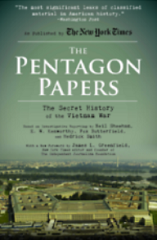
The reasons for America’s involvement in Indochina have been muddled and in some cases omitted from discussions.   Secrecy became the standard method of communication in more than one administration in Washington as the United States became deeper involved in a conflict with no end goal in sight.  Daniel Ellsberg gained fame and infamy when he revealed the top-secret Pentagon Papers to the country.   The New York Times later published a review of the documents and today it is available in the form of a book titled The Pentagon Papers: The Secret History of the Vietnam War.  The book is enlightening and contains a trove of information regarding how and why decisions were being made in the White House as control of the government passed through several presidents.  Former Secretary of Defense Robert S. McNamara (1916-2009) published his own memoir of the war, In Retrospect: The Tragedy and Lessons of Vietnam.  The book has its fans and critics. McNamara has often been blamed for the war and the vitriol towards him was so strong that in later years he declined to talk about the conflict.   True, he was a participant in the events leading up to the war, but many other players had a hand in the game which became deadlier as time went on.  To understand their roles and the policies enacted, it is necessary to revisit the  complete history of U.S. foreign policy in Indochina.  David Halberstam (1934-2007), author of The Unfinished Odyssey of Robert F. Kennedy, conducted his own research into the war’s origins and the result was this New York Times bestseller that is nothing short of mind-boggling.

Halberstam admits that he knew Ellsberg and in fact, he reviewed the Pentagon Papers as he wrote the book.  In addition he conducted hundreds of interviews but was careful not to reveal any of their names.  When Ellsberg was indicted and had to stand trial, Halberstam was subpoenaed to give testimony, unaware then of how Ellsberg came into possession of the documents.  But what started out as a look at the life of  former National Security Advisor McGeorge Bundy (1919-1996), grew into this definitive account of the reasons for the Vietnam War.

The book follows a carefully guided timeline and the story of Vietnam begins in China before moving on to Korea and eventually Southeast Asia.  These parts are critical for they set the stage for foreign policy decisions in the years that followed and explain many of the mistakes that were made.  As President Eisenhower winds down his time in office, a new young Catholic Democrat gripped parts of the country as he declared himself the next person to occupy the White House.  By the time John F. Kennedy (1917-1963) took office, the road to Vietnam had already been paved.  It is at this point in the book where the pace picks up and never slows down.   The concept of the best and the brightest came to Halberstam as he thought of a phrase for Kennedy’s cabinet of intellectuals who were set on reshaping Washington in the image they believed was right to push the country forward.  One by one he introduces us to all of the characters that have a role in the story, tracing their origins and helping us to understand how they reached their positions in the government.  Some of them are as mysterious as the country’s then paranoia about communism taking over the world.  But as they come together, something still is not quite right and Vietnam becomes the issue that will not go away.  And for the thirty-three months Kennedy was in office, the American involvement would grow in Indochina but the nation had not yet entered a war.   The growing crisis however, had begun to cause a rift in the White House and the deception employed by those loyal to the military and war hawks is eye-raising and chilling.  I also believe that it helps explain Kennedy’s murder in November, 1963. We can only guess what would have happened if he had lived.  There are those who strongly believe we would have withdrawn from Vietnam. I believe that is what would have happened, probably sooner rather than later.  But Kennedy was gone and his successor, Lyndon B. Johnson, inherited the nightmare of Vietnam.

As Johnson settles in to being the new Commander-In-Chief,  Indochina becomes a thorn in his side and he becomes conflicted with the decisions he will eventually make.  This part of the book is the crux and the key to the final push by the military for a war.  Many of Kennedy’s cabinet members continued to stay and at first worked under Johnson.  But as time passed and the ugly truths about Vietnam came back from Saigon, they would fade out as Johnson led the nation down the path of escalation.  Halberstam is a masterful story-teller and the scenes he recreates from his research are spellbinding.  Nearly everyone in the book is now deceased but as I read the book I could not help but to scratch my head at their decisions and actions.   The warning signs of Vietnam loomed ominously large but tragically were ignored or discounted.   Washington suffered from a tragic twist of fate: although it had the best and the brightest in Washington, they still made mistakes that literally made little sense. And that is a central theme in the book. The war’s architects were all brilliant individuals with endless accolades yet they failed to understand what was considered to be a peasant nation far away from home. Many of them would suffer in one way or another.  For Lyndon Johnson, Vietnam eventually became the final nail in the coffin that sealed his chances at reelection.

During the reading of the book, I also noticed at how Halberstam explained the actions of the North Vietnamese Army (NVA) and Vietcong.  In order to understand why Vietnam became a stalemate, it is not just necessary to understand the failures of Washington, but the strategy of Ho Chih Minh and the generals under him.  The small peasant nation took on a colossus and refused to give up. And the battles of  Vietnam changed warfare and showed the world what many believed to be impossible.  Arrogance and in some cases, racist beliefs laid at the base of some foreign policy decisions regarding the war.  History has a strange way of repeating itself and the repeated warnings from the French fell on deaf ears as American troops landed in a place many of them knew nothing about.  Looking back with hindsight, the critical failures are clearly evident and although Halberstam shows us how we became involved in Vietnam,  we are still baffled about why.  How could so many minds filled with so much knowledge make such rudimentary and baseless decisions?   The answers are here in this book in the form of official cables that withheld information, overzealous military advisors, an unstable South Vietnamese government, National Security Action Memos and the idea that the United States could solve any of the world’s problems.   This book is a must-read for those who are interested in the history of the Vietnam War.

ISBN-10: 0449908704
ISBN-13: 978-0449908709

The Pentagon Papers: The Secret History of the Vietnam War- Neil Sheehan, Hedrick Smith, E. W. Kenworthy, Fox Butterfield and James L. Greenfield

ellsbergThe names of the 58,000 Americans who died in the Vietnam War that are found on the memorial in Washington, D.C., are a reminder of a conflict deemed by many to be the worst the United States has ever been involved in.  The withdrawal of U.S. forces in March, 1973, brought a sigh of relief to the American public which had long grown tired of a war with no end in sight.  The dark truth which we now know is that we did not by any means accomplish the mission.  And the mighty American war machine failed to secure a victory. I have met many veterans of the war and have an uncle who served.  What I recall most about all of them is that they do not speak of their experiences while in combat.  I know the memories are there and for some of them, they were unable to leave parts of the war behind.  Today we call it PTSD, but back then you simply found a way to move forward in life.   But why were they in Vietnam to being with?  Was the domino effect really a threat to the United States?
On May 11, 1973, Daniel Ellsberg found himself the talk of the town as charges pending against him for espionage were dismissed by U.S. District Judge William Byrne. He had been indicted for leaking what became known as The Pentagon Papers, the subject of this book and the topic of the movie The Post starring Tom Hanks and Meryl Streep.  The New York Times, after several battles in court, was finally allowed to move forward with its plan to publish The Pentagon Papers and contained in the pages of this book are the documents that the U.S. Government tried in earnest to hide from the American public under the guise of “national security”.   Ironically, the facts that are revealed in this book have absolutely nothing to do with national security but rather several presidential administrations that failed to find a workable solution to Indochina.

The late Secretary of Defense, Robert S. McNamara (1916-2009) has been called the architect of the war and was loathed by many because of it. However, the title is misleading and in some ways unfair. The war had many architects either by wishful thinking, uncontrolled ego or naiveté.  What is truly ironic is that as the war waged on, McNamara became a strong voice of dissent.  And in spite of what we have been led to believe, our existence in Indochina began many years before 1965.  The story of U.S. involvement in Vietnam is a long tale, filled with hard truths, false truths, deception and ultimately failure.  But this is how it happened and why.

The papers are divided into several sections which correspond to a different aspect of the conflict.  The administrations of Eisenhower, Kennedy and Johnson are examined to understand what each cabinet did and did not do as it grappled with the growing headache.   Step-by-step Southeast Asia opens up as black hole as more advisors are committed, instability rages in South Vietnam and war hawks finally get their wish as the United States jumped nearly feet first into a jungle conflict that proved to be nothing short of disastrous.  Rolling Thunder, troop deployments and South Vietnamese politics are just some of the issues that antagonized Washington for nearly a decade.

If you served in Vietnam, I forewarn you that the book might anger you in many ways. For others, this is a critical source of information in order to understand the war from a behind the scenes view.   We are often told that the military fights to protect the country and our freedoms that we take for granted.  But did a nation over 13,000 miles from U.S. soil really pose a threat to the most powerful nation on earth at the time? And what would we have accomplished if we had in fact won the conflict?   Perhaps Vietnam would have become a second Korea, partitioned between a communist controlled North-Vietnam and a U.S. controlled South-Vietnam.   Following the U.S. withdrawal, Saigon fell and the North achieved its goal of reunification.  Today the war is a distant memory for young Vietnamese but for the older generation, many painful memories remain.  The figures in the book are long gone but their actions will stay with us and the Vietnam war will always be a regrettable example of U.S. foreign policy gone wrong.

ISBN-10: 1631582925
ISBN-13: 978-1631582929

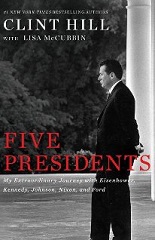
Five Presidents: My Extraordinary Journey with Eisenhower, Kennedy, Johnson, Nixon and Ford-Clint Hill with Lisa McCubbin

clint hillThe 20th Century was filled with some of the most earth-shattering events the world has ever seen.  The home video shot by Abraham Zapruder that recorded the assassination of John F. Kennedy stands as one of the most important pieces of motion picture ever captured.  During that film, as former Firs Lady Jacqueline Bouvier Kennedy reaches to the trunk of the car to retrieve a portion of JFK’s skull, a secret service agent can be seen leaping on the trunk of the car as the motorcade sped down the Stemmons Freeway en route to Parkland Hospital.  The agent, Clint Hill stands out in the film as only one of two agents to make any major movement to help the fatally wounded Kennedy and Gov. John Connally. Hill would go on to serve three more presidents and today is a best-selling author with several books published about his time working in the United States Secret Service.

Teaming up with Lisa McCubbin, who worked with Hill on his first book, ‘Mrs. Kennedy and Me’ and subsequent memoir ‘Five Days In November’, Hill recounts his experiences during a career that stretched over five administrations, beginning with the legendary Gen. Dwight D. Eisenhower.  The secret service of today is far advanced from the days of Eisenhower’s administration and as Hill shows us, the secret service was still developing as the agency tasked with the daily protection of the commander-in-chief.  As Eisenhower’s administration comes to an end, a new president takes office and his administration would change Hill’s life forever.  Primarily assigned to guard Mrs. Kennedy, she and Hill become close friends and as fate would have it, he was included in the motorcade on November 22, 1963.   The murder of JFK and the swearing-in of Lyndon Johnson are still surreal and continue to capture the public’s attention as more books are published about that day.

Moving on to Johnson’s administration, we see the stark contrast between the two presidents.  But Hill allows us to see the private side of LBJ, not often seen or discussed in books or magazines. He would stay with Johnson throughout the remainder of his term until the top office in the land was assumed by Richard M. Nixon.  Nixon’s presidency and the events that followed would shock not only Hill but the entire nation.   The Vietnam War and Watergate scandal permanently marked Nixon’s time in office and his resignation is the only one to have ever occurred by a sitting U.S. President.  The prior resignation of then Vice-President Spiro Agnew began to erode the already crumbling confidence in the U.S. government.  And by the time that Gerald Ford took office, things had reached the point where the nation was threatening to become unhinged.   Regardless of their personal shortcomings or questionable judgment calls, Hill stood by each one and recalls his time with each and remarks fondly and gracefully on the proud career he left behind.

This book is not a “smoking gun” about JFK’s murder nor is it a gossip column.  It is a memoir by a remarkable person who had an even more remarkable career.  His life was and is extraordinary by far and in the book an entire cast of characters make an appearance such as Arnold Palmer, Frank Sinatra and even Elvis Presley.  Assassinations and attempted assassinations,  infant deaths, racial tension, war and social change are relived as Hill’s memory comes alive.  And as he Hill points out, not many agents have worked in as many details as himself making his story all the more valuable as a piece of history recounting America’s most dangerous moments.

ISBN-10: 1476794138
ISBN-13: 978-1476794136