
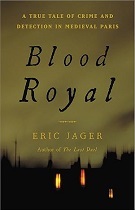
On the night of November 23, 1407, Louis I, duke d’Orléans (1372-1407), younger brother of Charles VI (1368-1422), was violently murdered in Paris, France, by a group of masked assailants who escaped on horseback. Initially, investigators had little information but tasked a local detective named Guillaume de Tignonville (d. 1414) to find Louis’s killers. This book caught my attention due to my fondness for true crime material. The title alone gave me the idea that the material might be macabre, and to a certain extent it is. However, it is also a classic detective story with a plot twist that is shocking and unbelievable. Author Eric Jager takes us back to medieval France in 1407 to unravel a murder that sent chills down my spine.
Prior to reading the book, I was not aware of this historical event and had little knowledge of medieval France. As a result, the book felt like a new lesson in world history. I must warn readers that Louis’s murder is gruesome, and the description of the crime by the author is graphic. The crime is horrific, but what I also noticed was the descriptions of the living conditions for Parisians and the system of rule under Charles and Louis. Frankly, life in the medieval era was not for the faint of heart. Dysentery, pestilence, famine, and warfare routinely threatened people as they did their best to survive each day. After learning about daily life, the story changes when a mysterious man in a robe appears looking for a place to rent. After initial difficulty, he succeeds in renting space from a local family who could not have known that this act would set off a chain of events which lead to the duke’s assassination.
The back story to the duke’s reign is discussed, and it becomes apparent that Louis is anything but ordinary. Further, he has a few vices which earned him his fair share of enemies. And even for the medieval world, some of his actions were both appalling and egregious. The lead investigator de Tignonville finds himself facing a monumental task in finding the duke’s assassins. And here is where the art of solving crimes takes center stage. There are no modern-day forensic tools, this is a classic whodunit with the investigator using the established process of elimination and a laser focus to track down the murderers. But when his investigation takes him to a place he never expected, the story takes a sharp turn which guarantees the fallout will leave no one unscathed.
When the murderer was revealed in the book, I recoiled in shock. But as Jager explains the history between Louis and the person who plotted his death, the pieces of the puzzle fall into place. A deadly cat and mouse game had developed ensured that France would never forget its blood climax. Eventually, the public learns of the plotter’s identity, but what happens next is nothing short of surreal. In fact, it will make you question the concept of justice. Humiliation and absurdity become recurring themes, and even the famed detective is not immune. Complicating matters are personal issues among people in high positions of power, which are centered around fame, money, and infidelity. I guess in that sense, not much has changed today. Louis’s death left the nation in a vulnerable position and when England becomes aware of the turmoil in Paris, all bets are off, and the suspense heightens as conflict arrives at France’s doorstep. The descriptions of violent encounters and their aftermath are raw but also show the reality of those on the losing end of conquest during that time. Invasion was merciless and there was little pity for the losing side. But France did not take British encroachment lying down, and many Frenchmen would answer the call to serve at the Battle of Agincourt (October 25, 1415). Sadly, some people we learn about do not survive the conflict. But their determination to resist Brutal rule in service of France is noted.
Francophiles may possess in depth knowledge of this time in the country’s history. But for the rest of us learning for the first time, Jager’s book is a good place to begin. It is a well-researched and thorough account of a vicious crime that is straight out of a horror film. And that crime brought France to the brink of ruin. It is a case study of the dangers of greed and gratuitous violence. Paris is a different country today, but it too has its dark past which comes alive in the pages of this investigative report which will satisfy the curiosity of true crime lovers.
“Louis’s murder had plunged France into a bloody civil war, leading to a devastating English invasion under Henry V, followed by a brutal foreign occupation that began to lift only with Joan of Arc”.
ASIN : B00CO7FI54
Publisher : Little, Brown and Company; Illustrated edition (February 25, 2014)
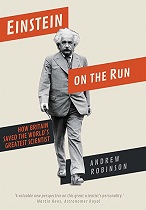 On January 30, 1933,
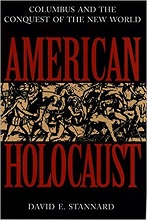 Earlier this week, my boss mentioned during a Zoom office meeting that Columbus Day needed to be re-examined. He had learned of many dark aspects of Christopher Columbus’ (1451-1506) arrival in the Caribbean. The movement to end the celebration of Columbus’ life has gained considerable traction over the past several years. Some states in America have renamed the Columbus Day to “Indigenous People’s Day”, in honor of the Native Americans who sufferend immensly at the hands of Spanish and other European explorers. It is a sound recommendation and one that may even happen here in New York City as it becomes harder for people to ignore the disturbing actions by Columbus and his group of marauders. Many of us learned in school that he was the man who “discovered America”. But is that what really happened? An uncontested fact is that Columbus never set foot on North American soil, making the claim of discovering America misleading. And we know today after many years of neglect by mainstream media, is that indigenous populations were decimated when exposed to the new visitors from abroad. The true story however, goes far beyond Columbus, who was just one of many bloodthirsty religious fanatics who favored violence over peaceful assimilation. David E. Stannard revisits the Columbus story in this eye-opening and chilling account that resulted in a stiff drink and a long moment of silence after I had finished reading.
 I saw this book while browsing online and the cover immediately caught my attention. After reading the cover, I was further intrigued and wanted to know which great war the author was referring to. Needless to say, my curiosity got the better of me and I decided to take the plunge. Author Stephen Bourne has researched the lives of Black soldiers who fought in the British military during the World War I and their communities in Britain during and after the war. Sadly, as the author points out, for too long there was never a major focus on the experiences by Black Britons, who were nearly erased completely from history. But due to efforts by Bourne and others, some of their stories have survived and in this book, they are given their just due for their service in defense of Great Britain.
 The conflict in Northern Ireland between pro-British Protestants and Republic Catholics, is the longest running feud to date. The planned exit by England from the European Union has resulted in suspense and apprehension throughout the rest of the United Kingdom. The Irish have undoubtedly been watching closely as any movement by England will have a ripple effect that will eventually reach their shores. Belfast remains a major tourist attraction in the north, similar to its southern counterpart Dublin, and receives millions of visitors each year. History buffs may recall that Belfast is the city in which Harland and Wolff built the world-famous RMS Titanic for the White Star Line. But behind the fame of the doomed ocean liner, lies a dark side that has taken more lives than anyone could have ever imagined. Belfast and Londonberry (“Derry”) have served as the battlegrounds for the deadly war between Nationalists and Republicans forces. Across Ulster province, six of the nine counties are protected by the British Crown (“the Crown”) and unofficially by the Ulster Volunteer Force and Ulster Defense Association. The Irish Republican Army (“IRA”) stands firm as the opposition force founded to defend the minority Catholic population from what they believe to be the refusal of the Crown to let Ireland become a united country. Kevin Toolis is a journalist and screenwriter born in Edinburgh, Scotland to Irish parents. In this eye-opening and chilling book, he travels back to the country of his ancestors, seeking to understand what drives the men and women of the IRA.
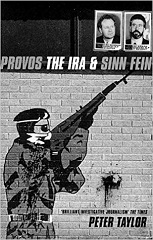 Britain is steadily moving towards the anticipated and dreaded exit from the European Union on March 29, 2019. For Ireland, the move comes with a mix of emotions, including fears of the re-ignition of a conflict that resulted in several thousands deaths over the span of several decades. The IRA has long been recognized as the extreme group responsible for dozens of bombs and acts of terrorism across Norther Ireland and London. But the reality is that many groups were involved in one of the world’s deadliest conflicts. I have been following Brexit since the referendum was held on June 23, 2016. The vote to leave the European Union sent shock waves throughout the world and left many wondering what would happen to both England and Ireland in its wake? I wanted to know more about the conflict in Northern Ireland and decided on this book by author Peter Taylor. And what I found inside its pages, has opened my eyes to a feud that would have dire consequences should it commence again.
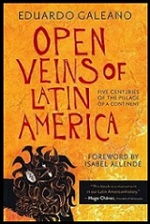 Latin America is home to some of the most beautiful scenery in the world. The Iguazu Falls, Andes Mountains and Patagonia attract millions of visitors annually. The beauty of these and other sites across Latin America stand in stark contrast to the poverty that can be found outside of major cities and sometimes within. In between major railway stations and ports exist slums that remind us of the severely uneven distribution of wealth throughout the continent. Speaking from personal experience, most Americans would be shocked at living conditions that still exist in Latin America to this day. But why does a continent with a history that goes back several hundred years and is home to beautiful people, beautiful languages, great foods and beautiful scenes of nature, continue to suffer from poverty, corruption and exploitation.
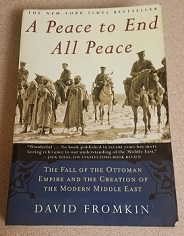 Ideology is sometimes as powerful of a tool as violence and in some cases has been the direct cause of violence. In the Middle East, ideology has maintain a stronghold as it finds itself on a crash course with modernity. Those who live outside the Middle East are at times confused and mystified by the traditions and events that occur throughout the Arab nations. In fact, many of us here in the United States do not know how the modern-day Middle East came into existence. To them, I say that the key to understanding the Middle East is to retrace its history to see why and how it developed into what we know it to be today. David Fromkin lends us a helping hand in this incredible historical investigative account of the fall of the legendary Ottoman Empire and the creation of a region that would never truly know peace.
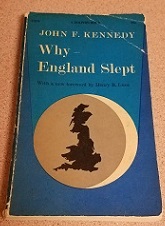 On September 1, 1939, Adolf Hitler’s Third Reich invaded Poland and started the Second World War. In violation of the terms of the Treaty of Versailles, Germany had rearmed itself and under the determination of Hitler, set its eyes upon conquering all of Europe. The looming threat of German domination had been lingering for quite some time before the outbreak of the war. But sadly, many of the nations that would later be opposed to Germany did not think that Hitler would be brazen enough or have the resources to initiate a world conflict. In hindsight, we know that way of thinking was short-sighted and later highly regrettable. The actions of the British government in response to Hitler’s annexation of Czechoslovakia, resulted in the condemnation of Prime Minister Neville Chamberlain and established Germany as a legitimate threat to world peace. The episode has been recalled in history books and documentaries and continues to provoke discussion about how Hitler could have been stopped before his army invaded neighboring Poland.
 FREETHINKING BIBLIOPHILE
You must be logged in to post a comment.