
 On September 22, 1980, the Iraqi military marched into neighboring Iran under the orders of President Saddam Hussein (1937-2006). Tensions between Hussein and Ruhollah Khomeini (1902-1989) had been brewing over control of the Shatt al-Arab river, Iraqi nationalism and Khomeini’s calls for the Ba’ath party to overthrow the Iraqi government. The conflict raged for eight years before a cease-fired was signed in August, 1988. It is estimated that the war resulted in the deaths of nearly 1.5 million Iraqis and Iranians. On both sides, villages were destroyed, leaving thousands homeless and families permanently separated. Children as young as thirteen were conscripted to serve, becoming trained killers before the age of twenty-one. After the cease-fire, prisoners of war remained held in prisons on both sides before they were slowly repatriated. This book is the story of two of those prisoners who survived the war, living to tell their story about the war that changed their lives.
Zahed Haftlang was born in the town of Masjed Soleyman in Khuzestan Province, Iran. His relationship with his father, whom we come to know as “Baba”, is not good and serves as the main catalyst for his flight from home. At the age of thirteen, he joined Iran’s Basij paramilitary and for six years he fought in the war before being captured by the Iraqi army. in 1982. By Iraqi protocols, he should have been executed, but his captor showed mercy and transported him back to base for medical treatment. Along the way, he suffers more injuries at the hands of Iraqi soldiers but arrives in stable condition. He was then joined by other captured Iranian soldiers and for the next seventeen years, he remained there as a prisoner of war before being released in 1999.
Najah Aboud was born in Iraq and grew up in the Shula neighborhood in Baghdad. At the age of eighteen, he joined the Iraqi army and was formally discharged in his early twenties. He was called back to serve at the age of twenty-eight when the war broke out. In 1982, he was captured by Iranian forces and and spent seventeen years as a prisoner of war.
The two stories are interesting and although parallel, they show two different sides of the war. What is clear from the beginning is that neither man wanted the conflict but rather a normal life that would include a career, marriage and children. Their goals are simple and under normal circumstances achievable. In fact, Najah had been operating the Bruce Lee Restaurant before the war destroyed his efforts. The arrival of the war changed all of their dreams each one recounts how destruction settled in as the bombs fell and all hell broke loose. It is at this point in the book that the stories change gears and the ugly realities of the war become vividly clear.
What I noticed in each account is that on both sides of the war, chaos reigned. Neither goes through any type of basic training but rather are thrown into positions and forced to learn through baptism by fire. Their recollections of battle scenes and the horrors of war are graphic and sobering. Make no mistake, they do not sugar coat this part of the book, it is as real as it gets. Eventually, both are captured and their experiences as prisoners of war are where their accounts diverge, showing a very stark difference in treatment of prisoners of war. For Najah, his time served in Iranian camps is quite mild although mundane. He longs for his fiance Alyaa and son Amjad. But for Zahed, the Iraqi camp is nothing short of a nightmare. The descriptions given by him of his time as a prisoner of war are beyond shocking. Inhumane would be an understatement to describe his treatment at the hands of officials, most notably the antagonist Mira Sahib, whose sadistic behavior is repulsive. By the time Zahed is released, he is a shell of himself and man haunted by the war in which he fought. A shining light comes in the form of Maryam, whose entry into his life influences the decisions he makes as love becomes a very real possibility. Najah continues to carry his own own scars as well without any information of his future wife and son.
The realization that both Iraq and Iran suffered tremendously during the war hits home and they both realize that moving abroad is the only way to help their families and themselves. In a twist of fate, both end up in search of a new life in North America. Vancouver, Canada is the destination and fate intervenes in ways that no one could have ever imagined for them both. Upon arrival life is tough for both, but various figures enter the story, each to serve a different purpose in their lives. And even after adjusting to life in the U.S., there is still much they must deal with regarding their former lives as soldiers on the front line.
The ending of the book is beyond moving and puts the finishing touch on two incredible stories. Both express their gratitude to author Meredith May for writing this book and I do too. It truly is an exciting and emotional book to read but crucial in understand the effect of war on all involved.
ASIN: B01IA7TLL8
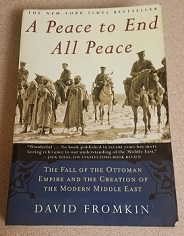 Ideology is sometimes as powerful of a tool as violence and in some cases has been the direct cause of violence. In the Middle East, ideology has maintain a stronghold as it finds itself on a crash course with modernity. Those who live outside the Middle East are at times confused and mystified by the traditions and events that occur throughout the Arab nations. In fact, many of us here in the United States do not know how the modern-day Middle East came into existence. To them, I say that the key to understanding the Middle East is to retrace its history to see why and how it developed into what we know it to be today. David Fromkin lends us a helping hand in this incredible historical investigative account of the fall of the legendary Ottoman Empire and the creation of a region that would never truly know peace.
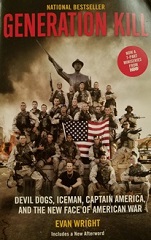 Fourteen years have passed since the United States military invaded the nation of Iraq and deposed its former ruler Saddam Hussein. President George W. Bush had declared Iraq America’s number one enemy and vowed to remove Hussein from power. Hussein fled but was captured in December, 1993 and eventually executed for his crimes against his own people. For many Iraqis and Americans, his death was long overdue and they bid farewell to one of history’s worst dictators. Critics of the war remain and remind us that our military is still in Iraq and no clear permanent solution to establish true democracy is in place. The war is as controversial as those that precede it. But for the men and women that served in the war, their stories are often unnoticed. However in this phenomenal story, Evan Wright brings their story to light for the world to see what warfare was like for thousands of troops. In March, 2003, he accompanied the First Reconnaissance Battalion as the invasion begins. The group becomes known as First Recon and is tasked with clearing town after town until the Iraqi army capitulates. Baghdad eventually falls, Hussein escapes and the marines have done their job for the time being. America celebrates and Bush stands stoically as the armed forces once again succeed. The infantry soldiers return to civilian life or choose to remain enlisted. Their stories fade in time and their names are often never heard of by the mainstream public. But just who are these brave souls and why do they voluntarily put their lives on the line? Wright explores this and more in the book that became a New York Times Bestseller and inspired the HBO hit series of the same name.
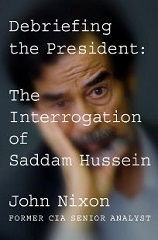 On March 20, 2003, the United States military invaded the Republic of Iraq. The invasion marked the second time US and Iraqi forces faced off in armed conflict. Saddam Hussein, the ruler of Iraq was deposed and fled into hiding. He was captured several months later on December 10, 2003 and three years later, executed by hanging. Over 10 years have passed since his death and Iraq continues to struggle with stability in the face of internal factions divided along tribal and religions lines and the emergence of ISIS intent of claiming their portion of territory across the Middle East. After he was captured, he was debriefed by American forces. The man who many Americans had seen as a powerful dictator on television, was reduced to another captured fugitive on a most wanted list. His appearance before cameras with a full beard and unkempt hear, remains one of the most popular images from that decade. However, it was a stark contrast from the man who allegedly had his mind-set on the destruction of America. But is that was Saddam Hussein really wanted? And what were his thoughts leading up to and during the invasion? John Nixon served as a former Senior Analyst with the Central Intelligence Agency and was tasked with debriefing the fallen dictator. This book is a recap of his career and the conversations he had with Hussein following his historic capture.
 Many years have passed since the U.S. invasion of Iraq but the effects continue to linger. The conflict continues to rear its ugly head and provokes fierce debate. When Saddam Hussein was finally captured and subsequently convicted, many Muslims in Iraq and other nations breathed a sigh of relief. The region continues to deal with social and political issues, but the days of Hussein and his power-hungry sons are long gone. Stories of their inhumane treatment and the barbaric conditions of the country’s prisons are never-ending. Exiles from the country have opened up and revealed what they remember from their time under the brutal Hussein regime. This is the story of Mayada Al-Askari, a divorced mother of two who ran a local printing shop and was wrongfully accused of spreading anti-government. She was arrested, incarcerated and tortured on a regular basis by prison officials determined to find the source of the anti-regime literature. She was eventually released when it was determined that a subordinate of hers was the real culprit behind the printings.
 FREETHINKING BIBLIOPHILE
You must be logged in to post a comment.