
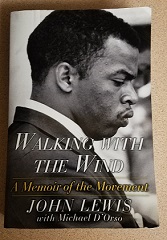
The Declaration of Independence of the then Thirteen States of America, is often looked upon as inspiration for what liberty truly means. The second paragraph drives home the point with the following words: “We hold these truths to be self-evident, that all men are created equal, that they are endowed by their Creator with certain unalienable Rights, that among these are Life, Liberty and the pursuit of Happiness.” The words, when taken at face value, give off the impression of a country in which one can truly be free. But we very well know through history, that the opposite has been true, millions of people, in particular Black Americans have had to endure a long and hard struggle to achieve equality in the United States. Two weeks from today, America remembers the legacy of Dr. Martin Luther King, Jr. (1929-1968) and his view for a United States in which its citizens were truly united. Great strides have been made since Dr. King’s death, but by no means should his legacy be forgotten. Congressman John Lewis (D-Atlanta) was a close associate of Dr. King’s and today he is one of the remaining figures from the Civil Rights Movement. Many of his peers are deceased but today at seventy-eight years of age, he is still serving in the U.S. House of Representatives continuing to fight for what he believes is the direction to the move the United States forward. At first glance he is unassuming but if you study his life and words closer, you will soon learn that this remarkable figure has an extraordinary story to tell about his participation in the movement for racial equality.
When we think of the Civil Rights Movement, John Lewis is typically not the first figure many would have in mind. With his short stature and plain image, he appears to be the loving grandfather on the neighborhood block rather than the activist he was and still is. But just how did a young kid from the country in Georgia go on to be a pivotal figure in the movement that changed America? The answer to that question and many others about Lewis’ life are contained within the pages of this autobiography that is sure to leave the reading asking for more. In fact, I found it increasing difficult to stop reading the book once I had started. With Lewis’ easy-flowing narrative and endless anecdotes about himself and some of the most legendary figures America has ever seen, the book transplants the reader back in time to witness how a cause became a national and world-wide struggle against discrimination.
One of the things that I found likeable about the book is Lewis’ openness about his own shortcomings. He never portrays himself to be above anyone or all-knowing. In fact, he easily recalls the times in which he was lacking in knowledge, overcome with fear of his opponents and reluctance to partake in the cut-throat world of politics. Quite frankly, he has walked the walk and talked the talk, risking his life in sit-ins, marches and voter registration drivers in the deep American south, culminating with the showdown with the virulent racist Sheriff of Dallas County, Alabama, Jim Clark. (1922-2007). In fact, the events Lewis recalls, are also discussed in the book by another of his close associates, Ralph David Abernathy (1926-1990). His autobiography and memoir of the movement was appropriately titled And the Walls Came Tumbling Down . Both authors played an important part in those events and do not fail to explain in full detail how they developed and why they were important. I highly recommend that book as a complement to Lewis’ story.
Similar to Abernathy’s book, King is a critical character in the story and both authors show how important King was to the movement at hand. What is also revealed, particularly here is the complicated power struggles within the Southern Christian Leadership Conference (SCLC). Infighting, jealously and egos all play their parts in the story revealing the sometimes fragile relationships at the base of the movement. Misogyny, homophobia and even racism against White Americans became the tools that turned the SCLC into a shell of its former self. The assassinations of the 1960s convinced many that nothing could ever be the same again. Lewis addresses all of them and his relationship to several of the late figures. Students of the movement will recall that Lewis eventually became part of the campaign by Robert F. Kennedy (1925-1968) for President of the United States. His memories of Kennedy are touching and is yet another example of the extreme sense of loss that following in the wakes of the assassinations that became all to common in the turbulent 1960s.
Today it is nearly impossible for youths to imagine what life was like for Black Americans during Jim Crow and later, even as President Lyndon B. Johnson (1908-1973) pushed forward an earth-shattering civil rights bill. As Lewis puts it, raw fear was a daily reality in a time where social justice warriors sometimes died early deaths and authorities used every trick in the book to maintain a strict social structure of power. His ability to fair in the book and examine every situation from all sides has earned him followers and detractors but here, Lewis explains himself, leaving it up to the reader to digest his words and perhaps use them in a positive way. What I found equally important as the story at hand is his messages to Black Americans as well. Change in society must come from all places, and only then can a nation truly move forward. John Lewis has spent the majority of his life fighting for equality on behalf of those who sometimes have no other voice. His eyes have seen some of the most important events in history and he is a living testament to the strong character common to his peers who became world-respected figures in their own right.
If you are looking for a good read about the Civil Rights Movement, this is a fine place to start where you can follow John Lewis as he is walking with the wind.
ISBN-10: 9781476797717
ISBN-13: 978-1476797717
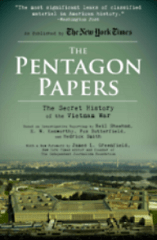 The names of the 58,000 Americans who died in the Vietnam War that are found on the memorial in Washington, D.C., are a reminder of a conflict deemed by many to be the worst the United States has ever been involved in. The withdrawal of U.S. forces in March, 1973, brought a sigh of relief to the American public which had long grown tired of a war with no end in sight. The dark truth which we now know is that we did not by any means accomplish the mission. And the mighty American war machine failed to secure a victory. I have met many veterans of the war and have an uncle who served. What I recall most about all of them is that they do not speak of their experiences while in combat. I know the memories are there and for some of them, they were unable to leave parts of the war behind. Today we call it PTSD, but back then you simply found a way to move forward in life. But why were they in Vietnam to being with? Was the domino effect really a threat to the United States?
 FREETHINKING BIBLIOPHILE
You must be logged in to post a comment.