
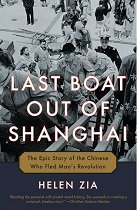
 Throughout history, war and destruction have been constant reminders of the fragility of peace. On September 1, 1939, Nazi Germany’s army invaded its neighbor country Poland and ignited the Second World War, the conflict that changed the world in ways one could have imagined. Adolf Hitler’s (1889-1945) quest for world domination inspired other nations to launch their own offensives. National Fascist Party leader Benito Mussolini (1883-1945) plunged Italy into the conflict and in Japan, Hirohito (Emperor Shōwa)(1901-1989) initiated the Japanese campaign to completely control all of Asia. Prior to the conflict, China found itself the target of Japanese invasion and amid internal civil war between the Chinese Communist Party led by Mao Zedong (1893-1976) and Kuomintang under the control of Chiang Kai-Shek (1887-1975). While Hitler’s army was marching across Europe, death and destruction accelerated across Asia and in China, the horror escalated to unthinkable heights. Chinese who were able to leave, fled their homes in search of a new life. This book is the story of that exodus and four individuals who risked it all for freedom. The lives of Benny Pan, Ho Chow, Bing Woo, and Annuo Liu come into focus as examples of the struggle Chinese faced as they sought to escape China before Mao’s army seized control over the entire country.
As I read the book, I noticed how the four stories are told in an alternating pattern. The book moves chronologically but the author switches between each story over time. Some readers may find this to be challenging as opposed to one section telling the story from start to finish of one person. However, the format here works because the author does not solely tell their stories but the history of Japanese occupation and the dark reality of life in Shanghai during the war. The story of Shanghai is often neglected but in 1937, the Japanese made it the eye of their rage and when Japan’s army did invade, the misery under which Chinese lived increased exponentially. The atrocities conducted by Japanese units is documented and the story of Nanjing remains one of its darkest parts. However, the Japanese had accomplices and the actions by Chinese doing the bidding of Tokyo will cause readers to shake their heads is disgust or disbelief. For young Benny Pan, the reality of aiding the Japanese hits home when he learns more about his own father. I am sure that what he learned became a heavy burden to carry for years to come.
On the opposite side of the spectrum, Chinese remained loyal to their homeland but had no desire for communist rule and had hope that Chiang Kai-Shek would defeat the communists. Mao proved to be a bigger foe and more popular figure than expected. Annuo Liu is still a young girl when her father answers the call to aid the Nationalists in the fight against the communists. Her mother becomes the backbone of the family, and their story of survival highlights the role thousands of women found themselves in as their husbands were called to fight and defend China from enemies within and abroad. Annuo’s story is nothing short of miraculous. Her father makes appearances throughout the book, but his experiences changed him permanently and his daughter who ages on her own begins to resist his rule as a new life with personal independence becomes possible. The dark reality of Communist rule settles in and for Annuo, the writing is on the wall and America becomes destination number one. While I read her account, I could not help to think how I would have felt to see my father walk out the door to parts unknown while my mother struggles to provide with little to no resources. The human spirit is one of the strongest things I have ever witnessed, and this book is proof.
Chinese who did escape Shanghai faced uncertain futures abroad such as Ho Chow who arrives in America as a student and Bing who is matched with a suitor that facilitates her arrival in America. Each took a different path to the United States, and both faced exile back to their country of birth. However, America is the land of opportunity and through fortune, determination, and sacrifice, they establish permanent homes in the land of the free. Ho Chow’s story became my favorite and his unwavering focus on studies and survival are nothing short inspirational. Of course, there is a dark side to their move to America and that is the prejudice awaiting Chinese immigrants in America. Today it may be hard to imagine but at one time, immigration from China severely restricted or prohibited as shown in the Chinese Exclusion Act of 1882. America was certainly an improvement from Shanghai but far from paradise and the Chinese that did move to the United States faced new battles such as learning English, navigating the immigration system, and combating anti-Asian feelings due to the events of Pearl Harbor and allied efforts to defeat the Japanese military. But they persevered and made America their home. For Benny Pan, leaving China for good came after significant hardship and personal sacrifice after Mao’s Communist Party took over the nation. His struggle exemplifies the fear and paranoia that arrived with the communist regime. The Chinese Communist Party made it clear that opposition was permitted and during Mao’s reign, millions perished through his failed “Great Leap Forward” and “Cultural Revolution”. The invasion of Japanese military units and later oppression by communists, resulted in the separation of families, friends and colleagues, many of whom never saw each other again.
Chiang Kai-Shek fled after suffering defeat and went on to form the nation of Formosa known as Taiwan today. The autonomy of this smaller island nation draws the ire of Beijing which remains determined to force it into submission. And in the process, it reinforces why so many of its people left China more than sixty years ago. But the Generalissimo was not above reproach himself and the author reveals several secrets about the Nationalists that caught my attention. Some Nationalists were not as “patriotic” as they appeared. Dark alliances were formed under the guise of resisting “communist influence”. China became a hotbed of discontent on all sides, and no one was safe. Life became cheap and death a daily reality. Even the suspicion of being a “leftist”, “nationalist” or “Japanese puppet” was enough to induce violence and incarceration. Helen Zia beautifully brings the past alive and shows the panic people faced as everyone worried about making the last boat out of Shanghai. Highly recommended.
“A professor in China told me that, in modern China, everyone’s story is a tragedy. Unfortunately, the same may be said about those from many other regions of the world. My deepest appreciation goes to all who struggle to overcome the scars of exodus; their lives are cautionary tales that show why such tragedies of history must not be repeated.”
ASIN: B07CR2CMGR
 On October 1, 1949, the People’s Republic of China was officially established as the ruling party in the nation. Mao Zedong (Mao Tse Tung) 1893-1976) assumed the position of Chairman, a title he held until his death in 1976. The Chinese Communist Party continues to rule the country and imposes its will on Hong Kong. Taiwan remains independent but is often the source of friction between Beijing and western powers. The story of the Chinese communists is a highly intricate tale that is often left out of discussions regarding the aftermath of World War II (1939-1945). Edgar Snow (1905-1972) spent twelve years in China and was able to observe the emergence of the Communist Red Army determined to liberate China both from Japanese imperialism and the control of the White Army, led by the Kuomintang Government (KMT) headed by the Generalissimo Chiang Kai-Shek (1887-1975). This book is a collection of those memories that take readers back in time to the era when Mao Zedong was beginning to establish himself as a leader and China found itself in the middle of political, economic and social turmoil.
 On December 26, 1991, the world watched in shock as the Union of Soviet Socialists Republics (USSR) dissolved, splitting the once mighty Soviet Union into fifteen separate nations. I vividly remember watching the news broadcasts and seeing the flag of the Soviet Union lowered for the last time. It was the end of an era highlighted by the Cold War in which Washington and Moscow viewed each other as a threat to world peace. Paranoia, suspicion and espionage propelled the two to the brink of nuclear war on several occasions. In October, 1962, the world watched in gut-wrenching suspense as the Cuban Missile Crisis heated up and threatened to be the spark that ignited the next world war. President John F. Kennedy (1917-1963) and Soviet Premier Nikita Khrushchev (1894-1971) found their selves in a situation that could have resulted in the physical destruction of half the planet within a matter of minutes. Diplomacy eventually prevailed through the use of back door channels encouraged by the realization of figures in both governments that the looming showdown would produce no winners. Tensions between the two super powers cooled but never full subsided and as the dissolution of the USSR played out on television, Washington closely monitored the events while re-examining its global position as Russia emerged from the post-Soviet empire as the country to watch. Twenty-eight years later, the USSR is still recalled as one of the greatest powers in history. Its fall was earth shattering and left so many wondering, how and why did it happen?
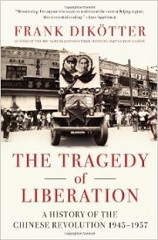 Today, the People’s Republic of China continues to feel the effects of the policies of it most popular leader, the late Mao Zedong (1893-1976). Known as Chairman Mao, his successful campaign against the Nationalist led by Chiang Kai-Shek (1887-1975) set the stage for the founding of the People’s Republic of China on October 1, 1949. Mao ruled the nation until his death on September 9, 1976 at the age of eighty-two. During his tenure he came a controversial figure and is credited with causing millions of deaths through the failed policies of collectivization and the infamous “Great Leap Forward.” The aura of promise and hope that surrounded the commencement of his administration subsided as millions of Chinese endured long periods of poverty and famine while Mao enjoyed unlimited perks through his role as Chairman. Propaganda is a power tool used by the darkest of dictators to enforce their will on the masses of people they wish to control. An official story of triumph supported by an unwavering commitment to the revolution by ordinary men and women, helped cast an illusion of a progressive new China, modeled on its Soviet counterpart. In reality, the story is far different and in some cases, horrific as can been seen in this study of the early years of the Chinese Revolution by Dutch historian Frank Dikötter. (1961-)
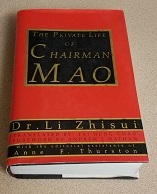 On September 9, 1976, Mao Zedong (1893-1976) died in Beijing, China at the age of eighty-two. The late Chairman served as ruler of the People’s Republic of China following the defeat of Chiang Kai-Shek’s Kuomintang (KMT) party in 1949. The People’s Liberation Army, under the guidance of Mao, pushed the KMT to complete physical exhaustion before claiming victory. To some, Mao represented the face of a new frontier for the people of China. To others, his regime was viewed as an expansion of Soviet influence as Communism became embraced in Europe and Asia. His failed policy of the Great Leap Forward resulted in mass starvation and is viewed as an epic failure in planning at the highest levels. Over time, many became disillusioned with the “Cultural Revolution” as the reality of a Communist government drearily set in. Mao, seemingly impervious to the deadly effects of his actions, continued to live the opulent lifestyle he had created for himself as the new leader of China. And the “Closed Door” policy afforded him with a shield to protect his empire from the prying eyes of the western hemisphere. But Mao’s meeting with President Richard M. Nixon in 1972 offered a glimmer of hope that the two world powers could form a bond that would in turn bring the two countries together through mutual understanding. Today relations between China and the United States remain tense and show no signs of changing in the foreseeable future. China continues to go through social change but the nation remains haunted by the legacy of Mao Zedong.
 FREETHINKING BIBLIOPHILE
You must be logged in to post a comment.