

I have often heard the saying that “desperate times call for desperate measures”. In times of war, I am sure it holds true on more occasions that can be counted. During World War II, the threat of German infiltration into American society was very real and sabotage a critical issue. Foreign enemies knew that the key to weakening America was covert tactics that allowed access to its shores. In New York City, the waters in and around the Big Apple were especially vulnerable and critical. But there was one problem. The military lacked crucial intelligence to stop foreign subversives from conducting their missions. That all changed with a plan that became known as “Operation Underworld“. To this day it is still taboo but as World War II raged, Allied commanders used every tool at their disposal to defeat the Axis powers. And part of that toolbox was organized crime figures whose legacies are cemented in history.
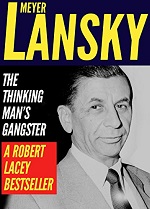
The author provides a back story to the events to come by revisiting the actions of President Franklin D. Roosevelt (1882-1945) which focus on ethnic groups suspected of being loyal to Italy, Japan, and Germany. Military officials were aware of sabotage in waters along the Northeast coast but powerless to stop it and espionage. Soon all options are on the table and the story shifts gears when the Office of Naval Intelligence (“ONI”) steps up and introduces its top-secret plan that is executed by Commander Charles R. Haffenden. But first Haffenden needs a point of contact and finds his man in mobster Joseph “Socks” Lanza (1904-1968). The Luciano Crime Family enforcer also ran the Fulton Fish Market and his control over the area provided an ear to the streets which comes into play as the plan is put into action. His control over the rackets also provided an ear to the streets and the ONI was determined to use this asset. However, Lanza is not a mob boss and has limited power in his section of Manhattan. The ONI soon realizes that to aid the war effort and strike a blow against the Axis powers, it needs the help of the big names in the game. One of these people is Mafia titan Charles “Lucky” Luciano (1897-1962), who had been convicted on June 7, 1936, of compulsory prostitution and sentenced to thirty to fifty years in prison. However, even behind bars, Luciano still controlled the family that carried his name. But Haffenden could not walk into the prison and speak to him directly. The covert nature of the plan required shrewd ideas to provide cover and the ONI enlisted the help of Luciano’s lawyer Moses Polakoff (1896-1993) and the man known as the “Mob’s accountant”, Meyer Lansky (1902-1983).
Black takes us back in time and behind the walls of the Clinton Correctional Facility in Dannemora, New York where we learn of the harsh conditions surrounding Luciano’s incarceration. The prison is dark, cold, and far removed from Luciano’s former residence at the Waldorf Astoria hotel. But a blessing arrives when Polakoff mentions that the government needs the mob’s help, and it might help Luciano get out of prison earlier than expected. But the gangster is still not fully convinced but Lansky’s presence and advice helps sway him to the Allied cause. And to his benefit, Luciano is moved to Great Meadows Prison in Comstock, New York, closer to New York City and in far better condition. After he agrees to help the ONI, the web of cooperation is formed that remains intact through most of the book.
What is interesting about the book is while the war is raging, Luciano and the other mobsters are doing their part to help the ONI while at the same time conducting their usual mafia related business which includes murder, narcotics, and all sorts of mayhem. It could be argued that the book is not just a story about the secret ONI plan but also a good discussion of the mob’s presence in New York City during that time. Eventually the Axis powers collapse and the war ends. But Luciano remained in prison. The remaining parts of the book discuss his attempts to be released from prison by the same man who convicted him, former New York Governor, Thomas E. Dewey (1902-1971). Although the two had no personal connection, I found it interesting that they could not escape each other as their lives proceeded in different directions. But Black does show that Dewey had moved on from his prosecutor days and Luciano had become a memory for him. As for Luciano, Dewey would always be the man who wrecked his life and was the reason he eventually was deported back to Italy. The saga behind Luciano’s expulsion from America is re-told here in gripping detail with famous mobsters Joe Adonis (1902-1971) and Frank Costello (1891-1973) making an appearance in the story. And admittedly, it is hard not to like Luciano, but I also noted that he was a career criminal who had no issue giving orders for someone’s death and going against the code of the streets when needed such as in the feud with Vito Genovese (1897-1969). But his importance to the Allied effort cannot be overstated.
As one would expect, the story of Luciano’s help leaks out, but I was not prepared to learn how far the ONI went to destroy any trace of government contact with the mob boss. The final days of Haffenden’s career left me speechless. And had it not been for a decisive action by Dewey to clear his own name and the actions of Manhattan District Attorney Frank Hogan (1902-1974), parts of the story may have been lost forever. Of course, some parts of Operation Underworld were lost forever but the record still stands, and the story told within is sure to be of interest to history buffs with an affinity for World War II. The war has long been over, and Luciano has been gone since 1962, but it is an incredible story and part of New York City history. Highly recommended.
ASIN: B09RGLWNKW
 In September 1971, reputed mobster
  FREETHINKING BIBLIOPHILE
You must be logged in to post a comment.