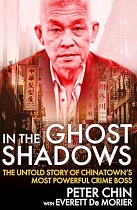
In the Ghost Shadows: The Untold Story of Chinatown’s Most Powerful Crime Boss – Peter Chin with Everett De Morier

The Chinatown section of Manhattan in New York City has always had an aura of attraction and mystery. The Cantonese and Mandarin languages spoken by its inhabitants have provided the neighborhood with a form insulation which kept the eyes of outsiders at bay. But for those who venture into the area, there is an abundance of outstanding cuisine, endless shops, and the realization of a city within a city. I personally have walked the streets of Chinatown as an eager shopper and have driven its streets on my way to the Manhattan Bridge to return to Brooklyn. But what many are unaware of is the dark history of Chinatown and the powerful crime bosses who once ruled with iron fists. This book is the story of the former boss of the Ghost Shadows gang, Peter Chin. Readers may recognize Chin from his appearance on the YouTube channel called Vlad TV. Here, his unbelievable story is presented by author Everett De Morier as told to him by the former crime boss. And it is a deep dive into a world most New Yorkers did not know existed.

You may be wondering why a former crime boss decided to tell his life story. It is a good question, and the long road taken by the author in telling Chin’s story is explained. Chin could take what he knows with him to the grave when he takes his final breath. But a suggestion by a former New York City Police Department (“NYPD”) officer plants a seed in his mind which results in Chin agreeing to tell his story. And once he begins, the book becomes a roller coaster ride as we run the streets of Chinatown and explore the criminal underworld. The story begins in China but when Peter is eight, the family emigrates to New York City where they are reunited with his father Bark Chin, who forms a dark cloud over the home. Also, he makes an appearance late in the story in a role that is interesting and puzzling. Father and son did not have a good relationship, and what Chin recalls left me shaking my head at times. Any questions regarding the importance of a strong father in the home are answered here.

Sadly, Chin’s personal life provided the perfect pretext for his gravitation towards the streets. And through a series of events, he soon finds himself running with the Ghost Shadows. But he quickly learns that Chinatown is a hotbed of turf battles and throughout the story we see the rise and fall of other gangs such as the White Tigers, Flying Dragons under Michael Chen (1950-1983) and the Hip Sing Tong led by the Godfather of Chinatown Benny “Uncle Seven” Ong (1907-1994). Gunfights, fistfights, back door deals and homicides are on the menu as Chinatown turned into a battle zone. While I read, I was taken back because as a New Yorker, I know that geographically, Chinatown is not as big as one might expect. Encounters between gangs often occur due to their proximity to each other. And when they cross paths, the tension escalates at breakneck speed. Chin finds himself a target more than once in the book, and one incident leaves him at Downtown Beekman Hospital for an extended stay. But despite the dangers, Chin continues to rise to the top and along the way as he makes friends with powerful crime figures and others holding access to vast amounts of wealth. It is the type of gangster story Hollywood loves to produce but this is non-fiction and Chin’s life was on the line daily.

There is one area of the story that I wish had more content and that is Chin’s marriage and his son Anthony. His wife and son are mentioned but rarely, and this is likely because Chin was telling the story and chose to keep them out of it. In fact, the author does explain that Chin kept them hidden in Brooklyn for their protection while he conducted business on the streets. As the cash rolls in and he gains fame and respect, his exposure to law enforcement also grows, drawing the attention of the NYPD’s Jade Squad and the Federal Bureau of Investigation (“FBI”). Readers will see that his fall is inevitable but there is still time before that happens, and that means more violence on the streets of Chinatown. The swift pace in which situations escalate gives new meaning to the term “on sight”. Actions are instant and deadly, with shocking displays of rage and destruction which claim innocent lives and places Chinatown’s gangs in the crosshairs of prosecutors who had been given a tool unlike anything courts had seen before: the Racketeer Influenced and Corrupt Organizations Act, simply known as “RICO”.  This new law would devastate criminal organizations across the country and takedown Chinese gangsters, the Italian Mafia and other crime figures who remain behind bars.

Chin’s fall, which we know is coming eventually does but I surprised at the sentenced he received and did not anticipate the judge’s ruling. It hits Chin like a stack of bricks, but jail proves to be the place he needed to be. His time in prison is interesting and shows that old habits die hard. The seasoned gangster moves like you would expect inside prison walls revealing that the world within its walls has its own structure which outsiders would not understand. However, prison also proves to be a turning point when he meets an inmate who gives him two gifts which change his life permanently. And when readers reach this point in the book, the realization that Chin rose to surreal heights without a full formal education will set in. It did for me. And it is here that his redemption begins. Luckily for him, there is life after prison which we learn of towards the end of the book when he is reborn and comes full circle. And in an ironic twist of fate, a prosecutor who once chased him, finds himself facing criminal charges. Further, the prosecutor in Chin’s case would later gain infamy for her role in a case which shook New York City to its core, and later revealed disturbing questions of misconduct, bigotry, and wrongful prosecution. In this story, Chin rides off into the sunset, but his story is not over, and he has many years to live and can look back on his time as the leader of the Ghost Shadows. If you love history and the stories from New York City, you will love this.

Anyone who thinks criminals don’t follow the news coverage about them is dead wrong. They follow it avidly. That’s how Chin’s gang came by their name. A newspaper reporter had written a story about their crimes and concluded with a bit of a poetic flourish: They came in like a shadow and left without a trace . . . like a ghost shadow.”

ASIN ‏ : ‎ B0D2SNJV9Z
Publisher ‏ : ‎ Citadel Press (January 21, 2025)

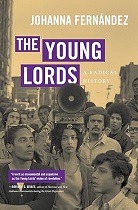
The Young Lords: A Radical History – Johanna Fernández

Lords

In two weeks, Black History month will commence and highlight the legacy and story of Black Americans. The achievements of  America’s black citizens will come into sharp focus, but the story is far from monolithic. In fact, within and around the movements were organizations who modeled themselves after the Black Panther Party of Self-Defense, Student Non-Violent Coordinating Committee (SNCC) and others. Among those groups was the Young Lords, a primarily Hispanic America organization which originated in the windy city of Chicago before spreading to other places including my hometown of New York City. This is their story by author Johanna Fernández and the radical history they created in the struggle by Puerto Ricans for their place in American society.

Although not necessary, I do recommend two other books which could serve as primers for the story of the Young Lords. The first is ‘War Against All Puerto Ricans: Revolution and Terror in America’s Colony‘ by Nelson A. Denis and the second is ‘Fantasy Island: Colonialism, Exploitation, and the Betrayal of Puerto Rico‘ by Ed Morales. Both are invaluable tools in understanding the current-day state of Puerto Rico. I also recommend ‘When I Was Puerto Rican‘ by Esmeralda Santiago. The story here originates in the City of Chicago, where a young Puerto Rican man named Jose “Cha Cha” Jimenez reaches his breaking point after witnessing the discrimination and exploitation of Puerto Ricans who relocated to the mainland United States from their Caribbean island. A native of the island himself, Jimenez understood the experiences of others who had to make a new home in cities they were unfamiliar with. Added to their despair was the social climate of America during the turbulent 1960s when America found itself going through profound change.

I was fascinated learning about Jimenez’s story, and the transformation he undergoes as he becomes aware of the plight facing his neighborhood. The author does an excellent job in allowing the reader to view things as Jimenez would have in the late 1960s. We learn that his mother, who is from an older generation, sees things differently and the two are sometimes at odds over how to move forward when others see them as a threat. His path to the outspoken Lords figure started early. In fact, a Fernandez explains:

“Cha Cha Jiménez had been a Young Lord since the age of eleven. He was among a group of seven youths—six Puerto Ricans and one Mexican—who had organized the gang in 1959. The others included the group’s unofficial leader, Orlando Dávila, as well as Benny Perez, David Rivera, Fermín Perez, Joe Vincente, and the Mexican-descended Sal del Rivero.” 

It is surreal that at the age of eleven, Jimenez and others were envisioning their path when other kids would typically be signing up for little league baseball or making plans for summer camp.  Further, the author does not shy away from another complicated issue: race within Puerto Rican culture itself.  The identity of Afro-Puerto Rican is a major component of the story that actually propels the Young Lords forward. However, it is also taboo, but in the book, the members of the Young Lords are not afraid to confront it and use it as a tool for solidarity. For Jimenez and others like him, they had to confront the issue of being labeled a “minority” while also exploring their heritage. It was a journey in search of two identities.

As the story progresses, the Young Lords grow in size as other young Puerto Ricans are drawn to their message. However, the issue of class comes up, and there is friction between the older middle-upper class Puerto Ricans and the young bearded revolutionaries who were reading the works of Chinese Communist Party leader Mao Zedong (1893-1976), Argentine revolutionary Ernesto “Che” Guevara (1928-1967) and others. The movement could not be contained, and the story picks up the pace when a new chapter for the Lords is formed in New York City. Taking the cue from Chicago, the New York chapter moves full speed ahead in terms of organization and operations that caught the attention of the entire city. The story left me speechless at times and I also felt a tinge of embarrassment for not knowing the Young Lords story and their place in the history of the Five Boroughs. From the seizure of the First Spanish United Methodist Church to the occupation at Lincoln Hospital, the Lords were determined to make their voices heard and did. The unbelievable events are re-told in vivid detail and highlight the organizational skills and commitment by the Lords to their cause. Today both episodes are footnotes in history but in 1970, the New York Police Department took them very seriously.

Following the events of 1970, the story takes a sharp turn when the group shifts its focus from New York to Puerto Rico itself. How and why the decision was made is covered in the book, and as I read, I was confused  at the change in course. Of course, Puerto Rico was the heart of the group even with twenty-five percent of the members being Black Americans. However, the island was very different from New York City and Chicago, and that becomes clear in the story. It is not long before the Lords re-focus on New York but by then, the Federal Bureau of Investigation (“FBI”) had them on their radar. And like the Panthers and other left-wing groups, the infamous COINTEL program found its mark. Before the bureau was done, shockwaves traveled through the organization all the way up the chain of command. The story of party official Gloria Fontanez and her marriage are an example of how far the bureau had infiltrated the group. It can be argued that this was the beginning of the end for the Young Lords. However, their impact could not be ignored, and for thousands of Puerto Ricans, they instilled pride and hope, that they too will move forward in life.

Upon finishing the book, I sat back for a minute to digest what I had read. The Young Lords had accomplished what no one imagined, in such a short period of time. Aside from the public actions which caught the attention of City Hall, they had also started a newspaper called ‘Palante’. They understood that knowledge is power, and to learn, reading is a necessary tool. To drive home the point about Palante and its creation, Fernández explains that:

“With little to no experience in newspaper production or training in journalism, the approximately ten young radicals who were on the Palante team at any given time worked doubly hard to produce one of the few bilingual newspapers of the period—no small accomplishment for an organization with few members who were fluent or formally trained in Spanish.”

The success of Palante was no small feat but by 1971, the Young Lords’ offices in New York City were gone. We learn of the split between the New York and Chicago chapters of the organization which is eerily similar to the fallout within the Black Panther Party. Party expulsions, deaths and exodus for other reasons only served to deplete the ranks of the once formidable revolutionary party. But it does not diminished the heights the Young Lords reached in a time when being Puerto Rican was seen as below-human and few understood the pride that came with being Boricua. If you want to know more about the Young Lords and New York City History, this is the place to start.

ASIN ‏:‎ 1469653443

Before the Fires: An Oral History of African American Life in the Bronx from the 1930s to the 1960s Before the Fires – Mark Naison and Bob Gumbs

BronxThe Bronx, New York is known as the birthplace of hip-hop music and the home of the New York Yankees. It is also a melting pot and home to immigrants from all parts of the world. And the history of the Bronx is as storied as the people who call him home. During the 1970s, New York City had ventured into its darkest days with the threat of bankruptcy and crime rate nothing short of astronomical. In the Bronx, an epidemic of fires emerged but not solely due to arson. In fact, arson played a minor role in the plague of fires that struck the Bronx. Regardless of how and why the fires started, the tragedies altered the Bronx landscape and left its people wondering where things went wrong. However, life in the Bronx was not always as perilous. Authors Mark Naison and Bob Gumbs conducted interviews with former residents of the Bronx to learn what life was like before the fires and drugs devastated communities.

Most of the people interviewed are Black Americans but there is one interview with a former resident who was white. The participants range in age and occupation, but all called the Bronx home, with a heavy focus on the Morrisania section. Among the speakers are a relative of jazz legend Thelonious Monk (1917-1982) and the sister of NBA legend Nathaniel “Tiny” Archibald. Their stories are interesting but there are numerous interviews in the book which are highly informative. What struck me as I read is the diversity that existed in the Bronx at a time when racial segregation in America was legal and enforced. In fact, the Bronx during the 1930s to the 1960s could serve as the blueprint for the United Nations. Speaker after speaker comment on the diversity they saw in a neighborhood home to Jews, Irish, Italian, Blacks, and anyone else who needed a place to live. Of course, there were racial issues on occasion and the presence of gangs cannot be overlooked. Names such as the Slicksters, Savage Nomads and Fordham Baldies are cemented in New York City gang lore. The dark elements of life in the Bronx are discussed but the speakers are unanimous in the position that the racial violence found in American South was unknown to the Bronx. That is not to imply that everything was perfect. In fact, during those times Crotona Park and Arthur Avenue were off limits to blacks as is discussed by more than one speaker. And though white flight did occur, the speakers also fondly remember their white neighbors with whom they created memories to last a lifetime.

There is a dark side to the interviews and that takes the form of heroin which floods New York City and turns the Bronx into a nightmare. The rise in drug addiction is the most difficult of the stories in which it is mentioned. Thankfully, none of the speakers suffered from addiction but they recall how they saw their neighborhoods change as drugs flooded the streets. The stories are heartbreaking and an eerie premonition of the current opioid crisis in America. Fentanyl has the possibility to repeat the events in the Bronx a thousand times over across America, and in some places it has already started. The influx of heroin resulted in the exodus of long-term residents resulting in a change in demographics, income level and quality of life. However, today the vacant lots are gone, and the fires in the 1970s ancient history to the younger crowd. But there was a time when the Bronx hit rock bottom and was one of the worst parts of New York City. My borough of Brooklyn had its own issues and in East New York, we were able to relate to the Bronx as we too saw the influx of drugs and escalation of violence that turned the streets into war zones.

Another thing I noticed as I read the stories was the sense of community that once existed. The Morrisania section was its own world with close bonds and unlocked front doors. The image that I formed in my head is far removed from the reality of life in the Bronx today where doors must be locked. The carefree environment discussed by the speakers sounds too good to be true, but it was a different time with different mindsets. The loss of community and the indifference on the streets today is puzzling to the older residents as can be seen in the interviews. The Bronx they knew is long gone, having been replaced by new tenants whose experiences and lives have taken different paths to the city that never sleeps. However, New York and America by large was built by immigrants and that is also evident in the interviews.  The men and women interviewed in the book had been away from the Bronx for extensive periods of time, but they are all clear about their love for the borough known informally on the streets by its nickname “the Boogie Down Bronx”. If you like New York City history, this will pleasantly surprise you.

ASIN: B01J86B22Q

Unchosen: The Hidden Lives of Hasidic Rebels – Hella Winston

winstonSeveral years ago, I accompanied a friend as she undertook the task of burying her late mother who had passed after several years of ill health. The cemetery is for followers of the Jewish faith and as part of the internment process, I was required to wear a yarmulke and spread dirt over the grave. The rabbi explained the meaning behind the acts, and the presence of others in attendance who did not know her mother but came out after hearing of her death. That day I was a witness to a side of Judaism I was not previously aware of. My friend was not Hasidic but strongly identified with her Jewish roots. Today when I drive through parts of Brooklyn, I take notice of the Hasidic Jewish communities in Crown Heights, Borough Park, and Williamsburg. To the public, the people of these sects are elusive and mysterious. Author Hella Winston stepped into these worlds to learn the truth about those who become unchosen.

It is imperative to recognize that Jewish is not a monolithic term. In fact, the divisions between sects, mainly the Satmar and Lubavitch, should not be overlooked. However, what is uniform is their commitment to preserving their faith and the importance of never forgetting the name of Adolf Hitler (1889-1945). The Third Reich’s determination to exterminate Europe’s Jewish population had an unintended result here in New York as Winston points out. Readers will not be surprised at what they learn but what the author does reveal, will put the Hasidic community’s cohesiveness in a clearer perspective. The horrors of World War II cannot be understated and as Winston notes,

“One of the most striking things I came to understand during the course of this research is the power of the Holocaust, and the history of Jewish suffering in general, both in the actual lives of some Hasidic people and in the imaginations of these communities as a whole. There is, of course, the plain historical fact that the Hasidic communities that exist in America today were started almost entirely by refugees from World War II”.

Of course, the Hasidic culture we see does not exist solely because of the war. The scriptures impact every aspect of daily life and readers familiar with orthodox customs are aware of the restrictions in place around the Sabbath and during holidays. The individuals she became acquainted with revealed deeply personal parts of their lives and provided information that I learned of for the first time. One section that stands out is the view held towards Theodore Herzl (1860-1904), considered to be the father of Zionism. Brooklynites may recall that a street in the Brownsville section of Brooklyn bears his name. The reason for the view of Herzl held by the Hasidim is quite simple and in the overall context of the book, makes sense. But there is far more to the story than just Herzl and the people we are introduced to are anything but orthodox.

Winston picked members of both genders and from various families and each story has similar tones but are in fact different. I did observe that although they wanted a different life, they still loved their families and the communities they grew up in. The struggle with faith is not an easy one. Critics online have blasted the book as a condemnation of the Hasidim. I disagree and did not get that feeling while reading and have no ill will towards them. Admittedly, there were customs that I would not want to adhere to but it is not for me to say they are right or wrong for others. And I feel that anyone reading this book has to do so with an open mind. There are however, parts in the stories of the women that will make you scratch your head and have feelings of disapproval and/or disgust. These are the sections that bring to light the reality for Hasidic women. We pass them on the street, on the subways and maybe even the park, but the truth about their daily lives is carefully guarded. Whether the women are happy with their lives or not is for them to reconcile but if we digest what is contained here, it is apparent that not all are content and the number of women who yearn for more out of life could be higher than we think. The same applies for men due to the number of readers who contacted Winston after the book’s publication.

The book’s star is undoubtedly Yossi, whose story is a roller coaster ride in itself. But for all that we do learn about inside the community, there is a realization to be had for those who venture outside of it; none are prepared for the secular world which might as well be another planet. And this is one the tragedies of the book. The speakers have decided to venture in the secular world but have no real foundation to do so as the majority of their lives was spent inside the community which offered not only the resources they needed but security as well. The streets outside the community are unforgiving and more than one speaker falls victim to its darker elements. Thankfully, none perish but their experiences highlight the unchartered waters that await anyone who decides they no longer believe or wish to be Hasidim.

A common aspect I found in the stories is that they were living double lives. While they believed in the scriptures, they could not reconcile that with the practices they witnessed daily. It is a difficult position to be in and the mind will find itself at war with itself. The stories of Chaim, Yitzchak, Dini, Malkie and Leah are all intense on their own and in each one we see that regardless of location or religion, human nature is strong and cannot always be contained. The quest for freedom led some to take extreme measures as they struggled with choices I have been forced to make. And this is one of the best parts of the book that is possibly overlooked. All isolated communities have their secrets and the Hasidim are no different. But what readers should come away with is that if you are not a part of the community, you have freedoms and liberties that are desired by people within the community. And the reality is that they may never know the world as you do. For them, the scriptures control their lives and those in high positions of power pick up where faith does not. The narratives are controlled but not impervious. Over time, I believe that the Hasidim will also adjust to modern times as the younger generation seeks a new path in a rapidly changing world.

Despite the information revealed in the book, there are positive aspects to the Hasidim way of life and there are followers who are happy in the community. And as Winston points out, they too are human beings. The Hasidim also have fears, concerns, passions and insecurities. Winston’s book is not about which way is right or wrong but provides a window in a world we see only from the outside. In no way is the book a definitive account of the Hasidim nor was it intended to be. But if you can see the value in the stories contained within, then you will appreciate what she has brought to light. And if there are Hasidim who have left their communities and not sure about what to do, the organization Footsteps which was started by Malkie Schwartz, a speaker in the book, provides assistance to those in need.

If you are curious about the Hasidic way of life and what happens to those who leave, this is must-read.

ASIN:‎ B0053CUNJ8

The Strike That Changed New York: Blacks, Whites, and the Ocean Hill-Brownsville Crisis – Jerald E. Podair

NYNew York City is famously known as the “Melting Pot” due to the diversity among the residents that call it home. As a lifelong New Yorker, I can attest that the city attracts people from every part of the world. However, what is often neglected is that diversity and assimilation are two very different concepts. That is not to say that the entire city is divided. In fact, my neighbors hail from places both domestic and abroad. My father has told me stories of his childhood in Brooklyn and his neighbors who had emigrated from Eastern Europe. He has fond memories of the Italian woman who cooked breakfast for him and my uncles and the Jewish neighbor who made fresh breads and other dishes they loved. But that all changed when my grandmother moved the family to a different part of Brooklyn and the Government began to de-segregate public schools. The pushback from the middle class was swift and in May 1968, tensions came to a head at P.S. 271 in Ocean Hill-Brownsville, Brooklyn, when teachers engaged in the first of several strikes that changed New York. This is the story of those strikes and the people whose actions changed New York City politics.  

Readers should be aware that any pre-conceived notions about New York City being a liberal mecca will be challenged by this book. 1968 has long passed and may seem like ancient history to the youth of today but older readers will recall the turbulent atmosphere of the 1960s. Social unrest, war, revolution and assassinations marked the decade as one of the deadliest in history. New York City’s public school system had long attracted Jewish professionals and college graduates from white middle class backgrounds. In Ocean Hill-Brownsville, the local community had come to see this as an issue and on May 9, 1968, Community Board administrator Rhody McCoy (1923-2020) sent a letter to 19 white teachers informing them that they would no longer be allowed to teach at the school and would be reassigned. The impact was enormous and the fallout is on full display at Podair takes us through the events. 

The response by the United Federation of Teachers (UFT) was predictable and swift. Union President Albert Shanker (1928-1997) saw the move by McCoy as nothing short of absurd and before long, the UFT and the local community became locked in stand-off that showed the dark side of New York City and questioned the meaning of liberalism. It is hard to put into words the scale of the tragedies contained within the book. The strikes are only one aspect of the story. Other regrettable components are the changed in racial dynamics, political affiliation and the ultimate failures by those who believed in their cause. Sure, there are winners and losers in story but the price paid by the local community was higher than anticipated. Podair simplifies the events even further by stating: 

“The Ocean Hill–Brownsville school controversy, which began in earnest with Rhody McCoy’s letter to Fred Nauman on May 9, 1968, was at its core the story of black and white New Yorkers who spoke different languages to each other, like strangers.

The question that readers will ask is how did New York City reach that point? The Civil Rights Act and Voting Rights Act had both been signed into law but the reality is that the problems of Black Americans were far from gone. Economic and social advancement remained out of reach for millions of blacks. And an ugly truth is that Congress cannot legislate acceptance. Consider this fact by the author that sheds light on what black students faced in the 1960s: 

“Residential segregation led in turn to educational segregation. By 1964, the average black student in New York attended a school that was over 90 percent nonwhite. While the central Board of Education did not shortchange black-majority schools in terms of funding, spending as much on them as on white schools, two crucial characteristics distinguished the two: the number of experienced teachers and class size.”

It should be pointed out that there were teachers who did want to make a difference. Fred Nauman, one of the central figures in the story believed in the ideas of Martin Luther King, Jr. (1929-1968) and found McCoy’s actions unbelievable. The sentiment was shared by others. But what they didn’t expect was the reaction from the local community which wanted their children to be taught by teachers who come from the same places that they do. And this idea serves as the issue that stoke the fires raging in the book. As the tensions mounted, sharp divisions began emerge and the racial incidents in the book are disheartening. As I read I could feel the charged atmosphere and see the long-term effects of what was being said and done. Readers should know that the story gets ugly at times with no punches being pulled. The rise of anti-Semitism made me cringe and I am sure you will have the same response. On the teacher’s side, we also see ugly displays of racism from teachers thought to be “liberal”. Quite frankly, the strike revealed more than meets the eye. Podair is even more direct: 

“The third Ocean Hill–Brownsville strike was the most bitter of all. It drew in the rest of the city. The strike divided the city in two important respects. First, by pulling blacks and Jews apart, and bringing Jews and white Catholics together, it reconfigured New York’s social landscape in sharp, defining shades of black and white. Second, it brought long-simmering class resentments to the surface, arraying poor blacks and corporate, government, media, and intellectual elites against the teachers and their allies in the city’s white middle-class population.” 

City Hall was not oblivious to the matter and several mayors had to confront the strike issue, social unrest and financial peril to varying degrees of success. Former Mayor Robert F. Wagner (1910-1991) found himself directly in the line of fire personally attempting to diffuse the situation. His actions and role are discussed thoroughly as are the roles of mayors Abraham Beame (1906-2001) and Edward Koch (1924-2013). I took note of the sub-story of New York City’s near bankruptcy and its relevance to the UFT and issues plaguing the city. Childhood memories of graffiti-riddled trains, vacant lots and burned out cars came flooding back to me as I read through the account of how close the city came to disaster. 

By the time I finished the book, I could not help to feel that those who lost the most were the students. Shanker and the UFT survived the strike but also paid a price.  A short term success was achieved in exchange for unintended long-term results. As for the local community in Brownsville, it found itself politically isolated, devoid of teachers and necessary social programs. Further, the relationship between the Jewish and Black communities deteriorated and those tensions later culminated in the Crown Heights Riots after Galvin Cato and his cousin Angela Cato were struck on the sidewalk by a car being driven by Yosef Lifsh on August 19, 1991. The next morning, Yankel Rosenbaum, a University of Melbourne Student conducting research for his doctorate was attacked and later died of his injuries. For several days after the accident, rioting occurred in what would become one of New York City’s darkest periods. 

Throughout the story, I found that I could related to the local community and their goals but questioned whether the end justified the means. In what could be described as political suicide, the strike helped formerly distant groups solidify political unity leaving black communities isolated. And not even the most liberal of mayors could rectify that. I also thought of the teachers I had as a child, all of whom I remember fondly. And most importantly, I thought of the late Sister Margaret “Peggie” Merritt (1937-2016) who served as the principal of St. John Neumann Roman Catholic School in one of New York City’s worst neighborhoods. I cannot recall the number of times she walked my brother and I home when it was late. Her actions and those of other teachers showed the devotion they had to the young kids growing up in a warzone plagued by crime, drugs and poverty.  When they left at night, they drove home to their neighborhoods far removed from East New York but I have no doubt that they took with them the realization that the streets outside the school were waiting to devour those who fall victim to their seduction. If they were biased, they sure picked an interesting place to use it. 

New York City has come a long way since 1968 but still has some distance to travel. This story can serve as an example of the divisions that can be found in cities across America even today. And if we are to prevent or rectify what is wrong, the first step is learning from mistakes of the past. If you have an interest in New York City politics and its history, this is must-read. Highly recommended. 

ASIN:‎ B0014CL72S

How the Other Half Lives (Iluustrated): Studies Among the Tenements of New York – Jacob A. Riis

riisA few weeks ago, my family had its first gathering in nearly two years.  The even took place at Jacob A. Riis Park in Queens, New York.  As I walked the boardwalk next to the beach, I wondered how many people there knew the story of Jacob A. Riis (1849-1914) for whom the park is named. In 1890 this book by Riis was published and more than one hundred years later is stands as a  crucial piece of writing about the island of Manhattan.  At the time Riis wrote the book, the City of New York had yet to be incorporated.  That occurred eight years later on January 1, 1898.  His focus here is on the tenements in lower Manhattan and the different ethnic groups that inhabited the area.  And though New York has changed significantly in the years since Riis wrote this book, the gap between the wealthy and poor still remains wide.
Riis personally visited the tenements and made his observations regarding the people who called the them home.  And what he reveals is not entirely shocking but should serve as a reminder that before the skyscrapers rose across Manhattan, many parts of the island were home to families on all income levels and poverty was more common that some may think.  And in the area that was once known as the Five Points, life was tougher and deadlier.  The pictures that emerge from Riis’ work show two different worlds that exist in the same city.  The wealthy lived comfortably further uptown but, in the tenements, it was hell on earth.  In the tenements we find immigrants from Ireland, Italy, Poland, China, and various other places from which they departed.  All were in search of a better life in America but found themselves at the bottom of the social ladder where they were joined there by black Americans who had struggled to fit into American society in the wake of the Civil War and the failed Reconstruction Acts.  Riis gets up close and personal with each group and leaves us his thoughts which are sure to raise eyebrows.

I do warn readers that the author uses coarse language at times and his references to some groups and areas would never make it past a publisher’s desk today.   More than once I winced at his use of such terms as “Chinaman” and “Jewtown”.   But I also realize that in 1890 this style of writing was perfectly acceptable.  And despite the terms he chooses for certain discussions, Riis’ goal of shedding light on how the other half lived is thoroughly accomplished.  And the illustrations that are included help to reinforce the message he is delivering.  Today it might seem unreal that such conditions existed in New York, but they did, and the tenements were beyond deplorable.  Disease, hunger, crime, and despair could be found all over, and many met early deaths trying to survive in the depths of hell.  Their stories are consolidated here through Riis’ storytelling that is engaging and will keep readers tuned in and rooting for the underdog.  Riis is also rooting for them as well and fully understand the challenges they face.  To make that point clear he explains to the reader that:

“The poorest immigrant comes here with the purpose and ambition to better himself and, given half a chance, might be reasonably expected to make the most of it. To the false plea that he prefers the squalid homes in which his kind are housed there could be no better answer. The truth is, his half chance has too long been wanting, and for the bad result he has been unjustly blamed.”

Those words are still true today.  Readers who are also history buffs may recall that only eight years prior to the publication of this book, Congress had passed the Chinese Exclusion Act which was signed into law by President Chester A. Arthur. The legislation prohibited Chinese laborers from emigrating to the United States and remains one of America’s darkest legacies with regards to immigration and the Chinese-American experience.  I am sure Riis was cognizant of that fact and fully understood how and why the Chinese neighborhoods developed into what they became.  I found him to be fair for the most part in his descriptions of the tenements but there were times where his words are slightly menacing.  But interestingly, Riis is aware of it and mentions it on occasion as he explains the various areas of the tenements.   However, there is one group for which he seems to be far harsher upon than others: the Arab/Bohemian.  I cannot say why his words about the Bohemians were as sharp as they were, but his criticism of the group is significant in the book.  Sadly, even today America’s Muslims are not always fully understood and anti-Arab discrimination is still an issue within our borders.  In all fairness, Riis never goes as far to mercilessly bash them or try to incite violence upon them.  But I do feel that perhaps he was a little too critical of an immigrant group that has strived for acceptance.

There are many redeeming moments in the book and Riis does make sure to point the great things about the various ethnic groups.  And that is what is so striking about the book.  His casual use of terms and descriptions could be taken as slightly bigoted, but he never fails to give praise where praise is due.  And when it comes to the Negro population, he is brutally honest in the treatment blacks had received in America and how their lives have suffered because of it.  I could feel while reading the book that his time in the tenements allowed him to understand the challenges immigrants faced as arrived in America.  Faced with a new culture, new language, and exposure to ethnic groups they may have only heard about, immigrants in New York during the 1800s did what was needed to survive and for many, life in the tenements was their daily reality.  Lower Manhattan looks different today but at one time the Five Points was a battle zone and life was not guaranteed.  It was here that the other half lived.  Riis, however, was optimistic and makes this statement that I feel exemplifies at least one thing New York City will always be known for:

“New York is, I firmly believe, the most charitable city in the world. Nowhere is there so eager a readiness to help, when it is known that help is worthily wanted; nowhere are such armies of devoted workers, nowhere such abundance of means ready to the hand of those who know the need and how rightly to supply it. Its poverty, its slums, and its suffering are the result of unprecedented growth with the consequent disorder and crowding, and the common penalty of metropolitan greatness.” 

Some readers may find the book to be difficult at times due to Riis’ descriptions of the tenements.  He spares very few details, but I believe that was the effect he wanted when he wrote the book.  The tenements were not a place of happiness but of hopelessness and uncertainty.  New York City is known as the melting pot and the label is accurate, but it is imperative to remember that the melting pot we have come to know has its own dark past and for hundreds of immigrants arriving in Manhattan during the 1800s, life was not a glorious as many had hoped.  These are their lives brought to life by Jacob Riis in this book that is and forever shall be part of American history.

“Long ago it was said that “one half of the world does not know how the other half lives.” That was true then. It did not know because it did not care. The half that was on top cared little for the struggles, and less for the fate of those who were underneath, so long as it was able to hold them there and keep its own seat.” – Jacob A. Riis

ASIN ‏ : ‎ B0796FFTQ4

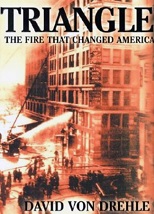
Triangle: The Fire That Changed America – David Von Drehle

triangleDuring my first semester at the John Jay College of Criminal Justice many years ago, I attended a class in the field of fire science as part of my graduate degree track.  In the class, we, were required to study one of the deadliest fires in New York City history: the Triangle Shirtwaist Factory fire on March 25, 1911.  Our professor warned us that the story was deeply disturbing and that the detailed descriptions of the victims would be beyond grisly.  However, he also explained that as part of the basis for a career in fire protection, we needed to understand the life safety code and the stories of how and why fire protection has continued to advance. Today, nearly twenty-three years later, I still recall the fire and its impact on workplace safety.  But I decided to read this book by David Von Drehle to revisit the fire and perhaps learn something I did not know previously.  And what I found within its pages, is a story much longer story than the one I had learned of over two decades ago.  And similar to when I first read about the fire in college, I also felt chills go down my spine this time around.   

The author does not go into the fire right away but takes a slightly different approach in explaining working conditions for garment factory workers, which included a disproportionate amount of women.  Workers’ rights were not as widespread as today and in fact, it was not until the National Labor Relations Act of 1935 as part of President Franklin Roosevelt’s (1882-1945) New Deal policies that the right of private workers to unionize became federal law.  Prior to this, employees in the private sector were often at the mercy of their employers. Working conditions were dire and low wages the norm.  However, workers were not inclined to accept these conditions long term and as we see in the story, they began to resist what they felt were inhumane conditions. Many of the garment workers were European immigrants, some of whom spoke little to no English.  They were easy prey coming off boats arriving in Ellis Island and willing to work for low but steady wages.  Two European entrepreneurs named Max Blanck and Isaac Harris formed the Triangle Waist Company and chose the eighth, ninth and tenth floors of the Asch Building located at 23-29 Washington Place.  Today it is known as the Brown Building and is part of New York University (NYU).  They begin to hire locals, many of them young women whose first language is Yiddish.  The author introduces us to many of them and allows us to learn their stories, some of which contain obscure parts lost to history.  Many of them are younger than twenty-five years of age.  Some are single, others married or engaged but all of them are eager to earn wages to support their families which were sometimes struggling to survive.  On March 25, 1911, their monotonous routine was changed forever after a fire broke out due to a series of events that would be discovered in the wake of the tragedy. 

I must warn readers that the story is very dark and there are no “happy endings”. This case study is about a deadly fire that took the lives of one hundred forty six men and women.  Due to the material contained on each floor, the fire had plenty of fuel and the lack of adequate fire protection only served to accelerate the spread of the flames and smoke.  When the workers realized a fire had started, all hell literally broke loose. Through survivors’ testimonies, we are able to piece the story together and witness the frantic activity that commenced as workers tried desperately to escape what became a deathtrap.  And in the three minutes it took for all of this to take place, New York City and America were changed forever.  However, what we learn following the tragedy is equally as important and regrettable.  Drehle points out some very disturbing facts about the owners and previous incidents that should have served as a major warning of what was to come. And this comment about the fire is beyond sobering: 

The Triangle fire of March 25, 1911, was for ninety years the deadliest workplace disaster in New York history—and the most important. Its significance was not simply the number dead. The 146 deaths at the Triangle Waist Company were sensational, but they were not unusual.

But in a city where politics were controlled by the infamous Tammany Hall and corruption was an open secret, compliance was not always high on anyone’s agenda.  But in the wake of the fire, action was swift and notable figures take center stage such as former New York Governor Al Smith 1873-1944) and Francis Perkins (1880-1965) who served as U.S. Secretary of Labor from 1933-1945.  As part of the Factory Investigation Committee, she and her colleagues would embark on mission to reform factories all across America. Their story is included here as well. 

The infamous owners of the company do not escape scrutiny and the author gives a summary of their trial.  Represented by famed trial lawyer Max Steuer (1870-1940) the duo mounts a defense to escape conviction but they would never again achieve the success they had prior to the fire.  And the statements given by survivors, some of which are included in the summary of the trial highlight the negligence by the two as the bosses of the factory.  During the trial, dozens of witnesses were called including a fire chief whose statements about what he witnessed upon arriving at the scene will make readers recoil in shock and disbelief.  The memories they recall are not for the faint at heart. But they are necessary even today to understand why workplace safety is so critical. The trial’s ending is another turn in the story and the efforts of the survivors’ families serve as a last turn at the plate.  As the book concludes, Blanck and Harris fade into obscurity but the fire that occurred  at their factory continues to live on in the annals of American history. 

If you are a New York City history buff you may already know this story.  And if you live in the Big Apple such as myself, you have probably walked past the Asch building hundreds of times without realizing what took place there many years ago.  It was there that the lives and dreams of the new immigrant workers who had recently arrived in America were destroyed and lost.  And for those that did survive, their lives were never the same again.  Today, the conditions learned of in the book would be unheard of and citations would be forthcoming immediately upon discovery.  However in 1911, New York City was a very different place where tenements and slums were prevalent and employee safety was not a pressing concern.  Drehle explains just how widespread tenements were and what their living conditions were like when he remarks: 

In 1909, there were more than one hundred thousand tenement buildings in New York City. About a third of them had no lights in the hallways, so that when a resident visited the common toilet at night it was like walking lampless in a mine. Nearly two hundred thousand rooms had no windows at all, not even to adjoining rooms. A quarter of the families on the Lower East Side lived five or more to a room. They slept on pallets, on chairs, and on doors removed from their hinges. They slept in shifts.

It was from these tenements that many of the garment factory workers came as they sought employment even if it meant risking their lives. And until the fire, very few had a voice in they manner in which they worked.  Sadly, it took a tragedy such as the Shirtwaist Factory to change the way people thought about protecting them and other employees across America.  Some of you who read this will shed tears as you go through the book and that is okay for I too found myself gripped with emotion as the image of the factory floor consumed by fire formed in my mind.  I also felt the sense of grief that consumed family members as they identified their loved ones on the streets of Manhattan that night.  The magnitude of the fire cannot be overstated, this was an event that truly did change American history.  And the hauntingly true is captured here in a book that will satisfy any reader in search of the truth regarding the Triangle Shirtwaist Factory fire. 

ASIN : B004RPY48I

The Snakehead: An Epic Tale of the Chinatown Underworld and the American Dream – Patrick Radden Keefe

RaddenIn the early morning hours of June 6, 1993, a shipping vessel named the Golden Venture ran aground at Rockaway Beach in Queens, New York.  National Park Service officers began to inspect the incident and noticed human figures jumping over the sides of the boat and scurrying out of the light.  It soon became clear that the ship was carrying human cargo, more specifically, Chinese men and women being smuggled into the United States. The next day, my parents, brother and I watched the news broadcasts in shock.  But what none of us realized was that the smuggling of human beings into the country had been taking place right under our noses. However, my father who was undoubtedly the most street savvy out of the group remarked that people have been smuggled into the United States for years.  But looking back, I do not believe that even he knew the scope of the operation.  Patrick Radden Keefe, the author of the phenomenal Say Nothing: A True Story of Murder and Memory in Northern Irelandjourneyed into the Chinese underworld and explored the complicated network of international human smuggling. And what he found is a story that will surely be remembered for years to come.
Readers may be surprised to hear that the Golden Venture incident is only part of the full  story. It is however, the culmination of a series of critical events that take place over the course of the book.  The story begins in Chinatown where a Chinese immigrant from the Shengmei in Fujian Province named Cheng Chui Ping (1949-2014) and her husband Cheung Yick Tak operate a variety story and other small business ventures.  On the street she was known as Big Sister Ping, the woman to whom all went if they also hailed from  Fujian.  As a native New Yorker, I admit that I did have some embarrassment at my lack of knowledge of the importance of Fujian and Chinese immigration to the United States.  Reefe provides some very interesting information and I was surprised to learn that even Chinatown was split and may be split today, between different demographics within the Chinese community itself. Further, he provides a very thorough discussion on the history of Chinese immigration in America, and makes sure to include the good, the bad and the even the regrettable.  Readers who are interested in learning more about the Asian American experience will highly appreciate Roger Daniels’ Asian America: Chinese and Japanese in the United States Since 1850, which is invaluable in understanding Chinese and Japanese immigration to America.

As the book progresses, Sister Ping emerges as a titan in the New York Chinese-American community, providing an invaluable link between new immigrants to America and their native homeland. The money comes pouring and smuggling proves to be a highly lucrative business, with uninterested authorities oblivious to a vast network operating freely across several continents.  With the arrival of Fujianese immigrants also came the darker underworld controlled by the tongs, the gangs that preyed on Chinese businesses and in some cases, turned Lower Manhattan into a shooting gallery.   The central Fuk Ching tong figure is Guo Liang Qi who is known simply as Ah Kay. This simple and unassuming immigrant becomes one of the most important figures in the book and permanently intertwined in the story of Big Sister Ping.

The discovery of the Golden Venture left many Americans scratching their heads.  But surprisingly, not everyone was in shock. In fact, Reefe shows that Washington knew far more about Chinese smuggling than it led the American people to believe.  And in New York City, officials with the Immigration and Naturalization Service were well acquainted with Sister Ping, who surprisingly, had been previously apprehended near Buffalo, New York.  The authorities and Ping engage in a cat and mouse game in which the smugglers know the authorities are watching but unable to make any significant headway.  But all of that changes after the “Beeper Store” murders which placed Ah Kay high on the list of most wanted fugitives.  The grisly fallout from the murders at the store and the inhumane deaths occurring at the hands of smugglers started to awaken the sleeping giant and soon, people in high places within the U.S. Government began to take notice of the growing Chinese underground smuggling ring. And by the time of Ping’s demise, even the Federal Bureau of Investigation (FBI) had its hand in the jar.  But incredibly, official policy in Washington seemed to facilitate the very thing that many sought to eliminate.  Actions by the administration of George H. W. Bush (1924-2018) are examined in detail and will leave some readers shaking their heads at what could be described as an incredible lack of foresight.

One part of the story that stands out is the sort or revolving door aspect to the early arrests that take place of Sister Ping, Yick Tak and others.  Few stay in custody for long and eventually make their way back to Chinatown.  The author leaves it up to the readers to decide how they were able to manage such feats but I believe that those closely following the story will quickly put two and two together. Some secrets of Ping’s first arrest and that of her husband are carefully hidden from public light. However, they are only a small part of a story that becomes far more disturbing as the focus moves from New York to the South China Sea and Southeast Asia where Ping is continuing to operate after exiting stage left from New York.  The events that take place in the South China Sea are crucial to the journey of the Golden Venture, originally known as the Tong Sern.  At this point in the book, it becomes clear how the Golden Venture’s final journey began to take shape and the doom that awaited the men and women on board.

After running aground, the passengers aboard the Golden Venture were in for yet another journey, this one through the United States immigration system.  At this point in the book, the story takes yet another turn as Washington finds itself in a tough predicament.  I had always wondered what happened to the people on the Golden Venture and could not recall what became of them.  While I did remember that they were detained as illegal aliens, I was not aware of their ordeal after surviving the journey across the seas.  I am sure that readers may be divided on the Government’s response in this situation.  Some may argue that there was no perfect way to deal with the survivors while others may feel they should have been deported immediately.  What is clear is that they became a political football that landed into the lap of President William Jefferson Clinton.   Ultimately, Clinton makes a final decision that one would assume solved the plight of the passengers.  However, that is not the case and Reefe follows their journeys across America in the country that would become a new home for some of them.   A few of the stories are uplifting and others not so much.  But each highlights the lengths to which people will go for a new life in America. And Reefe does an excellent job of driving home that point.

Sister Ping figures prominently throughout the book and her final capture is straight out of the playbook of Interpol.  However, how she was eventually captured does provoke deep thought and produces even deeper questions.   Mysteriously, records pertaining to the case of her husband Yick Tak, who was arrested shortly before Ping for the second time, remained sealed.  However, her subsequent trial and conviction are explained by the author and even includes snippets of Ping’s bizarre rants in the courtroom.   The fall of big sister was fast and furious but she was only one in a large network of smugglers who see big money to be made by helping those in achieving their dreams of moving to the United States.  To the very last moment, Ping remained defiant and some statements she makes will cause readers to wonder if one person can be that out of touch with reality.   On August 24, 2014, Ping died at the Federal Medical Center Carswell in Fort Worth, Texas. She was sixty-five years old and left behind a legacy that remains intact to those who have come from Fujian and made a new home in America.  But to authorities, her arrest and downfall was a sweet victory following years of investigative work and tragic discoveries of other failed ventures destined for the shores of America.  She may be gone but to a large number of immigrants she will always be known as Big Sister Ping.  And this is the story of the Snakehead, the underground network that opened the eyes of many to the paths taken by those who risk life and death to live the American dream.

ASIN: B002HMJZAA

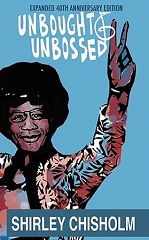
Unbought and Unbossed: Expanded 40th Anniversary Edition – Shirley Chisholm with Scott Simpson, Donna Brazile and Shola Lynch

ChisholmMany years before Hilary Clinton decided to run for the office of President of the United States, there was another politician who had eyes on the White House. And although she did not win the Democratic nomination, she earned a significant amount of votes and in the process, showed that a women candidates were more acceptable to society than many have long believed.  Her name was Shirley Anita Chisholm (1924-2005) and through sheer determination, she launched a political campaign that challenged many accepted norms in American society and helped to break down barriers, even today.  In January, 2019, thirty-six women joined the House of Representatives following the success by Democrats in the 2018 mid-term elections.  The number is now the record for the most women in the House of Representatives and if current trends are an indication, that number will continue to grown through future elections.

If Chisholm were alive today, she would have been thrilled and satisfied with the election of Barack Obama and the current roster of Congresswomen.  Their elections to office would serve as confirmation that her life and struggle helped pave the way for women and minority candidates. This is her story in which she invites the reader into her personal life so that we can learn more about the first Black-American woman to run for president.

The first thing that I noticed about the book is the formatting.  I chose the Kindle version and the text alignment is in dire need of correction.  Other buyers have commented on the same issue.  Putting that aside, the story is intriguing from start to finish and will satisfy any reader interested in Chisholm’s life.  She was a product of Brooklyn, New York, born to immigrant parents from the Caribbean island of Barbados.  From an early age, her life was anything but ordinary and throughout the book, we see that she possessed an uncanny drive and found herself typically in the right place at the right time.  As she admits herself, politics was not her first choice as a career.  But her fate was destined and through a series of events beyond her control, she makes her way into the political field of New York City, a Democrat stronghold.

To say that the book is inspiring is an understatement. Incredibly and sadly, it is only around two hundred pages but within those pages, is a wealth of wisdom that Chisholm passes on to those who are willing to listed.  Her rise in politics to the position of congresswoman was a feat that many thought she could never pull off.  But as the book progresses, it is clear that Chisholm was never a typical candidate.  Her outspokenness, intelligence and fierce independence made her both an outcast and threat. Today, she would be labeled anti-establishment.  But is a price that she was more than willing to pay in defense of her core beliefs. Her refusal to conform and tow the line is part of what keeps her legacy alive to this day.

However, not all of her story is smiles and cheers.  She also reveals some of the darker moments in her life and how they changed her view on the world in which she was attempting to make her name known.   Her relationship with her mother, is a case study for the many challenges American-born children face with regards to foreign-born parents. And yes, there is also the issue of race, which she addresses as well.  However,  I noticed that it does not take over the book but is mentioned only when necessary.   Chisholm is speaking to everyone, about America as a nation and the many problems that existed then and still exist now, regardless of race.

To some, it may be regrettable that many of the things she discusses are still an issue. It may seem as if America has not learned much over the past fifty years. However, I do believe significant progress has been made and I feel that Chisholm would agree.  I am confident that one day in the near future, America will have a female president.   Whomever she is, she will have to confront many of the issues that faced Chisholm more than forty years ago.  But if we remember her advice and keep our sights on the long-term goals, then the first woman president can be successful and become a beloved figure with a legacy to match.

This book should belong to the library of any woman running for public office or considering a political campaign.  These words are the truth about the challenges women have faced and continue to face, as they amass a higher standing in American politics.   Chisholm’s life, here on display, was a mix of love, God, education, success and motivation.   If you have the time, sit back and listen to Shir speak in this truly good read.

ASIN: B008PINHIG

Mole People: Life in the Tunnels Beneath New York City – Jennifer Toth

Mole PeopleA subway ride through the underground portion of the New York City Transit system can reveal far more than most might anticipate.  And if you find yourself on a train passing through lower Manhattan, you might pick up images of abandoned stations or long-lost passages through the windows of the subway car, forgotten with time as relics of the City’s storied past.  The system itself is truly is a modern marvel that continues to be renovated and upgraded.   But there are still many parts that remain hidden, known only to workers of the Metropolitan Transit Authority (MTA) and possibly others who have dwelled in prohibited areas far removed from the sight of strap-hangers.  In the 1980s, the City saw a rise is the number of people living beneath the sidewalks, in crevices, tubes and tunnels buried far below the surface.   The total number of underground dwellers will most-likely never be known. But their existence is a telling sign of the extremes some people go to when living on the streets.  Jennifer Toth, stepped into this world, largely unknown even to those that live in New York City.  Some may call her foolish and others may feel that she was courageous.  I believe that she had a mix of many things as she covered the lives of those she met as she explored a completely unknown and different world that could only seem to exist in fiction.

There is a section in the book where one city worker describes the dwellers as a CHUD or Cannibalistic Underground Humanoid Dweller.   The name sounds ridiculous but was probably taken from the 1984 B-grade horror film of the same name directed by Douglas Cheek and starring the late John Heard (1946-2017) and a young Daniel Stern.   In the film, a court injunction has prevented the removal of radioactive material currently sitting under New York City.  The Nuclear Regulatory Commission (NRC) is unable to transport the material out of the City.  The homeless soon become exposed to the toxic sludge and are transformed into cannibalistic monsters that come above ground at night to hunt.   Highly imaginative and campy, the film is a fun ride for those who are aficionados of 1980s horror films and the movie holds a place in my own collection.  The majority of the film is purely imagination but the people who lived underground was quite close to reality.  And in this book, Jennifer Toth shows what the movie did not explore for obvious reasons.

Some of the people she interviewed for the book gave their real names while others preferred a pseudonym. Geographically, their locations were spread out across the city with the majority of the scenes taking place below Penn and Grand Central Stations.  Seville, Black, Brenda, Blade and Bernard are just some of the many dwellers that Toth encountered in the course of her research. Other figures who cast a darker tone are mentioned briefly in passing sections.   Shockingly, some of them came from good homes, graduated from college and possessed advanced degrees.   Abuse, drugs and dysfunction at home proved to be the common link between many of them and fueled their decision to go underground where it was “safe” from above. In the interviews they are highly articulate, aware of their surroundings and should be productive members of society.  And even more surprising,  some of them preferred to live underground.  But there also exist, another group of people, who ended up underground as an escape from lives that could be classified as hell on earth.

Each person has their own reason for moving underground but what emerges in the book, is an underground network of tunnels, caves and passageways akin to a city of its own where surface dwellers are not welcome and those who come down below are seen with the highest level of suspicion.  It is a world many of us could never imagine living in, let alone raising a child in as can been seen in the book.  The descriptions of the tunnels are graphic and those with a weak stomach will need a strong resolve to make it through some chapters.  Life underground is gritty, dirty and beyond dangerous. It is not for the faint at heart.  But miraculously, Toth was never seriously injured while conducting the interviews.  She may have had someone watching over her combined with an unusual amount of good luck or perhaps she did on the one thing that many above ground could never do for the people below and that is to simply listen.  Whether some of them embellished their tales is a strong possibility.  Drug addiction and mental health issues are largely prevalent in many of them and could possibly have played a role in the accounts that they give.  But what is accurate is the former existence of a large number of underground dwellers beneath the City.

The book was completed in 1993 and to my knowledge, there is no follow-up to the story nor would I expect there to be.  Her experience with Blade as detailed towards the end of the book is beyond enough to make anyone think twice about returning.  Some of the characters may still be alive today while others may have left the tunnels or died along the way.   In recent years, I cannot recall any discussion of the mole people and most of them have probably been relocated by City officials as the tunnels were cleaned up and the underground squatters permanently removed.  Some of them may still live underground, firmly hidden from prying eyes, but the number is probably far lower than the 1990s when the epidemic reached its height.

The book is revealing and sure to leave many readers in a state of shock.  New Yorkers unaware of the mole people of the 1980s and 1990s will find this book to be eye-opening about the city they call home.   The book shows the ability of humans to adapt to nearly anything and the lengths people will go to in their efforts to survive. This is a haunting look at life in a city beneath a city.

ISBN-10: 155652241X
ISBN-13: 978-1556522413