

The 1980s was a decade unlike any other, both positive and negative. Hollywood had reached its pinnacle with movies that became eternal classics, the Soviet Union began its decline, NASA experienced a tragedy that haunts us today, and change was rapidly occurring around the world. The Caribbean island of Grenada had a population of less than 100,000 people in the month of October 1983. It is seen as a small island. But on October 19, 1983, that island made news around the world when the leader of the ruling New Jewel Movement (“NJM”), Maurice Rupert Bishop (1944-1984) was assassinated along with several others in a violent coup which plunged the country in chaos and resulted in the deployment of United States Marines by United States President Ronald Reagan (1911-2004). The involvement of American troops has overshadowed the events leading up to the events on October 19. But in order to understand Bishop’s downfall and its aftermath, a discussion regarding the events leading up to the tragedy is necessary. Godfrey Smith, a Belizean journalist, revisits the death of Bishop and the political climate in Grenada, in this book which is both informative and chilling.
Godfrey’s book is less than two hundred pages, but its contents tell a story that gave me a new perspective on the events in Grenada during that time. From the beginning, there is a dark omen over the story due to a meeting of the Central Committee which would have extensive ramifications. However, the subject of the meeting does not appear at first to be something that should have resulted in the death of Bishop and others. But a sad reality is that power is seductive and it corrupts. In the meeting of the Central Committee it is suggested that Bishop shares the duties of leader with Bernard Coard, second in command. The meeting expands into criticism of Bishop’s ruling style, but the matter is put on hold as Bishop wants to think about the party’s future and obtain Coard’s input. Coard was not present, and the talking is done by others. But this meeting would set into motion a chain of events that brought Grenada to the brink of anarchy.
Before we reach the fallout in October 1983, Godfrey provides a short biography of Bishop’s life and his rise in politics. It is a fascinating story, and easy to see why Bishop became the people’s favorite. However, he had his demons like other leaders. We learn of Bishop’s nonchalant manner in handling party issues, and his philandering which became an issue as his personal life became more complicated. His weaknesses provided the pretext needed for subordinates to usurp his authority. But they were not serious enough for death. The question that arises in what happened that caused the Central Committee to remove Bishop by force? The answer partly lies in a trip abroad that should have been routine.
The NJM had established itself as a left-wing government. Further, it had formed closed relations with Caribbean neighbor Cuba through its President Fidel Castro (1926-2016). This should come as no surprise because the NJM was based on Marxist-Leninist ideals and naturally aligned itself with nations founded on similar principles. But Washington was watching closely, and Bishop’s growing ties to Castro did not go unnoticed at home. In fact, as we see in the story, it backfired with deadly consequences. It also raised the issue of how much influence Cuba should have in Grenada’s affairs. Internally, Bishop’s avoidance of the bi-lateral power sharing agreement, planted the seeds of doubt in the minds of people who believed he needed to be removed. The fear of a tyrant was fresh in their minds due to the removal of a former president whose name is rarely mentioned in world history.
As a backstory to the fallout between Bishop and party leaders, we learn of the toppling of Prime Minister Eric Gairy (1922-1997) who was viewed as a dictator. For readers unaware of Gairy’s reign, this is a good primer. Of course, the full story is far more detailed, but for the purposes of this book, the amount of information is sufficient to set the stage for Bishop’s future battle within his own party. His trip abroad which included a visit to Cuba, set the stage for the conspirators to enact their plan. And when the party does meet with Bishop who is reluctant to change the power structure, we see the writing on the wall. A secret meeting without his knowledge proves to be a warning that something was not right. The moment we are waiting for eventually comes when Bishop and others are detained. But the conspirators did not anticipate that the people of Grenada loved Bishop and would not tolerate his incarceration on trumped up charges.
When the people learn that Bishop has been arrested, all hell breaks loose in Grenada. He is eventually freed and retreats to Fort Rupert along with the other officials unjustly detained. At first it seems as if Bishop will prevail, but this location would prove to be a scene of horrific events that are haunting. I must warn readers that the decision to seize the fort and capture its occupants is graphic. Frankly, it was nothing short of murder. As I read, I felt a sense of loss at Bishop’s death and how callous his executioners were in ending the lives of Grenadian officials. It is by far, the darkest moment in the book and I can only imagine the grief felt by Grenadians on that day. In Cuba, Castro was following the events, and his prophetic warning about U.S. involvement was about to come true.
The deployment of U.S. Marines has been labeled an “invasion”. It is true that battles did occur between the U.S. military and Grenadian army, but order was restored, and the October 17 group consisting of those who led the coup against Bishop received their comeuppance for what happened. The author explains the result of the arrival of U.S. troops and trials of conspirators. Today, those who survived their prison sentences are still alive, but they carry with them the memories of October 19, and the insanity which occurred. Bishop’s demise was tragic, and its impact was significant. It is further complicated by the controversy surrounding his grave which has no marker. Readers who find this book enjoyable, should take a look at a Washington Post podcast called ‘The Empty Grave of Comrade Bishop‘ by host Martine Powers. It is a fascination series of episodes which take a deep dive into the life of Maurich Bishop and the island of Grenada.
ASIN : B08JF29K7G
Publisher : Ian Randle Publishers (September 16, 2020)

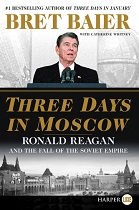 Readers old enough to remember the Soviet Union will recall the shock and disbelief that came with the Union of Soviet Socialist Republics (U.S.S.R.) flag being lowered for the last time on December 25, 1991. The “Cold War” had come to an end, but a long road lay ahead between the United States and Russia in coming to terms with each other’s way of life. On May 29, 1988, United States President Ronald Reagan (1911-2004) and First Lady Nancy Reagan (1921-2016) arrived in Moscow for a three-day summit with Soviet General Secretary Mikhail Gorbachev and his wife Raisa (1932-1999). It has been held as a triumph in American foreign policy and as an example of strong leadership. In less than three years, the Soviet Union dissolved, and Reagan was vindicated in his predictions of its demise. During the summit, Reagan spoke to the people of the Soviet Union at Moscow University and to this day it stands as a breathtaking moment in world history. But as always, there is more than meets the eye. Fox News host Bret Baier revisits the summit in this book about three days that impacted world history.
 In 2019 the Urban Institute conducted an analysis of the welfare system in the United States. It found that at least fifty-nine million Americans were on some form of public assistance mostly obtained through six major welfare programs in the country. The people in need of assistance will vary but the image that was once presented to the public stands in stark contrast to reality. In his first run for office of the president, California Governor Ronald Reagan (1911-2004) (R-CA) used the welfare system as part of his program to appeal to conservative voters. Unbeknownst to voters, Reagan had set his focus on a woman in Chicago who would later be called the “Welfare Queen”. The truth is not as glamorous and far more bizarre but that did not deter Reagan from using the case of Linda Taylor (1926-2002) who represented all that was wrong with the system in his eyes. His first campaign for president failed but he mounted a second campaign that culminated with the defeat of sitting President James E. “Jimmy” Carter in 1980. By then Taylor was an afterthought but her life was far from over. In fact, as Josh Levin shows in this biography, her life was full of mystery, tragedy, and dark moments.
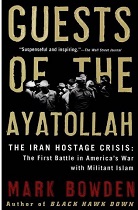 On November 4, 1979, university students seized the U.S. Embassy in Tehran, Iran and detained more than fifty U.S. Government employees. Though some were later released, the majority remained behind for four hundred forty-four days in what is known as the Iran Hostage Crisis. In 1953, Mohammad Mosaddegh (1882-1967) and the National Front Party gained political power in opposition to Mohammad Reza Shah (1919-1980). A twice elected member of Parliament, Mossadegh emerged as a popular figure but within days of the Shah’s exile in August of that year, Mossadegh was removed in a coup sponsored by the British Government and the United States. Mossadegh’s removal and the Shah’s return, inflamed tensions and in November 1979, Iranians decided that America must go. This is the story of the hostage crisis from start to finish in an account that provides a thorough discussion of America’s foreign policy mistakes and Iran’s inner struggle between traditionalism and modernity.
 Of America’s forty-six presidents that have served in office, few are as popular as Ronald Reagan (1911-2004). The 40th President of the United States is remembered for his time in Hollywood, his term as Governor of California and a presidential administration that had its share of controversy. The Iran-Contra scandal remains inextricably linked to Reagan and is a stark reminder of U.S. foreign policy gone wrong. The fallout in Central America from Washington’s influence and interference can still be felt to this day. Reagan is long gone from office and deceased since 2004. However, his name can still be found in conversations about politics in America, when discussing conservatism and the decline of Soviet influence across the globe. Although known to be a fierce conservative, Reagan was able to use his actor’s skills to conceal this from the public. But historians know all too well that there was dark side to the life of Reagan before and during his time in office. Journalist Dan Moldea takes another look at Reagan, paying close attention to his time in Hollywood as president of the Screen Actors Guild (SAG), its dealings with the Music Corporation of America (MCA) and the Italian American mafia.
 I still remember the video footage taken during the live testimony of Lt. Col. Oliver North (Ret.), as Congress sought to unravel interconnected covert operations that revolved around Iran, Israel and Nicaragua. North appeared on television in full military dress, earing the sympathy and admiration of a large segment of American citizens. There were some who felt he should have been incarcerated and that his actions were a dishonor to the very uniform he had on. Regrettably, his testimony did little to help fully understand what had really taken place. And even my father who follows politics and news religiously did not fully understand what had taken place. Wh
 For the first time in a long time, I found myself emotional and angry as I finished this book about the relationship between the United States and the military dictatorship in El Salvador during the small Central American nation’s civil war in the 1980s. I had expected the book to be a tough read and contain many facts that would be both uncomfortable and upsetting. But I admit that I was not prepared for what I learned. This is not the first book I have read or reviewed regarding El Salvador. There are many other books that are very good but take different approaches to the subject matter. It might be fair to say that the other books were a primer for what I was to learn here in this mind-blowing and deeply troubling book by Raymond Bonner, a former Marine who served in Vietnam and current staff writer for the New York Times.
 FREETHINKING BIBLIOPHILE
You must be logged in to post a comment.