
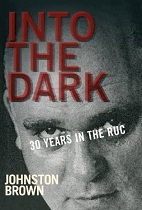
 The conflict in Northern Ireland known as “The Troubles” claimed over thirty-five hundred lives and brought the Irish Republican Army (“IRA”) into sharp focus as bombings, assassinations, and paramilitary operations spread fear across the United Kingdom. However, within Ulster Province in Northern Ireland, loyalists confronted their own demons in the form of paramilitary groups determined to eradicate the IRA and Catholics committed to a fully independent Ireland. The Royal Ulster Constabulary (“RUC”) was formed in 1922 after the partition of Ireland and found itself tasked with addressing a conflict that escalated by the minute. Over the course of thirty years, Johnston Brown served as an officer in the RUC and witnessed some of the darkest moments in the history of the Troubles. This is his account of his career in the RUC and the people he encountered. And like the title says, there were times where it was necessary to go into the dark.
Though it is not a necessity, readers will benefit by having a general understanding of the conflict and events that followed the partition of Ireland in 1921. Further, this book is written by an officer on the side of Ulster law enforcement but not from the view of a Protestant or a loyalist. In fact, nowhere in the book does Johnston show any hint of bias regarding faith or politics. Known affectionately by his peers as “Jonty”, his job and goal was to protect and serve, and that meant breaking down paramilitary groups whether they were for partition to remain or a united Ireland. But before he joined the RUC, he had to navigate a turbulent life which included living under the roof of a tyrant posing as a father. The author speaks frankly about his childhood and the difficulties that came with the dysfunction created by his domineering father. But in an ironic twist, had it not been for the police officers he encountered, this book may not have been written. His account of his childhood is tough to read at times but there are bright moments in the story. And as shocking as those events are, there is far more in the book to learn as the story takes a dark and disturbing turn.
Johnston’s career as a police officer is routine until he makes the arrest of several men involved in a covert paramilitary operation. They are loyalists and as Johnston learns, they have friends in high places, which includes his unit and the Special Branch, an intelligence division whose role in the story will leave readers staring in disbelief. To put the events to come into perspective, Johnston remarks early in the book that,
“The very last thing I ever expected was to be obstructed by members of the institution to which I devoted almost 30 years of my life. I did not anticipate that some of the worst difficulties and dangers I would face were to come from within the very organisation of which I was part.”
Readers might wonder how threats from within could be more dangerous than those from either the IRA or loyalist factions such as the Ulster Defence Association (“UDA”) and Ulster Volunteer Force (“UVF”). Well, the revelations by Johnston will remove any doubt of the dangers he faced as he and other officers in his unit struggled to contain the tensions in Northern Ireland that repeatedly erupted in deadly violence. In relation to the arrests and release of the men suspected of executing a covert mission, Johnston has a physical encounter with a fellow officer in the Criminal Investigation Department (CID) that leaves him puzzled and dazed. However, the fog slowly begins to clear as he realizes that the Special Branch has a bag of tricks and when they go into the dark, it is better to stay way. And this cold truth shows itself midway through the book when Johnston is contacted by a loyalist rebel named Ken Barrett, one of the book’s most unsavory figures. But the part about Barrett’s story that caused me to recoil was the murder of solicitor (lawyer) Pat Finucane (1949-1989). I knew Finucane’s story from other books I had read and reviewed about the Troubles, but I did not know of Barrett’s role and his status as a confidential informant. And an admission by a Special Branch officer in Johnston’s company left me speechless. It is at this moment in the book where we have gone fully into the dark.
After Barrett’s entry into the story, nothing is the same again. In fact, we follow the author as he works on other cases involving Ulster loyalists who commit horrific acts. Yet, the Special Branch remains a source of danger and irritation. To say that their actions are astonishing would be an understatement. But as the author clarifies, the dark figures moving around in the Special Branch should allow readers to paint them all with the same brush. However, the dangerous elements within the Special Branch make their presence felt in the book and had Johnston in their crosshairs. What evolves is a dangerous game in which Johnston and the Special Branch tip toe around each other while working informants and making arrests of men who would not hesitate to kill anyone deemed fit to be eliminated. And towards the end of the book, the name of Johnny Adair will be etched into the reader’s memory when he emerges as the biggest threat to Johnston and his family. And before the story is over, Adair and his loyalist conspirators get up close and personal with Johnston who eventually retires from the RUC but remains on high alert.
This is the first book I have read by a police officer on the Ulster side of the conflict. Discussions of the Troubles often center around the IRA but as we see here, the loyalist side was equally as deadly, and the Ulster police were at risk for murder by both Protestants and Catholics. Officers such as Johnston were navigating deadly waters as they tried to maintain order in Ulster Province where all hell repeatedly broke loose. The story is tough to accept but this was his reality every day as a member of the RUC who came face to face with the people who went into the dark and tried to take everyone else with them. Johnston is alive to tell his story, but thousands of others did not live to see the Good Friday Agreement and current day Ireland. On a side note, there were ramifications of the agreement that gave me chills as I read Johnston’s words. This book is an asset in preserving the history of the Troubles, a conflict that haunts the United Kingdom to this day. And if Johnston publishes another volume as indicated, I will be waiting for its release.
ASIN: B00D59OLBC
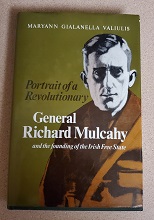 Discussions of the 1916 uprising in Ireland tend to focus on a select group of figures. The names of Patrick Pearse (1897-1916) and James Connolly (1868-1916) are legend in Irish history and their actions part of the narrative of the Republican fight for a united Ireland. In December, 1921, the British Government and Republican forces reached an agreement that officially partitioned Ireland into Unionist north and Republican south. The southern part was established as the Free Irish State, to be led by Michael Collins (1890-1922)who became Chairman of the Provisional Government of the Irish Free State. Collins is well-known in Irish history for his unwavering support of the Republican cause. However, there was another figure who not only worked closely with Collins, but someone whose own story and actions are typically left out of the official narrative. Pictured to the left General Richard Mulcahy (1886-1971), one of the founding members of the Irish Free State and staunch supporter of Irish independence. When I saw this book for sale, I knew immediately that I had to read it and understand who the intriguing character on the cover of the book really was.
 Those of you who follow my blog probably know by now that I have covered quite a number of books regarding Northern Ireland the conflict known as “The Troubles”. My curiousity with the conflict in Northern Ireland stems partly from my love of history and partly from my visit to Ireland in 2016. I sought to fully understand the battle being waged by Republicans to unify the country and the opposition mounted by Loyalist who remain in support of British rule. Author Tim Pat Coogan has written of the 1916 Easter
  The looming exit from the European Union by England will undoubtedly be watched by the whole world, which has been kept in suspense by the referendum in 2016 and failure of former British Prime Minster Theresa May to garner enough votes for a formal separation. Current Prime Minister Boris Johnson has declared it will happen and on January 31, 2020, he will be proven right or wrong on the matter. In Northern Ireland, there is fear and uncertainty regarding how the move by England will affect Ulster County, the loyalist stronghold composed of majority that stands firmly behind the Crown. The Irish Republican Army (“IRA”) will be following as well to see how the move will affect its goal for a united Ireland free of British interference. Time will tell how the departure from the European Union will affect both Britain and other nations. Recently, I decided to do some further reading on Northern Ireland and I came across this book by Tim Pat Coogan about an Irish revolutionary I was previously unfamiliar with. His name was Michael Collins (1890-1922) and this is the story of his group of assassins known as the Twelve Apostles and their fight for freedom from Downing Street by famed author Tim Pat Coogan.
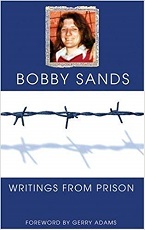 The hunger strike at the HM Prison Maze in 1981, captured the attention of the British Government and earned the IRA sympathy around the world. On May 5, news broke that IRA member Bobby Sands (1954-1981) had died after 66 days of refusing to eat. Sands and his fellow strikers were determined to be recognized as political prisoners and earn several other concessions from Margaret Thatcher’s (1925-2013) government. London had refused to give in and Thatcher had earned the nickname of “The Iron Lady”. Today, the “Troubles” as they are known, continue in Northern Ireland. The IRA remains committed to its goal of a unified Ireland and the removal of the British Crown from Ulster County. Sands had risen among the ranks in the IRA and during his incarceration, his reputation as a leader and intellectual grew every day. This book is a collection of his writings which were smuggled out in parts (The IRA prisoners at HM Prison Maze were engaged in a long running standoff with guards and were being kept in bare minimum cells with mainly a mattress and bucket to be used as waste disposal).
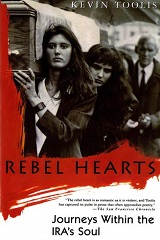 The conflict in Northern Ireland between pro-British Protestants and Republic Catholics, is the longest running feud to date. The planned exit by England from the European Union has resulted in suspense and apprehension throughout the rest of the United Kingdom. The Irish have undoubtedly been watching closely as any movement by England will have a ripple effect that will eventually reach their shores. Belfast remains a major tourist attraction in the north, similar to its southern counterpart Dublin, and receives millions of visitors each year. History buffs may recall that Belfast is the city in which Harland and Wolff built the world-famous RMS Titanic for the White Star Line. But behind the fame of the doomed ocean liner, lies a dark side that has taken more lives than anyone could have ever imagined. Belfast and Londonberry (“Derry”) have served as the battlegrounds for the deadly war between Nationalists and Republicans forces. Across Ulster province, six of the nine counties are protected by the British Crown (“the Crown”) and unofficially by the Ulster Volunteer Force and Ulster Defense Association. The Irish Republican Army (“IRA”) stands firm as the opposition force founded to defend the minority Catholic population from what they believe to be the refusal of the Crown to let Ireland become a united country. Kevin Toolis is a journalist and screenwriter born in Edinburgh, Scotland to Irish parents. In this eye-opening and chilling book, he travels back to the country of his ancestors, seeking to understand what drives the men and women of the IRA.
 FREETHINKING BIBLIOPHILE
You must be logged in to post a comment.