
 The Chileans have a saying that the Andes do not give back what they take. The survivors of Uruguyan Air Force Flight 571 are reminded of this each year as the anniversary of their ordeal is observed. On October 12, 1972 athletes from the Old Christians Rugby Club and selected family members departed from Montevideo, Uruguay en route to Santiago, Chile for a scheduled match. Inclement weather forced a stopover later that day in the Argentine city of Mendoza. On Friday, October 13, their plane departed Mendoza for the final leg of the trip but none of the passengers could have known that their flight would never reach its final destination. At 3:34 p.m., the plane impacted the mountains below causing the aircraft to break apart, killing several passengers nearly instantly. As the fuselage came to a rest, survivors found themselves in the valley of a mountain during the winter season and in unfamiliar territory. And for the next seventy-two days, the fuselage became their home as they struggled to keep going in the face of severe adversity. Eduardo Strauch was on the plane that day and survived the crash. But for more than thirty years, he has kept his silence about what he remembers and how it impacted his life. This short but poignant memoir is his account of what is known as the “Miracle in the Andes”.
Previously, I reviewed two books that have been written by those who survived the ordeal. The first was Nando Parrado’s Miracle in the Andes which I found to be the most extensive account. And in the History Channel documentary on the crash, he is the narrator and most prominent speaker of those connected to the event. The second book is called I Had to Survive by Roberto Canessa and is also a very moving account of the ordeal. However, Canessa’s life took a slightly different path, leading him into the medical field instead of public speaking. Parrado and Canessa are by far the more popular of those who survived the crash. But Strauch has plenty to say here about what he remembers of that day. And although his account is shorter than the other two, there is much to be learned here as he takes us back in time to a day when he was a optimistic young man anxious to play a football match in Santiago, Chile.
Interestingly, Strauch nearly missed getting on the departing flight in Montevideo due to his travel documents being left at home. But fate was at play and he managed to sort his affairs only eight minutes before takeoff. For the young athlete, the flight was the first part of what was intended to be a joyful weekend. In less than twenty-four hours, that journey turned into a nightmare. Following the impact, survivors went into action to help the wounded, move the deceased and figure out how to obtain any type of help. Strauch was a key eyewitness to all that transpireddand he relays play-by-play, the grim reality of their situation that eventually begins to settle in. His description of key events are direct and to the point, sparing the reader from more gut-wrenching anecdotes. However, what he does say is sure leave readers with a chill running down their spines.
As the ordeal extends from hours to days to weeks, the survivors begin to realize that there is no guarantee of rescue. Yet, they never give up and rely on each other during an event that no one could have predicted. Strauch reflects that:
“Friendship had been a constant in our story, such a crucial part of our survival from the beginning that it was difficult to separate one from the other. What we suffered together only depened the friendship that had existed amoung the majority of us before emabarking on the trip, turning it into an unbreakable brotherhood.”
Throughout the story, Strauch is always insightful, even at times when it seems as if all hell has broken loose. It is evident that the experience remains with him to this day and for the survivors of that crash, they share a bond that can never be broken.
As I mentioned, the book is not very long and the story moves quite rapidly. He recalls the moment they realized that Nando and Roberto had found help and that they would be resuced by authorities. Without question, the rescue after seventy-two days, is one of the highlights in the book, next to Strauch finding love and becoming a father. But regardless of what he has accomplished in life, he never fails to remind us that the mountain is always in his thoughts. The Andes took a part of him that will remain in the Valley of Tears for an eternity. However, the Andes also gave him several things which he explains beautifully here in this excellent account of a very dark moment.
“The capacity of the mind to embrace infinity, that path toward an authentic spirituality, is one of the most beautiful lessons that my life on the mountain left me with.” – Eduardo Strauch
ASIN : B07H7GKR9R
 History has many dark secrets that some have wished remained hidden from the official record so that the history that has been portrayed remains sanitized and above reproach. But it is also said that what you do in the dark always comes to light. In the wake of the coup that saw the overthrow of Chilean President Salvador Allende (1908-1973) on September 11, 1973, the country was placed in a vice grip by his successor, Augusto Pinochet (1915-2006), who commenced a program of retribution against enemies, activist and those “suspected” of being part of the opposition to the new government. His regime was marred by human rights violations for which he was arrested by British Police in England on October 17, 1998. Pinochet was extradited back to his native Chile but never stood trial for his actions. He died on December 10, 2006 of congestive heart failure and pulmonary edema. His death marked the end of legal action to bring him to justice but it did not stop the prosecution of others who were complicit in the horrific actions that took place in the aftermath of the coup. Researchers continued to investigate Pinochet’s actions and those of fellow dictators in Argentina, Brazil, Paraguay and Uruguay. During one such expedition in Paraguay, a trove of documents were uncovered that shed light on a joint program created by several neighboring countries to track down those deemed enemies of the state with the purpose of execution. The program is known as Operation Condor and here Charles River Editors provides a concise summary of how and why the program came into existence.
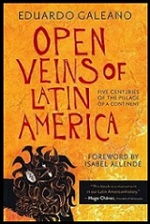 Latin America is home to some of the most beautiful scenery in the world. The Iguazu Falls, Andes Mountains and Patagonia attract millions of visitors annually. The beauty of these and other sites across Latin America stand in stark contrast to the poverty that can be found outside of major cities and sometimes within. In between major railway stations and ports exist slums that remind us of the severely uneven distribution of wealth throughout the continent. Speaking from personal experience, most Americans would be shocked at living conditions that still exist in Latin America to this day. But why does a continent with a history that goes back several hundred years and is home to beautiful people, beautiful languages, great foods and beautiful scenes of nature, continue to suffer from poverty, corruption and exploitation.
 Nestled between Brazil and Argentina is the small Latin American nation of the Oriental Republic of Uruguay (República Oriental del Uruguay). The nation is the second smallest on the continent next to Suriname and boasts one of the highest
  FREETHINKING BIBLIOPHILE
You must be logged in to post a comment.