
 On March 25, 1985, the 57th Academy Awards ceremony was held at the Dorothy Chandler Pavilion, Los Angeles. During the ceremony, the category of best supporting actor was called, and the winner was Haing S. Ngor (1940-1996), a doctor born and raised in Cambodia, who had survived the Khmer Rouge dictatorship under the notorious Pol Pot (1925-1998). Ngor had starred as Cambodian journalist Dith Pran (1942-2008) in the 1984 film The Killing Fields starring Sam Waterston, John Malkovich, and Craig T. Nelson. The movie is tough to watch due to its sensitive subject matter but also an important work of art that captured a time in world history when a revolution nearly destroyed an entire nation permanently.
I was familiar with the Khmer Rouge before starting the book and I have seen the film more than once. I have also read Loung Ung’s First They Killed My Father, a gripping account of life under the Khmer Rouge. Her story was adapted for the big screen and in 2017, Netflix released the film of the same name directed by Angelina Jolie. Though there are some modifications to the story in the film, it is follows the book fairly closely and shows how Cambodian society was turned upside down during the tyranny of the Khmer Rouge. Ngor is even more blunt in how life changed for Cambodians:
“The truth was that under the communists the country was much worse off than it had ever been during my lifetime. We had no electricity. No clocks or automobiles. No modern medicines. No schools. No religious worship. Very little food. And we lived in constant fear of the soldiers.”
The book begins with Ngor remembering his early life and fragile relationship with his father. A volatile temper and determination to resist anything he felt was unfair, resulted in Ngor going through a series of inconvenient situations, including one with his father that placed their relationship under great strain. However, he eventually graduates from medical school and begins to practice medicine. Life as a doctor is good and at home, his wife Huoy performs the traditional duties of a wife in Cambodian society. On April 17, 1975, their lives were changed permanently when Pol Pot and his revolutionaries seized control of Cambodia under the guise of rebuilding society. Millions of Cambodians had no idea what would come next as the extremists dismantled society piece by piece. To give the reader an idea of how extreme their ideloogy was, Ngor explains that:
“The Khmer Rouge wanted a complete change of society, from top to bottom. Gone was everything that had governed our lives in the old times. Lon Nol was gone, airlifted to America before the fall; Sihanouk was gone, his fate a mystery. The monks were gone.”
Following the takeover, families were uprooted and forced to move, typically to distant parts of the country to engage in heavy manual labor. Famine, inhumane treatment, and lack of crucial resources gave rise to disease, hunger, and death in work camps across the country. Ngor himself suffered illness on more than one occasion as he explains in the book. Had it not been for his medical training which he kept secret for reasons also disclosed in the book, he surely would have perished. The aid of his wife Huoy was invaluable and she served as his guardian angel on more than one occasion. But her fate and that of those around them, are among the difficult moments in the book. And when not facing death from hunger or disease, workers were reminded through vicious and bloodthirsty guards that Angkar was watching. This system of surveillance gave men and women incentive to spy on each other and tell what they saw, even if it meant death to those accused. Ngor becomes a first-hand witness to the brutal system of torture that Angkar notoriously used to break the spirit of those needing “reformation”.
As time progressed, cracks in the surface began to show and Ngor realizes that the regime is slowly falling apart. The Khmer Rouge’s idea of transforming society was a complete failure and in its attempt to flex its muscle, it had angered the North Vietnamese Government which soon made it a goal to deal with Cambodia. In April 1979, the Vietnamese invaded and put an end to the reign of the Khmer Rouge. But for Ngor and millions of his fellow citizens, the occupation by Vietnam did not end their ordeal overnight. Cambodia had been freed of one communist government only to be replaced by another. Those who were able realized the only option was to cross the border into Thailand. The journey was not easy and bandits along the way were just as ruthless as the Khmer Rouge if not worse at times. But in Thailand, the full weight of his ordeal comes crashing down when he reflects that:
“By 1979 Cambodia was utterly destroyed. Next door in Thailand were paved roads, beautiful temples and more rice than the people could eat. As a refugee, the more I saw of Thailand, the angrier I became. It was the anger of a man who finds out he has been lied to all his life.”
After arriving in Thailand, Ngor slowly puts his life together and through a series of chance encounters, he befriends John Crowley of the Joint Volunteer Agency who paves the way for his next journey to the United States where he is joined by his adopted niece Sophia. His entry into America was rough at first but it is clear from the start that in comparison to the Cambodia he had left behind, America was a brand new and welcomed experience. And luck was on his side again when he was scouted and picked to star in the Killing Fields. His performance and win at the Oscars transformed Ngor into a celebrity but the experiences in Cambodia remained fresh in his mind and a heavy burden to bear. Ngor never ceased to labor on behalf of those still in Cambodia who never wanted to see another Khmer Rouge takeover. IN spite of his fame and success, Ngor remained haunted by what he saw and experienced. He reminds the reader that the Khmer Rouge destroyed nearly every part of Cambodian society. And I believe that this sombering statement bythe author sums up the experiences of those held under the iron grip of the Khmer Rouge:
“The Cambodian holocaust ripped through our lives, tossing us randomly, leaving none of us the way we were. You can blame who you want, the outside powers for interfering, or our own internal flaws like corruption and kum, but when the talking is over we still do not know why it had to happen. The country is still in ruins, millions have died and those of us who survived are not done with our grieving.”
The book closes with more reflection by Ngor of Cambodia and his life in America. By this time, Sophia had moved out and the two had not spoken. In the epilogue, we learn more of their relationship and future interactions. Also, more information is provided about Ngor’s return to Cambodia, his business dealings and difficulties in life while living in Los Angeles. After finishing Ngor’s heartbreaking account of his life, readers will need to prepare for another difficult part in the book: Ngor’s final days.
On February 25, 1996, Ngor was returning home when he drove past three Asian street gang members. The trio was high on crack cocaine and saw him as their next target to score more cash. It is believed that after asking for his money and other valuables, the thieves also wanted a chain he wore which contained a locket holding a picture of his late wife Huoy. Ngor undoubtedly would have refused, and readers will understand why after finishing his story. Prosecutors stated that shots were fired and Ngor fell to the pavement gasping for air. He died on the scene at the age of fifty-five. It should be noted that the killers did not take Ngor’s car or money, leading people to believe that the killing was related to his past in Cambodia. It is difficult to say but there is one clue provided in the epilogue related to the political climate in Cambodia at the time that might explain who would have wanted him dead. We may never know the real motive for his death, but the shooter was sentenced to life in prison and his accomplices each received a sentence of twenty-five years to life.
In the future when I watch The Killing Fields again, I will now have a deeper appreciation for Ngor’s performance. I wish I had known more about him upon viewing the film for the first time. However, my lack of knowledge regarding his personal life does not detract from the viewing experience. The film is haunting as it should be to show viewers the danger of poisonous rhetoric. Voltaire had it right when he wrote that “any one who has the power to make you believe absurdities has the power to make you commit injustices“. Haing S. Ngor was witness to one of history’s greatest crimes and lived to tell the tale of Cambodia’s darkest days. And even today, this book can server as reminder of the dangers that come with extremism and importance of addressing extreme ideology before it is too late.
ASIN : B019NFEM42
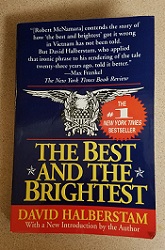 I have often wondered why my uncle and many other veterans that I have met, were sent to Vietnam. He and others never speak of the war, choosing instead to internalize their memories and feelings. But from the few things about being Vietnam that my uncle has told me, I cannot image what it was like to be fighting a war in a jungle 13,000 miles away from home. Today he is seventy-two years old and his memories of Vietnam are as sharp today as they were when he left the country to return home. And there is a part of him that still remains in Vietnam, never to leave its soil. He is one of five-hundred thousand Americans that served in a war that claimed fifty-eight thousand lives.
 The names of the 58,000 Americans who died in the Vietnam War that are found on the memorial in Washington, D.C., are a reminder of a conflict deemed by many to be the worst the United States has ever been involved in. The withdrawal of U.S. forces in March, 1973, brought a sigh of relief to the American public which had long grown tired of a war with no end in sight. The dark truth which we now know is that we did not by any means accomplish the mission. And the mighty American war machine failed to secure a victory. I have met many veterans of the war and have an uncle who served. What I recall most about all of them is that they do not speak of their experiences while in combat. I know the memories are there and for some of them, they were unable to leave parts of the war behind. Today we call it PTSD, but back then you simply found a way to move forward in life. But why were they in Vietnam to being with? Was the domino effect really a threat to the United States?
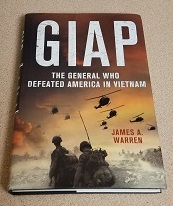 April 30, 1975-The city of Saigon, the capital of South Vietnam, falls to the People’s Army of Vietnam and the National Liberation Front of South Vietnam. The siege of the capital is the final push by North Vietnam on the course towards reunification. The final withdrawal by U.S. military and government personnel marks the of a deadly and protracted war that cost 58,000 American lives and over 1 million Vietnamese lives. To date, it is the only loss suffered by the United States Armed Forces. The success of North Vietnam is a shining moment in the Vietnamese struggle for independence for colonialism by France and the anti-communism policies of the United States. Ho Chih Minh becomes a legend in Vietnamese history and many years later Saigon is renamed in his honor. Ho died on September 2, 1969, several years before the war’s conclusion, but his ideology and belief in a free Vietnam helped his successors continue his goal of unconditional victory. Looking back at the war, it seems almost absurd that a country the size of Vietnam was able to resist and defeat efforts by the French and Americans to impose their will. Both nations were equipped with better weapons, bigger budgets and highly skilled armies. However on the Vietnamese side, there was a general who proved to be just as sharp as any the French or the United States had to offer. And by the end of the war, he would also become a legend in his own right. His name was Võ Nguyên Giáp. (1911-2013)
 FREETHINKING BIBLIOPHILE
You must be logged in to post a comment.