
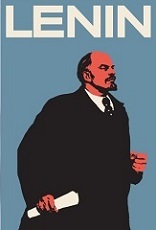
 The dissolution of the United Soviet Social Republics (USSR) remains one of the most important and world changing moments in history. The lowering of the hammer and sickle on December 26, 1991, was the end of seventy-four years of Soviet dominance over Eastern Europe. But the remnants of the Soviet Union can still be found today and the ghost of its founder, Vladimir Ilyich Ulyanov (1870-1924), continues to haunt Russia. In Red Square, Moscow, Lenin’s corpse remains on permanent display and is maintained by a full-time staff of technicians. To believers in the old-guard and Marxism, Lenin is the eternal leader of the Bolshevik revolution. To his detractors, he was madman who unleashed a wave of terror and was outdone only by his successor Joseph Stalin (1878-1953). Undoubtedly, Stalin ruled the Soviet Union with an iron grip built upon fear, intimidation and murder. But those tactics were not new methods of operation, having been in use long before he took power. During the reign of the Soviet Union, information regarding Lenin’s private life was kept secret and only the most privileged of researchers were able to see any official records. The passage of time and change in attitudes had resulted in the disclosure of Soviet records that many thought would never be revealed. The thaw which began with Nikita Khrushchev (1894-1971) has allowed the world to learn the truth behind the Iron Curtain. Author Victor Sebestyen has taken another look at Lenin’s life in this well-researched and revealing biography of the iconic and infamous Soviet leader.
It is not a requirement but I do believe that basic knowledge of the former Soviet Union will make the book even more enjoyable to the reader. There are many figures in the story, some of whom became pivotal figures in Soviet and world history. From the start, the book is intriguing and the author’s writing style sets the perfect tone for the book. Furthermore, at the end of each chapter are the footnotes which help aid the reader in following the narrative and developing a mental picture of the tense political climate that existed in Russia at the beginning of the 1900s.
Prior to reading the book, I had learned a significant amount of information regarding Lenin’s life but the story told here is simply astounding. Sebestyen leaves no stone unearthed, fully disclosing the sensitive parts of Lenin’s life including his marriage to Nadezhda Konstantinovna Krupskaya (1969-1939) and relationship with Inessa Armand (1874-1920). And as the author points out, Nadezhda or “Nadya”, was a supportive and valued voice in Lenin’s circle. Her comments throughout the book shed light on Lenin’s very private side and her commitment to the revolution and Lenin’s ideology made her a celebrated figure in her own right. She remained committed to Lenin after his death and up until her own in 1939.
Lenin’s early life is examined in through detail and reveals an interesting figure but highly unorthodox and complex. Ideology becomes a major focus of his life and his series of odd jobs come to an end when he finds his true calling as the man destined to lead the Bolshevik Revolution. But his path to get there had many obstacles along the way and it is his time away from Russia that is just as interesting as his time in Russia. As would be expected, his service as chairman is the crux of the book and Sebestyen delivers the goods. Sensitive readers should be aware that there are very disturbing events that take place and in their graphic detail here, they may prove to be too upsetting for some. But the author reveals them so that we may learn the truth about Lenin. In the title of the book, the author refers to him as a “Master of Terror”. I believe the title was earned and this book is proof of it. His deeds have been overshadowed by those of his successor but Lenin was a master in his own right and I have no doubts that Stalin took many notes. Death, deception, lies and even pilferage are part of the Soviet story, serving as pillars in the foundation upon which Lenin and his party established their system of brutality. Their acts were so surprising in some instances, that even after having finished the book, I am still shaking my head in disbelief. And to say that anarchy ruled, might be an understatement.
Sebestyen carefully follows Lenin’s rise and the formation of the Soviet Government. From the start, all was not well and cracks in the facade immediately began to form. The fragility of the coalition is on full display, allowing readers to grasp the unstable nature of Soviet politics and how quickly friends could turn into enemies. Jealousy, egos and diverging interpretations of true Marxism severed friendships, raised suspicion and helped create an atmosphere of distrust that remained with the Soviet Union for the next seventy years. And even today, Russia and the independent republics, sometimes struggle to to stand completely removed from the dark legacy of the USSR.
One subject which has always been up for debate is Lenin’s untimely demise at the age of fifty-four. His condition at the time was somewhat puzzling to doctors but all agreed that it deteriorated quickly. Sebestyen clears up a few rumors surrounding Lenin’s death but there is a slight chance that some details regarding Lenin’s death still remain hidden. However, I do believe the author presents a solid analysis of what contributed to his death based on facts and not mere speculation. Readers who are expecting to find any evidence of a conspiracy will disappointed. No such theories are presented or even acknowledged, keeping the book on track all the way until the end.
The existence of Lenin’s tomb is both a testament to his influence over Russia and his inability to envision a future without himself. He could have never imagined the heights that the Soviet Union would reach over time nor could he have pictured its downfall. I think he may have mixed feelings to know that today in 2019, people are still interested in his life, one that he was willing to devote to the success of the Soviet empire. In death, he became eternally etched into the Soviet experience and he remains one of history’s most polarizing figures. This biography is nothing short of excellent.
B06WLJZNBH
 In December, 1991, the unthinkable happened as the Union of Soviet Socialist Republics (USSR) dissolved into fifteen separate countries. Known informally as the Soviet Union, the USSR seemed at times indestructible to those viewing the union from abroad. But within dissension had been brewing for many years in the wake of the tyrannical reign of Joseph Stalin (1878-1953). His successors embarked on a period of de-Stalinization that thrived under the administration of Nikita Sergeyevich Khrushchev (1894-1971). The Soviet Union remained a superpower and in direct competition with arch-rival the United States. It dissolution shocked the world and left the future of the former Soviet republics in limbo. In the aftermath of the monumental and historic collapse, the individual republics established their own rights to self-governance and in some cases, completely rejected Russian rule. Tensions between many of the nations continues to this day. Currently, Vladimir Vladimirovich Putin serves as the President of Russia, and is as much of a controversial figure as many of his predecessors. His appointment by late President Boris Nikolayevich Yeltsin (1931-2007) gave many Russians hope that a new direction was in store for the beloved country. Today, as we look back at the time that has passed since he was chosen to lead Russia, we can see a tortured nation still suffering from systematic oppression and what is rightly described in this book as totalitarianism.
 Today, sixty-four years after his death in, Joseph Stalin (1878-1953) remains one of the most polarizing and studied figures of the 20th century. As the leader of the Soviet Union during the Second World War, he enforced the legendary Red Army as it fought off a German onslaught and helped the Allies put an end to Germany’s Third Reich. Following the war, tensions between the United States and the USSR escalated giving birth to the Cold War. In 1991, the USSR collapsed and today Russia is under the control of Vladimir Putin, undoubtedly one of the world’s most controversial figures. Stalin’s reign may seem to be in Russia’s distant past but it was less than one hundred years ago that Stalin ruled with an iron fist, striking fear into the hearts of not only his enemies but those closest to him. Rumors have surfaced over the years regarding everything including his love life, health, mental state and bungled policies. But who was the real Joseph Stalin? Born Ioseb Jughashvili in Gori, Georgia on December 18, 1878 to Besarion “Beso” Jughashvili (1850-1909) and Ketevan “Keke” Geladze (1858-1937), few could have imagined that the young child would grow up to rule an entire nation. His life in later years became mysterious to those inside and outside of Russia. Misconceptions and falsehoods have spread, causing even more confusion about the truth. Stephen Kotkin has takes on the late leader’s life in a multi-part definitive biography that is simply outstanding.
 FREETHINKING BIBLIOPHILE
You must be logged in to post a comment.