
 The more I learn about history, the more I realize how much of it is not taught in schools. I recall learning about the Civil War but in limited discussions. And I fondly remember the 1989 film Glory featuring Matthew Broderick, Morgan Freeman, and Denzel Washington. The story of black soldiers in the Civil War needed to be shown but of course, there is far more to the story. Here, author James G. Mendez discusses the experiences of the Civil War’s black soldiers and their families during a time when America was being pulled apart at the seams. And what he shows is that there is far more to the story of the Civil War than one might expect.
When I saw this book in my list of recommendations, it immediately caught my attention. I knew beforehand that it would not be an easy read and my suspicion was correct. And though the story is not all tragedy and heartbreak, it is rife with examples of the grueling hardships black troops faced in the Union Army during the war as they fought for their freedom and the lives of millions of Black Americans. But before the author arrives at the point of the induction of black troops, he first provides a discussion of the social climate in America which constantly denied African Americans basic rights. Frankly, life was brutally hard for blacks and as the author shows, basic rights were a dream for them. Readers might be shocked to see that states considered to be “liberal” or “blue” today have their own dark history including New York, my home state. Mendez pulls no punches and shows that even in the North, blacks still faced enormous hurdles, and support for the war effort varied and was not unified behind the idea of eradicating slavery. In fact, the author’s work shows that attitudes towards slavery were varied and unpredictable. However, the abolitionists were determined to see its demise.
I once told a friend that black history is American history. I say this because you cannot separate the two. And as can be seen in the book, the efforts of Black Americans have been crucial in the history of this nation. In regard to combat, Mendez explains:
“Blacks fought, both as slaves and free men, in every American war, including the Revolution, the War of 1812, and the Mexican-American War. They fought bravely and received accolades from prominent American leaders such as Andrew Jackson, who acknowledged after the Battle of New Orleans (December 1814 to January 1815) that black soldiers played a major role in his victory.”
Despite the contributions of blacks, resistance to black troops during the Civil War was strong and commonplace. Readers will be disheartened and surprised to learn of the attitude towards using black troops held by those in power in across states in the Union and in the army itself. Delaware in particular will stand out to readers in the book. As the war progressed, it became apparent that the Union Army needed manpower and eventually, the idea of using black troops became a reality due to the actions of Governor John A. Andrew (1818-1867) of Massachusetts. His vision and the developments that ensued will provide readers with a firm foundation as the story of the Northern Black troops kicks into high gear.
As one would expect, the arrival of black troops did not always go smoothly and the harsh reality the new soldiers faced is discussed. And their opponents were not solely those wearing a uniform. In fact, I learned for the first time about the deadly race riots in Detroit and New York City that were horrifying. The shocking events and impact on the troops’ morale is a crucial point in the book for it shows the difficult place black troops found themselves in. How did they have the courage and will to fight for a country that denied them basic rights? In the face of severe hostility and violence, blacks continued to enlist in the Union Army. And to put the importance of their service into perspective, Mendez provides key statistics:
“Nearly 200,000 black soldiers served in the Civil War—178,975 in the army and the remainder in the navy. Out of the total number in the army, 32,723 were from the North.”
On the battlefield, black troops fought and died alongside white soldiers but even in death they and their families continued to suffer indignations. Not only was the pay between whites and blacks unequal but for black families, obtaining benefits for a loved one’s death could be impossible. The sad and complicated story of the unequal pay matter is one of the darkest parts of the book, yet it makes the story of the troops even more remarkable. The military and Congress did eventually address the matter, but the timing will leave readers mystified.
In the film Glory, the battle scenes are graphic, and it is known that the savagery in which battles were fought was not for the faint at heart. However, I learned here that soldiers often died due to conditions that would not be fatal today and the leading causes of their deaths may surprise you. Of course, what the author reveals does make sense in hindsight but is still shocking. Further, those who survived returned with their scars and trauma. Survivors of the war include Charles R. Douglass (1844-1920), the son of abolitionist and social reformer Frederick Douglass (1818-1895). His story is a prime example of the extensive damage the war inflicted upon its participants.
Eventually, the war reaches its bloody climax, and the Confederacy is forced to concede defeat. But the Union mission was far from over. Black troops were needed more than ever and how they were used after the South’s defeat is, yet another example of the difficulties faced by them before, during, and after the war. But what stands out here is that the reality of black troops being gatekeepers of the South was a recipe for a disaster and doomed from the start. The intricacies of the Union’s post-war actions and failures by Washington are additional tragedies that afflicted black troops and the country, inadvertently paving the way for the rise of Jim Crow. This book is not about the Reconstruction Acts, but Mendez does mention the actions of President Andrew Johnson (1808-1875) who clashed with Radical Republicans as the latter sought to rebuild the South completely.
I wish this book had been available and required reading when I was a student years ago. There is a wealth of information contained here often neglected or possibly unknown. America has come a long way since the Civil War, but the conflict continues to haunt the nation as the issues of race and equality remain at the forefront. In comparison to the 1800s, life for Americans is vastly different. But let us not forget that between 1861 and 1865, America was at war with itself, and joining the effort were its black residents fighting for their lives and the freedom of future generations.
ASIN: B07BHQ6XKM
 Several weeks ago, during a phone call with an uncle on my father’s side, he opened up about his service in Vietnam, in particular, his return to the United States after his tour was over. He painfully recalled being confronted by mothers wanting to know why he returned, and their sons did not. He continued by describing the hostile environment soldiers returning from Vietnam faced due to the unpopularity of the war. Years would pass before Vietnam veterans finally received the attention and understanding they deserved regarding their experiences in Southeast Asia. The war is far in the past, but I know my uncle carries with him dark memories of what he saw and had to do in order to survive his tour. In 1988, the television show
  America has always loved gangster stories. Tales from the lives of larger-than-life characters both feared and respected have captivated film audiences and true crime readers. In my hometown of New York City, the Italian American mafia holds a firm place in the annals of the city’s crime history. Of all the mafia bosses, none was as flamboyant and media savvy as the late Gambino Family boss John J. Gotti (1940-2002). The media nicknamed him the “Teflon Don” due to the acquittals his lawyers obtained of a multitude of charges that could have put the mafia boss in prison for life. On March 13, 1987, Gotti and his co-defendants were acquitted of federal racketeering charges and the verdict left prosecutors in the Eastern District of New York licking their wounds. Gotti and his fellow mobsters were elated the Federal Government was far from finished. However, prosecutors knew that to convict Gotti, they needed irrefutable evidence of his crimes and witnesses willing to testify. As fate would have it, in time prosecutors would obtain all that they needed through a chain of events that began with wiretaps in the home of mobster Angelo Ruggiero, Sr. (1940-1989) known as “Quack Quack”. And leading the mission for the Government was lead prosecutor John Gleeson, also a former judge in the Eastern District. This is the story of how the United States Attorney’s Office in Brooklyn secured a conviction against America’s most notorious mobster.
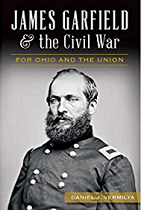 On September 19, 1881, United States President James A. Garfield (1831-1881) died in Elberon, New Jersey seventy-nine days after he was shot and mortally wounded by Charles J. Guiteau (1841-1882) on July 2, 1881. The assassin, motivated by a desire to see Chester A. Arthur (1829-1886) become president. Arthur did become the next president, but Guiteau was on borrowed time and was executed on July 30, 1882. Garfield was shot after two months in the White House and died in less than one year as president. His remarkably short tenure as president is often overlooked by history but there was far more to his story that has been taught in history classes. The story of his life is equally as intriguing as its ending and in this short but concise examination of the late president, Daniel Vermilya focuses on Garfield’s early life and his time as a Union officer in the American Civil War (1861-1865).
 New York City is famously known as the “Melting Pot” due to the diversity among the residents that call it home. As a lifelong New Yorker, I can attest that the city attracts people from every part of the world. However, what is often neglected is that diversity and assimilation are two very different concepts. That is not to say that the entire city is divided. In fact, my neighbors hail from places both domestic and abroad. My father has told me stories of his childhood in Brooklyn and his neighbors who had emigrated from Eastern Europe. He has fond memories of the Italian woman who cooked breakfast for him and my uncles and the Jewish neighbor who made fresh breads and other dishes they loved. But that all changed when my grandmother moved the family to a different part of Brooklyn and the Government began to de-segregate public schools. The pushback from the middle class was swift and in May 1968, tensions came to a head at P.S. 271 in Ocean Hill-Brownsville, Brooklyn, when teachers engaged in the first of several strikes that changed New York. This is the story of those strikes and the people whose actions changed New York City politics.
 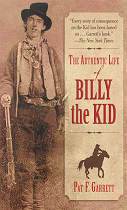 Billy the Kid remains one of the most mythical figures of the American Old West. There are parts of his life that remain a mystery, but “the Kid” did shoot and killed several men before his own death at the hands of Deputy U.S. Marshall Pat F. Garrett (1850-1908), on July 14, 1881. Following the Kid’s death, Garrett authored this book regarding his former acquaintance. For decades it stood as the best account of the Kid’s life but has been surpassed and challenged. Further, the book is Garrett’s account and not subject to cross-reference within. While it is true that Garrett did know the Kid, questions remain about the outlaw’s life.
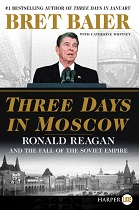 Readers old enough to remember the Soviet Union will recall the shock and disbelief that came with the Union of Soviet Socialist Republics (U.S.S.R.) flag being lowered for the last time on December 25, 1991. The “Cold War” had come to an end, but a long road lay ahead between the United States and Russia in coming to terms with each other’s way of life. On May 29, 1988, United States President Ronald Reagan (1911-2004) and First Lady Nancy Reagan (1921-2016) arrived in Moscow for a three-day summit with Soviet General Secretary Mikhail Gorbachev and his wife Raisa (1932-1999). It has been held as a triumph in American foreign policy and as an example of strong leadership. In less than three years, the Soviet Union dissolved, and Reagan was vindicated in his predictions of its demise. During the summit, Reagan spoke to the people of the Soviet Union at Moscow University and to this day it stands as a breathtaking moment in world history. But as always, there is more than meets the eye. Fox News host Bret Baier revisits the summit in this book about three days that impacted world history.
 In December 1963, one month after the assassination of U.S. President John F. Kennedy (1917-1963), former President Harry S. Truman (1884-1972) authored an op-ed piece in the December 22, 1963, edition of the Washington Post about the Central Intelligence Agency (CIA) and its role in America. While reflecting on what the CIA had become, he stated “there is something about the way the CIA has been functioning that is casting a shadow over our historic position and I feel that we need to correct it.” The agency had been established through the National Security Act of 1947 which was intended to both centralize and simplify national defense and the intelligence apparatus. Five years before the National Security Act was signed into law, President Franklin D. Roosevelt (1882-1945) had also addressed the need for foreign intelligence and through Executive Order 9128 on July 13, 1942, he formally established the Office of Strategic Services (OSS). And to lead the new agency, he turned to former director of the Coordination of Information (COI), the legendary William Joseph “Wild Bill” Donovan (1883-1959). Though he was never director of the CIA, Donovan is credited as being the father of intelligence. Author Richard Dunlop examines Donovan’s life in this intriguing biography and historical account of how the intelligence community came to exist.
 In 2019 the Urban Institute conducted an analysis of the welfare system in the United States. It found that at least fifty-nine million Americans were on some form of public assistance mostly obtained through six major welfare programs in the country. The people in need of assistance will vary but the image that was once presented to the public stands in stark contrast to reality. In his first run for office of the president, California Governor Ronald Reagan (1911-2004) (R-CA) used the welfare system as part of his program to appeal to conservative voters. Unbeknownst to voters, Reagan had set his focus on a woman in Chicago who would later be called the “Welfare Queen”. The truth is not as glamorous and far more bizarre but that did not deter Reagan from using the case of Linda Taylor (1926-2002) who represented all that was wrong with the system in his eyes. His first campaign for president failed but he mounted a second campaign that culminated with the defeat of sitting President James E. “Jimmy” Carter in 1980. By then Taylor was an afterthought but her life was far from over. In fact, as Josh Levin shows in this biography, her life was full of mystery, tragedy, and dark moments.
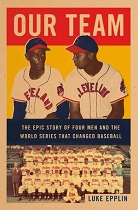 In 2012 Warner Bros. Pictures released the film ’42’ which tells the story of how Jack Roosevelt “Jackie” Robinson (1919-1972) broke the color barrier in Major League Baseball (“MLB”). The late film star Chadwick Boseman (1976-2020) starred as Robinson in the biopic and delivered a phenomenal performance. Robinson did break the color barrier, but he was not the only player to do so at that time. In Cleveland, Ohio, Indians owner William Louis “Bill” Veeck (1914-1986) was determined on further integrating baseball and set his eyes on the Negro Leagues as a pool for untapped talent. Soon enough, he had purchased the rights to Lawrence Eugene “Larry” Doby (1923-2003). The Indians subsequently signed Negro League pitcher Leroy Robert “Satchel” Paige (1906-1982) who joined the ranks and became another teammate of the team’s ace, Robert William Andrew “Bob” Feller (1918-2010).
 FREETHINKING BIBLIOPHILE
You must be logged in to post a comment.