
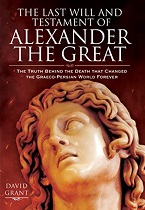
 Throughout history, rulers and conquerors have left their mark on the world with legacies that remain intact to this day. Alexander III of Macedon (356-323 BC) was only thirty-two years of age when he died. But in his short and extraordinary life, he ruled an empire that changed world history. In mainstream culture, he is known as Alexander the Great and in his era, the mention of his name evoked fear across territories threatened by the Macedonian empire. Yet for all of his power and accomplishments, he died intestate, having failed to clarify his wishes as he faced death. Whether it was due to procrastination, sickness or paranoia is lost to history. But what we do know is that following his death, the interactions between his former generals became dark and deadly. And before the violence was over, multiple participants had been dispatched to Hades. Strangely, there is no official cause of death for the legendary ruler. There are rumors of possible poisoning or a deadly illness such as typhoid, but the different accounts of his final days add more confusion to the mystery. Author David Grant dissects the known diaries of events that purport to contain the truth about Alexander’s death in an effort to resolve the matter.
Readers without prior knowledge of Alexander’s life may find value in first watching a documentary about him or reading articles online. I say this because in the wake of his death, key figures once under his command take on various roles and each having their own agenda. There are names in the book that will stand out easily such as Aristotle (384-322 BC) and Cleopatra (357-308 BC). But they play minor roles in the story which focuses heavily on the former generals and their actions. As I read, I found keeping track of the figures slightly challenging as the story moves from place to place. However, I recommend getting familiar with each character as you make your way through the discussion. Essentially, two major factions appear after Alexander’s death, one side led by Perdiccas (356-321) and Eumenes (362-313 BC) who are loyal of Alexander’s line of success and the other by Meleager (d. 323 BC), Antigonus I Monophthalmus (382-301 BC), and Antipater (397-319 BC) who see the power vacuum as a chance to consolidate power. Added to the mix are the roles and rights as heirs of Alexander’s sons Alexander IV from wife Roxana (340-310 BC) and Heracles (327 -309 BC) from wife Barsine (363-309 BC). The story is deeply intricate with alliances and double-crosses, and the author did an exceptional job of researching the events and composing this account that examines the known facts. But complicating the task are the various accounts of Alexander’s death.
The name of Eumenes will be seared into reader’s minds for multiple reasons. He becomes a prominent figure in the book due to his account of how Alexander died. His explanation is not beyond suspicion, and historians have questioned its authenticity. Grant also questions its accuracy and provides compelling reasons why it cannot be trusted entirely as the definitive account of the Alexander’s end days. Despite its questionable contents, Eumenes was a witness to Alexander’s final days and would have included truths in his account. They may stand in contrast to the story presented by the Royal Diaries which found subscribers in historians Arrian of Nicomedia (86-160 AD) and Plutarch (46-119 AD). The Royal Diaries, sometimes referred to the Journal, are accepted as authentic. But with other aspect of Alexander’s final days and the deadly power struggles that ensued, questions remain about the source material used to explain those events. And as the author explains in the book’s conclusion, the authenticity of any alleged “wills” is subject to scrutiny due to events that transpired and their participants. But that examination should not take away from the facts that are known and other truths we may never know.
Between 322 and 275 BC, Alexander’s former generals engaged in the Wars of the Diadochi, a conflict that spanned several decades and led to the collapse of Alexander’s empire. The author refers to them, when necessary, but the book is not a discussion of the multiple wars. However, they are relevant to the story as they show the deception and greed to be found in the wake of Alexander’s death. The plots are intricate and some sections might need to be revisited for clarification, but the venom between parties was intense and everyone seemed to have a role to play including Alexander’s mother Olympias (375-316 BC) who was determined to maintain the line of succession. Grant pulls no punches and brings the past to life as enemies plot ways to have each other killed. The amount of blood spilled during these wars is unimaginable. Olympias proves to be a formidable threat and she has her own story in the book and her fate becomes tied to the actions of Antipater’s son Cassander (355-297 BC). This is one part of the story that reaffirms the savagery of the ancient world. The tragic truth is that the wars were both deadly and costly, and erased any chance for Alexander’s line of succession to continue.
This book is not light reading by any means but it also an invaluable tool when examining Alexander’s demise. There are no happy endings in the story. And whether the cause was typhoid fever or poison, Alexander’s death at the age of thirty-two remains one of history’s biggest conspiracies. But whether there actually was a conspiracy is still unsolved. Voltaire (1694-1778) once said, “to the living we owe respect, but to the dead we owe only the truth”. Grant seeks the truth about Alexander’s will and so do we. I can say that reading the book resulted in me further researching the historical figures. And having done so makes the story easier to digest. If you love ancient Greek history, this book is must read.
ASIN: B098PJ9FML
 In the 1989 film ‘
 At 4:03 p.m. on September 13, 1996, rap star Tupac Shakur (1971-1996) died from gunshot wounds he received on September 7 while riding in the passenger seat of a BMW driven by former Death Row Records CEO Marion “Suge” Knight on the Las Vegas strip. Shakur was twenty-five years old and left behind a complicated legacy that remains a top of discussion in rap music culture. I remember with vivid clarity the shock that was felt when his death was announced and have always believed that a part of the rap music genre died with him that day. Officially his murder is listed as unsolved and an open case by the Las Vegas Police Department. Off the record, it has been alleged and believed that Crips gang member Orlando “Baby Lane” Anderson (1974-1998) pulled the trigger of the gun that ended Shakur’s life. The case is filled with rumors, mysteries, and chilling facts. Journalist Cathy Scott stepped into this murky world to set the record straight on Shakur’s murder.
 On January 28, 1986, Americans watched in horror as the Space Shuttle Challenger suffered a catastrophic rupture in its rocket booster shortly after liftoff. Among the seven crew members who perished was Ronald McNair (1950-1986) and African American astronaut who had joined a diverse crew of individuals who were making history. As a student, I remember being in awe of McNair and the mission he was on. Naturally, my fellow students and I also had an affinity for Christa McAuliffe (1948-1986) a schoolteacher whose hometown was watching that day as well. To millions of young black children, McNair was a remarkable sight, but he was not the first to break NASA’s color barrier. In fact, NASA had begun to integrate the space program decades before, during the administration of President John F. Kennedy (1917-1963), whose initiative to travel to the moon led to NASA changing itself and playing a significant role in the Civil Rights Movement.
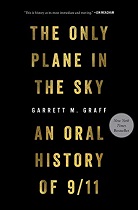 This past Sunday marked the twenty-first anniversary of the September 11th attacks which claimed the lives of 2,996 people. The mood in New York City was somber, with rain and dark clouds all day. However, that did not stop anyone from remembering the tragedies on September 11, 2001, a day that changed America. Friends are always surprised to learn that I have never visited the 9/11 Memorial and Museum. As a New Yorker who was in Manhattan on the day of the attacks, and watched the events unfold from an office window, I will always have my memories of that sad day. But my reluctance to visit the museum has never prevented me from reading and hearing stories from people who were at the World Trade Center and survived. Undoubtedly, there are survivors who have never told their stories, choosing not to re-live the events of that day. Thousands of others did go on the record and their words have been preserved so that the history of 9/11 can continue to be told to future generations. Author Garrett M. Graff has compiled hundreds of statements from survivors, Bush Administration officials, NYC officials, military personnel and first responders, and has turned them into this oral history of the attacks.
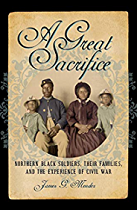 The more I learn about history, the more I realize how much of it is not taught in schools. I recall learning about the Civil War but in limited discussions. And I fondly remember the 1989 film
  Several weeks ago, during a phone call with an uncle on my father’s side, he opened up about his service in Vietnam, in particular, his return to the United States after his tour was over. He painfully recalled being confronted by mothers wanting to know why he returned, and their sons did not. He continued by describing the hostile environment soldiers returning from Vietnam faced due to the unpopularity of the war. Years would pass before Vietnam veterans finally received the attention and understanding they deserved regarding their experiences in Southeast Asia. The war is far in the past, but I know my uncle carries with him dark memories of what he saw and had to do in order to survive his tour. In 1988, the television show
 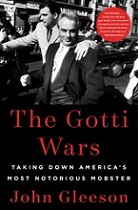 America has always loved gangster stories. Tales from the lives of larger-than-life characters both feared and respected have captivated film audiences and true crime readers. In my hometown of New York City, the Italian American mafia holds a firm place in the annals of the city’s crime history. Of all the mafia bosses, none was as flamboyant and media savvy as the late Gambino Family boss John J. Gotti (1940-2002). The media nicknamed him the “Teflon Don” due to the acquittals his lawyers obtained of a multitude of charges that could have put the mafia boss in prison for life. On March 13, 1987, Gotti and his co-defendants were acquitted of federal racketeering charges and the verdict left prosecutors in the Eastern District of New York licking their wounds. Gotti and his fellow mobsters were elated the Federal Government was far from finished. However, prosecutors knew that to convict Gotti, they needed irrefutable evidence of his crimes and witnesses willing to testify. As fate would have it, in time prosecutors would obtain all that they needed through a chain of events that began with wiretaps in the home of mobster Angelo Ruggiero, Sr. (1940-1989) known as “Quack Quack”. And leading the mission for the Government was lead prosecutor John Gleeson, also a former judge in the Eastern District. This is the story of how the United States Attorney’s Office in Brooklyn secured a conviction against America’s most notorious mobster.
 On September 19, 1881, United States President James A. Garfield (1831-1881) died in Elberon, New Jersey seventy-nine days after he was shot and mortally wounded by Charles J. Guiteau (1841-1882) on July 2, 1881. The assassin, motivated by a desire to see Chester A. Arthur (1829-1886) become president. Arthur did become the next president, but Guiteau was on borrowed time and was executed on July 30, 1882. Garfield was shot after two months in the White House and died in less than one year as president. His remarkably short tenure as president is often overlooked by history but there was far more to his story that has been taught in history classes. The story of his life is equally as intriguing as its ending and in this short but concise examination of the late president, Daniel Vermilya focuses on Garfield’s early life and his time as a Union officer in the American Civil War (1861-1865).
 New York City is famously known as the “Melting Pot” due to the diversity among the residents that call it home. As a lifelong New Yorker, I can attest that the city attracts people from every part of the world. However, what is often neglected is that diversity and assimilation are two very different concepts. That is not to say that the entire city is divided. In fact, my neighbors hail from places both domestic and abroad. My father has told me stories of his childhood in Brooklyn and his neighbors who had emigrated from Eastern Europe. He has fond memories of the Italian woman who cooked breakfast for him and my uncles and the Jewish neighbor who made fresh breads and other dishes they loved. But that all changed when my grandmother moved the family to a different part of Brooklyn and the Government began to de-segregate public schools. The pushback from the middle class was swift and in May 1968, tensions came to a head at P.S. 271 in Ocean Hill-Brownsville, Brooklyn, when teachers engaged in the first of several strikes that changed New York. This is the story of those strikes and the people whose actions changed New York City politics.

You must be logged in to post a comment.