
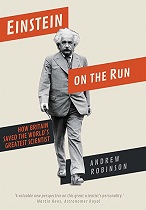
 On January 30, 1933, Adolf Hitler (1889-1945) became Chancellor of Germany and established the Third Reich, formed under the banner of national socialism, as the country’s ruling party. The Sturmabteilung known informally as the “Brown Shirts”, embarked on a campaign of terror across the nation persecuting opponents of the Reich and those determined to be “undesirable” of Aryan citizenship. Millions of Jews had already fled the country, alarmed by the rise of Hitler’s party and the anti-Semitism spreading like wildfire. Among those who left was famed scientist Albert Einstein (1879-1955), who never returned to the nation of his birth after his departure in 1932. And though he had left Germany, he remained on the radar of the Third Reich which moved swiftly to erase his name from Germany literature. After leaving, Einstein moved across Europe before finally settling in the United States. But what is often neglected in discussions of his life and fame is the time he spent in England as the Nazi party gained strength and war with Germany became a reality.
Admittedly, I knew little of Einstein’s life after fleeing Germany. Today he is remembered for the theory of relativity and his equation E=mc2. Both were groundbreaking events in science but while Einstein was making a name for himself in Britain, Hitler was ramping up efforts to eliminate his opponents abroad and those around Einstein remained keenly aware of the threat. Author Andrew Robinson has examined the late scientist’s time on the run and compiled a story that is both unbelievable and tragic. And though it contains biographical information on Einstein, the book was not written as a definitive account. But the information is crucial to understanding Einstein’s motives and his complicated life.
There is an incident revisited in the book that played an integral part in Einstein’s decision to leave. The murder of journalist and government official Walter Rathenau (1867-1922), served as a wake-up call for German Jews indifferent to growing anti-Semitism and a new group of rebels calling themselves National Socialists. Rathenau’s assassination remains one of Germany’s darkest moments and a pivotal moment in resentment towards Jews. Einstein knew Rathenau personally and was disturbed by his murder. The crime removed any illusions that he would be safe in Germany should Hitler gain power and ten years later, Einstein and second wife Else (1876-1936) left for good. Their arrival in England as captured by the author, shows a Britain receptive and in awe of the Germany scientist. And it is here that Einstein accomplishes some of his greatest feats. However, he was still a man without a home and as Robinson shows, no one knew where he would finally end up. The couple moved around quite a bit and, in the book, Einstein reports from multiple locations playing host to the man awarded the Noble Prize in 1921.
Though the threat of assassination is always present and one on occasion, a high possibility, the author provides valuable insight into Einstein the person. I did not know previously, how Einstein felt about Zionism and his Jewish faith. His relationship with Chaim Weizmann (1874-1952), the First President of Israel, is interesting and shows that Einstein was able to view an issue from both sides when necessary. Further, his relationships with both wives, his son Eduard (1910-1965) and stepchildren from Else are complex and reveal his shortcomings. Fans of Einstein will find these parts of the book both shocking and hard to accept but the reality is that despite his brilliance, he struggled in other aspects of his life. Frankly, we see the human side of Einstein and all his faults. But despite his personal life, he remained at the forefront of science and paved the way for nuclear fission. Interestingly, Robinson provides information about the atomic bomb and Einstein’s role that is often misunderstood. Further, the idea of nuclear fission did not belong to Einstein who was quite indifferent to his own successes. However, after the bomb’s development and use against Japan in August 1945, Einstein became an ardent opponent of its use and earned himself a spot on the subversive list of none other than former Federal Bureau of Investigation Director J. Edgar Hoover (1895-1972). I cannot say I was too surprised by this as Hoover was fanatical about “communists” and others he deemed threats to the United States.
Einstein’s stay in England was temporary and the couple eventually settled in Princeton, New Jersey. The author provides plausible explanations for the decision to leave Europe for America and the simplest reason is correct, in that Einstein needed to be far away from the threat of Nazi terror and in a place where he could find peace. America was not perfect, but it was nothing like Europe being forced to confront the growing German menace. Einstein never returned to Europe, remaining in America until his death in 1955. Today his image can be found on posters, t-shirts, websites, and other memorabilia, but there was a time when his image meant persecution and death. Hitler never succeeded in punishing Einstein, but the Nazis did confiscate everything they found belonging to him. Had they succeeded in capturing Einstein before he left, history and World War II might be quite different today. But as the saying goes, everything happens for a reason. Fans of Albert Einstein will appreciate this book.
ASIN: B07XD5QKN5
 The Bronx, New York is known as the birthplace of hip-hop music and the home of the New York Yankees. It is also a melting pot and home to immigrants from all parts of the world. And the history of the Bronx is as storied as the people who call him home. During the 1970s, New York City had ventured into its darkest days with the threat of bankruptcy and crime rate nothing short of astronomical. In the Bronx, an epidemic of fires emerged but not solely due to arson. In fact, arson played a minor role in the plague of fires that struck the Bronx. Regardless of how and why the fires started, the tragedies altered the Bronx landscape and left its people wondering where things went wrong. However, life in the Bronx was not always as perilous. Authors Mark Naison and Bob Gumbs conducted interviews with former residents of the Bronx to learn what life was like before the fires and drugs devastated communities.
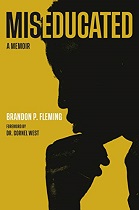 Every so often, a recommendation shows up in my list that catches me completely off guard. This book is one of them. At first, I was not sure what to make of it and had not heard of it previously. But after seeing the high rating, I decided I had to see for myself and now that I have finished the book, I can state with certainty that it is a true gem. As stated on the cover, the book is a memoir by Brandon P. Fleming, a former debate coach at Harvard University and the Founder & CEO of The Veritas School of Social Sciences. The school was formerly known as the Harvard Debate Council Diversity Project. And though he has found success through years of challenging work, there was a time when Fleming could have become an inner-city statistic.
 On May 14, 1948, World Zionist Organization executive head
 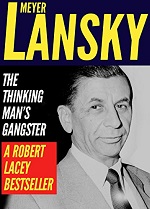 In September 1971, reputed mobster
  On the morning of July 30, 1975,
  Infamous gangster
  Several years ago, I accompanied a friend as she undertook the task of burying her late mother who had passed after several years of ill health. The cemetery is for followers of the Jewish faith and as part of the internment process, I was required to wear a yarmulke and spread dirt over the grave. The rabbi explained the meaning behind the acts, and the presence of others in attendance who did not know her mother but came out after hearing of her death. That day I was a witness to a side of Judaism I was not previously aware of. My friend was not Hasidic but strongly identified with her Jewish roots. Today when I drive through parts of Brooklyn, I take notice of the Hasidic Jewish communities in Crown Heights, Borough Park, and Williamsburg. To the public, the people of these sects are elusive and mysterious. Author Hella Winston stepped into these worlds to learn the truth about those who become unchosen.
 On the morning of December 21, 1940, American writer

You must be logged in to post a comment.