
 Quite some time has passed since my last post, mainly due to work matters and my being fully invested in finishing the book that is the subject of this review. Originally, I had planned on reading this three-part autobiography by William L. Shirer (1904-1993) one book at a time but Amazon also offers them combined and I decided to take the plunge. Shirer is by far, one of my favorite authors and there was no way I could pass this one up. Some of you may be familiar with him and recall that he is best known for his time as a CBS correspondent stationed in Nazi Germany during Adolf Hitler’s (1889-1945) rise to power. Upon returning to the United States, he moved to radio full time and lived the rest of his years as an author of historical non-fiction that has stood the test of time.
At the onset, I did not fully appreciate the length of the material. And to say that the e-book is a long would be an understatement. But contained within is an incredible story by one of America’s greatest witnesses to history. Up first is volume one called “The Start” and his story begins in the Midwest in Cedar Rapids, Iowa on February 04, 1904, shortly after the turn of the century. America was a very different place and Shirer is a master storyteller who brings the distant past back to life, allowing us to re-live what it was like in a time before cars, planes and the modern technology we take for granted daily. As Shirer tells his story, he reveals something about his family’s ancestry that would later be a source of irony in the book. To be more specific, Shirer explains:
“The family name originally was Scheurer, a fairly common name in the German Black Forest region. Some time during the trek west it was Anglicized to Shirer. My grandfather attached no importance to the change, explaining to me once, when I asked him, that it was done mainly because the town officials and tradesmen mistakenly kept writing it the way they thought it sounded, and it was simpler to go along with them.”
In a twist of fate, the author of German stock, would make his name famous by reporting on the atrocities of the Third Reich in his family’s fatherland. But Germany was not his first destination as a foreign news correspondence. In fact, Germany was not even on his list of places to be stationed. How and why he left the United States to work in Europe is fully explained and it is clear that from a young age, Shirer’s life was destined to be anything but ordinary. It surely was a complex fate and Shirer sums up the turn of events in this passage:
“I had come over to Europe for two months. As it turned out, I would remain there to live and work for two decades, experiencing and chronicling the remaining years of an uneasy peace, the decline of the democracies, the rise of the dictatorships, turmoil, upheaval, violence, savage repression, and finally war.”
Shirer did return to the United States early in his career, but a meeting with Robert Rutherford “Colonel” McCormick (1880-1955) of the Chicago Tribune turned out to be more than he could ever expected and set him down the path that would take him back to Europe and finally Berlin, where he would witness the rise of Nazi Germany. The first volume is a good and Shirer’s memories of his time in Europe wherein he convalesced with some of the greatest writers and stars are interesting. Among the many stars who make an appearance are literary greats Sinclair Lewis (1885-1951), Gertrude Stein (1874-1946) and Ernest Hemingway (1899-1961). Shirer is like a human recorder, observing everything and brining the past back to life through his words. It becomes clear that Europe is a second home and a place more familiar to him than the United States. And though he would eventually return home, the reader will begin to see that Europe is the place where the best is yet to come and his to Germany in the second volume called “The Nightmare Years”, is where we see the William Shirer that most of us will be familiar with.
In the second volume, Berlin takes center stage as Hitler is ramping up the Germany war machine as part of his master plan to dominate Europe. But first, he moves to annex neighboring countries without the use of force and Shirer revisits each episode to explain how Hitler pulled off those feats and why no one moved to stop him. It will make some readers wonder whether World War II could have been prevented as early as 1938. Hitler seized on the inaction of Britain and France, setting his sights on Poland. But this time, people did step in and the world went to war. Shirer, who had left the Chicago Tribune in a weird series of events that is discussed in the book, was hired by legendary broadcaster Edward R. Murrow (1908-1965) to become the CBS Correspondent in Berlin. This change of fate placed Shirer at the scene of the crimes so to speak as the Nazi regime plotted and schemed its way to become a looming threat across an entire continent.
His interactions with the German officials are particularly amusing and reveal the façade presented to ordinary Germanys by the Nazis who had assured them that Germany did not want war with anyone. Reich Minister of Propaganda Joseph Goebbels (1897-1945) makes repeated appearances throughout the story and the full extent of his delusion is on display. Shirer gives his analysis of Goebbels and the other characters in Hitler’s inner circle whose names are infamous in world history. I believe Oscar Wilde had it right when he said “the world is a stage, but the play is badly cast”. However, in Nazi Germany, the cast was not only but deadly to anyone deemed inferior or Jewish. Shirer does not go into the issue of the concentration camps extensively and I believe to do so would have required a different book. But he does bring up the matter later on during the Nuremberg trials. This part of the story is focused on the rise, menace and fall of Nazi Germany but in a highly compressed format. Also, Shirer and his family left Germany in 1940, five years before the Germany military surrendered to Allied forces. His return home and life after war are covered extensive in volume three titled “A Native’s Return”.
Upon returning home, Shirer starts the process of becoming re-acclimated with his native land. I do not believe he ever imagined how his life would change as he re-settled in America. He found a place on radio but his relationship with Murrow takes a strange turn and Shirer goes through the entire story of his departure from CBS. I have not heard Murrow’s side if he ever put it in writing or gave statements orally. But, the influence of former CBS president William S. Paley (1901-1990) is clearly evident and cast a dark cloud over the events as they play out. But Shirer does not stay down for long and moves through life facing adversity head on. And one decision in 1954, changed his life and reputation forever. It was then that he decided to write his masterpiece, The Rise and Fall of the Third Reich: A History of Nazi Germany, a book that remains among my favorites. What I found surprising through Shirer’s words is that originally, no one wanted to publish the book. It sounds mind-boggling today but I can understand that in 1954, a book over 1,000 pages was not an easy sell and still is not. But in writing that book, Shirer created the definitive account of the Third SS Reich.
Following the success of the book, Shirer embark on another project about the French defeat in World War II, a book which I have added to my list. That book’s creation and reception are explained and shows the extent of knowledge Shirer possessed with regards to the war. As the third volume progresses, he offers his continuing commentary on historical events in American history from Watergate to the Iran-Contra scandal. And his frankly discusses his personal problems including the relationship with his wife Tess and his heart problems in later years. Incredibly, Shirer never stops moving and even fulfils is dream of seeing Russia. A good recap of that trip is also included in Shirer’s signature writing style. As the third volume winds down, Shirer provides an overview of his life and those of his closest friends who all meet their own ending in various ways. It truly is an incredible story of a journey through a century that changed our world. As an American, he was placed in a unique position observe the world and as a final reflection, Shirer closes the three-part series with this quote that I personally can relate to for a number of reasons:
“It was a complex fate, maybe, as Henry James said, to be an American and one, I realize, not especially admired by some in other countries and other cultures, who perceived us as “the ugly Americans.” Still, as I wrote in the last line of the general introduction, I am glad it was mine.” – William L. Shirer
B08L9JTCYQ
 February 9, 1979 marked 40 years since Paramount pictures released the cult-classic film
  During my first semester at the John Jay College of Criminal Justice many years ago, I attended a class in the field of fire science as part of my graduate degree track. In the class, we, were required to study one of the deadliest fires in New York City history: the Triangle Shirtwaist Factory fire on March 25, 1911. Our professor warned us that the story was deeply disturbing and that the detailed descriptions of the victims would be beyond grisly. However, he also explained that as part of the basis for a career in fire protection, we needed to understand the life safety code and the stories of how and why fire protection has continued to advance. Today, nearly twenty-three years later, I still recall the fire and its impact on workplace safety. But I decided to read this book by David Von Drehle to revisit the fire and perhaps learn something I did not know previously. And what I found within its pages, is a story much longer story than the one I had learned of over two decades ago. And similar to when I first read about the fire in college, I also felt chills go down my spine this time around.
 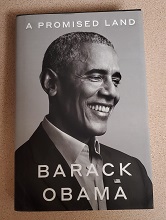 I believe that we can all agree that 2020 was a year unlike any other in modern history. The coronavirus, officially known as Covid-19, brought the world to a grinding halt and disrupted our lives in ways we could have never imagined. Here in the United States, we saw the pandemic take hold, social unrest erupt and the election of Joe Biden, Jr., as the next President of the United States of America. His swearing in on January 20, will mark the final stage in the transition between administrations. For some, it signals the return of politics largely void of the more extreme rhetoric that has gripped the country in recent years. Former President Barack Obama, will undoubtedly be called on for support and advice. I have often thought back to the Obama administration and the decisions that were made on a range of issues. But in particular, I have become even more interested in what life is really like as the Commander-In-Chief. This book, by the 44th President of the United States is exactly what I had been looking for. Not only does it provide an insider’s view into life within the White House, it is also a sobering account of life as a politician. There are highs and lows with a lot in between.
  Joseph P. Kennedy, Sr. (1888-1969) frequently reminded those he knew that his ancestor had come to America to escape the “potato famine” in Ireland. While Kennedy was certainly well versed at re-writing his family’s history, the famine did indeed exist and caused death and destruction across southern and western Ireland. I had known of the famine and it resulting in the mass exodus of Irish families who made new lives in North America. However, there was much about the famine that I did not know and felt that this book was the perfect choice to learn about a historical event that changed Irish history. Those of you who follow this blog might recall some of the reviews I have posted regarding the conflict in Northern Ireland known as “the Troubles”. Here, I am shifting gears a bit and taking a step back further in time. And the first question I had for myself before reading this book was just what exactly did happen during the famine? Author Susan Campbell Bartoletti provides the answer to that question and a wealth of information that will allow any reader of this book to fully understand the cause of the famine and the events that transpired.
 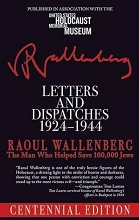 I am always on the lookout for stories that I have not yet heard and names of people I am not yet familiar with. When I saw the cover of this book, I tried to jog my memory with regards to the name of the author. I finally realized that I did not know of Raoul Wallenberg (1912 -1947?) but I knew instantly that I had to read this book. Admittedly, I am always interested in the personal correspondence of figures from the distant past to see how information was shared in the years before E-mails, SMS and social media. The cover of the book directly describes what is contained within which is a collection of the letters between Raoul, his grandfather Gustaf Wallenberg (1863-1937) and Raoul’s mother Maj von Dardel (1891-1979) whose replies to her son are not included.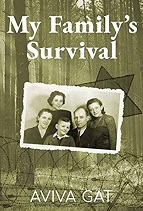

 When we think of political dynasties in America, perhaps no other name has had as big of an impact as the Kennedys. They are both admired and loathed but their importance to the American experience cannot be understated. The patriarch, Joseph (“Joe”) P. Kennedy, Sr. (1888-1969) was once one of the wealthiest men in America. Yet for all of his financial success, controversy followed him and his family for years after his death. The family’s success undoubtedly reached its highest peak with second son John F. (“Jack”) Kennedy (1917-1963) was elected in 1960 as the next President of the United States. For Joe, it was a dream come true and reaffirmed his mantra that “Kennedys don’t lose”. To most of the public, the Kennedys seemed like figures out of a story book and the media’s creation of the term “Camelot” that was given to the Kennedy White House, further enhanced the family’s mythical status. The image presented to the public gave the impression of a fairytale marriage that any single person would envy. Today, we know through the benefit of hindsight that the truth is far less glamarous and behind the scenes, there were dark storm clouds gathering as infidelity, old man Joe’s influence and one foreign crisis after another made life as the first family strenuous to say the least. Rumors have persisted over the years that Joe Kennedy provided the money for all of his sons’ political campaigns and that the money he provided was used in several places to swing the election to his son Jack. And while there has never been documented evidence of such, statements have been made by many individuals that action were taken to give Kennedy the election. All knowledge of what really did happen went with Joe Kennedy to the grave and I doubt that even his sons knew the whole story. He was a master at compartmentalization and for years, remained chameleon like figure. Ronald Kessler decided to take another at Kennedy’s life and what he found has been compiled into this book that peels back the layers that have shrouded the Kennedy family is mystique for several decades.
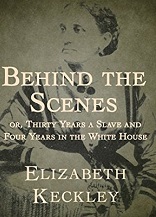 The assassination of President Abraham Lincoln remains one of the most important historical events in American history. Honest Abe, as he was known, had been elected as the first Republican president to serve in the highest office in the land. The Grand Old Party (GOP) had been founded in 1854 and Lincoln was the icon for what the party stood for. In the wake of his death, John Wilkes Booth (1838-1865) was shot and killed by law enforcement officers and several of his co-conspirators went the gallows including the first woman to be executed by the United States Government, Mary Surratt (1823-1865). Lincoln’s widow, Mary Todd Lincoln (1818-1882) grieved deeply for her husband but what I was not aware of, was her close friendship with a former slave and dress owner by the name of Elizabeth Keckley (1818-1907). When I saw the title of the book, I had to do a double-take and quickly realized that I needed to read this book. And I can after having finished it, that it is an incredible story from a first-hand witness to the personal lives of Abraham Lincoln, his family and important figures in Washington who do not escape Mary’s skeptical eye.

You must be logged in to post a comment.