
 The United States is considered by many historians to be “young nation” due to it being in existence since 1776. While it is true that my nation’s history is not as extensive as Ancient Greece or Egypt, in the time since its creation, America has been the source of some of the most groundbreaking events in world history. Incredibly, there are dozens of smaller events that have taken place which many Americans have forgotten about or are not aware of. When President Donald Trump ran for office in 2016, he made it clear he wanted to bring jobs back to the Appalachian region known simply as “coal country”. It was profound promise to make and some might go as far as to say it was deception on the part of the candidate. Four years later the situation in Appalachia has not changed much and coal is widely considered to be an older energy source to be exported rather than used domestically. Natural gas and nuclear power have substituted coal as America continues to employ cleaner sources of energy. West Virginia is seen as the heart of Appalachia and has made headlines in recent years due to the surge in opioid addiction. I watched the 2013 documentary Oxyana and it provides a glimpse into the lives of some West Virginians but surely, it does serve as the example for the entire state. But what we do see in the film continues to exist and is cause for concern. One question I have always had is what exactly happened during the time in which coal was so widely desired? I had read Henry Caudill’s Night Comes to the Cumberlands: A Biography of a Depressed Area and therein the author provides a thorough explanation of the coal story in Cumberland County, Kentucky. James Green shifts the focus here to West Virginia and tells the story of its coal miners who waged a battle that helped changed labor practice in America.
Before starting this book, I believe that it is imperative for you to clear your mind of any pre-conceived notions about West Virginia. As I began to read, I reminded myself that there was much about West Virginian history I did not know and this book is solid proof of that belief. Green takes us back in time to the middle to late 1800s as mining companies begin to realize the enormous potential for profits in West Virginia. Dozens of corporations soon set up shop and began hiring miners to engage in backbreaking and deadly work. Sadly, the workers are essentially viewed as “tenants” of the coal company which is recognized as a “landlord” by the law. Further, it is clearly explained in the book how miners had very little rights and were financially dependent on the coal company in every part of their lives making the system nothing more than a hotbed of slave labor. The work was long and dangerous with explosions and the caving in of mines a very real threat. In the early 1900s, miners began to wake up and their voices would be amplified by critical events and iconic figures who remain legends in miner lore. The formation of the United Mine Workers of America (UMWA) was the first step in miners taking back control from the coal companies and obtaining protections in what was becoming an increasing deadly profession. Unionization was new to coal country and the coal companies did not give in without a fight. What took place in the wake of its formation, provides us with an incredible story told beautifully here by the author. However, the formation of the UMWA is only one part of the story and there were many faces and events taking place around it that are important pieces to the larger picture.
Every movement needs leaders and there is no shortage of them here. The guiding figures we learn of in the story are Mary Jones (1837-1930) known publicly as “Mother Jones”. She emerges as a powerful voice for the miners and is joined in the struggle by Frank Keeney (1882-1970) and Fred Mooney (1888-1952), whose efforts to protect the miners are critical to the story being told. Admittedly, I did not know the names of these figures nor of the battles between coal companies and miners in both Paint Creek and Cabin Creek. The violence became so bad that Governor William E. Glasscock (1862-1925) declared martial law on more than one occasion. West Virginia was hot and the battle was just heating up. More figures soon enter the story including both former Governor Harry Hatfield (1875-1962) and Matewan, West Virginia Police Chief William Sidney “Sid” Hatfield (1893-1921), whose actions against the Baldwin-Felts Detective Agency earned him the admiration of thousands of miners. Interestingly, both are related to the Hatfield family and the author does discuss the Hatfield-McCoy “feud” that has become a pop reference in American culture. Readers who want to know what really happened during the alleged feud should read Thomas Dotson’s The Hatfield and McCoy Feud after Kevin Costner: Rescuing History, which clears up many long-standing rumors and non-factual statements that have persisted for years.
I found myself surprised to learn of the large number of immigrants that lived and worked in the West Virginian mines. In contrast to a prevailing image of a largely white Anglo-Saxon demographic, immigrants from Europe and Black Americans settled in the area where the men found work in the mines. McDowell county stands out in the story for its black citizens and importance to the growth of the UMWA. And just as Mother Jones realized, they were the key to achieving both unionization and true change for the miners in West Virginia. In fact, the Italian immigrants played a much larger role than many people may realize. And some might be surprised at the large number of Italian settlers but what is often left out of the Italian immigrant story is their arrival in the south, in particulars New Orleans, Louisiana. From the south, many Italians also moved across the United States and settled in areas that provided the new lives they sought in America. It could be said that Green’s book is not just a story on West Virginia’s mines, but also the immigrant experience in America which continues to play itself out as politicians use the matter for political gain.
While reading the book, I quickly realized that was took place in West Virginia was really a small-scale civil war. It may sound like an exaggeration but I am convinced that readers will see just how deadly and fierce the fighting became as coal companies began to use outside enforcers to evict miners off company property. Albert Felts and Don Chafin (1887-1944) emerge as the story’s villains. The battles were deadly and the miners essentially form their own army to take on the corporations. It was nothing short of a war which has received scant attention in discussions focused on American history. Green is fully conscious of this and early on he points out that:
The West Virginia coal miners’ story has never been recounted in full from its origins in 1892, when the first UMWA organizers appeared in the coal camps, to those thrilling days in the first spring of the New Deal, when union forces emerged victorious after forty years of struggle.4 The Devil Is Here in These Hills is a history of that enduring struggle and of the diverse community of working people who carried it on for so long.
Washington was aware of the events taking place in West Virginia but had repeatedly resisted calls from state officials to send in federal troops, believe that the matter could be resolved through negotiation. The stalemate continue through the early 1900s until a key piece of legislation was passed that changed America. The New Deal programs enacted by President Franklin D. Roosevelt (1882-1945) between 1933 and 1939 were critical in repairing the American economy in the wake of the Great Depression. A key component of the program ushered in a new course for American labor. Its significance will not be lost on readers. However, there are sad moments in the book and what happens in the aftermath of the New Deal may in fact be the saddest part of the story despite the law’s impact. I say this because the removal of the need for a united front changed not only the demographics in West Virginia but also gave rise to darker aspects of America’s troubled past. The author explains each in detail and I am sure readers will be shaking their heads by this point in the book.
Jones, Keeney and Mooney are long gone but their actions and commitment to miners’ cause will never be forgotten. The story of West Virginia’s mines and its workers is an example of the bloody and protracted struggle for workers’ rights that continues to this day. Further, it is a part of American history that every citizen should know. If you are curious about coal country and its long history, this book is a must read.
ASIN : B00OV9D9RM
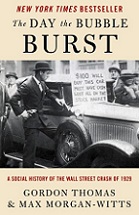 In the autumn of 1929, between the months of September and October, the world was plunged into financial uncertainty as stock markets in New York City and other places saw a massive devaluation of stocks and bonds. Some investors lost millions in the crash and others less financially secure, saw nearly their entire market portfolio crumble before their eyes. In the wake of the crash, America plunged into the great depression that spread misery and despair across the nation for several more years. The crash remains to this day, one of the greatest financial disasters in history. However, its causes are still up for debate and there is no single reason for the catastrophe but numerous factors did combine to bring the economy to a grinding halt. Authors Gordon Thomas and Max Morgan-Witts have studied the crash and tell the story here about the “day the bubble burst”.
 Every time I board a flight at New York’s John F. Kennedy International Airport, I am amazed at the concept of flight. And while I do understand how an aircraft works from a technical standpoint, the process of taking off, cruising and landing still fascinates us and captivates our attention. Today, we reap enormous benefits from the trials and errors of those before us who sometimes gave their lives in the pursuit of flight. In June, 1939, a German pilot named Erich Warsitz (1906-1983) flew an aircraft named the Heinkel He – 176, equipped with a rocket booster for extra lift and speed. The flight was successful and the result of many years of dangerous tests. The pilot and the engineers around him had just changed history forever and ushered the world into the jet engine era. This book is a look back at that miraculous time and Warsitz’s life as presented by his son Lutz.
 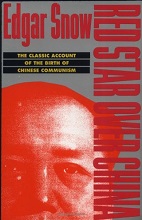 On October 1, 1949, the People’s Republic of China was officially established as the ruling party in the nation. Mao Zedong (Mao Tse Tung) 1893-1976) assumed the position of Chairman, a title he held until his death in 1976. The Chinese Communist Party continues to rule the country and imposes its will on Hong Kong. Taiwan remains independent but is often the source of friction between Beijing and western powers. The story of the Chinese communists is a highly intricate tale that is often left out of discussions regarding the aftermath of World War II (1939-1945). Edgar Snow (1905-1972) spent twelve years in China and was able to observe the emergence of the Communist Red Army determined to liberate China both from Japanese imperialism and the control of the White Army, led by the Kuomintang Government (KMT) headed by the Generalissimo Chiang Kai-Shek (1887-1975). This book is a collection of those memories that take readers back in time to the era when Mao Zedong was beginning to establish himself as a leader and China found itself in the middle of political, economic and social turmoil.
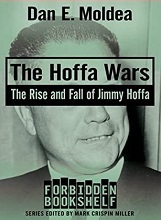 The disappearance of James Riddle Hoffa (1913-1975) still captivates audiences as shown by the success of Martin Scorcese’s
  If you look at cover of this book, you will see of deeply concentrated eyes staring back at you and it becomes instantly clear that behind those eyes is a long story yearning to be told. When I saw this book in my list of recommendations on Amazon, I did not recognize the face. I had heard the name but admittedly, did not know anything about his life. Those of us who find solace and deep interest in the arts are probably familiar with the life of Jean-Michel Basquiat (1960-1988), who in death has earned a place on the list of the best artists from the 1980s. In this stunning biography, author Phoebe Hoban explores Basquiat’s brief and unorthodox life. And it is a story that is both hard to accept and difficult to ignore.
  Those of us who have traveled to Puerto Rico and have seen the island outside of San Juan, known why it is called the island of enchantment. There is no one word explanation for Puerto Rico and I firmly believe that it is a place you have to see to truly understand. Several years have passed since my last visit to the island but upon resolution of Covid-19, I do plan on returning to the place that holds a special place in my heart. Hurricane Maria arrived in Puerto Rico on September 20, 2017, and the devastation was nothing short catastrophic. The storm’s wake revealed the underlying infrastructure in dire need of upgrade that was unable to cope with the hurricane’s power. The electrical grid began to collapse, roads became blocked and residents had to rely on each other to survive each day. Currently, the island is still recovering from the storm’s effects and the Trump Administration’s response to the storm is seen by many as subpar. Some might call that a euphemism but I always refrain from coming as political in any posts. Further, a political discussion can be found within the pages of this incredible book that explains clearly and thoroughly what went wrong with Puerto Rico from the moment the United States launched its invasion in 1989. And I believe that the book will leave you with a very different view of the island’s problems and a range of emotions about how it reached its current state.
 On March 24, 1976, Army Commander General Jorge Videla launched a successful coup against the government of Isabel Peron. The coup marked an end the reign of the Peronist party, universally known from the era of former President Juan Perón (1895-1974) and wife Eva (1919-1952). For many Argentines, the departure of Isabel Peron was a sign that perhaps the country would truly be on the road to democracy. In fact, Berta observes the occurrences and remarks:
  On July 2, 1961, legendary author Ernest Hemingway (1899-1961), took his own life in the small town of Ketchum, Idaho at the age of sixty-one. His suicide shocked fans and even today, the details of his death are unsettling and puzzling. It seems unthinkable that the man who wrote For Whom the Bell Tolls and Old Man and the Sea, would end his life in such a tragic manner. However, what we see from the public view often stands in stark contrast the reality behind the scenes. And one of the best ways to understand the life of the departed is to learn from those that were closest to them as their lives came to an end. A. E. Hotchner (1917-2020) spent fourteen years with Hemingway as the author moved from one city to the next across the globe in what can only be described as an extraordinary life. This is his memoir of the time he spent with the man he called Papa.


You must be logged in to post a comment.