
 Drug addiction has steadily become one of the greatest plagues to affict mankind. Nearly all of us know someone who has struggled with addiction or lost their life to it. Recently, I read Sam Quinones’ spellbinding account of the rise in opioid in the United States Dreamland: The True Tale of America’s Opioid Epidemic , in which Quinones explains how and why opioids have become so ingrained and deadly in American culture. My boss had recently ordered this book about drug addiction to understand the matter which had come up in one of our cases. He mentioned that he did not have the time to read it at the moment but let us know that the book was for the taking to anyone who had interest in it. I decided to take it along with a few other books also on the opioid epidemic. Similar to Dan Peres As Needed for Pain: A Memoir of Addiction , the story at hand involves the drug addiciton of a successful individual whom many would not suspect of being an addict. Eilene Zimmerman tells the story of her late husband Peter, whose battle with addiction claimed his life and led her on a mission to understand how drugs have infiltrated the lives of even the most successful.
As the book opens, Eilene arrives at Peter’s house after learning he had a bizarrer outburst at his son Evan and daughter Anna. No one has heard from him and she decides to check on him and confront him over his behavior. Upon arrival at his house, she notices several odd things before finding him face up and deceased. A called is placed to 911 and she desperately tries reviving him but it is soon clear that Peter is gone. At this point in the book, we are not sure why he has died but only that something terrible has happended and many questions now exist that are answered as the book progresses.
The story of his life and their time together is equally as important as his death and Eilene takes us all the way back to the time when she was twenty-three and in search of a job after recently being laid off. She meets Peter after he interviews her at a job placement center. Over the next two years they became friends and eventually found themselves in a committed relationship. Zimmerman’s memories provide examples of how true love flourishes under the most unexpected of cirumstances. Marriage, children and an eventual move to San Diego, California follow where they settle in with their children Evan and Anna. Peter is a successful partner in a law firm whileEilene exercises her talents in journalism. However, their marriage soon desolves and not long after, Peter starts to exhibit some very strange behavior.
Peter, who was once a doting father and husband, begins to unravel, missing appointments or in some cases not showing for events. Although the couple divorced, they remained close because of their children. Eilene notices some very disturbing aspects of his appearance which Peter quickly explains as Hasimoto’s disease. Wanting to believe him at face value, she accepts his expanation until discovering one day that some parts of the story do not add up. But Peter has an answer for everything, a commonly known trademark of drug users. As she relays the memories of his behavior, readers will be tempted to think “why didn’t she see that he was using drugs?”. One answer is that prior to Peter, she had no direct exposure to it. Her story is similar to thousands of grieving relatives who have never seen up close, the effects of drugs that are mentioned on television and the internet. Peter’s children are equally disturbed and distressed by their dad’s behavior but no one can come up with a logical answer for his erratic actions.
The author looks back with hindsight and provides insightful comments as she tells the story. It is clear that she is now well immersed in the underpinnings of drug addiction in America and also part of the growing number of those who have lost someone close to narcotics. She is candidly honest about her failure to see what was slowly becoming obvious and why she held on to her belief that he needed to see another doctor about the Hashimoto diagnosis. But through her words, readers will be able to piece together a picture of a man who is in the grip of a serious addiction that is literally changing him mentally, physically and emotionally. The meltdown kicks into high gear and for Zimmerman and her children, events soon take a dark turn.
After learning about their lives and the road leading up to Peter’s death, Zimmerman has a lot more to discuss in the book and devotes a signficant portion to the use of drugs in corporate America, in particular among lawyers. This section hit home because I work in the legal field and bear witness to the amount of pressure and stress that attorneys carry daily. Some handle it better than others and yes, from my own knowledge as well, some turn to drugs to ease the stress. But wht I learned here was more than I had bargained for. And to make matters even more surprising, what Zimmerman relays is just a small sample of what is possibly very large scale. Further, what she relays is that drug use is more prevalent among professionals than most of us think. It also reinforces the notion that not all drug users look like they use.
Towards the end of the book, she also devotes a section to Generation Z and the modern day professional. The invention of social media and concept of being “plugged in” all day long has not only increased workloads but stress. The use of drugs culd very well increase among the younger generation who are coming of age in an era where social and workplace pressures are higher than ever. In Japan, it is well documented that some people have succumbed from working themselves to death. While the United States does not appear to be as extreme in the idea of overwork, there are many professionals who do work eighty or more hours each week. For some of them, the keep going, they will turn to illegal drugs that give them the assist they need to keep going. But how do we then give them the help they need before it is too late?
I found myself glued to the pages of this book. Once the story begins, it continues to pick up speed as Peter begins his descent from which he will never return. Zimmerman’s honesty about her own actions and beliefs will provide solace to other wives and mothers who have been in the same situation. And in spite of all that happens in the book, she never stops loving him even after he is gone, showing the long lasting effects of losing someone to drugs. This is a great read from a very strong person who tells you her story so that your family does not live through what she did. Highly recommended.
ISBN-10: 0525511008
ISBN-13: 978-0525511007
 The recent Netflix series
  In August, 2019, a close friend lost her brother, who became yet another statistic in the ongoing crisis regarding opioid and other drug use in America. I had met him previously and his death seemed surreal at the time. In fact, it still does. His parents had never experienced anything like it and did what they could to get him the help that he needed. For them and thousands of other parents who have lost a child to drugs, they often wonder how did this happen? And what could we have done to stop it? There are many answers to both questions but in this eye-opening book, Sam Quinones tackles the first question and tells the story of the development of the opioid epidemic in America.
 In the spring of 1846, a group of settlers left home in Springfield, Illinois en route to either Oregon or California. A popular destination for many was the City of Yerba Buena, known today as San Francisco. By the first week of may, the party had reached Independence Missouri and soon continued on their route. They soon learned of an apparent shortcut through what is known as the Hastings cut-off near Salt Lake City, Utah. The trail was named after Confederate General Lansford Hastings (1819-1870). It was believed that the shortcut would eliminate as much as three hundred miles off of their trip. The group separated and eighty-seven people continued on the trail. Instead of elminating travel time, their journey was extended by another month. Deeply behind schedule, their provisions began to run low and winter soon set in. By the time their ordeal was over, only forty-eight had survived. Some managed to survive by turning to cannibalism and that act has earned them a permanent place in American pop culture. We have come to know this group pf settlers as the Donner Party.
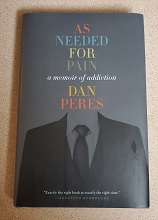 The past several years have given way to a rise in the number of opioid related deaths in the United States. Cities across America have struggled with a surge in drug overdoses and lack of proper facilities to handle the deceased. I knew several people who battled an addiction to opioids and all but one are now deceased. It is a soul crushing and life depleting addiction that cuts across all ethnic lines. Many of us know someone who is currently battling an addiction or once did in the past, whether it was opioids, alcohol or some other substance. And what we all know is that addicts do not get clean until they have realized there is no where else to go but in the ground. Dan Peres is a former Editor in Chief for Women’s Wear Daily Details and in this revealing memoir, he details his own struggle with a drug addcition that nearly took his life.
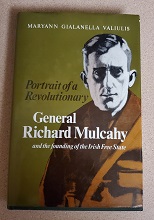 Discussions of the 1916 uprising in Ireland tend to focus on a select group of figures. The names of Patrick Pearse (1897-1916) and James Connolly (1868-1916) are legend in Irish history and their actions part of the narrative of the Republican fight for a united Ireland. In December, 1921, the British Government and Republican forces reached an agreement that officially partitioned Ireland into Unionist north and Republican south. The southern part was established as the Free Irish State, to be led by Michael Collins (1890-1922)who became Chairman of the Provisional Government of the Irish Free State. Collins is well-known in Irish history for his unwavering support of the Republican cause. However, there was another figure who not only worked closely with Collins, but someone whose own story and actions are typically left out of the official narrative. Pictured to the left General Richard Mulcahy (1886-1971), one of the founding members of the Irish Free State and staunch supporter of Irish independence. When I saw this book for sale, I knew immediately that I had to read it and understand who the intriguing character on the cover of the book really was.
 I saw this book in my list of recommendations on Amazon and decided to take a closer look. The cover caught my attention and after reading the full title, my interest peaked. On January 9, 1969 a group of students belonging to the Swarthmore Afro-American Students Society (SASS), took over the admissions office at Swarthmore College. In the months prior, a working paper regarding the recruitment and admission of black students had been released, resulting in immediately backlash from the university’s black students who felt their privacy had been violated and their experiences ignored. The animosity between the students and Dean Hargadon continued to increase and the students felt they had no option but to act. Joyce Frisby Baynes, Harold S. Buchanan, Jannette O. Domingo, Marilyn J. Holifield, Aundrea White Kelly, Marilyn Allman Maye, Myra E. Rose and Bridget Van Gronigen Warren moved into the admissions office and over the next few days, their resistance changed the course of history for Swarthmore College.
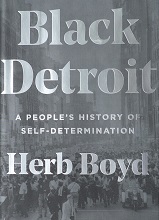 When I think back to my youth, I recall various automobiles that were own by my father, uncles and friends. Their cars were American made and typically products of General Motors. Buick, Pontiac and Cadillac were the cars of choice and hardly anyone then owned a foreign car. If you owned a Cadillac, it meant status and success in the America. Detroit became Motor City and its dominance over the U.S. auto industry remained in place for several decades until automakers from Japan and Germany stormed into the American market. The city has an extensive past, beginning with French explorer Antoine de Lamothe Cadillac (1658-1730) for whom the luxury automobile is named after. In 1701, he established what is now Detroit before eventually returning to France where he lived out the rest of his days. The evolution of Detroit is one of America’s greatest success stories and also one of its greatest tragedies. Throughout all, its black citizens have always remained firm in their dedication to seeing Detroit become a city to be envied. Herb Boyd takes another look at his city and the role of black men and women in the development of a famed city.
 In 2019, streaming giant Netflix premiered “

You must be logged in to post a comment.