

On September 11, 1973, Chilean President Salvador Allende was overthrown through a CIA backed coup, that resulted in the seizure of power by General Augusto Pinochet. The removal of Allende satisfied the Nixon Administration which had seen the democratic election of Allende as a threat to the Western Hemisphere. To Washington, it was inconceivable to think that the events in Cuba were spreading across Latin America. The consensus was clear, Allende had to be removed. McCarthyism and the red scare led to anyone having left-leaning political views to be branded as a communist determined to see the fall of Capitalism. Among Allende’s supporters was Chile’s national poet, Pablo Neruda (1904-193). Twelve days after Allende’s removal and death, Neruda died after a long battle with pancreatic cancer. He was sixty-nine years old. Forty-five years later, his poetry is still beloved in Chile and other parts of the world. And he is recognized as being one of the world’s greatest poets. I had heard of Neruda before and have been fortunate enough to visit Chile. It is a unique country and there is something special about it which is not easy to put into words. Chile truly is a place you have to see in person, to experience Chilean culture and travel through Patagonia. I admit that I did not know much about Neruda’s life, so when I saw this biography in my recommendation list, I did not hesitate to buy it and start reading nearly instantly. And what I have learned is more than I could have ever imagined.
Mark Eisner has researched Neruda’s life and has compiled a biography that is nothing short of outstanding. Surely, Neruda took some things with him to the grave as all great figures do. But his large volume of work, speeches and other writings have survived, and they would all help Eisner in what was a monumental task. Neruda’s story begins in 1904, an era remotely differently from the era in which we currently live. Eisner has recreated early 1900s Chile and first tells us the story of Neruda’s parents. His father, José del Carmen Reyes Morales, is a central character in the story and the beginning of the book focuses on his life before Neruda enters the picture. On July 12, 1904, the story changed for good, when his wife Rosa gave birth to a happy baby boy, Ricardo Eliecer Neftalí Reyes Basoalto, the future Pablo Neruda. The young child enters a world that is marred by affairs, illegitimate children, strict social class and backbreaking work on the railroad which in some cases proved to be deadly. Neruda would inherit some of his father’s nefarious traits and the would cause him consternation and scandal in his own life. And through his poetry, he allowed the world to read his emotions. But what many did not know then and may not know now, is that there was also a very dark side to the famed poet.
Eisner does not shy away from Neruda’s failings and when necessary, uses Neruda’s own words to drive home the point. As I read the book, there were some points at which I shook my head in both shock and disgust. In fact, there are several parts of the book that may prove to be upsetting to female readers. Incredibly, Neruda was able to compartmentalize his life and the ease in which he discarded those around him was quite frankly, disturbing. To the public, he was the rising poet and Eisner follows his developing career which threatened to place him in poverty. But through a series of events, blessed with luck, Neruda persevered and went on to create poetry that has changed the lives of millions of people. But what Eisner also shows, is the two sides of Neruda which were unable to be reconciled and a poet struggling with his own happiness while at the same time, oblivious to the errors of his ways.
Neruda was an outspoken leftist and his affinity for the Soviet Union and the communist system of government, earned him many enemies as well. The author explores this part of Neruda’s life and the fear of communism that spread across several continents. His devotion to communism following his admission into the Chilean Communist Party, would prove to be a thorn in his side until his final day. But for Neruda, staying in one place for long was never an option and this story is filled with travel around the world as Neruda works and creates in several countries. Through Eisner’s words, we follow Pablo and his many love interests across the globe as he travels to and from Chile both as foreign agent and fugitive. At times, it seemed as if his life was straight out of a Hollywood film. There is no let up and Pablo has forced Eisner to move full speed ahead. Once I started the book, it became increasingly difficult to set it aside for a later time in the day. I was glued to the pages, curious to see where Neruda ends up next and who makes an appearance in his life and who makes their exit. To say his life was unorthodox would be an understatement.
At over six-hundred pages, the book is not exactly a short read but the pace of the story will result in readers forgetting about the length completely. The story is engaging and Neruda was quite the character. But he possessed a natural gift and Eisner’s inclusion of his poems, gives the book an added air of authenticity to it. In those sections, he turns the floor over to Pablo who never failed to deliver.
Having completed the book, I have mixed feelings about Neruda. But that is a credit to the author’s talent. Eisner does not show the Neruda people want to see, he shows us the Neruda that we need to see in order to come to our own conclusions. A brilliant and talented poet was also at times a cold-blooded monster. He battled loneliness but had fans worldwide. Some would call him a walking contradiction and others might simply accept the label of eccentric. Regardless off the adjective, Neruda did not fit perfectly into any mold and Eisner has captured his complex character which at times did not function based on reason or logic. It is a great story of a unique person, who never faced his own demons but was able to capture the hearts and emotions of millions of people facing their demons. In death, he became a legend of nearly God-like status and remains a cultural icon in Chile. He is to Chile what Jorge Luis Borges is to Argentina. Those looking for a good biography of Pablo Neruda, will be more than satisfied with this gem by Mark Eisner.
ASIN: B072SCL5Z
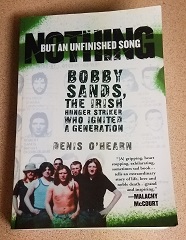 Recently, I have become fascinated with the troubles in Northern Ireland, a culmination of long-simmering tensions between Catholics and Protestants in Ulster Province. The conflict is among the longest running in the world and has claimed the lives of thousands. In each of the books that I have read, I kept coming across the name Bobby Sands (1954-1981). I knew he was one of several prisoners at the Long Kesh correctional facility who died following a hunger strike in protest of the conditions at the jail and the policies of London. However, I did not know much about his life. I became focused on him and eagerly searched online for whatever I could find. Amazon delivered yet again with this definitive biography of Sands’ life by author Dennis O’Hearn that is nothing short of riveting.
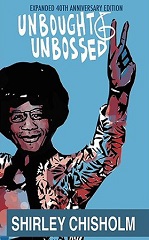 Many years before Hilary Clinton decided to run for the office of President of the United States, there was another politician who had eyes on the White House. And although she did not win the Democratic nomination, she earned a significant amount of votes and in the process, showed that a women candidates were more acceptable to society than many have long believed. Her name was Shirley Anita Chisholm (1924-2005) and through sheer determination, she launched a political campaign that challenged many accepted norms in American society and helped to break down barriers, even today. In January, 2019, thirty-six women joined the House of Representatives following the success by Democrats in the 2018 mid-term elections. The number is now the record for the most women in the House of Representatives and if current trends are an indication, that number will continue to grown through future elections.
 Several years ago, I visited Dublin to finally see Ireland for myself. And while I admit that I was not swayed by the Irish breakfast, there were many other things about Dublin that made up for the first morning and I left Dublin with a sense of warmth and humbleness. During my visit, I stopped by the General Post Office (“GPO”) to send out a few postcards. As I stood on line with other tourists, I marveled at the beauty of the building. After some time, I and the other customers departed and went our separate ways. But I do not believe that many of us on line that day, recalled or were aware of the historical significance of the post office. On April 24, 1916, members of the Irish Republican Brotherhood (“IRB”), staged an uprising across Dublin to force an end to the rule of the British Crown (“the Crown”) across Ireland. The GPO was one of many occupied buildings but is recognized as “ground zero” for the various seizures that occurred. The events of that day have become known as the Easter Rising and contained within the pages of this book, is the story from start to finish by author Tim Pat Coogan.
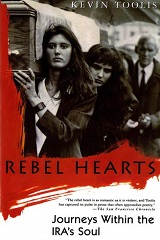 The conflict in Northern Ireland between pro-British Protestants and Republic Catholics, is the longest running feud to date. The planned exit by England from the European Union has resulted in suspense and apprehension throughout the rest of the United Kingdom. The Irish have undoubtedly been watching closely as any movement by England will have a ripple effect that will eventually reach their shores. Belfast remains a major tourist attraction in the north, similar to its southern counterpart Dublin, and receives millions of visitors each year. History buffs may recall that Belfast is the city in which Harland and Wolff built the world-famous RMS Titanic for the White Star Line. But behind the fame of the doomed ocean liner, lies a dark side that has taken more lives than anyone could have ever imagined. Belfast and Londonberry (“Derry”) have served as the battlegrounds for the deadly war between Nationalists and Republicans forces. Across Ulster province, six of the nine counties are protected by the British Crown (“the Crown”) and unofficially by the Ulster Volunteer Force and Ulster Defense Association. The Irish Republican Army (“IRA”) stands firm as the opposition force founded to defend the minority Catholic population from what they believe to be the refusal of the Crown to let Ireland become a united country. Kevin Toolis is a journalist and screenwriter born in Edinburgh, Scotland to Irish parents. In this eye-opening and chilling book, he travels back to the country of his ancestors, seeking to understand what drives the men and women of the IRA.
 When I first learned of the country called Burkina Faso, I felt a sense of shock at how little of it I had heard not only in school but through the media. The landlocked African nation was never mentioned in the history books that I had read and even today it remains a minor player on the world stage. But between the years of 1983 and 1987, events transpired there that were both remarkable and tragic. Had success prevailed, the world would know Burkina Faso today as the pioneer of progressiveness in modern day Africa driven by the ideas of its late leader Thomas Isidore Noël Sankara (1949-1983).
 If you have traveled to or live in Louisiana, I think you will agree that it is one American’s most unique states. The City of New Orleans has a storied past on its own and each year, it attracts millions of visitors, curious to see Mardi Gras (Fat Tuesday) and the world-famous French Quarter. Baton Rouge proudly serves as the state’s capitol and an icon on the landscape of the deep south. However, there is also a dark history of Louisiana, one that filled with racism, corruption, crime and poverty. Louisianans with a long memory will remember that there once lived a governor who ruled the state with an iron grip until his reign was ended by an assassin’s bullet. He was Huey P. Long (1893-1935), the 40th Governor of Louisiana who left a complicated legacy that is nothing short of surreal.
 On December 26, 1991, the world watched in shock as the Union of Soviet Socialists Republics (USSR) dissolved, splitting the once mighty Soviet Union into fifteen separate nations. I vividly remember watching the news broadcasts and seeing the flag of the Soviet Union lowered for the last time. It was the end of an era highlighted by the Cold War in which Washington and Moscow viewed each other as a threat to world peace. Paranoia, suspicion and espionage propelled the two to the brink of nuclear war on several occasions. In October, 1962, the world watched in gut-wrenching suspense as the Cuban Missile Crisis heated up and threatened to be the spark that ignited the next world war. President John F. Kennedy (1917-1963) and Soviet Premier Nikita Khrushchev (1894-1971) found their selves in a situation that could have resulted in the physical destruction of half the planet within a matter of minutes. Diplomacy eventually prevailed through the use of back door channels encouraged by the realization of figures in both governments that the looming showdown would produce no winners. Tensions between the two super powers cooled but never full subsided and as the dissolution of the USSR played out on television, Washington closely monitored the events while re-examining its global position as Russia emerged from the post-Soviet empire as the country to watch. Twenty-eight years later, the USSR is still recalled as one of the greatest powers in history. Its fall was earth shattering and left so many wondering, how and why did it happen?
 On February 13, 1961, United Nations Ambassador Adlai Stevenson (1900-1965) placed a call to President John F. Kennedy (1917-1963) and informed him that Patrice Lumumba (1925-1961), the first Prime Minister of the Independent Democratic Republic of the Congo, had been murdered a month earlier. The moment that Kennedy took the call was captured by a photographer and the image shows him with his hand covering his face in shock. The picture truly does speak a thousand words and Kennedy’s dismay resonated with millions of people around the world.
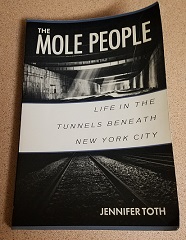 A subway ride through the underground portion of the New York City Transit system can reveal far more than most might anticipate. And if you find yourself on a train passing through lower Manhattan, you might pick up images of abandoned stations or long-lost passages through the windows of the subway car, forgotten with time as relics of the City’s storied past. The system itself is truly is a modern marvel that continues to be renovated and upgraded. But there are still many parts that remain hidden, known only to workers of the Metropolitan Transit Authority (MTA) and possibly others who have dwelled in prohibited areas far removed from the sight of strap-hangers. In the 1980s, the City saw a rise is the number of people living beneath the sidewalks, in crevices, tubes and tunnels buried far below the surface. The total number of underground dwellers will most-likely never be known. But their existence is a telling sign of the extremes some people go to when living on the streets. Jennifer Toth, stepped into this world, largely unknown even to those that live in New York City. Some may call her foolish and others may feel that she was courageous. I believe that she had a mix of many things as she covered the lives of those she met as she explored a completely unknown and different world that could only seem to exist in fiction.

You must be logged in to post a comment.