
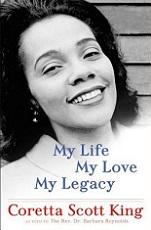
 I find that as I age, I am more focused on historical events that changed the course of America, in particular from Black Americans. It has been said that in order to know where you are going, you have to know where you come from. For millions of Black Americans, the question of identity has been a difficult one to answer. Some prefer the term African-American while others prefer Black-American. And there are some who prefer Afro-American or just simply Black. Regardless of the label, there is a shared history of pain, struggle and the never ending goal for full integration American society. Over the past fifty years, tremendous progress has been made in the United States but there is still much work to be done. But one of the greatest things about America is our ability to correct and learn from mistakes that have lingered for too long. The young generation of today lives in a world far removed from only twenty years ago. Their world is one in which technology is ingrained and life moves at an even faster pace. My father often thinks back to the period of integration and the times where it seemed as if America was going to tear itself apart. Even to him, as a kid it seemed as if the accomplishments by Black Americans over the years were just a pipe dream.
The Civil Rights Movement was a platform not just for Black-Americans but for all people that had been denied basic civil rights to which everyone is entitled, whether here in the United States or around the world. Dr. Martin Luther King, Jr., has always been seen as the “leader” of the American movement. The reality is that he was one of endless figures who displayed unparalleled bravery and dedication. But he is easily the most recognizable. But behind him, was his wife Coretta Scott King (1927-2006), who in later years became even more vocal in her commitment to Dr. King’s legacy and the movement they both believed in. This book is her autobiography so that the world can learn more not about Mrs. King but about Coretta.
Her story begins in 1927, in the small town of Heiberger, Alabama during the Jim-Crow Era. Readers sensitive to the subject matter might find this part of the book a little unnerving. Although there are some low points, there are equally many high points as well and the pride and dignity with which the Scott family carried itself offsets the darker memories that she recalls. From an early age, she is independent, tough and open to change. Those traits would prove to be invaluable later in life when a young bachelor named Martin Luther King, Jr., walked into her life. It is at this point in the book that the story picks up speed at an extraordinary pace.
Martin’s story is well-known and he remains one of the most iconic figures in world history so I do not think it is necessary to go into detail about his life in this post. Plus, Coretta does that for us but not in the position of a biographer, but simply as his wife and the mother of their four children. This is the behind the scenes look into their very private life which might surprise some. In contrast to the public version of Dr. King which was cool, controlled and always prophetic, the version shown by Coretta is humble, playful, a homemaker, a prankster and a father. The movement is never far away and Coretta explains early on that they both believed that the movement was a higher calling than anything else. And each would maintain that belief until the end of their lives.
As the story moves into the 1960s, the movement gains momentum and Coretta revisits all of the critical moments that changed America. The bus boycotts, Rosa Parks (1913-2005), Bull Connor (1897-1973) and Jim Sharp (1922-2007) are just some of the events and figures that she discusses. She also discusses the much darker moments that occurred such as a the murders of John F. Kennedy, Malcolm X, Robert F. Kennedy and her beloved Martin, whose death rattled the globe and changed her life permanently. Following his assassination, she became the heir apparent to the King legacy and she has never wavered in that task.
The book changes gears after Martin’s death and the focus shifts primarily back on Coretta. Her children also come into sharper focus and she discusses how each responded to their father’s death and what he meant to them. Although Martin was gone, Coretta was still in high demand and the movement never stopped. Her circle of friends and acquaintances changes slightly but the core group of support remains intact. Later in her years, she finds herself in what some would call the widow’s club but to her, it was far from that. She was a survivor of the movement who understood that death was a constant threat to anyone who dared to challenge the system.
There is one part of the book that did strike me and that was her discussion of rumors of Martin’s infidelity. Accounts of philandering, allegedly picked up through FBI wiretaps has circulated for years. It is true that tapes were mailed to their house and Coretta elaborates on what they contained. She also has choice words for J. Edgar Hoover and his bureau. King’s friend Ralph Abernathy (1926-1990) comes under fire here for his statements in his autobiography And The Walls Came Tumbling Down wherein he discusses Martin’s transgressions. Coretta remains firm in her beliefs about Martin’s actions outside the home and Abernathy never changed his position. All are now deceased, leaving us without the opportunity to clear up the issue. What I can say is that I have never seen any photo evidence of such activity and the main source for the information came from the very agency whose job it was to discredit him. I will leave the issue up to the reader to research.
Dick Gregory once said that Black History is American History. One month in February does not come close to telling the full story. But that is easily circumvented through books such as this, written by those who were present during the defining moments in the American experience. Coretta is no longer with us, but her words of wisdom and guidance remain as a light to lead us through our darkest times, some of which have yet to come. Highly recommended.
ISBN-10: 1627795987
ISBN-13: 978-1627795982
 The cover of this book is bound to cause many to do a double take. The crossing out of the word black is far from subtle, but anyone who is familiar with the late Richard Claxton “Dick” Gregory (1932-2017), will know that subtlety was not in his character. He was known as a star comedian for many years but he was also a civil rights activist, nutrition guru, social critic, writer and occasional actor. His death marked the passing of a icon whose sharp wit and frankness earned him the respect of his peers and people across the nation. Published after his death, this book takes a look at the official history of African Americans that Americans have been told for more than a century. Gregory makes it clear early in the book that American History and Black History are one in the same. It is a valid point and for African Americans, the United States is the only home that many have ever known. The history that has been taught in classrooms across America continues to be re-examined in the pursuit of the truth by historians and independent researchers. The gift of the internet has allowed truth-seekers to reach audiences of monumental sizes as we step back in time to learn what really did happen with regards to pivotal events that shaped the modern day United States.
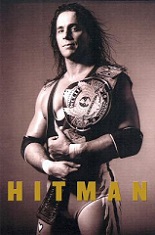 Baseball has long held the title of America’s pastime. The NBA and NFL have respectable followings of their own. However there is also the world of sports entertainment that has been made famous by the phenomenon of professional wrestling. My father has always called it “rassling” and when I walked around the house doing my best impersonations of the stars of what was then called the World Wrestling Federation (“WWF”), he always shook his head in laughter. In spite of the wisdom he possessed about the spectacle I was obsessed with, not once did he ever try to dissuade me from watching the heroes that I came to believe in. And when he and my uncle took my brother and I to Madison Square Garden to see Hulk Hogan live in person, it was if we had been transported to wrestling heaven. As I aged, my view of wrestling changed and so did the characters I found to be standouts. Among them, was Bret Hart, known as the Hitman and leader of the Hart Foundation, the heel group that had an enormous following of fans. When he retired not long after suffering a devastating concussion in the ring, I and many fans looked back on the many matches he took part in with sadness knowing he would never set foot in the ring again. I always wondered what really went on behind the scenes and when I saw that he had written this autobiography, I knew that I had to read it. And I am happy to report that the book did not let me down and it is one of the best books about the wrestling industry that I have ever read.
 On the morning of February 26, 1993, Ramzi Yousef and a team of terrorist drove a bomb laden van into the basement of the World Trade Center complex in New York City. As I watched the news from across the river in Brooklyn that morning, I felt a sense of shock and vulnerability. America had been attacked. When Ramzi Yousef was captured and extradited to New York to stand trial, many New Yorkers breathed a sigh of relief. The Hon. Kevin Duffy sentenced Yousef to life with no parole plus an additional 240 years which he is currently serving at the ADX Florence Supermax facility in Fremont County, Colorado. Eight years later on September 11, 2001, America was attacked again when terrorists hijacked four commercial airliners, crashing two into the World Trade Center, one into the Pentagon and the final aircraft outside of Shanksville, Pennsylvania. The response from Washington was swift and a show of force nearly unparalleled in modern times. The mission to capture those responsible and root out terrorists, led to Afghanistan, a land-locked country in South-Central Asia. Images of U.S. troops and the enemy Taliban flashed across news screens as reports of successes in the mission to root out terror were triumphantly proclaimed. To many Americans, Afghanistan was another far away place across the world where people lived in ways that seemed to be from ancient times, going against “American ideals”. Today, Afghanistan is nearly completely forgotten by the American public. There has been no news about what America’s current role is and plans to withdraw American forces have been cast aside as yet another victim of the focus on what has become reality television politics. The story of Afghanistan and its importance to world history is often misunderstood and in some cases not even recognized. But there is far more that meets the eye and author Steve Coll explores this topic in this New York Times bestseller that tells the full story what did happen in Afghanistan between the Soviet Invasion and the deadly attacks on September 11, 2001.
 The Second World War remains one of the most studied and brutal conflicts in the history of man. The rise and fall of Adolf Hitler and the Third Reich have become a case studies for history buffs and students learning about a war that nearly resulted in the complete destruction of Germany and the continent of Europe. It is true that Hitler had many supporters but he also had large numbers of detractors, some of whom were serving in his own army. The attack of personal liberties and treasured institutions, caused shock and consternation across Germany. The persecution of the Catholic church by the National Socialists is among Hitler’s darkest deeds. Throughout the war, Hitler would ramp up his attacks on the church and his bloodthirsty purge of religion knew no bounds. The horror with which the clergy watched the rise of the Third Reich spurred many to action and they were determined to rid Germany and the world of the man they saw as the very incarnation of evil. Among them was Dietrich Bonhoeffer (1906-1945), the man who became a pastor, martyr, prophet and spy.
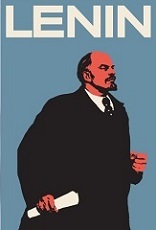 The dissolution of the United Soviet Social Republics (USSR) remains one of the most important and world changing moments in history. The lowering of the hammer and sickle on December 26, 1991, was the end of seventy-four years of Soviet dominance over Eastern Europe. But the remnants of the Soviet Union can still be found today and the ghost of its founder, Vladimir Ilyich Ulyanov (1870-1924), continues to haunt Russia. In Red Square, Moscow, Lenin’s corpse remains on permanent display and is maintained by a full-time staff of technicians. To believers in the old-guard and Marxism, Lenin is the eternal leader of the Bolshevik revolution. To his detractors, he was madman who unleashed a wave of terror and was outdone only by his successor Joseph Stalin (1878-1953). Undoubtedly, Stalin ruled the Soviet Union with an iron grip built upon fear, intimidation and murder. But those tactics were not new methods of operation, having been in use long before he took power. During the reign of the Soviet Union, information regarding Lenin’s private life was kept secret and only the most privileged of researchers were able to see any official records. The passage of time and change in attitudes had resulted in the disclosure of Soviet records that many thought would never be revealed. The thaw which began with Nikita Khrushchev (1894-1971) has allowed the world to learn the truth behind the Iron Curtain. Author Victor Sebestyen has taken another look at Lenin’s life in this well-researched and revealing biography of the iconic and infamous Soviet leader.
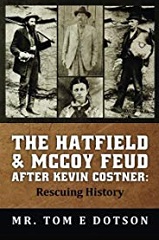 In American folklore, there are two families whose names are recognized as being part of what is arguably the longest running feud to have ever taken place in the United States. The Hatfields and the McCoys have become ingrained in the American experience and the alleged feud between the two families has been re-told through films, documentaries, websites and books. In 2012, the History Channel released a multi-part miniseries about the feud starring Kevin Costner as William Anderson “Devil Anse” Hatfield (1839-1921) and the late Bill Paxton (1955-2017) as Randolph “Ran’l” McCoy (1825-1914). The series is highly rated but just how accurate was it? And were the Tug Valley in West Virginia and Pike County in Kentucky, really that deadly in the late 1800s? Thomas E. Dotson is a descendant of both families and here he rescues history and sets the record straight about what really did happen between the years of 1882 and 1888. And what he reveals will undoubtedly change the way you view the “feud” between the two famous families.
 In 1993, Loud Records released an album that re-defined the rap music genre. A group of nine lyricists from the borough of Staten Island in New York City joined together and created Enter the Wu-Tang (36 Chambers). The album was a smash hit and before long, millions of hip-hop fans knew the names of each member by hard. As a New York City native, I remember when the single Protect Ya Neck was released and the buzz surrounding this new group that was in your face, raw and uncut. To some, the group was just another rap entourage from the streets, that was profane and too rough around the edges for mainstream society. But to fans, they represented a new concept and sound that no one had ever seen before from rap artists. The latter won out and through many albums, tours and even television appearances, the group cemented their legacy as one of rap’s greatest acts. But for all of the glitz and glamour, there also existed a behind-the-scenes story that was playing out in ways that no fan could have ever guessed.

You must be logged in to post a comment.