
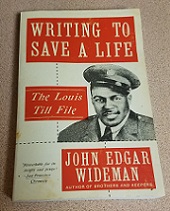
 The images that were published in Jet magazine of Emmett Till’s (1941-1955) mutilated corpse still cause readers and viewers on the internet to recoil in shock. With their graphic detail and macabre detail, the pictures of Till’s face become burned into the memory of anyone who has seen them. The story of Till’s murder at fourteen years of age because of allegedly “whistling or cat-calling a white woman” is a dark reminder of the ugly history of racism that prevailed in American culture. Today such a crime is unimaginable, but in 1955 it was not only very real but also encouraged by rabid racists with a vendetta against people of color. In January, 2017, Carolyn Bryant Donham, the woman at the center of the Till story, allegedly admitted that her claims were false. Regardless, the mere thought of such an act was more than enough to get a Black American lynched at that time and Till became one more victim on a long list of senseless murders carried out by maniacs emboldened by racist ideology. Till’s murder was creepy, appalling and downright shocking but another part of the story which is just as dark is the execution of his father Louis Till (1922-1944) by the Unites States Army in Civitavecchia, Italy, after being convicted of being part of the rape of two Italian women, one of whom was murdered during the crime. Till never gave any statements about his innocence nor did he confirm his guilt but the army had what it needed and he fell victim to the hangman’s noose taking any facts with him to his grave. After his death, details of the execution were withheld from his widow Mamie but were revealed ten years later. His final resting place is at the Oise-Aisne American Cemetery and Memorial in Fère-en-Tardenois, France.
The thought that both father and son were executed because of perceived slights against white women is chilling and it is impossible to escape the aspect of race. Two young Black men accused of having committed crimes against white females could not and would not be permitted to survive. Their deaths are reminder of the misguided belief of the pursuit and dominance over white females by black males. Sadly, it is a misconception that still exist to this day. But what exactly did happen in Civitavecchia? Undoubtedly a crime did take place and most likely by the hands of U.S. servicemen. But there is always the requirement of conclusive evidence and in this case, there is much we do not know. But author John Edgar Wideman decided to take another look at Till’s case, even requesting and receiving a copy of the military’s case file by way of the Freedom of Information Act (FOIA). In the book he does not include the entire file and moves between excerpts of it and his own story which is recounts as he writes about Till. The style of writing might confuse some readers but I believe Wideman presented it that way because of the parallels between his life and Emmett’s. In fact, I would go as far as to say that Wideman is presenting to the reader an idea of the struggle of many Black American families during a time of fierce racial prejudice. But the focus of the book is on Louis Till and it is here that I think it falls just short of hitting its mark.
Wideman’s personal story is highly interesting and he does a great job of showing the plight of Black families in America during his and Emmett Till’s childhood. But I think that more of the Louis Till file should have been presented. He concludes that he could not save Till from either prison or the hangman but from the portions of the file that he does include in the book, it is clear that reasonable doubt exist as to whether Till actually did the crime. And this is where the book should have reached its pinnacle. But this does not happen and the book’s slightly abrupt ending makes the reader yearn for more or some sort of closure. Sadly it never comes. And we are left to wonder about what actions, if any, Till did take on that night. In Wideman’s defense, the Army’s file had no index and was disorganized. I would not be surprised if some portions of it were removed or lost over the passage of time, making a definite conclusion beyond the reach of anyone today. None of figures involved with the case are alive preventing us from having the benefit of spoken words from those that were there. We are left to rely on the case file and our own beliefs. But I think one area where Wideman may have succeeded is igniting interest in Louis Till’s case in those that have read this book. I believe that there is more the Till’s case than we currently know and some day, another independent investigator may uncover the truth about his conviction and execution.
The book is a good read and just enough to get an idea of what did happen to Louis Till. But I believe it could have been much more effective with the inclusion of more of the file and some sort of definite conclusion even if it were the author’s belief. I do not know if Wideman will publish another book on the file but time will tell. For those looking to know more about Till’s sad and tragic life, this is a good resource to have.
ISBN-10: 1501147293
ISBN-13: 978-1501147296
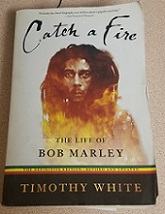 When we think of Reggae music, Rastafarianism and the island of Jamaica, the vision that usually comes to mind is of the mythical figure that was known as Robert Nesta “Bob” Marley (1945-1981). He has been gone for more than thirty-seven years but his music still inspires millions of people around the world and his image graces t-shirts, posters, book covers and other items deemed to be collectibles by their sellers. To some, there is no Reggae without Marley and he is considered to be one of Jamaica’s greatest icons, the superstar from Nine Miles who made his way up through the ghettos of Trench Town until making it big in the music business, where he found international fame. His untimely death on May 11, 1981, sent shock waves through the music industry and the sense of loss continues to confuse as many will ask the question, why did he leave this world at such a young age? To answer that question, it is first necessary to understand Marley’s life. Timothy White (1952-2002), a former journalist with the Associated Press, interviewed Marley scores of times and conducted extensive research to compose this phenomenal biography of the late musician. But just who was Bob Marley? And what was it about him that captivated millions?
 The word time has many definitions, one of which is “the indefinite continued progress of existence and events in the past, present, and future regarded as a whole.” We use time every day in a multitude of ways and without it, society would cease to function. But is time really what we think it is? And how does it apply to our past, present and future? Mankind has been searching for an answer to question “why are we here?” Creationists will say that all things we have come to know are the result of divine power. Evolutionists take the side of science as facts are learned revealing yet another piece of the jigsaw puzzle that is the origin of the universe. Whichever side you find yourself on, I think we can all agree that there are many questions about our universe that have yet to be answered in the form of God or science. Perhaps both are responsible or maybe science will one day provide all of the answers we seek. The late Stephen Hawking (1942-2018) addressed the issue of time in this New York Times and international bestseller that helps us to understand the development of time and how it relates to our very existence.
 He was arguably the greatest villain in the history of professional wrestling. His trademark shirt with the word “Hot Rod” and the red kilt he wore, made him stand out in an industry overrun with colorful character. To his family he was known as Roderick Toombs and Dad, but to the world, he was known as Rowdy Roddy Piper. You would be hard pressed to find any wrestling fan who does not know his name or story. He truly was one of the greats of the industry who’s ribbing of other wrestlers and shenanigans during his famous show Pipers Pit, cemented his legacy as a legend. When he died on July 31, 2015, the world was in a state of shock. I simply could not believe the news reports. At sixty-one, he was far too young to depart this earth and after a hard life in the wrestling business, it seemed as if his glory days were ahead of him. His shocking death still causes fans to shake their heads in disbelief that a man so loved was taken so soon. In all of the interviews I have watched or read with stars who knew him, not one had bad word to say about him. He is remembered as a kind soul backstage and a man possessed with genuine and undeniable talent that helped make Vince McMahon, Jr., the legend that he is in the wrestling business. But just who was the real Roddy Piper? And how did the world of Roderick Toombs, father and husband coincide with the public image he worked forty years to build? His daughter Ariel and son Colt took what remained of the second book Piper was writing about himself and decided to complete a biography of their father. The result? One of the best biographies I have read about a wrestling superstar.
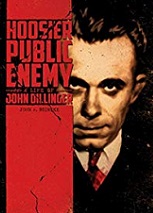 At the height of 1930s era crime and depression, criminals that under normal circumstances would be looked upon with scorn, became larger than life iconic figures whose daring bank robberies and shootouts with policy became stuff of legend. The brazen thefts in the middle of broad daylight accomplished with the use of the Thompson Sub-machine Gun (Tommy Gun) and the Browning Automatic Rifle (BAR) catapulted America into a new and deadlier form of crime. In response, the Federal Bureau of Investigation under the direction of J. Edgar Hoover (1895-1972) stepped into the foray and within a one-year stretch, arrested or executed America’s most wanted. At the top of this list was the late John Herbert Dillinger (1903-1934).
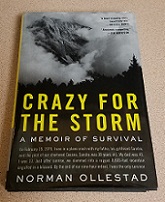 On February 19, 1979, eleven year-old Norman Ollestad was a passenger in privately chartered Cessna aircraft. He was joined by his father Norman and his father’s girlfriend Sandra. The flight was supposed to be a routine trip but weather conditions and pilot error resulted in a series of events that climaxed with the crash of the plane in the San Gabriel mountains in Northern Los Angeles County, California. Miraculously, he was able to descend the mountain and eventually encountered a family living in the area who alerted authorities that a survivor of the crash had been found. Suddenly without his father, young Norman is forced to keep going in life without the words, wisdom and encouragement of the man he called Dad. In 2006, he began to write this book, his life story and his memories of his father while growing up in Malibu, California.
 Recently, I watched the Netflix series



You must be logged in to post a comment.