
The ev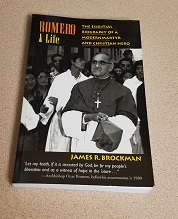 ening of March 24, 1980 marked a changed in the course of the history of El Salvador. In the evening of that day, Archbishop Oscar Romero was shot and fatally wounded as he conducted a mass for his followers. He is rushed to a nearby hospital but quickly succumbs to his wounds. His death plunges the nation in mourning and earns widespread condemnation across the globe. On May 23, 2015, thirty-five years after his death, he was beatified. In El Salvador his grave site is destination for visitors curious about the martyred priest. On the silver screen, he was brilliantly portrayed by the late Raul Julia in the 1989 film ‘Romero’. Following his death, the country fell deeper into civil war and chaos resulting in the deaths of thousands of El Salvadorans. And to this day, the country continues to heal itself from the brutal system of tyranny and murder that plagued the nation for decades.
It is fair to argue that Romero is more popular in death than in life. Today he is faintly remembered but during his time, his voice was one of the loudest to be heard from Central America. James Brockman takes another look at the life of the mythical figure. The book clearly is a biography of Romero and traces his origins to his hometown of Ciudad Barrios. The day-to-day experiences of his life are included in detail but more focus is placed upon Romero’s later years as he struggles to maintain his place as Archbishop among dissidents and seeks to have the government investigate and subsequently punish those responsible for the wave of murders of clergy that gripped the country. Disappearances, assassinations and other crimes of unspeakable horror surrounded Romero forcing him into a position that would earn him praise and bring about his demise.
Brockman creatively uses Romero’s own words in parts of the book to highlight his thinking and clarify the positions that he took. As we follow Romero’s last few years on earth, we are periodically reminded of the endless number of priests that fell victim to gunfire as they spoke out against the crimes destroying their country. We travel with Romero on his two trips to Rome where he seeks guidance about his role in El Salvador and back to his native land as he attempts to steer the congregation and nation towards a better path in the face of an administration infiltrated by corruption and incompetence. As a member of the clergy and voice of the people, the selflessness displayed by Romero in his frugal way of life and tireless efforts to help those in need, exemplify the highest character that a Christian can seek to possess. Not without his faults, he remains an icon for those who advocate for love, prosperity and the messages of the Catholic Church.
For some readers, parts in the book may be hard to accept. The stark truth as exposed by Brockman is that during the 1970s and 1980s, El Salvador found itself at the doorstep of anarchy. The accounts of murders, kidnappings and disappearances of common people is alarming and tragic. The crimes and the victims force us to ask ourselves why people can commit those acts towards each other. Someone very close to me was born in this small Central American nation and has told me stories of the fragile state of the nation and her family’s escape from a life that was a living hell. Today her parents have since returned to the land they call home but it is much different from the nation that they left many years ago. The country is no longer in a civil war but struggles to combat the rise of gang warfare that centers around the notorious MS-13. But there was a time when El Salvador was one of the most dangerous places on earth and a priest tried his best to salvage what was left of it. This is his story and the truth about his words and actions.
ISBN-10: 157075599X
ISBN-13: 978-1570755996
 On January 7, 1971 law enforcement personnel responded to the scene of a single car accident on U.S. Route 271 near Pittsburg, Texas. The deceased is identified as Malcolm “Mac” Wallace. His death marks the end of a life replete murder, sex, alcohol and suspicion. Wallace was a known associate of several powerful figures in the State of Texas, most notably, Billie Sol Estes and Lyndon Baines Johnson. His association with Johnson earned him the title of a conspirator in the murder of President John F. Kennedy. An unidentified finger print at the Texas School Depository discovered in the wake of Kennedy’s murder, puzzled investigators and researchers for years. In 1998, Nathan Darby, a career fingerprint analyst, identified the print as belonging to Wallace giving rise to the belief of many conspiracy theorists that Wallace had been on the sixth floor either right before or during the assassination. Wallace’s death was cloaked in conspiracy theories about how and why he died. But just who was Mac Wallace? Was it really his print at the book depository? And was he LBJ’s hitman for hire as has been alleged? Joan Mellen, a noted scholar and author of several books related to JFK’s murder explores the relationship between Wallace and Johnson in this phenomenal account of the lives of both of these Texas natives.
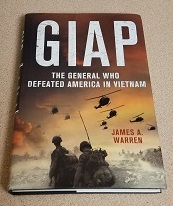 April 30, 1975-The city of Saigon, the capital of South Vietnam, falls to the People’s Army of Vietnam and the National Liberation Front of South Vietnam. The siege of the capital is the final push by North Vietnam on the course towards reunification. The final withdrawal by U.S. military and government personnel marks the of a deadly and protracted war that cost 58,000 American lives and over 1 million Vietnamese lives. To date, it is the only loss suffered by the United States Armed Forces. The success of North Vietnam is a shining moment in the Vietnamese struggle for independence for colonialism by France and the anti-communism policies of the United States. Ho Chih Minh becomes a legend in Vietnamese history and many years later Saigon is renamed in his honor. Ho died on September 2, 1969, several years before the war’s conclusion, but his ideology and belief in a free Vietnam helped his successors continue his goal of unconditional victory. Looking back at the war, it seems almost absurd that a country the size of Vietnam was able to resist and defeat efforts by the French and Americans to impose their will. Both nations were equipped with better weapons, bigger budgets and highly skilled armies. However on the Vietnamese side, there was a general who proved to be just as sharp as any the French or the United States had to offer. And by the end of the war, he would also become a legend in his own right. His name was Võ Nguyên Giáp. (1911-2013)
 On December 30, 1970, Charles “Sonny” Liston (1932-1970) died at his home in Las Vegas, Nevada at the age of thirty-eight. His body was discovered six days later by his wife Geraldine when she returned home from a trip out-of-state with Liston’s son Daniel. It was first suspected that Liston, a known user of heroin, had overdosed. But it was later declared by the coroner’s office that he died of natural causes. To this day it is the official cause of death. The late Liston is remembered as one of the greatest boxers to ever grace a ring. His battles in and out of the ring with Muhammad Ali are some of boxing’s most entertaining moments. Although Liston lacked the personality of Ali or the flair of Floyd Mayweather, Jr., he was feared in the ring as a powerhouse of a brawler unafraid to go in and demolish whoever stood in front of him. His personality in the ring was a direct reflection of his personality outside the ring in a life full of twist, turns and ultimately tragedy. Shaun Assael recounts the short and tragic life of Liston and his death which he believes was in fact a homicide that was wrongly classified at the time of Liston’s death.
 Earlier this year, Netflix released the second season to the hit show ‘Narcos’ starring Wagner Moura as the infamous Pablo Escobar. While not exactly a dead ringer for Escobar, Moura pulls off a stunning performance bringing the late drug czar back to life. The series is violent and gritty but a look into a time in Colombia’s past when life was more terrible than death. Robin Kirk is currently the
  James Baldwin once remarked that the story of Black America was America’s story and believe that it was impossible to separate the two. Nearly all of this nation’s major events are in some way related to the plight of America’s minorities. The country that is the land of immigrants becomes more of a melting pot with each passing week. The recent documentary “13th” highlighted the system of mass incarceration that has resulted in America having the largest prison population of anywhere in the world and millions of young Black and Hispanic men and women being placed behind bars for extended sentences based on convictions for trivial crimes. At the heart of the African-American experience is the precarious state of the immediate family structure and the constant discord that exist.
 On July 10, 2013, the Hon. Nicholas G. Garaufis of the Eastern District of New York ruled that former Bonnano Crime Family boss Joseph Massino was to be
  The reputation of Christopher Columbus and his actions continue to be re-examined as more cities throughout the United States pay homage to the nation’s Native American population. His arrival in the Caribbean in 1492 set off a chain of events critical to development of the area as we know it today. It is common knowledge that many atrocities were committed during Columbus’ voyages to what was called the New World. As the Spanish colonized the Caribbean, the native Indian population began to decline and was nearly non-existent by 1524. We know them by the name Taino but their history and significance is still widely understated. But just who were the Tainos and how did they come to inhabit what is today the Spanish, British, Dutch and French West-Indies?
 July 19, 1979- Nicaraguan dictator Anastasio Somoza Debayle is overthrown in a coup headed by the Sandinista National Liberation Front. His removal brings an end to a thirty year reign of tyranny and oppression from the Somoza family, supported by the United States. Somoza joins a long list of puppet dictators enabled and sustained by U.S. foreign policy guided by financial interests. Today, Nicaragua is the second poorest nation in the Americas behind Haiti. In some areas, residents are forced to live on as little as

You must be logged in to post a comment.